
Plug it in. Warm up. No chimney required.
Calhoun County's winters are mild—a light heating season overall and an average low near 32°F—which makes electric a genuinely practical fit for supplemental heat and everyday ambiance. Find the right unit and get matched with a trusted local dealer.
Every Project Starts From One of These Five Situations
Mild winters call for modern convenience.
Calhoun County sits in the rolling hill country of north-central Mississippi, home to Pittsboro (the county seat), Bruce, Vardaman—the self-proclaimed 'Sweet Potato Capital of the World'—Derma, and the Big Creek community. With just over 5,600 residents spread across mostly rural land, winters here are short and mild: the climate zone is 3A, the heating season is light—nothing like a northern winter—and the average winter low sits at 32°F. That's a fraction of the heating demand a place like Duluth, MN or International Falls, MN sees every winter, and it changes what homeowners actually need from a fireplace. Nobody in Calhoun County is fighting sub-zero nights for months straight—they're looking for warmth on the handful of genuinely cold mornings, plus the look and feel of a fire without hauling in cordwood.
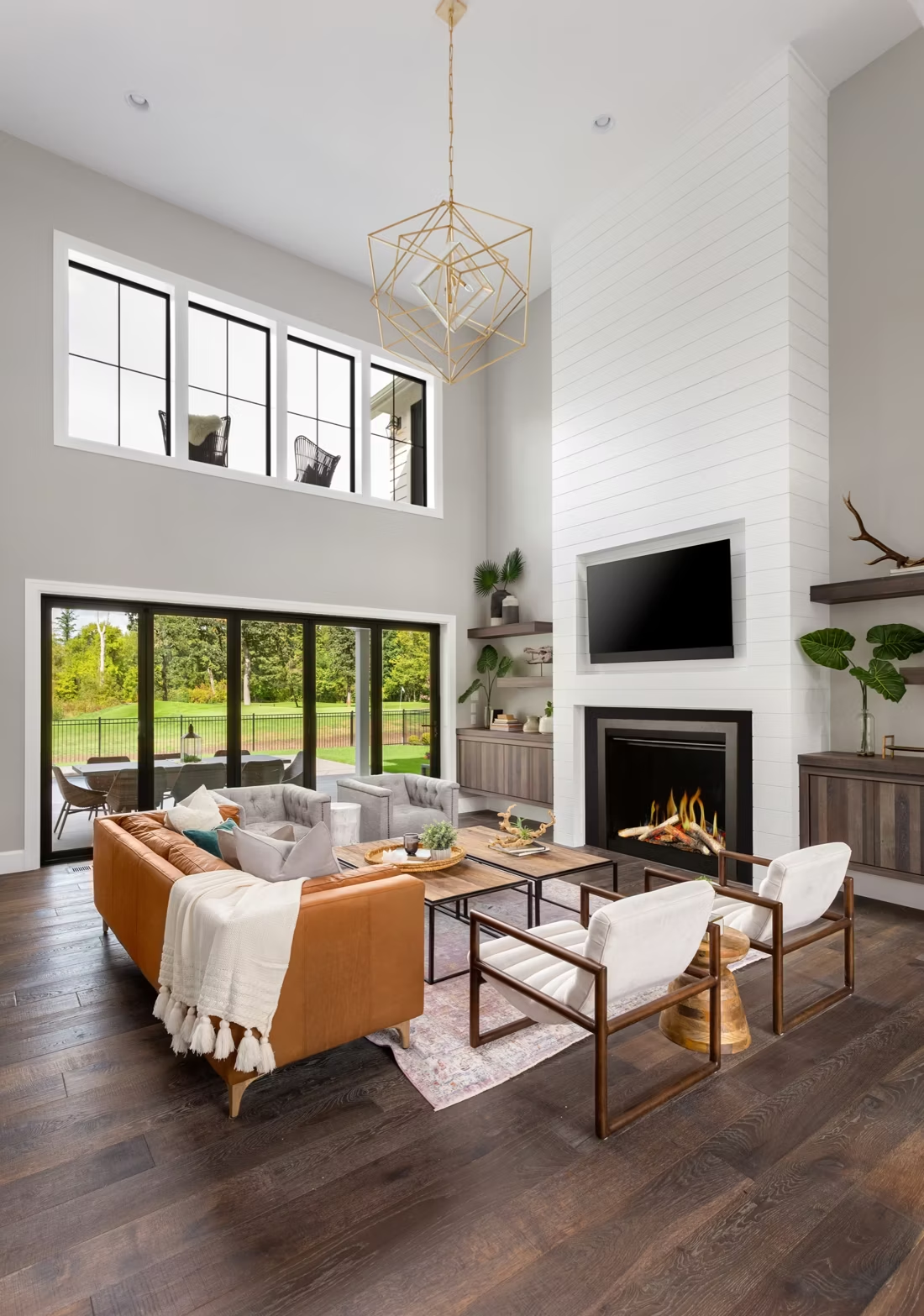
Electric fireplaces fit that need well. There's no chimney to build, no venting to route through a roof, and no gas line to run—which matters in a county where a lot of housing stock is manufactured or older farmhouses without an existing masonry fireplace to work from. A wall-mounted or built-in electric unit plugs into a standard outlet (or a dedicated 240-volt circuit for larger heaters), throws real supplemental heat on cold snaps, and can run on flame-effect alone the rest of the year for ambiance. In a county where oak, pine, and pecan cordwood is genuinely local and traditional, electric isn't competing with that heritage—it's the practical answer for a back bedroom, sunroom, or second living space that doesn't call for a full wood or gas install.
Three steps. No salesperson until you're ready.
Tell us about your project
Your zip code, your situation, and the fuel you're leaning toward—or let the answers point you to one.
See what's actually available
The brands dealers within 100 miles genuinely carry—real options, never a catalog mirage.
Get your dealer & Project Guide
A trusted local dealer, plus the free Project Guide & Parts List that names every component of the job.
Frequently Asked Questions
How much does an electric fireplace installation cost in Calhoun County?
A simple plug-in wall-mounted or freestanding electric fireplace in Calhoun County typically runs $300 to $700 installed, since there's no venting, no chimney, and often no electrical work beyond an existing outlet. Built-in electric fireplaces, recessed wall units, or larger heaters that need a dedicated 240-volt circuit run higher—usually $800 to $1,500 once a licensed electrician runs new wiring. Add carpentry costs if you want a custom mantel or surround built around the unit. Compare that to a wood stove install, which commonly runs several thousand dollars once chimney work is factored in—the low install cost is a big part of why electric is popular for secondary rooms here.
What size electric fireplace do I need for my Calhoun County home?
Most homes in Calhoun County—whether a ranch house in Bruce, a farmhouse outside Vardaman, or a manufactured home near Derma—fall in the 1,200 to 1,800 square foot range. A 1,500-watt electric insert or wall unit (roughly 5,000 BTU) comfortably supplements one main living space or bedroom in that size range. For open-concept living areas in newer builds, or if you want the unit to genuinely offset a room's heat load on the coldest mornings rather than just add ambiance, look at a larger 240-volt model. A local dealer can walk through your square footage and layout and tell you honestly whether a standard 120-volt plug-in unit will do the job or whether you need the extra wattage.
Electric vs. wood—which makes more sense in Calhoun County?
Wood has deep roots here—oak, pine, and pecan are all common local species, and plenty of Calhoun County households still burn cordwood for primary or backup heat, especially with power outages a real concern after ice storms. But with a light winter heating season and average winter lows only dipping to 32°F, most homes don't need a wood stove running around the clock. Electric fireplaces make sense as a low-maintenance option for rooms where you want heat and ambiance without stacking wood, cleaning ash, or worrying about creosote buildup. If backup heat during a power outage matters to you, keep a wood or propane option somewhere in the house—electric units go dark the moment the grid does.
Electric vs. propane fireplace—which is better for my home?
Most of Calhoun County isn't on a natural gas main, so the gas alternative here is propane, which means a tank, a supplier, and periodic refills. Electric skips all of that—no tank in the yard, no delivery schedule, no fuel cost swings. What you give up is raw heat output; a propane fireplace will out-produce an electric unit on the coldest days and keeps working if the power's out but the tank's full. For a supplemental-heat room or a space where you mainly want the visual of a fire, electric is simpler and cheaper to install. For a primary heat source in an older, drafty farmhouse, propane still has an edge.
Do I need a permit to install an electric fireplace in Calhoun County?
A basic plug-in electric fireplace that runs off an existing standard outlet typically doesn't require a permit. If your unit needs a new dedicated 240-volt circuit—common with larger built-in models—that electrical work should be pulled through the Calhoun County Building Department and done by a licensed electrician, since it involves new wiring back to the panel. Most local dealers either handle this coordination directly or can refer you to an electrician who regularly does this work, so you're not left tracking down permits yourself.
What's the best type of electric fireplace for Calhoun County's climate?
Given how mild winters run here, a lot of Calhoun County homeowners lean toward wall-mounted or built-in electric units chosen as much for the flame appearance as the heat—a realistic LED flame effect that can run year-round without the heater engaged. If you want it to actually offset heat in a room during a cold snap, look for a model rated around 4,600 to 5,000 BTU on a standard 120-volt circuit, or step up to a 240-volt unit if the room is larger or poorly insulated. Local dealers can show you the difference in flame realism between entry-level and mid-tier units side by side, which matters more for electric than for wood or gas.
How much does it cost to run an electric fireplace in Calhoun County?
Running cost depends on your local electric cooperative's rate, but rural Mississippi co-ops generally price power in the range of 11 to 13 cents per kilowatt-hour. A 1,500-watt heater running on high for eight hours would use about 12 kWh, or roughly $1.30 to $1.60 a day at that rate—noticeably cheaper than running a whole-home HVAC system to heat one room. Running the unit on flame-effect only, with the heater off, costs a fraction of that. It's worth asking your dealer for the wattage draw of any specific model you're considering so you can estimate your own numbers.
Electric vs. pellet stove—which is right for my home?
Pellet stoves burn compressed wood pellets—brands like Lignetics, Hamer Pellet Fuel, and Greenway Renewable Energy are all regionally available—and they put out serious, sustained heat, enough to serve as a primary source in a drafty older home. But they need a hopper loaded regularly, produce ash, and still require electricity to run the auger and blower, so they're not a power-outage backup either. Electric fireplaces produce far less heat but need zero fuel handling and no venting at all. For Calhoun County's mild winters, if you're mainly after ambiance and light supplemental warmth in a specific room, electric is the lower-hassle choice. If you want to meaningfully cut a propane or electric heating bill in a larger space, pellet has more real heating capacity.
Will my electric fireplace work if the power goes out?
No—electric fireplaces require electricity to run both the heater and the flame effect, so a power outage means the unit simply won't operate. That's worth planning around in Calhoun County, where ice storms and summer thunderstorms can knock out rural power lines for hours or longer. If backup heat during outages is important to your household, keep a wood stove, propane heater, or generator-backed setup available somewhere in the home, and treat the electric fireplace as what it's best at: everyday supplemental heat and ambiance rather than emergency heat.
Can I put a TV above my fireplace?
Yes—with an asterisk. Fireplaces are hot and TVs don't like heat. Either put a mantel between them to deflect rising warmth, or choose a fireplace with heat-management technology that creates a cool zone on the wall above—the wall stays around 125 degrees, barely warm, while the room still gets full heat. If you like clean lines and don't want a mantel, heat management is the answer.
How much does an electric fireplace cost to run?
With the heater on, a typical unit draws about 1,500 watts—at average electric rates that's roughly 20 cents an hour. Run the flame effect alone and it costs pennies; the flames are LED-driven and use about as much power as a light bulb. There's no pilot light, no fuel delivery, and essentially no maintenance.
Does a fireplace add value to my home?
On average, a fireplace adds back to the home about the same amount you spent installing it. Add the monthly savings from heating the rooms you actually use instead of the whole house—often hundreds of dollars a year—and the value case is strong before you even count what a fire does for how your family uses the room.
Can I install a fireplace myself?
If you're putting a fire in your house on purpose, it's best to work with an expert. Unless you're genuinely experienced in framing, gas line, vent pipe, and the national code on clearances to combustibles, have a professional do it—and ideally the same company that sells you the fireplace, so warranty, service, and liability all live under one roof.
Find your electric fireplace in Calhoun County.
Tell us a bit about your home and we'll put together a free Project Guide & Parts List—the right electric fireplace or insert for your space, the exact parts you'll need, and a trusted local dealer to install it.
Find Your Fireplace →