
Gas Heat Built for Real Minnesota Winters.
Woodbury averages an 8°F winter low and racks up more than 7,600 heating degree days a year—heating demand closer to Duluth than to most East Metro suburbs. Find the right gas fireplace or insert, and connect with a trusted local dealer.
Every Project Starts From One of These Five Situations
Instant heat for East Metro cold snaps.
Woodbury sits in Washington County on the eastern edge of the Twin Cities metro, at just under 1,000 feet of elevation in climate zone 6A. With 7,683 heating degree days a year and average winter lows around 8°F, the heating season here runs long—closer in severity to Duluth than to the rest of the East Metro. Wood heat never took hold here the way it has in more rural parts of Minnesota; Woodbury's housing stock is largely newer construction built since the 1980s, and most homes were designed around gas or electric heat from the start rather than wood-burning fireplaces. Oak, maple, birch, and aspen are common in the surrounding woodlots, but they're firewood for backyard pits, not primary heat for most residents.
Natural gas is the default heating fuel across nearly all of Woodbury's neighborhoods, and a gas fireplace or insert is one of the most common upgrades homeowners make to an existing unused prefab fireplace or an unfinished basement. Electric service comes through Northern States Power (Xcel Energy) and the City of St. Paul, at a residential rate around 17 cents per kWh—high enough that electric fireplaces make more sense as supplemental accent heat than as a serious contender for zone heating. A direct-vent gas fireplace gives Woodbury homeowners instant, thermostat-controlled warmth in the living room or basement, without the ash, chimney maintenance, or air-quality tradeoffs of wood.
Three steps. No salesperson until you're ready.
Tell us about your project
Your zip code, your situation, and the fuel you're leaning toward—or let the answers point you to one.
See what's actually available
The brands dealers within 100 miles genuinely carry—real options, never a catalog mirage.
Get your dealer & Project Guide
A trusted local dealer, plus the free Project Guide & Parts List that names every component of the job.
Frequently Asked Questions
How much does a gas fireplace installation cost in Woodbury?
A typical gas fireplace or insert installation in Woodbury runs $4,000 to $10,000, depending on whether you're converting an existing prefab wood-burning fireplace, adding a new direct-vent unit during a basement finish, or running new gas line to a room that doesn't currently have service. Conversions into an existing fireplace opening with gas already run to the house tend to land on the lower end; new construction or additions requiring a fresh gas line and venting through an exterior wall push toward the higher end. The City of Woodbury Building Safety Division requires a permit for the work, and most local hearth dealers handle that paperwork as part of the job.
Can I convert my existing wood-burning fireplace to gas?
Yes, and it's one of the more common calls we get from Woodbury homeowners. Many houses built here in the 1990s and 2000s came with a builder-grade, open masonry or prefab wood-burning fireplace that rarely gets used. Swapping in a gas insert or a vented gas log set typically runs $4,000 to $8,500, using the existing chimney or flue as the venting path with a stainless liner. It keeps the fireplace opening you already have while giving you the flip-a-switch convenience that fits how most Woodbury households actually use the room.
Is propane ever used instead of natural gas in Woodbury?
Rarely. Woodbury is a fully built-out, densely platted suburb, and natural gas mains run through essentially every neighborhood in the city, including the newer developments toward Bailey Road and Valley Creek. Propane shows up occasionally on larger acreage lots near the edges of Washington County that haven't been annexed into standard gas service, but the overwhelming majority of Woodbury gas fireplace installs tie into existing natural gas lines rather than a propane tank.
Will my gas fireplace still work if the power goes out?
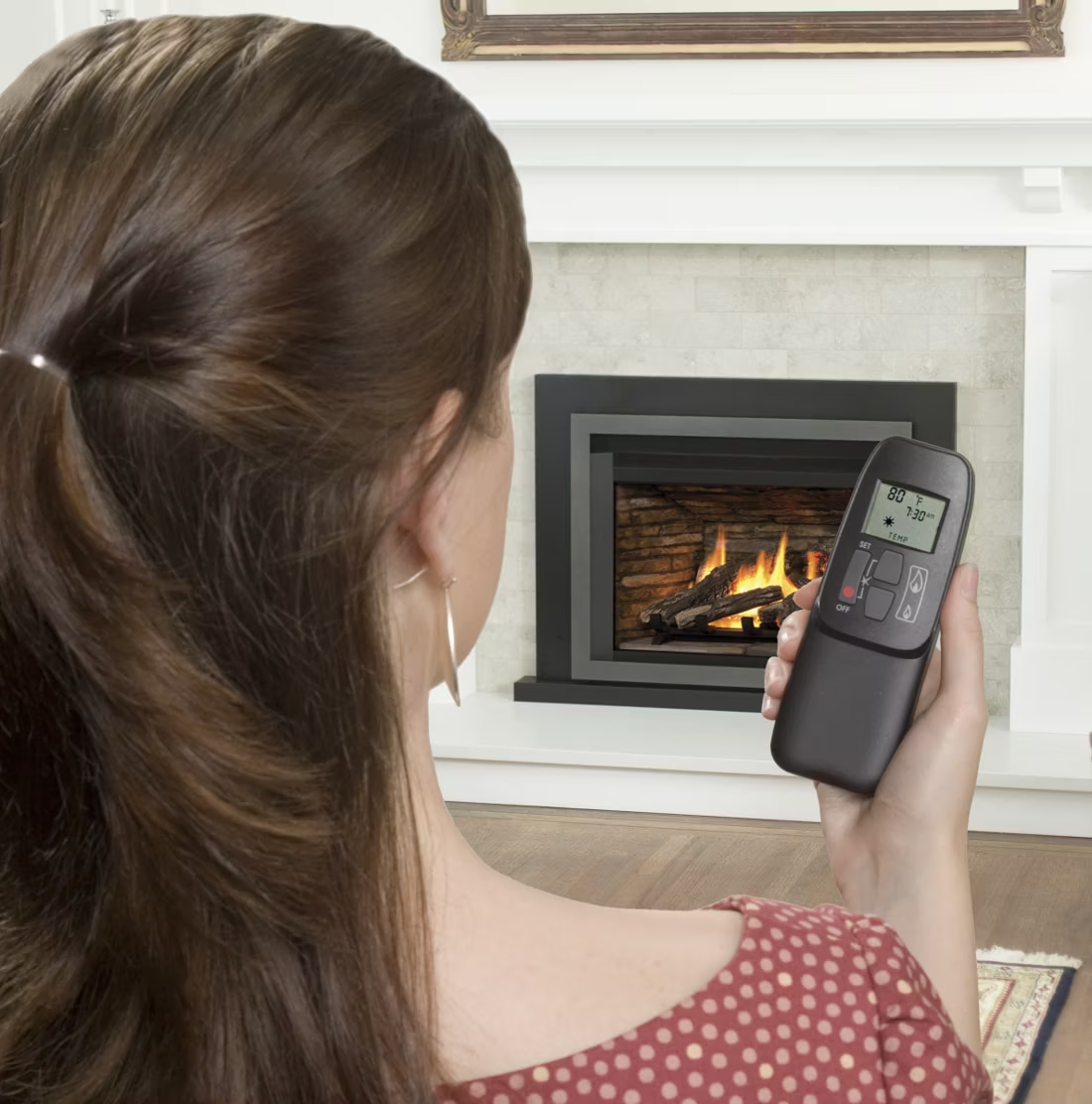
Most will, with the right ignition system. Units with intermittent pilot ignition (IPI) run on a battery backup that kicks in automatically during an outage, so the fireplace still lights on demand. Heat & Glo, headquartered just down the road in Lakeville, builds a number of models with this feature standard—worth asking about when you're comparing units. Given how often an ice storm or a heavy spring snowfall can knock out power in the East Metro for a few hours, a battery-backed gas fireplace is a real source of backup heat, not just ambiance. Standing-pilot models work during outages too, since the pilot flame never needs electricity to begin with.
What's the difference between a gas fireplace, gas insert, and gas stove?
A gas fireplace is a fully built-in unit framed into a wall—the standard choice for new construction or a basement finish. A gas insert slides into an existing masonry or prefab wood-burning fireplace and uses the existing chimney as its vent, which is the more common project in Woodbury given how many homes already have an unused fireplace opening. A gas stove is a freestanding cast-iron or steel unit that sits on the floor, similar in shape to a wood stove but running on gas—a good option for a walkout basement or a room without an existing fireplace. Most Woodbury homeowners end up choosing between the first two.
Do I need a permit to install a gas fireplace in Woodbury?
Yes. Woodbury requires both a building permit and a gas piping permit through the City's Building Safety Division for any new gas fireplace, insert, or gas line extension. The gas connection itself has to be run by a licensed gas-fitter. Most established hearth dealers in the East Metro coordinate all of this—the permit, the gas line, and the final inspection—so you're not left managing separate contractors.
Are vent-free gas fireplaces allowed in Woodbury?
Minnesota permits vent-free (unvented) gas appliances, but they come with strict room-size and ventilation requirements, and most Woodbury dealers steer customers toward direct-vent units instead. A direct-vent gas fireplace draws combustion air from outside and exhausts it back outside through a sealed pipe, keeping combustion byproducts out of the house entirely—an easier call in a well-insulated, tightly-built Minnesota home where indoor air exchange is already limited during the long heating season. Direct-vent is what you'll see in the large majority of Woodbury installs.
How often does a gas fireplace need to be serviced?
Plan on an annual inspection, ideally before the heating season starts in the fall. A certified technician checks the burner, pilot assembly, venting, and any battery backup or remote components, and cleans the glass and interior. This runs about $150 to $250 in the Twin Cities market and is a much smaller job than chimney sweeping for a wood-burning unit—but skipping it for several years is the most common reason gas fireplaces start having ignition problems or sooting on the glass.
Gas vs. electric fireplace—which makes more sense in Woodbury?
Gas delivers real heat output—enough to actually warm a room on an 8-degree January night—and once installed, it's cheap to run compared to resistance electric heat. Electric fireplaces cost less upfront ($400 to $1,500 installed, no venting or gas line required) and can go almost anywhere, but at Xcel Energy's residential rate of roughly 17 cents per kWh, running one as a primary heat source for hours a day gets expensive fast. Most Woodbury homeowners use electric units for ambiance in a bedroom or a room without gas access, and gas for the main living space where they actually want to offset the furnace on the coldest days.
Is my gas fireplace wasting gas?
If it was installed more than 15 years ago, probably. Older gas fireplaces keep a standing pilot light burning all the time, and that little flame can cost a couple hundred dollars a year. Newer models use pilot-on-demand ignition—the pilot lights only when you use the fireplace and goes out when you turn it off.
Why is a fireplace insert so efficient?
An insert does two things: it seals the chimney completely, so you stop losing air you already paid to heat, and it radiates warmth into the room through the firebox and glass. Most add a heat-exchange fan that pulls cool room air underneath, wraps it around the hot firebox, and pushes it back out warm. Your home is more efficient before you've even lit the first fire.
Can I install a fireplace myself?
If you're putting a fire in your house on purpose, it's best to work with an expert. Unless you're genuinely experienced in framing, gas line, vent pipe, and the national code on clearances to combustibles, have a professional do it—and ideally the same company that sells you the fireplace, so warranty, service, and liability all live under one roof.
Does a fireplace add value to my home?
On average, a fireplace adds back to the home about the same amount you spent installing it. Add the monthly savings from heating the rooms you actually use instead of the whole house—often hundreds of dollars a year—and the value case is strong before you even count what a fire does for how your family uses the room.
Nearby Dealers
Hearth shops serving Woodbury and the surrounding area.
Find your gas fireplace in Woodbury.
Tell us about your home and we'll match you with the right gas fireplace, insert, or stove—plus a free Project Guide & Parts List with the exact parts, including the vent kit, and our recommended local dealer for your project.
Find Your Fireplace →