
Add efficient, flame-free heat to your Wadena County home.
No chimney, no venting, no wood to split—just a plug-in or hardwired unit that adds real warmth and ambiance to a bedroom, basement, or addition anywhere from Wadena to Sebeka and Menahga. Find the right unit and connect with a trusted local dealer.
Every Project Starts From One of These Five Situations
Practical, flame-free heat for a hard winter climate.
Wadena County sits in Climate Zone 7 with an average winter low of -2°F and a long, demanding heating season—a cold-climate profile in the same league as Fargo, ND, just to the west. That kind of winter has shaped a heating culture built around wood (oak, maple, birch, and aspen are all common locally, with cutting permits available through Chippewa National Forest for $10-$20 per cord) alongside propane and electric furnaces as the backbone of most homes. Electric fireplaces don't try to compete with that as a primary heat source—nobody in this county is heating a farmhouse through a January cold snap on a 1,500-watt unit alone.
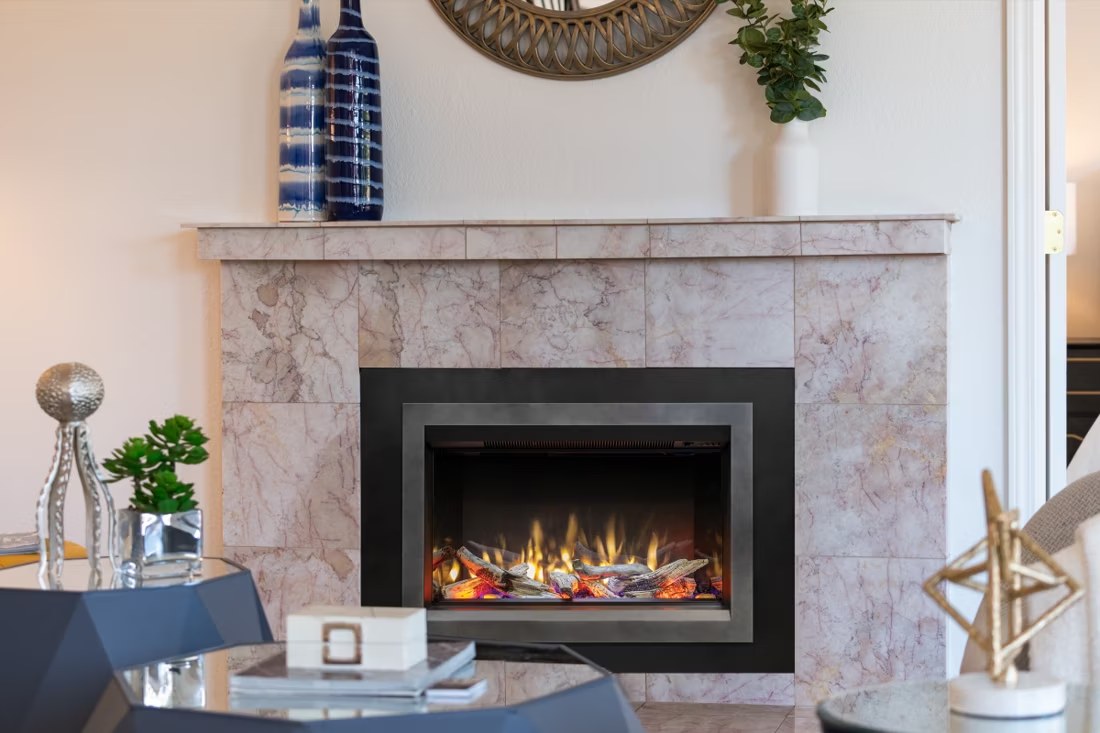
Where electric fireplaces earn their place here is zone heating and ambiance: a finished basement in Wadena, a bedroom addition outside Menahga, a rental unit or apartment above Main Street in Sebeka where a wood stove or gas line isn't practical. Plug-in units need nothing more than a standard outlet; built-in models with a dedicated circuit are a straightforward job for a licensed electrician, and most homes served by Todd-Wadena Electric Cooperative can add one without triggering the kind of permitting a wood stove or gas insert requires. The tradeoff worth knowing up front: electric fireplaces run on grid power, so they won't help during a winter outage the way a wood stove will.
Three steps. No salesperson until you're ready.
Tell us about your project
Your zip code, your situation, and the fuel you're leaning toward—or let the answers point you to one.
See what's actually available
The brands dealers within 100 miles genuinely carry—real options, never a catalog mirage.
Get your dealer & Project Guide
A trusted local dealer, plus the free Project Guide & Parts List that names every component of the job.
Frequently Asked Questions
How much does an electric fireplace installation cost in Wadena County?
Plug-in electric fireplaces and stoves are the least expensive option—often just the cost of the unit itself, since no wiring or permitting is involved. Built-in electric fireplaces or wall-mounted units that require a dedicated 120V or 240V circuit typically add a few hundred dollars in electrician labor on top of the unit cost, with total projects commonly landing between $500 and $2,000 depending on whether it's a simple insert into an existing mantel or a custom-framed built-in with trim work. Local dealers can walk through the actual numbers once they know your room and unit choice.
Is an electric fireplace enough heat for a Wadena County winter?
Not as your only heat source. With an average winter low of -2°F and a long, demanding heating season, Wadena County winters ask more of a heating system than a typical electric fireplace's 4,000-5,000 BTU output can deliver on their own. Electric units work well as supplemental zone heat—taking the edge off a chilly bedroom or basement so the furnace doesn't have to work as hard—or as a secondary heat source in a room that already has baseboard or forced-air heat. For whole-home heating in this climate, most local homeowners are still relying on propane, electric furnaces, or wood as the primary system.
Do I need a permit to install an electric fireplace in Wadena County?
Usually not for a plug-in unit—there's no venting, no gas line, and no combustion to inspect. Built-in models that require a new dedicated circuit typically need an electrical permit, since that work involves running new wiring back to the panel. Most licensed electricians serving Wadena County pull that permit as a routine part of the job. If you're adding a fireplace as part of a larger remodel or new addition, check with your local building department to see if it needs to be rolled into that permit instead of a standalone one.
What size electric fireplace do I need?
Sizing an electric fireplace is about the room, not the whole house. A compact insert or wall-mount (750-1,500 watts) is enough to noticeably warm a bedroom or den in the 150-300 square foot range. Larger built-ins or freestanding stoves rated near 4,600-5,000 BTU can take the chill off a finished basement or open living area, but given Wadena County's cold, they're still best treated as supplemental heat layered on top of your existing furnace or baseboard system rather than a replacement for it.
Will my electric fireplace work during a power outage?
No—electric fireplaces run entirely on grid power, so they shut off along with everything else during an outage. That's an important distinction for Wadena County, where winter storms can knock out power to rural lines served by Todd-Wadena Electric Cooperative for hours or longer. If backup heat during an outage matters to you, a wood stove or a propane unit with a battery-backed ignition system is the better choice for that specific need—electric fireplaces are best understood as everyday convenience heat, not storm insurance.
Electric fireplace vs. wood stove—which makes sense for my Wadena County home?
Wood is the deeper local tradition here, with oak, maple, birch, and aspen all common firewood species and Forest Service permits available through Chippewa National Forest for $10-$20 a cord. A wood stove can genuinely carry a home through a -2°F night and keep running with the power out. An electric fireplace can't do either of those things, but it wins on convenience: no cutting, stacking, ash cleanup, or chimney maintenance, and it can go almost anywhere in the house without venting. Many homeowners in the county end up with both—wood or propane for real heat, electric for the rooms where a fire's ambiance matters more than its BTU output.
Are electric fireplaces a good fit for basements and rentals in Wadena County?
Yes—this is where electric units tend to make the most sense locally. A finished basement doesn't always get enough heat from a single furnace duct, and an electric insert or stove can supplement that without cutting into a wall for venting. For rental properties and apartments around Wadena or Sebeka, a plug-in electric fireplace adds a real amenity without the landlord taking on gas line work, chimney liability, or combustion inspections—which is a big part of why they show up so often in rental units and finished lower levels across the county.
Where can I find someone to install an electric fireplace near me?
For a simple plug-in unit, no installer is required beyond placing it and plugging it in. For a built-in model with a dedicated circuit, you'll want a licensed electrician familiar with the manufacturer's wiring specs—undersized circuits are the most common mistake on DIY installs. A trusted local hearth or electrical dealer can also help you pick the right unit for your room and handle the wiring and any trim or mantel work in one visit, rather than coordinating a fireplace purchase and an electrician separately.
How much does an electric fireplace cost to run in Wadena County?
Most electric fireplaces draw around 1,500 watts on the heat setting, which at typical Todd-Wadena Electric Cooperative residential rates costs somewhere in the range of 15-20 cents per hour of continuous heat use—considerably cheaper per hour than running a wood stove's fuel cost once you factor in cordwood prices, though wood still wins on raw heat output for the money in a climate this cold. Since most owners run electric units for a few hours in the evening rather than around the clock, the actual monthly cost is usually modest—a few dollars to a few tens of dollars depending on how often it's used.
Do electric fireplaces actually produce heat?
Yes—most put out around 4,800–5,000 BTUs from a standard outlet, which comfortably warms a bedroom, office, or den as a comfort-zone heater. What they won't do is carry a whole house the way wood, gas, or pellet can. Think of electric as ambiance-first with honest supplemental heat: flames on with no heat in July, flames plus warmth in January.
Can I put a TV above my fireplace?
Yes—with an asterisk. Fireplaces are hot and TVs don't like heat. Either put a mantel between them to deflect rising warmth, or choose a fireplace with heat-management technology that creates a cool zone on the wall above—the wall stays around 125 degrees, barely warm, while the room still gets full heat. If you like clean lines and don't want a mantel, heat management is the answer.
Does a fireplace add value to my home?
On average, a fireplace adds back to the home about the same amount you spent installing it. Add the monthly savings from heating the rooms you actually use instead of the whole house—often hundreds of dollars a year—and the value case is strong before you even count what a fire does for how your family uses the room.
Can a fireplace actually lower my heating bill?
Yes—by creating a comfort zone. A furnace heats every square foot of the house just to warm the one room you're in; a gas fireplace on low burns roughly a sixth of the gas a typical furnace does. Set the furnace around 55–60 degrees as a baseline, then heat the rooms your family actually uses. Families who heat this way commonly save $20–$60 a month.
Find your electric fireplace in Wadena County.
Tell us about your room and how you plan to use it, and we'll put together a free Project Guide & Parts List—matched to a trusted local dealer who can wire it in right, whether that's a plug-in unit or a built-in with a dedicated circuit.
Find Your Fireplace →