
Add real warmth to the room you're actually in.
Zone heat and instant ambiance for river-bluff winters in Wabasha, without touching your gas line or your chimney. We'll help you find a local dealer who can size it right.
Every Project Starts From One of These Five Situations
Targeted warmth for a river town that gets seriously cold.
Wabasha sits on the Mississippi River in bluff country at 721 feet, and the numbers here are no joke: an average winter low of 4°F and a winter heating load about as demanding as Minneapolis, which puts Wabasha in the same climate ballpark as Minneapolis 90 miles up the river. In a town this cold, an electric fireplace isn't going to replace your furnace—but that's not really its job.
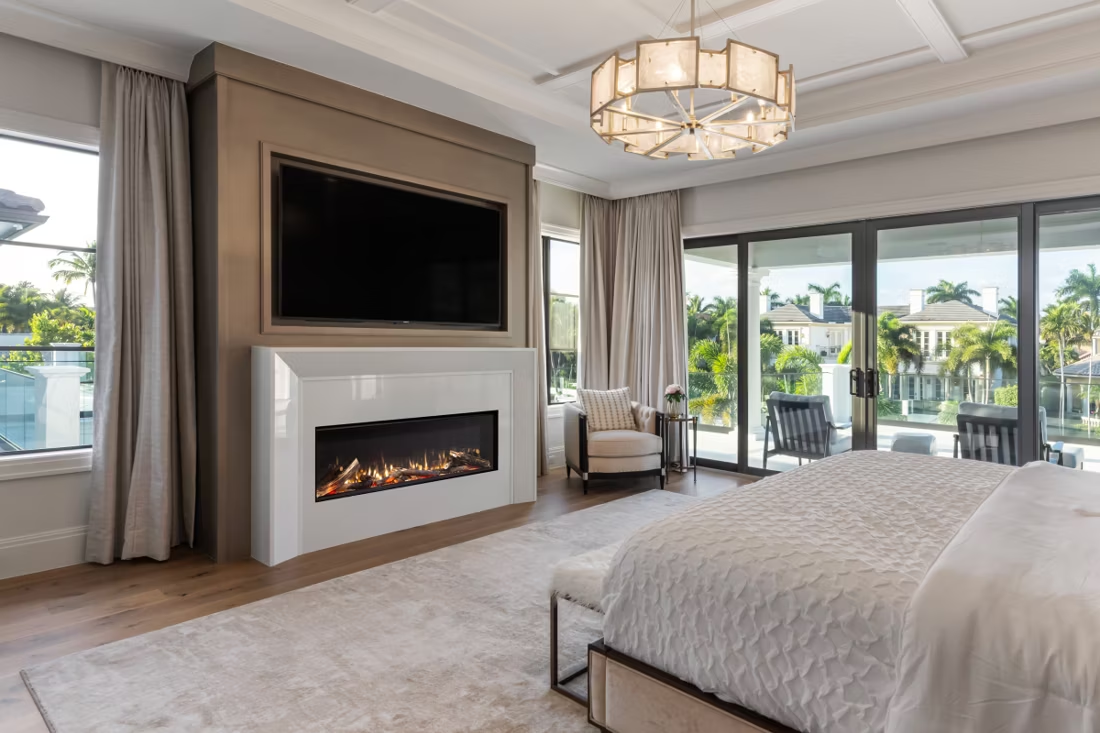
Most electric fireplace installs we see in towns like Wabasha go into finished basements, three-season porches, additions above the flood-prone lower blocks near the river, and bedrooms where running the whole-house furnace just to warm one room doesn't make sense. Northern States Power Co – Minnesota (Xcel Energy) serves the area at a residential rate of about $0.1698 per kWh, which keeps the operating cost of a zone heater manageable even when you're running it most evenings through a long Minnesota winter. No venting, no gas line, no wood to split from the oak and maple in the bluffs—just plug in or hardwire and go.
Three steps. No salesperson until you're ready.
Tell us about your project
Your zip code, your situation, and the fuel you're leaning toward—or let the answers point you to one.
See what's actually available
The brands dealers within 100 miles genuinely carry—real options, never a catalog mirage.
Get your dealer & Project Guide
A trusted local dealer, plus the free Project Guide & Parts List that names every component of the job.
Frequently Asked Questions
How much does an electric fireplace installation cost in Wabasha?
A plug-in electric fireplace insert or freestanding unit typically runs $300 to $1,200 installed, since most models just need a standard 120V outlet—no electrician required. Built-in wall units or larger linear fireplaces that need a dedicated 20-amp circuit run higher, often $800 to $2,500, once you factor in an electrician to run new wiring and any trim or surround carpentry. Compared to wood or gas installs in this area, electric is by far the cheapest and fastest path to a working fireplace, which is a big reason it's popular in Wabasha's older homes and river cabins where opening up a wall for venting isn't practical.
Will an electric fireplace actually heat my home in a Wabasha winter?
Not the whole home, and it's worth being honest about that up front. Most electric fireplace heaters put out around 4,600–5,200 BTU (roughly 1,500 watts), which is enough to comfortably heat a single room of 300–400 square feet, but with a winter heating load about as demanding as Minneapolis and lows regularly in single digits, Wabasha's climate is too demanding for electric heat to carry a whole house on its own. Think of it as zone heat for a den, basement, or bedroom while your furnace handles the rest of the house—that's how nearly every electric fireplace gets used here.
Do I need a permit to install an electric fireplace in Wabasha?
If you're installing a plug-in unit into an existing outlet, no permit is needed—it's no different than plugging in a space heater. If you're adding a built-in electric fireplace that requires a new dedicated circuit or panel work, that electrical work typically needs a permit through the City of Wabasha or Wabasha County building department, and it should be pulled by a licensed electrician regardless of whether you technically need the paperwork. Unlike wood stoves or gas inserts, there's no venting or chimney inspection involved, which is the main reason electric installs move faster than either of those options.
How much does it cost to run an electric fireplace in Wabasha?
At Xcel Energy's Wabasha-area residential rate of about $0.1698 per kWh, a typical 1,500-watt electric fireplace running on its heat setting costs roughly $0.25 per hour, or about $2 for an 8-hour evening of use. Running the unit on flame-only mode without heat (common for ambiance during warmer months or when you just want the look) draws only 30–100 watts, which costs pennies per hour. That low operating cost is part of why electric works well as supplemental heat in a climate this cold—you can run it every evening all winter without a noticeable jump in your bill.
Where do electric fireplaces make the most sense in a Wabasha home?
The most common spots we see locally are finished basements (especially in homes closer to the river where masonry chimney work or new gas lines get complicated), three-season porches that only get occasional use, primary bedrooms, and additions built after the original furnace was already sized for the existing footprint. Seasonal river cabins and cottages around Lake Pepin are another good fit—owners want heat and ambiance for weekend use without committing to a wood stove or propane tank for a place that sits empty much of the week.
What types of electric fireplaces are available?
You'll find three main formats: built-in wall units and linear electric fireplaces that get framed into a wall like a TV, insert-style units that slide into an existing masonry fireplace opening to replace an old wood-burning setup, and freestanding electric stoves that just need floor space and an outlet. For older Wabasha homes with an existing masonry fireplace that's gone unused for years, an insert is often the simplest upgrade—it covers the firebox opening, plugs in, and gives you working heat and flame effect without touching the chimney at all.
Electric vs. wood—which makes more sense for my home?
Wood is still the practical choice for real heat output in this area—Wabasha sits in oak, maple, birch, and aspen country, firewood is plentiful, and a wood stove keeps producing heat during a power outage, which matters when river-valley ice storms take down lines. Electric can't do that; it goes dark the moment the power does. What electric wins on is simplicity and cost: no chimney, no ash, no permit hassle, and a fraction of the install cost. Most homeowners here end up choosing based on the room—wood or a gas insert for a primary living space that needs real heat, electric for a secondary room where convenience and low upfront cost matter more than raw BTUs.
How is an electric fireplace actually installed?
Plug-in models are as simple as it sounds: set the unit or insert in place, plug it into a standard 15- or 20-amp outlet, and it's running. Built-in and larger linear units usually need a dedicated 20-amp circuit, which means an electrician running new wire from your panel—a job that typically takes a few hours. Either way, there's no venting, no masonry work, and no gas line, which is why electric installs in Wabasha are usually finished start to finish in a single day, compared to the multi-day timelines for wood or gas projects.
Electric vs. pellet stove—which is the better fit?
Pellet stoves, using bagged pellets from regional suppliers like Indeck Energy Services, Lignetics, or Somerset Pellet Fuel, put out real heat—often 40,000+ BTU—enough to seriously supplement or even replace furnace heat in a well-insulated space, but they require pellet storage, an auger and blower that need periodic cleaning, and a proper vent through an exterior wall. Electric fireplaces skip all of that at the cost of much lower heat output. If you want genuine backup heating capacity, pellet is the stronger option; if you want low-maintenance ambiance and modest zone heat with zero venting or fuel handling, electric is the easier path.
Does an electric fireplace need a vent or chimney?
No—that's its superpower. An electric fireplace needs a wall and an outlet, period. No vent pipe, no gas line, no clearances to design around, which is why it works in bedrooms, offices, apartments, and walls where venting a gas or wood unit would be impractical or impossible. Installation is typically the simplest and least expensive of any fireplace type.
Do electric fireplaces actually produce heat?
Yes—most put out around 4,800–5,000 BTUs from a standard outlet, which comfortably warms a bedroom, office, or den as a comfort-zone heater. What they won't do is carry a whole house the way wood, gas, or pellet can. Think of electric as ambiance-first with honest supplemental heat: flames on with no heat in July, flames plus warmth in January.
What is an in-home preview and do I need one?
It's a visit where a hearth professional measures your space, confirms the model you picked actually works in your home, and walks the specs—framing, gas line, venting, finish work—before anything is ordered. Some details you just can't know until you see the house. Never make a down payment without one; it's the single most-skipped step that burns buyers.
Can I install a fireplace myself?
If you're putting a fire in your house on purpose, it's best to work with an expert. Unless you're genuinely experienced in framing, gas line, vent pipe, and the national code on clearances to combustibles, have a professional do it—and ideally the same company that sells you the fireplace, so warranty, service, and liability all live under one roof.
Nearby Dealers
Hearth shops serving Wabasha and the surrounding area. Every listing shows whether it is a WhyFire partner, a dealer we have verified as authorized for the brands we recommend, or a local business carrying hearth products. No manufacturer pays for placement. How we verify dealers →
We’ve paused dealer listings for this connection today. Enter your zip or postal code above to find dealers near you, or come back tomorrow.
Popular Electric Brands
Where each brand came from, what's inside it today, and every current model. No brand pays to be here. Not every dealer carries every brand, so enter your zip code to see what's sold near Wabasha.
Fireplace Xtrordinair
Fireplace Xtrordinair, now often called FireplaceX, is the fireplace brand of Travis Industries, Inc., of Mukilteo, Washington.
5 electric models →DaVinci
DaVinci Custom Fireplaces is a brand of Travis Industries, Inc., of Mukilteo, Washington, the company behind Lopi and Fireplace Xtrordinair.
5 electric models →Kozy Heat
Kozy Heat was founded in 1976 by Dudley Hussong in Lakefield, Minnesota, and incorporated as Hussong Manufacturing Co., Inc. in 1978.
3 electric models →Forge & Flame
Forge & Flame is the stove brand Hearth & Home Technologies introduced in August 2023 to bring Vermont Castings, Harman, and Quadra-Fire under one name.
1 electric model →Electric Service in Wabasha
An electric fireplace's heater draws about 1,500 watts—pennies per hour at local rates.
Northern States Power Co - Minnesota
Find your electric fireplace in Wabasha.
Tell us about the room you're heating and we'll help you find a trusted local dealer and a free Project Guide & Parts List—the exact unit, wiring needs, and install plan for your Wabasha home.
Find Your Fireplace →