
Warmth on Lake Minnetonka without the woodpile.
No chimney, no venting, no shoreland permitting headaches—just plug-in or hardwired heat that fits lake cottages, boathouses, and condo remodels around Tonka Bay.
Every Project Starts From One of These Five Situations
Electric heat that fits Lake Minnetonota living.
Tonka Bay is a small city of under 1,500 people wrapped around the shoreline of Lake Minnetonka, sitting in climate zone 6A with a winter heating load roughly on par with Duluth—colder than the Twin Cities proper—and winter lows averaging around 6°F. Despite that cold, wood-burning is genuinely uncommon here. Much of the housing stock along the lake is lake cabins converted to year-round homes, boathouses, and condo-style remodels on tight shoreland lots, and Hennepin County's Shoreland Management Ordinance adds real friction to new masonry chimneys or Class A pipe near the water. Pellet stoves face a similar problem: with only about 1,462 residents, Tonka Bay doesn't have the delivery density that supports bulk pellet routes the way a larger town would.
Electric fireplaces sidestep both problems entirely. There's no chimney to permit, no combustion air to plan for, and no fuel to store—which makes them a natural fit for boathouses, dock-adjacent structures, guest suites over garages, and lake-view additions where running gas line or masonry isn't practical. Most homes here are served by Northern States Power Co (Xcel Energy) at roughly $0.1698 per kWh, and a modern electric insert or built-in draws about as much power as a space heater. It won't replace your furnace on a 6-below night, but as supplemental zone heat in a sunroom, primary bedroom, or lakeside family room, it's close to a no-friction install.
Three steps. No salesperson until you're ready.
Tell us about your project
Your zip code, your situation, and the fuel you're leaning toward—or let the answers point you to one.
See what's actually available
The brands dealers within 100 miles genuinely carry—real options, never a catalog mirage.
Get your dealer & Project Guide
A trusted local dealer, plus the free Project Guide & Parts List that names every component of the job.
Frequently Asked Questions
How much does it cost to run an electric fireplace in Tonka Bay?
Most electric fireplace inserts and built-ins draw around 1,500 watts on the heat setting. At Northern States Power Co's residential rate of about $0.1698 per kWh, that works out to roughly 25 cents an hour, or about $1 for a typical 4-hour evening of use. Running one as supplemental heat most evenings through a Minnesota winter—say 3-4 hours a night, 5 months a season—lands in the neighborhood of $35-$50 a month in electricity, well below what most Tonka Bay homeowners pay to heat with a whole-home system.
Do I need a permit to install an electric fireplace in Tonka Bay?
A plug-in electric insert that runs off a standard household outlet generally doesn't require a permit. A hardwired built-in unit—the more common choice for a linear electric fireplace set into a wall or custom surround—typically needs a dedicated 20-amp circuit, which does require an electrical permit through the City of Tonka Bay Building Department (with Hennepin County providing supporting building code review on larger remodels). Any local dealer who sells built-in units will typically coordinate the electrician and permit as part of the install.
Can an electric fireplace actually heat a room in a Minnesota winter?
Not the whole house—and any honest local dealer will tell you that upfront. With winters as cold as Duluth's and lows averaging around 6°F, Tonka Bay's heating load is serious, and a typical electric fireplace tops out around 4,600-5,000 BTU, which is supplemental heat for a single room, not a furnace replacement. Where they excel is zone heating: taking the edge off a chilly sunroom, warming up a primary bedroom without running the whole-home system overnight, or adding ambiance and heat to a lake-view addition that's otherwise on the far end of the ductwork.
What's the difference between an electric insert and a built-in electric fireplace?
An electric insert is designed to slide into an existing fireplace opening—including many of the older masonry fireplaces found in Tonka Bay's original lake cottages—and typically plugs into a standard outlet. A built-in electric fireplace is installed into new framing or a custom surround, usually hardwired to its own circuit, and gives you more flexibility on size and placement since it doesn't need an existing firebox. For a lakeside remodel or a boathouse conversion with no existing fireplace, a built-in linear unit is usually the better fit; for a cottage with an old masonry hearth you want to modernize, an insert is the simpler upgrade.
Why don't more homes around Lake Minnetonka use wood stoves?
It's not that wood doesn't work in this climate—oak, maple, birch, and aspen all burn well and are available regionally—it's that shoreland zoning makes new installations impractical for a lot of Tonka Bay's housing stock. Hennepin County's Shoreland Management Ordinance applies extra scrutiny to structures and chimney height near the lake's setback zones, and many properties here are additions, boathouses, or condo-style remodels on small lots where running a Class A chimney isn't realistic. A handful of older lake cabins still have a wood stove from decades past, but new wood-burning installs are genuinely rare in this specific city, which is a big part of why electric has become the default for supplemental heat.
What about pellet stoves—are those an option here?
Technically yes, but the infrastructure isn't really there. Regional pellet brands like Lignetics and Indeck Energy Services distribute through the Twin Cities metro, but with a population under 1,500, Tonka Bay doesn't have the density to support a local pellet dealer or delivery route the way a bigger town would. Homeowners who do want a pellet stove usually end up hauling 40-lb bags themselves from a big-box store in Minnetonka or Excelsior rather than having them delivered—which is workable for a cabin used occasionally, but a hassle as a primary heat strategy.
Electric vs. gas—which makes more sense for a lake home or boathouse?
Gas is a solid option in Tonka Bay for primary living spaces where a gas line or propane tank is already in place, and it delivers more real heat than an electric unit. But for boathouses, dock structures, and additions right at the shoreline, electric usually wins—there's no propane tank to site under DNR and shoreland fire setback rules, no gas line to trench across a small lot, and no venting to run through a wall facing the water. If you're weighing both for a main living room, gas is worth a look; for anything close to the shoreline or a secondary structure, electric is almost always the simpler path.
What's the best electric fireplace for supplemental heat in a cold climate like this?
Look at linear built-in models from brands like Napoleon, Dimplex, or Amantii—they run the standard 1,500-watt heater output (roughly 4,600-5,000 BTU) but pair it with realistic flame technology that holds up well as a focal point even with the heater switched off in shoulder-season months. For a Tonka Bay home, the more important variable than brand is placement: a unit in a well-insulated addition or sunroom will noticeably raise the room temperature, while the same unit in a drafty, single-pane lake cottage room will struggle. A local dealer can walk the room with you before recommending a specific model.
Will my electric fireplace still work during a power outage?
No—and this is worth knowing before you buy, especially around Lake Minnetonka where ice storms and summer thunderstorms occasionally knock out power for hours at a stretch. Unlike a wood stove or a battery-backed gas fireplace, an electric unit is entirely dependent on grid power from Northern States Power Co. If backup heat during an outage matters to you, pair the electric fireplace with a generator, or consider a gas fireplace with battery-backed ignition for at least one room in the house.
Can I put a TV above my fireplace?
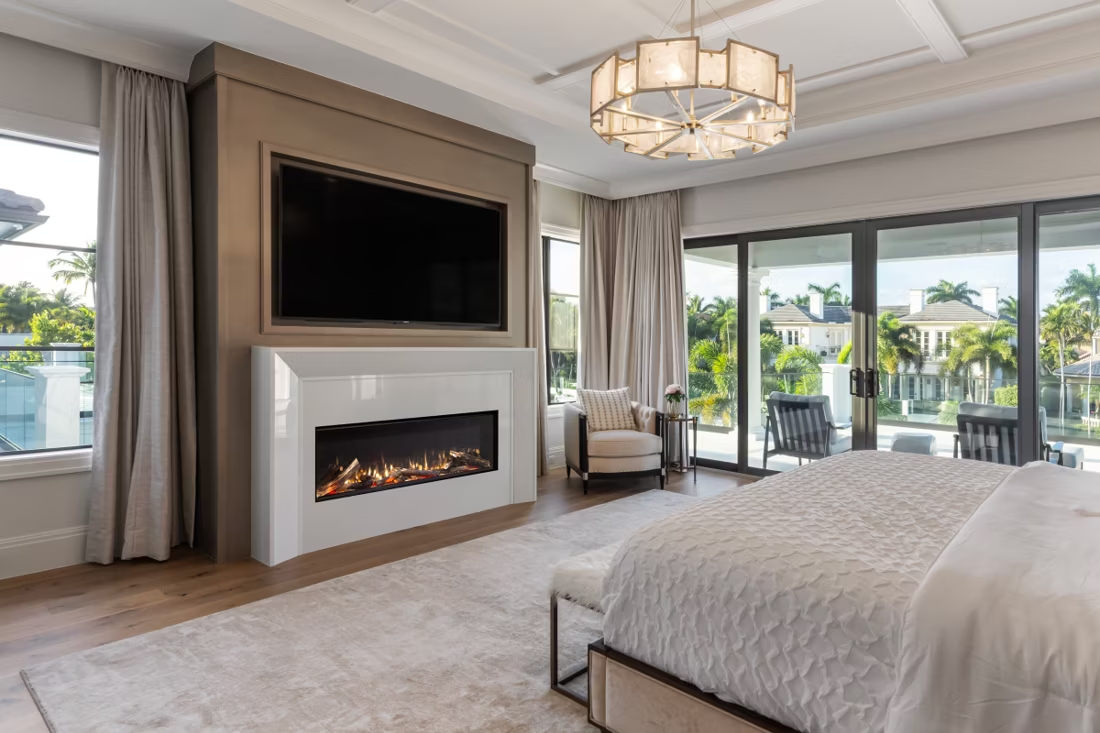
Yes—with an asterisk. Fireplaces are hot and TVs don't like heat. Either put a mantel between them to deflect rising warmth, or choose a fireplace with heat-management technology that creates a cool zone on the wall above—the wall stays around 125 degrees, barely warm, while the room still gets full heat. If you like clean lines and don't want a mantel, heat management is the answer.
Do electric fireplaces actually produce heat?
Yes—most put out around 4,800–5,000 BTUs from a standard outlet, which comfortably warms a bedroom, office, or den as a comfort-zone heater. What they won't do is carry a whole house the way wood, gas, or pellet can. Think of electric as ambiance-first with honest supplemental heat: flames on with no heat in July, flames plus warmth in January.
Can a fireplace actually lower my heating bill?
Yes—by creating a comfort zone. A furnace heats every square foot of the house just to warm the one room you're in; a gas fireplace on low burns roughly a sixth of the gas a typical furnace does. Set the furnace around 55–60 degrees as a baseline, then heat the rooms your family actually uses. Families who heat this way commonly save $20–$60 a month.
What is an in-home preview and do I need one?
It's a visit where a hearth professional measures your space, confirms the model you picked actually works in your home, and walks the specs—framing, gas line, venting, finish work—before anything is ordered. Some details you just can't know until you see the house. Never make a down payment without one; it's the single most-skipped step that burns buyers.
Nearby Dealers
Hearth shops serving Tonka Bay and the surrounding area. Every listing shows whether it is a WhyFire partner, a dealer we have verified as authorized for the brands we recommend, or a local business carrying hearth products. No manufacturer pays for placement. How we verify dealers →
Timberwall
Fireside Hearth & Home - Eden Prairie
Fireside Hearth & Home - Minnetonka
Pure Design Environments
Ferguson Enterprises
West Metro Fire And Stone
Fireside Hearth & Home - Maple Grove
Minnesota Gas Grills & Fireplaces
Fireside Hearth & Home - Roseville
Fireside Hearth & Home - Eagan
Fireplace Gallery, Inc.
Custom Fireplace & Chimney Care
Condor Fireplace & Stone
Glowing Hearth & Home - Coon Rapids
DJ's Heating & Air Cond. Inc.
Fireplace Creations, LLC
Minnesota Chimney
Electric Service in Tonka Bay
An electric fireplace's heater draws about 1,500 watts—pennies per hour at local rates.
Northern States Power Co - Minnesota
City Of St Paul - (Ne)
Find your electric fireplace in Tonka Bay.
Tell us a bit about your home—cabin, boathouse, or lakeside remodel—and we'll put together a free Project Guide & Parts List with the right unit and a trusted local dealer who can install it.
Find Your Fireplace →