
Steady heat for Twin Cities winters that average 7°F at night.
With winters as long and cold as Fargo or International Falls, St. Louis Park sits in a climate closer to those northern cities than to the milder Midwest. I'll match you with a trusted local dealer who knows the venting, the CenterPoint Energy gas line work, and what actually fits your home.
Every Project Starts From One of These Five Situations
Reliable warmth without stacking wood in the garage.
St. Louis Park is a dense, built-out inner-ring suburb of Minneapolis in Hennepin County, and its climate is no joke—Climate Zone 6A, an average winter low of 7°F, and a heating season long and harsh enough to rival Fargo or International Falls rather than a typical suburban forecast. Lot sizes here are tight, chimneys and cordwood storage are impractical for most of the city's housing stock, and there are no local air quality flags pushing residents toward solid-fuel appliances the way some other Minnesota communities see. That combination is exactly why wood-burning setups are essentially a non-factor here while gas has become the default choice for real, on-demand heat.
Most St. Louis Park homes sit on the CenterPoint Energy natural gas network that serves the Twin Cities metro, which makes adding a gas line to a fireplace straightforward compared to more rural parts of Minnesota where propane fills the gap. A huge share of the city's housing stock is the mid-century rambler built during the postwar boom of the 1950s and 60s, and a lot of those homes either have an aging wood-burning masonry fireplace ripe for a gas insert conversion or no fireplace at all and room to add one. Electric utility service comes from Northern States Power Co (Xcel Energy) at roughly 16.98 cents per kWh, which is fine for a small supplemental unit but doesn't compete with gas as a real heat source through a Minnesota winter this long.
Three steps. No salesperson until you're ready.
Tell us about your project
Your zip code, your situation, and the fuel you're leaning toward—or let the answers point you to one.
See what's actually available
The brands dealers within 100 miles genuinely carry—real options, never a catalog mirage.
Get your dealer & Project Guide
A trusted local dealer, plus the free Project Guide & Parts List that names every component of the job.
Frequently Asked Questions
How much does a gas fireplace installation cost in St. Louis Park?
In the Twin Cities market, a typical gas fireplace or insert installation runs somewhere between $3,500 and $9,500. A direct-vent insert dropped into an existing masonry firebox in one of St. Louis Park's many 1950s ramblers, with a gas line already nearby, lands on the lower end. A new built-in unit for a remodel or addition—with framing, a fresh CenterPoint Energy gas line run, and venting through an exterior wall—sits toward the top. A local dealer will give you a firm number once they've seen the space and the existing gas service.
Do I need a permit to install a gas fireplace in St. Louis Park?
Yes. You'll need a building permit through the City of St. Louis Park's Building & Energy Department, plus a separate gas piping permit since the work requires a licensed gas-fitter. Most hearth dealers who regularly install in the city handle both permits and the final inspection as part of the job, which saves you from coordinating two separate trades on a tight suburban lot.
Can I convert an old wood-burning fireplace to gas?
This is one of the more common projects in St. Louis Park, since wood-burning fireplaces are largely a legacy feature here rather than something homeowners actively use—cordwood storage doesn't fit well on most of the city's smaller lots, and there's no real local tradition of cutting or burning wood the way you'd see farther north. A gas insert typically drops into the existing masonry firebox using a stainless liner run through the original chimney, usually landing in the $4,000-$8,500 range depending on the flue condition and whether new gas line work is needed.
Will my gas fireplace still work if the power goes out?
Most will, which is worth knowing given how a Minnesota ice storm or a January cold snap can knock out power right when you need heat most. Units with IPI (intermittent pilot ignition) run on AA battery backup that kicks in automatically. Valor fireplaces take a different approach entirely—the pilot's thermocouple generates its own electricity, so there's no battery to remember. Ask your local dealer which ignition system is on any model you're considering if outage resilience matters to you.
Vented vs. vent-free gas fireplaces—which is right for St. Louis Park homes?
Direct-vent units draw combustion air from outside and exhaust it back outside through sealed venting, and they're the standard most local dealers install and the safest option in a climate zone 6A home that's likely sealed tight against the cold. Vent-free units are legal in Minnesota but come with strict room-sizing rules and add combustion byproducts to indoor air—a bigger consideration in a well-insulated St. Louis Park home built for a winter as long and harsh as Fargo's than in a drafty older farmhouse elsewhere in the state.
What's the difference between a gas fireplace, insert, and stove?
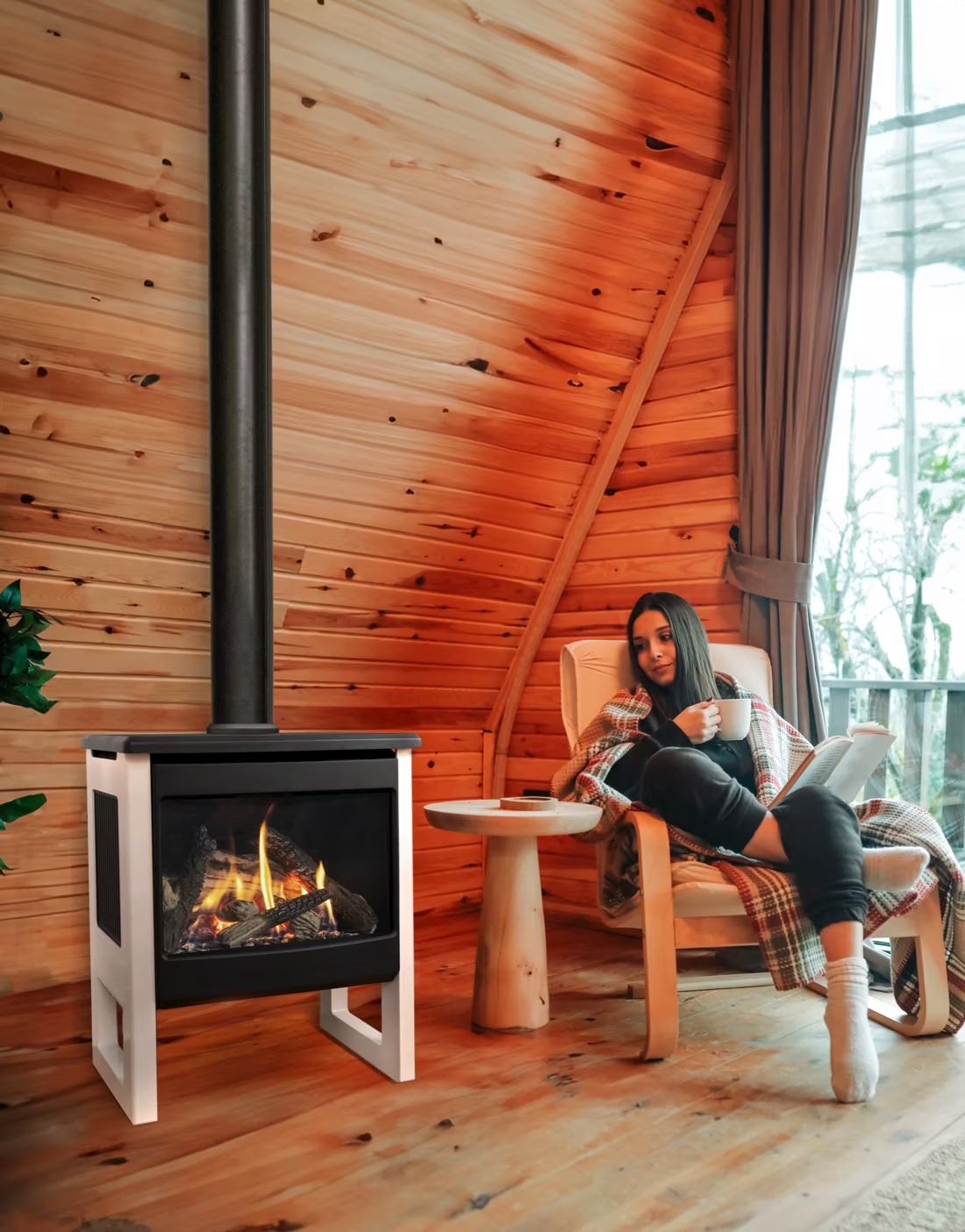
A gas fireplace is a built-in unit framed into a wall, typical in new construction or a full remodel. A gas insert fits inside an existing masonry firebox, which is the common upgrade path in St. Louis Park's older ramblers that already have a chimney chase but rarely see a wood fire lit in them anymore. A gas stove is freestanding on a hearth pad, running off a gas line or propane rather than cordwood—a good option if you want supplemental zone heat in a room without an existing fireplace opening.
How often should a gas fireplace be serviced in St. Louis Park?
Plan on an annual inspection, ideally in late summer or early fall before the heating season really starts. A technician checks the burner, pilot assembly, gas connections, and venting, and cleans the glass. With a heating season this long—St. Louis Park's winters stretch nearly as long as Fargo's—a unit running daily for six-plus months benefits from that yearly check more than it would in a milder climate. Expect to pay roughly $150-$250 for a standard visit.
Gas vs. electric fireplace—which makes more sense here?
Electric fireplaces are easy to install, need no venting or gas line, and run fine on Xcel Energy's residential rate of about 16.98 cents per kWh—but they're realistically a supplemental or ambiance option, not something that competes with the whole-room heat output of a gas unit through a Minnesota winter averaging 7°F. Most St. Louis Park homeowners install electric units in bedrooms or dens for quick, no-fuss warmth and keep gas in the main living space for the coldest months when real heat output matters.
Is natural gas available throughout St. Louis Park, or do some homes need propane?
Because St. Louis Park is fully built out within the Twin Cities metro, the vast majority of homes already sit on the CenterPoint Energy natural gas network, unlike rural parts of Minnesota where propane fills the gaps. If you're already on gas for your furnace or water heater, tying in a fireplace is generally a straightforward tap. Propane setups are the exception here rather than the rule, and mostly come up in unusual situations like a detached garage or outbuilding without an existing gas connection.
What's the difference between an insert and a zero-clearance fireplace?
An insert is a fireplace that slides into a pre-existing wood-burning fireplace—if you don't have one, there's nothing to insert it into. A zero-clearance fireplace is built into a framed wall, which makes it the answer for remodels and new construction. Simple test: existing masonry fireplace means insert; blank or framed wall means zero-clearance.
Are new gas fireplaces really better than old ones?
Two ways, and they're both big. Looks: modern gas fireplaces are realistic enough that it's hard to believe they aren't burning wood. Cost: old units burn a standing pilot year-round (roughly $200 a year), while new ones use pilot-on-demand ignition and modern burners. Add remote controls and thermostat operation, and the day-to-day experience isn't close.
Can a fireplace actually lower my heating bill?
Yes—by creating a comfort zone. A furnace heats every square foot of the house just to warm the one room you're in; a gas fireplace on low burns roughly a sixth of the gas a typical furnace does. Set the furnace around 55–60 degrees as a baseline, then heat the rooms your family actually uses. Families who heat this way commonly save $20–$60 a month.
How much should I budget for a fireplace?
For an average home—covering the fireplace, the vent pipe, and basic installation—a budget between $3,900 and $5,500 gives you a lot of options across wood, gas, and pellet. By the time you add finish work, gas line, and electrical, the average complete installation lands between $5,000 and $12,000 all-in. In a remodel or new build, a good rule is to put about 2.5% of the total project cost toward the fireplace.
Nearby Dealers
Hearth shops serving St. Louis Park and the surrounding area. Every listing shows whether it is a WhyFire partner, a dealer we have verified as authorized for the brands we recommend, or a local business carrying hearth products. No manufacturer pays for placement. How we verify dealers →
Ferguson Enterprises
Fireside Hearth & Home - Minnetonka
Pure Design Environments
Fireside Hearth & Home - Eden Prairie
Fireside Hearth & Home - Roseville
Fireside Hearth & Home - Maple Grove
Minnesota Gas Grills & Fireplaces
Fireside Hearth & Home - Eagan
Condor Fireplace & Stone
Custom Fireplace & Chimney Care
Timberwall
Glowing Hearth & Home - Coon Rapids
Fireplace Gallery, Inc.
The Chimney Pro’s Mn
West Metro Fire And Stone
DJ's Heating & Air Cond. Inc.
Get your free Project Guide & Parts List for a gas fireplace in St. Louis Park.
Tell me about your home and your current gas or electric service, and I'll match you with a trusted local dealer and send a free Project Guide & Parts List—sized for a winter as long and cold as Fargo's, with the exact vent kit and parts specified.
Find Your Fireplace →