
Add Real Warmth Without Adding a Vent.
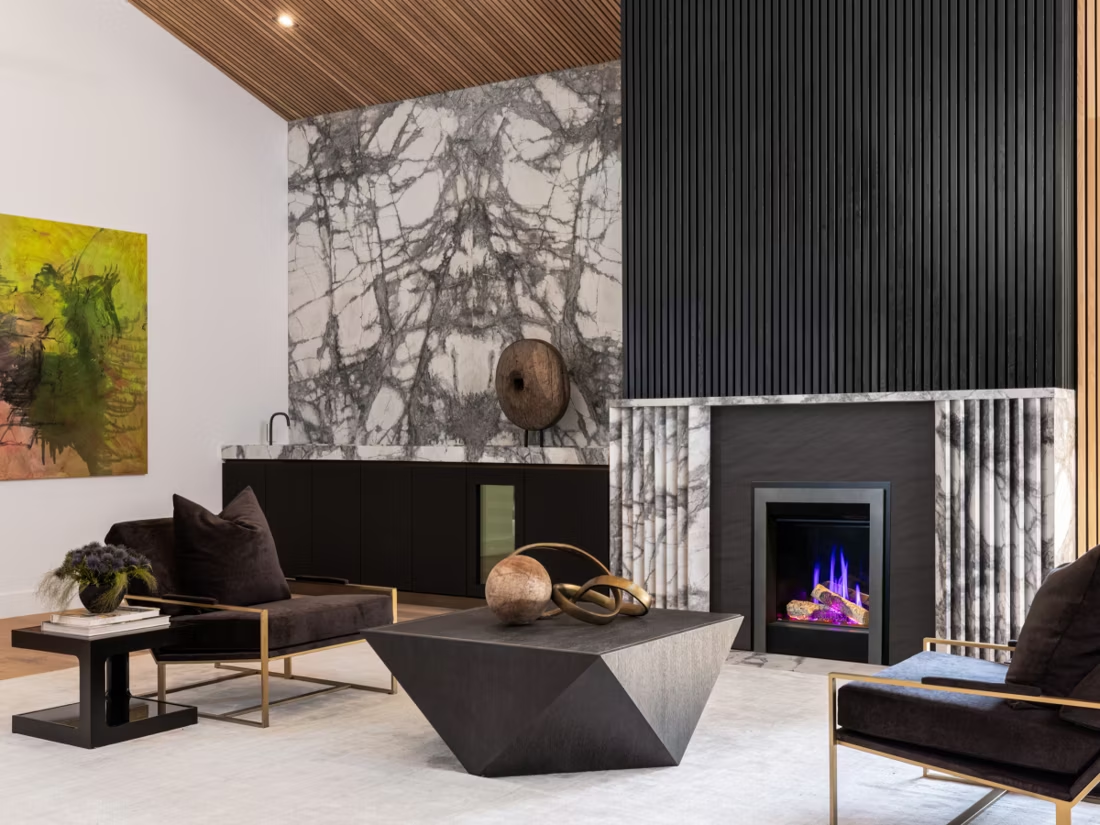
No chimney, no gas line, no permit headaches—just plug in or wire in and go. Find the right electric fireplace for your St. Francis home and get matched with a trusted local dealer.
Every Project Starts From One of These Five Situations
Zone heat that keeps up with a hard Minnesota winter.
St. Francis sits in Anoka County at just under 1,000 feet, but the elevation doesn't do much to soften the winters here—this area has a long, harsh heating season with average winter lows around 6°F, numbers that put it in the same conversation as Fargo, ND, not the milder parts of the Twin Cities metro just south of here. In that kind of cold, an electric fireplace isn't going to replace your furnace, and it shouldn't try to. What it does well is add fast, controllable heat to the rooms that need it most—a finished basement rec room, a three-season porch someone actually wants to use in February, a primary bedroom that always runs cold.
Connexus Energy serves electric accounts throughout St. Francis at a residential rate of about $0.1366/kWh, which keeps the operating cost of a supplemental electric unit reasonable for occasional or zone use. Because electric fireplaces don't burn fuel, there's no venting, no flue, no chimney, and—outside of a dedicated circuit for larger built-ins—often no building permit at all. For homeowners here who want the look and feel of a fireplace without cutting into a wall for gas line or hauling in oak and birch for a wood stove, electric is a genuinely practical, standard option, not a compromise.
Three steps. No salesperson until you're ready.
Tell us about your project
Your zip code, your situation, and the fuel you're leaning toward—or let the answers point you to one.
See what's actually available
The brands dealers within 100 miles genuinely carry—real options, never a catalog mirage.
Get your dealer & Project Guide
A trusted local dealer, plus the free Project Guide & Parts List that names every component of the job.
Frequently Asked Questions
How much does an electric fireplace installation cost in St. Francis?
Plug-in electric fireplaces and freestanding stoves—the kind that just need a standard 120V outlet—typically run $300 to $1,500 installed, and a lot of homeowners handle the setup themselves. Built-in wall units and mantel-style fireplaces that need a dedicated 20-amp circuit run by a licensed electrician usually land between $1,500 and $3,500 once wiring and trim work are included. Larger linear built-ins installed during a remodel or finished-basement project, where drywall and framing work are involved, can reach $3,000 to $5,000. None of these require the gas line or chimney work that drives up cost with wood or gas units—the electrician's time is usually the biggest line item.
Will an electric fireplace actually heat a room, or is it just for looks?
Most electric fireplaces include a built-in resistance heater, typically rated around 1,500 watts and roughly 5,000 BTU, which is enough to noticeably warm a 400- to 1,000-square-foot space depending on insulation and ceiling height. That's a real, useful amount of supplemental heat for a St. Francis basement or bonus room. What it isn't sized for is replacing your furnace on a night when it's 6°F outside and the wind is moving—with such a long, demanding winter heating season, this climate asks more of a heating system than a single electric unit is built to deliver as primary heat.
Do I need a permit to install an electric fireplace in St. Francis?
A plug-in freestanding unit generally doesn't require any permit—it's no different than plugging in a space heater. If you're installing a built-in wall unit or linear fireplace that needs a new dedicated circuit, that electrical work typically does require a permit, pulled through the City of St. Francis or Anoka County depending on your project's scope. A licensed electrician handling the circuit work will usually pull this permit as part of the job, so it's worth confirming that's included in any installer's quote before you sign off.
What's the best type of electric fireplace for supplemental heat in a cold Minnesota winter?
For St. Francis homes, a built-in linear electric fireplace with a higher-output heater setting tends to perform best as real supplemental heat rather than pure ambiance—brands with dual heat settings (typically 750W/1,500W) let you dial in warmth without overheating a small room. Electric inserts are also popular here for converting an old, drafty masonry fireplace that's rarely used—you get the visual warmth back without dealing with a chimney that's been sealed off or is due for expensive repair. Either works well in finished basements and additions common in the area's ranch and split-level homes.
Electric fireplace vs. a regular space heater—what's the difference?
Functionally, both use electric resistance heat, and the wattage is often similar. The real differences are permanence, safety features, and the room itself: a built-in electric fireplace has tip-over and overheat shutoff protection, sits flush in a wall or mantel rather than sitting on the floor as a trip hazard, and adds a real design element to the room. At Connexus Energy's residential rate of roughly $0.1366/kWh, running a 1,500-watt unit costs about 20 cents an hour—nearly identical to a space heater—so the cost tradeoff comes down more to appearance and safety than operating expense.
Can I convert my old wood-burning fireplace to electric?
Yes, and it's a common project for St. Francis homes with an older masonry fireplace that's rarely used or has a chimney needing costly repair. An electric insert slides into the existing firebox opening, plugs into a nearby outlet or a new dedicated circuit, and gets you flame visuals and supplemental heat without any venting, wood handling, or chimney maintenance. It's usually the fastest and least expensive of all the conversion options—often a single afternoon versus the multi-day gas line and liner work a gas conversion requires.
Will an electric fireplace raise my Connexus Energy bill much?
It depends on how much you run it. A 1,500-watt unit running on high for 8 hours a day at Connexus Energy's residential rate of about $0.1366/kWh costs roughly $1.64 a day, or around $50 a month with daily heavy use—reasonable for supplemental heat in a room you use often. Used occasionally for ambiance on the lower heat setting or with the heater off entirely, the cost is closer to a few dollars a month. It's a meaningfully lower operating cost than most people expect, especially compared to running a whole-house furnace harder to compensate for a cold room.
Electric vs. wood—which makes more sense for my St. Francis home?
Wood is genuinely standard heat here—oak, maple, birch, and aspen are all common and locally available, and a wood stove keeps working when the power doesn't, which matters during the ice storms that occasionally knock out lines in Anoka County. Electric can't do that; it goes dark the moment the grid does. What electric offers instead is zero maintenance, no chimney or wood handling, no permit hassle for a plug-in unit, and heat you can turn on instantly from a switch or remote. For a primary living space where convenience matters most, or a finished basement where running a flue isn't practical, electric is usually the better fit. Many households here end up with both—wood for backup and ambiance, electric for easy daily zone heat.
Will my electric fireplace work during a power outage?
No—unlike a wood stove or a battery-backed gas fireplace, an electric fireplace has no function without grid power, since the flame effect and heater both run on standard household current. Given how cold St. Francis winters run and that outages do happen here, homeowners who want backup heat alongside an electric fireplace typically pair it with a wood stove, a propane heater, or a home generator rather than relying on electric alone during a storm.
Do electric fireplaces actually produce heat?
Yes—most put out around 4,800–5,000 BTUs from a standard outlet, which comfortably warms a bedroom, office, or den as a comfort-zone heater. What they won't do is carry a whole house the way wood, gas, or pellet can. Think of electric as ambiance-first with honest supplemental heat: flames on with no heat in July, flames plus warmth in January.
Can I put a TV above my fireplace?
Yes—with an asterisk. Fireplaces are hot and TVs don't like heat. Either put a mantel between them to deflect rising warmth, or choose a fireplace with heat-management technology that creates a cool zone on the wall above—the wall stays around 125 degrees, barely warm, while the room still gets full heat. If you like clean lines and don't want a mantel, heat management is the answer.
Can I install a fireplace myself?
If you're putting a fire in your house on purpose, it's best to work with an expert. Unless you're genuinely experienced in framing, gas line, vent pipe, and the national code on clearances to combustibles, have a professional do it—and ideally the same company that sells you the fireplace, so warranty, service, and liability all live under one roof.
What is an in-home preview and do I need one?
It's a visit where a hearth professional measures your space, confirms the model you picked actually works in your home, and walks the specs—framing, gas line, venting, finish work—before anything is ordered. Some details you just can't know until you see the house. Never make a down payment without one; it's the single most-skipped step that burns buyers.
Nearby Dealers
Hearth shops serving St. Francis and the surrounding area. Every listing shows whether it is a WhyFire partner, a dealer we have verified as authorized for the brands we recommend, or a local business carrying hearth products. No manufacturer pays for placement. How we verify dealers →
2nd Generation Chimneys
Fireplace Gallery, Inc.
Glowing Hearth & Home - Coon Rapids
Minnesota Chimney
DJ's Heating & Air Cond. Inc.
Custom Fireplace & Chimney Care
DJ's Home Services
DJ's Companies
Condor Fireplace & Stone
Fireside Hearth & Home - Maple Grove
Electric Service in St. Francis
An electric fireplace's heater draws about 1,500 watts—pennies per hour at local rates.
Connexus Energy
Find your electric fireplace in St. Francis.
Tell us about your room, your circuit situation, and what you want the fireplace to do, and we'll match you with a trusted local dealer and send over your free Project Guide & Parts List—the exact parts and electrical specs for your St. Francis project, plus who to call to install it.
Find Your Fireplace →