
Add Warmth to Any Room in St. Anthony—No Chimney Required.
Electric fireplaces bring instant heat and ambiance to Twin Cities homes without venting, gas lines, or wood smoke—find the right unit and a trusted local dealer.
Every Project Starts From One of These Five Situations
The easiest heat upgrade in a hard winter town.
St. Anthony sits along the Mississippi River between Minneapolis and the northern Hennepin County suburbs, at just under 1,000 feet elevation. It's a small, dense city of bungalows, postwar ramblers, and newer condo and townhome buildings—and it sees real winter. This area has a long, demanding heating season with average winter lows around 6°F, putting St. Anthony closer to Duluth or International Falls territory than to the milder parts of the Midwest.
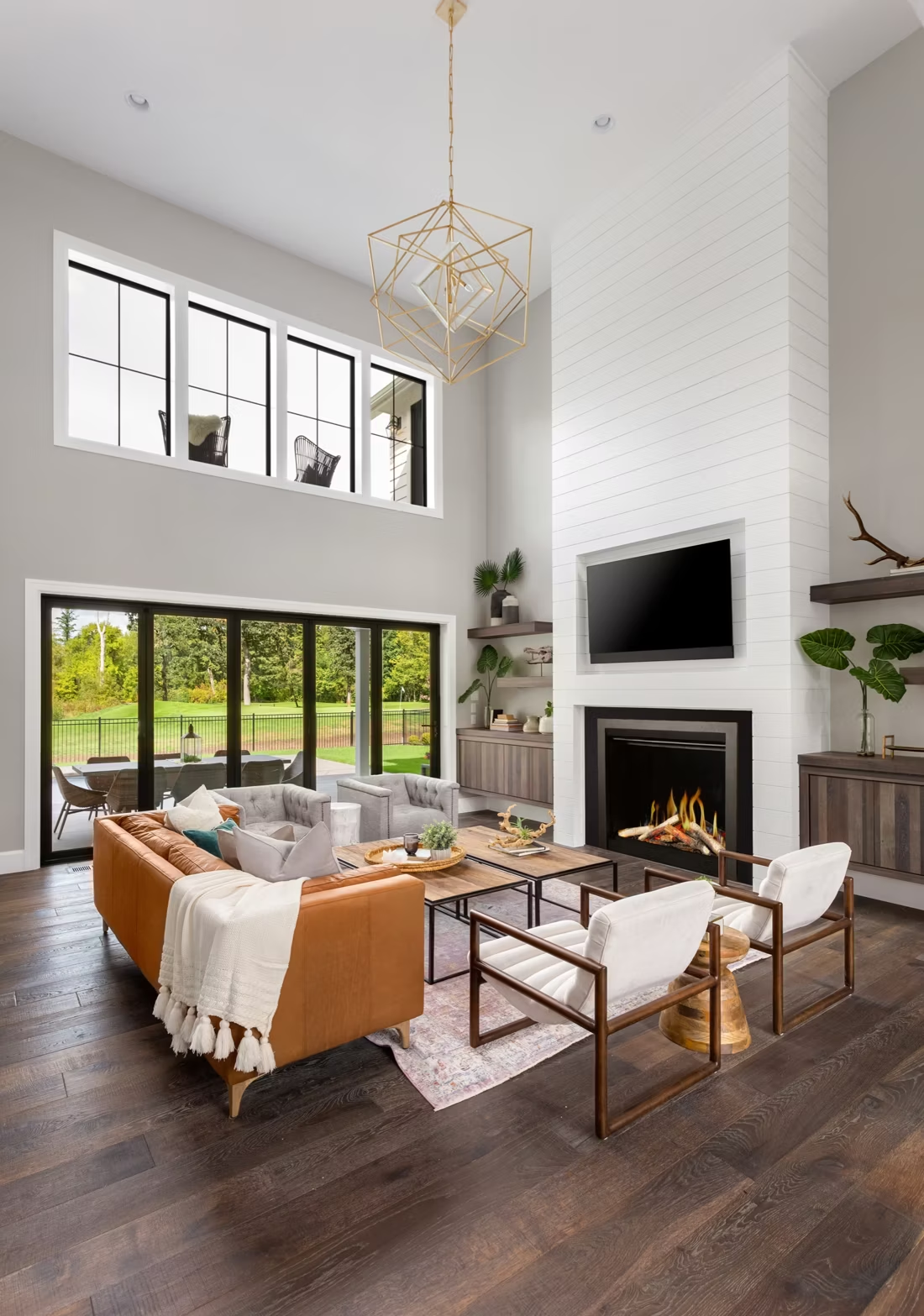
That climate means primary heat in St. Anthony almost always comes from a gas furnace or boiler—electric resistance heat as a whole-home solution would be expensive even at Xcel Energy's relatively reasonable residential rate. Where electric fireplaces earn their place is as zone heat and ambiance: a family room insert, a bedroom wall-mount, or a fireplace added to a condo or rental unit near Silver Lake Village where venting a gas or wood appliance isn't an option. No chimney, no gas line, no permit for the unit itself—just an outlet or a dedicated circuit, and a fire you can turn on with a remote.
Three steps. No salesperson until you're ready.
Tell us about your project
Your zip code, your situation, and the fuel you're leaning toward—or let the answers point you to one.
See what's actually available
The brands dealers within 100 miles genuinely carry—real options, never a catalog mirage.
Get your dealer & Project Guide
A trusted local dealer, plus the free Project Guide & Parts List that names every component of the job.
Frequently Asked Questions
How much does an electric fireplace installation cost in St. Anthony?
Wall-mount and freestanding electric fireplaces plug into a standard 120V outlet and typically run $400 to $1,500 installed, including mounting and minor trim work. Built-in units or inserts that need a dedicated 20-amp circuit run higher, often $1,200 to $2,500, once an electrician runs new wiring and a carpenter builds out the surround. With no venting, chimney, or gas line involved, electric is the fastest hearth project available here—most installs wrap up in a single day.
Will an electric fireplace heat my whole home given St. Anthony's cold winters?
No, and any honest installer will tell you that upfront. St. Anthony has a long, demanding heating season with winter lows averaging around 6°F—colder than Buffalo, NY in a typical season. A standard electric fireplace puts out about 1,500 watts, enough to comfortably heat a single room of 300 to 400 square feet, not a whole house. Here, electric fireplaces work best as zone heat for a family room or bedroom, layered on top of a gas furnace or boiler that carries the load through a Minnesota winter.
Can I convert my existing wood-burning fireplace to electric?
Yes. An electric insert slides into most existing masonry fireboxes with no chimney work, venting, or gas line—just a nearby outlet or, for larger units, a new dedicated circuit. It's a popular option for older St. Anthony bungalows with a fireplace that hasn't seen a real fire in years. The conversion typically runs $600 to $1,800 and takes a fraction of the time of a gas or wood conversion, since there's no venting to design around.
Do I need a permit to install an electric fireplace in St. Anthony?
Usually not, if you're plugging a freestanding or wall-mount unit into an existing outlet. If your installer needs to run a new dedicated circuit—common for larger built-in units—that electrical work requires a permit through the City of St. Anthony building department, pulled by a licensed electrician. There's no mechanical or gas permit involved, since electric units don't vent, which is part of why they're the simplest hearth upgrade available.
What's the difference between an electric fireplace, insert, and wall-mount unit?
A built-in electric fireplace is framed into a wall like a traditional fireplace, with a mantel and surround built around it. An electric insert is sized to slide into an existing masonry or built-in firebox, common in older St. Anthony homes with an unused wood fireplace. A wall-mount unit hangs on the wall like a flat-screen TV and needs only a nearby outlet—a common choice in condos and townhomes where masonry or venting work isn't an option. All three use the same basic heating element; the difference is how they fit into the room.
How much does it cost to run an electric fireplace in St. Anthony?
Most of the city is served by Xcel Energy, listed locally as Northern States Power Company – Minnesota, with a residential rate around 16.98 cents per kWh; a small section near the northeast edge draws power from the City of St. Paul's municipal utility. A typical 1,500-watt electric fireplace costs roughly 25 cents an hour on the heat setting, or about $30 to $40 a month with regular evening use through the winter—inexpensive, but supplemental, not a way to meaningfully cut your gas heating bill.
Electric vs. gas insert for my existing fireplace—which should I choose?
A gas insert delivers real, sustained heat output—enough to actually offset furnace use in a St. Anthony winter—but it costs more upfront and requires venting plus a gas permit. An electric insert costs less, installs in a day with no venting, and is often the better fit for condos and rentals in St. Anthony where landlords won't allow gas line or venting modifications. If ambiance and modest supplemental warmth are the goal, electric is the simpler answer; if you want a unit that noticeably reduces your furnace's workload, gas is worth the extra investment.
What's the best electric fireplace for a Minnesota winter?
Look for units with a true 1,500-watt heating element rather than just a decorative flame with a token heater, and a thermostat that lets you dial in a room temperature instead of just high and low. Dimplex, Napoleon, and Touchstone all make models with realistic flame effects you can run flame-only through summer and switch on for supplemental warmth once St. Anthony's heating season kicks in around October. For larger rooms, a 50-inch or wider built-in will carry more of the load than a compact wall-mount.
Will my electric fireplace work during a power outage?
No—electric fireplaces need power to run, so they won't provide heat during an outage, unlike a wood stove or a battery-backed gas fireplace. Winter storms in the Twin Cities occasionally knock out power for hours at a stretch, so if backup heat during an outage matters to your household, it's worth pairing an electric fireplace with a wood or gas appliance elsewhere in the home rather than relying on electric alone. Most St. Anthony homeowners choose electric for daily ambiance and convenience and keep a wood or gas unit on hand for outage backup.
Can I put a TV above my fireplace?
Yes—with an asterisk. Fireplaces are hot and TVs don't like heat. Either put a mantel between them to deflect rising warmth, or choose a fireplace with heat-management technology that creates a cool zone on the wall above—the wall stays around 125 degrees, barely warm, while the room still gets full heat. If you like clean lines and don't want a mantel, heat management is the answer.
What fireplace styles should I know before shopping?
Four cover most of the market: screen-front traditional (mesh front, open feel, fits craftsman homes), traditional door set (the classic look you grew up with), modern linear (wide, low, the statement piece for entertaining), and clean face contemporary (no trim—your tile or stone runs right to the fire's edge). Walk in knowing those four terms and you're ahead of most buyers.
Can a fireplace actually lower my heating bill?
Yes—by creating a comfort zone. A furnace heats every square foot of the house just to warm the one room you're in; a gas fireplace on low burns roughly a sixth of the gas a typical furnace does. Set the furnace around 55–60 degrees as a baseline, then heat the rooms your family actually uses. Families who heat this way commonly save $20–$60 a month.
Does a fireplace add value to my home?
On average, a fireplace adds back to the home about the same amount you spent installing it. Add the monthly savings from heating the rooms you actually use instead of the whole house—often hundreds of dollars a year—and the value case is strong before you even count what a fire does for how your family uses the room.
Nearby Dealers
Hearth shops serving St. Anthony and the surrounding area. Every listing shows whether it is a WhyFire partner, a dealer we have verified as authorized for the brands we recommend, or a local business carrying hearth products. No manufacturer pays for placement. How we verify dealers →
Fireside Hearth & Home - Roseville
Condor Fireplace & Stone
Custom Fireplace & Chimney Care
Ferguson Enterprises
Fireside Hearth & Home - Minnetonka
Fireside Hearth & Home - Maple Grove
The Chimney Pro’s Mn
Fireside Hearth & Home - Eagan
Glowing Hearth & Home - Coon Rapids
Pure Design Environments
Fireplace Gallery, Inc.
Fireside Hearth & Home - Eden Prairie
Minnesota Gas Grills & Fireplaces
2nd Generation Chimneys
Timberwall
Electric Service in St. Anthony
An electric fireplace's heater draws about 1,500 watts—pennies per hour at local rates.
Northern States Power Co - Minnesota
City Of St Paul - (Ne)
Find your electric fireplace in St. Anthony.
Tell us about your room and we'll match you with a trusted local dealer and send a free Project Guide & Parts List—the exact electric fireplace, mounting or insert kit, and electrical requirements for your St. Anthony home.
Find Your Fireplace →