
Warm, reliable heat for Spring Park winters.
Lake Minnetonka winters run long and cold. Find the right gas fireplace or insert, and get matched with a trusted local dealer who can size and install it correctly.
Every Project Starts From One of These Five Situations
Instant warmth for a hard Minnesota winter.
Spring Park sits on the shores of Lake Minnetonka in Hennepin County, at just under 950 feet elevation, where winter lows average around 6°F and the area sees a winter heating load in the same range as Fargo, ND or Duluth, MN. That's a lot of furnace runtime, and it's why a growing number of homes around the lake add a gas fireplace or insert as reliable zone heat rather than relying on the furnace alone.
Many homes in and around Spring Park—from year-round houses to seasonal lake cottages—are within reach of natural gas service through CenterPoint Energy, the primary natural gas utility across the western Twin Cities metro. Older lakeside cabins and properties further from the main lines sometimes run on propane instead. Either way, a direct-vent gas fireplace gives you instant heat at the flip of a switch, works during the ice storms that occasionally knock out power on the lake (with the right ignition system), and doesn't require the wood-stacking and ash cleanup that a boat-season lake house schedule doesn't always leave time for.
Three steps. No salesperson until you're ready.
Tell us about your project
Your zip code, your situation, and the fuel you're leaning toward—or let the answers point you to one.
See what's actually available
The brands dealers within 100 miles genuinely carry—real options, never a catalog mirage.
Get your dealer & Project Guide
A trusted local dealer, plus the free Project Guide & Parts List that names every component of the job.
Frequently Asked Questions
How much does a gas fireplace installation cost in Spring Park?
Local hearth dealers serving the Lake Minnetonka area typically quote somewhere between $4,500 and $10,000 for a gas fireplace or insert installation, with the final number driven by the unit itself, the venting path, and whether new gas line work is required. A direct-vent insert into an existing masonry fireplace with gas already run to that wall lands on the lower end. New construction, remodels, or homes needing a propane tank set or a longer gas line run to reach the fireplace location push toward the higher end. A local dealer will give you a firm number after seeing your home.
Can I convert my existing wood-burning fireplace to gas?
Yes, and it's a common project in Spring Park's older lake homes that were originally built with a masonry fireplace burning local oak, maple, or birch. A gas insert typically drops into that existing opening and uses a stainless liner run up the existing chimney, so you keep the look of the fireplace while gaining push-button heat. Whether the conversion uses natural gas or propane depends on which utility reaches your address—CenterPoint Energy serves much of the surrounding metro, while some properties closer to the water run on a propane tank instead.
Is natural gas available in Spring Park, or do I need propane?
It depends on where your home sits. Many Spring Park properties, especially those closer to County Road 15 and the more built-up parts of town, are within reach of CenterPoint Energy's natural gas lines. Some lakeside cottages and homes on the outer edges of the service area rely on propane instead, delivered and stored in an on-site tank. Most gas fireplace models can be configured for either fuel—your installer sets the correct orifice and regulator for whichever one reaches your house.
Will a gas fireplace keep working if the power goes out?
Most direct-vent gas fireplaces with intermittent pilot ignition (IPI) include a battery backup, usually AA batteries built into the unit, that lets the fireplace light and run normally when Xcel Energy service to the lake area goes down during an ice storm or spring thunderstorm. A few brands, including Valor, take it further with a pilot design that generates its own electricity through the thermocouple, so there are no batteries to remember at all. If backup heat during outages matters to you—and around Lake Minnetonka, ice-related outages do happen—ask your local dealer about the ignition system before you buy.
What's the difference between a gas fireplace, a gas insert, and a gas stove?
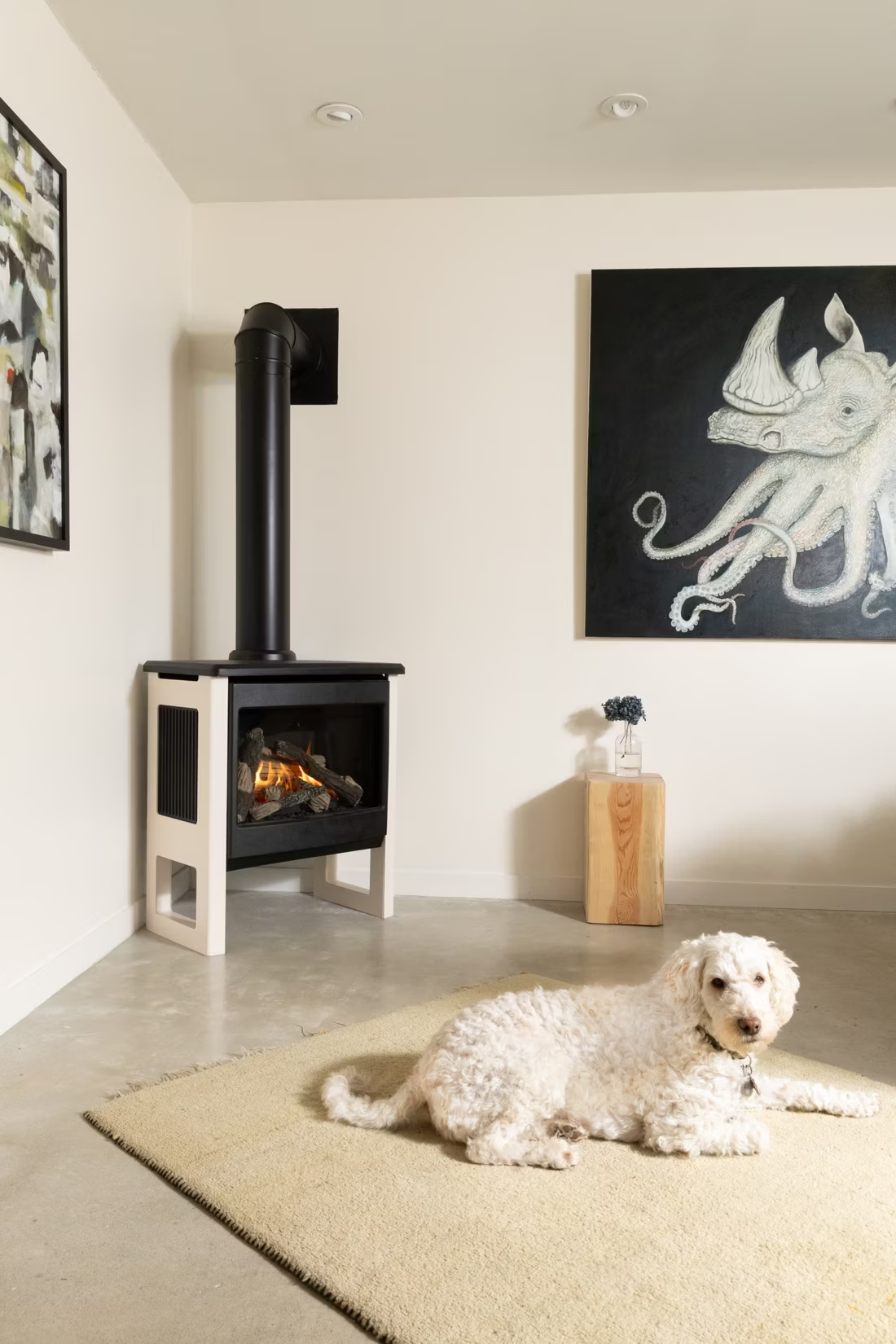
A gas fireplace is a fully built-in unit framed into a wall, typically chosen for new construction or a remodel. A gas insert slides into an existing masonry fireplace opening and vents up the existing chimney with a liner—the right fit for Spring Park's older lake homes that already have a wood-burning fireplace to upgrade. A gas stove is a freestanding cabinet-style unit that sits on the floor, useful in a room without an existing fireplace opening, like a lower-level walkout or a three-season porch someone's trying to use year-round.
Do I need a permit to install a gas fireplace in Spring Park?
Yes. New gas fireplace installations require a building permit and a gas piping permit, typically pulled through the City of Spring Park building department in coordination with Minnesota's state mechanical code, and the gas line connection has to be made by a licensed gas-fitter. Most established hearth dealers handle this paperwork as part of the install rather than leaving you to coordinate the inspections yourself, which is one of the real advantages of using a certified local installer instead of a big-box purchase and a handyman hookup.
Should I choose a vented or vent-free gas fireplace?
Vented, direct-vent gas fireplaces draw combustion air from outside and exhaust it back outside through a sealed pipe—they're the standard choice in Minnesota's cold climate and deliver real, sustained heat output without any tradeoff on indoor air quality. Vent-free units burn without outdoor venting and release some combustion byproducts into the room; they're legal in Minnesota under specific room-sizing and oxygen-sensor rules, but with such a long, harsh heating season and homes built tight against the cold, most Spring Park installers steer customers toward direct-vent models for both comfort and air quality reasons.
How often does a gas fireplace need to be serviced?
Plan on an annual inspection, ideally in late summer or early fall before the heating season around the lake really kicks in. A technician checks the burner, pilot assembly, venting, and gas connections, and cleans the glass and firebox interior. It's a much smaller job than a wood chimney sweep, but skipping it is how pilot and ignition problems go unnoticed until the first cold snap, which in Spring Park can arrive as early as October.
Gas or wood—which makes more sense for a Spring Park home?
Wood—burned as local oak, maple, birch, or aspen—offers higher heat output per load, lower fuel cost if you're cutting or buying cordwood, and it keeps working with zero electricity during an outage. Gas offers instant on-demand heat with no hauling, stacking, or ash cleanup, which matters for a lake house used on weekends or during boating season when nobody wants to tend a fire before heading out on the water. For a lot of Spring Park homeowners, the answer ends up being both: a gas unit for daily convenience in the main living space, and a wood-burning fireplace or stove kept in reserve for ambiance or as backup heat during a long outage.
Is my gas fireplace wasting gas?
If it was installed more than 15 years ago, probably. Older gas fireplaces keep a standing pilot light burning all the time, and that little flame can cost a couple hundred dollars a year. Newer models use pilot-on-demand ignition—the pilot lights only when you use the fireplace and goes out when you turn it off.
Why is a fireplace insert so efficient?
An insert does two things: it seals the chimney completely, so you stop losing air you already paid to heat, and it radiates warmth into the room through the firebox and glass. Most add a heat-exchange fan that pulls cool room air underneath, wraps it around the hot firebox, and pushes it back out warm. Your home is more efficient before you've even lit the first fire.
Does a fireplace add value to my home?
On average, a fireplace adds back to the home about the same amount you spent installing it. Add the monthly savings from heating the rooms you actually use instead of the whole house—often hundreds of dollars a year—and the value case is strong before you even count what a fire does for how your family uses the room.
How much should I budget for a fireplace?
For an average home—covering the fireplace, the vent pipe, and basic installation—a budget between $3,900 and $5,500 gives you a lot of options across wood, gas, and pellet. By the time you add finish work, gas line, and electrical, the average complete installation lands between $5,000 and $12,000 all-in. In a remodel or new build, a good rule is to put about 2.5% of the total project cost toward the fireplace.
Nearby Dealers
Hearth shops serving Spring Park and the surrounding area. Every listing shows whether it is a WhyFire partner, a dealer we have verified as authorized for the brands we recommend, or a local business carrying hearth products. No manufacturer pays for placement. How we verify dealers →
Timberwall
Fireside Hearth & Home - Minnetonka
West Metro Fire And Stone
Fireside Hearth & Home - Eden Prairie
Pure Design Environments
Ferguson Enterprises
Fireside Hearth & Home - Maple Grove
Fireplace Creations, LLC
Minnesota Gas Grills & Fireplaces
DJ's Heating & Air Cond. Inc.
Fireplace Gallery, Inc.
Minnesota Chimney
Glowing Hearth & Home - Coon Rapids
Custom Fireplace & Chimney Care
Fireside Hearth & Home - Roseville
Condor Fireplace & Stone
Fireside Hearth & Home - Eagan
Find your gas fireplace in Spring Park.
Tell us about your home on Lake Minnetonka and we'll match you with a trusted local dealer and send over a free Project Guide & Parts List—the exact parts, vent kit included, for your gas fireplace project.
Find Your Fireplace →