
Real ambiance, zero smoke, for Rochester winters below zero.
With a long, hard winter season and winter lows averaging 7°F, Rochester homes need heat that works in condos, additions, and finished basements without a chimney. Find the right electric unit and get matched with a trusted local dealer.
Every Project Starts From One of These Five Situations
Heat that fits condos, additions, and Mayo-area apartments alike.
Rochester sits in climate zone 6A at just over 1,100 feet, with winters that rival Duluth for sheer duration—a long, hard winter season and average lows around 7°F. But Rochester's housing stock looks different from a lot of cold-climate cities: a dense medical-campus core near Mayo Clinic full of condos and apartment buildings, plus a steady stream of additions, finished basements, and sunroom conversions in the surrounding neighborhoods. Very few of those spaces have a chimney or the clearances a wood stove needs, and running new gas line isn't always practical in a retrofit.
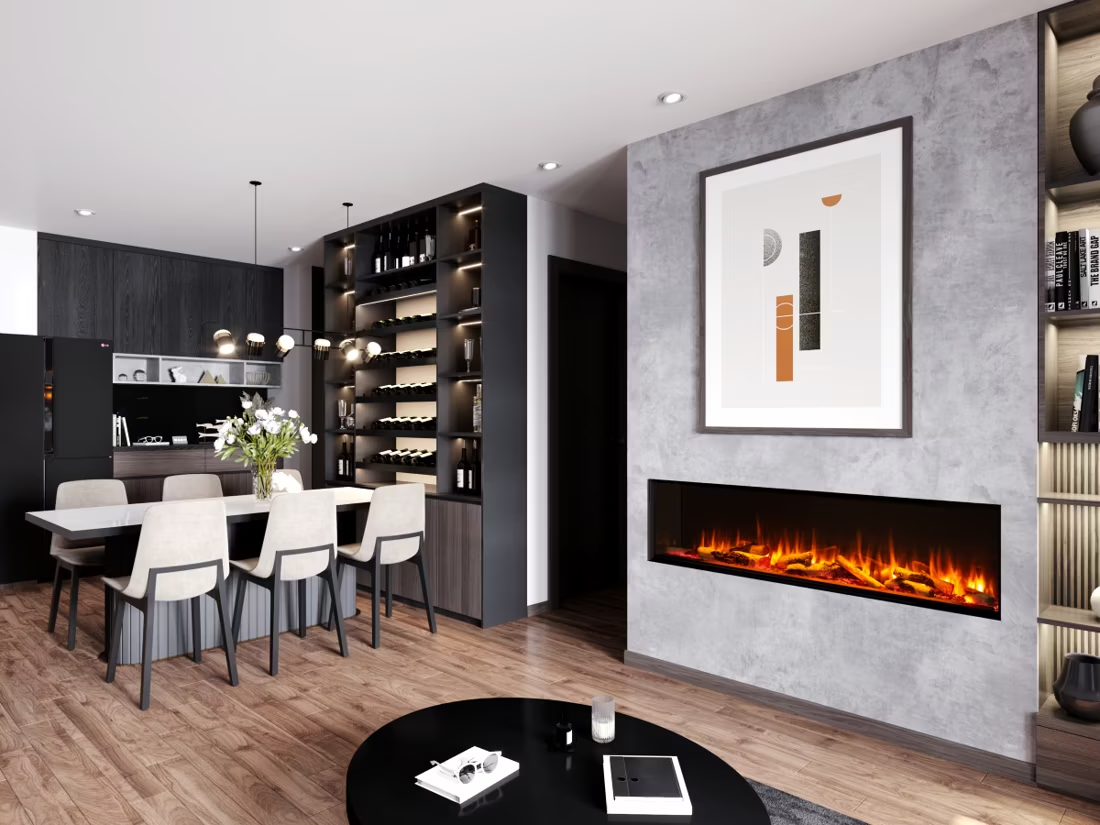
That's where electric fireplaces do their best work. Rochester is served by two utilities—Rochester Public Utilities in the city core and People's Cooperative Services in the surrounding rural parts of Olmsted County—with residential rates around 16.7¢ and 17.91¢ per kWh respectively. An electric unit plugs into an existing outlet or a dedicated circuit, needs no venting, and adds real supplemental warmth and glass-front ambiance to a bedroom, condo living room, or basement rec room without touching your roofline or gas meter.
Three steps. No salesperson until you're ready.
Tell us about your project
Your zip code, your situation, and the fuel you're leaning toward—or let the answers point you to one.
See what's actually available
The brands dealers within 100 miles genuinely carry—real options, never a catalog mirage.
Get your dealer & Project Guide
A trusted local dealer, plus the free Project Guide & Parts List that names every component of the job.
Frequently Asked Questions
How much does an electric fireplace installation cost in Rochester?
Plug-in electric inserts and stoves that run off a standard 120V outlet typically cost $300 to $1,200 installed in Rochester, and often need nothing more than moving the unit into place. Built-in wall units or larger inserts that require a dedicated 20-amp circuit run higher—usually $1,500 to $4,000—once you factor in an electrician to run new wiring, which is common in Mayo-area condo remodels and basement finishing projects. Local dealers will quote a firm number after seeing your wall and panel setup.
Do I need a permit for an electric fireplace in Rochester?
A plug-in unit that uses an existing outlet doesn't require a permit. If your installation involves new wiring or a dedicated circuit—common for built-in wall units—that electrical work needs to be pulled through the City of Rochester's Building Safety Division (or the appropriate township office if you're outside city limits in Olmsted County). Most electricians who do this work regularly will handle the permit as part of the job.
How much does it cost to run an electric fireplace in Rochester?
A typical 1,500-watt electric fireplace uses 1.5 kWh per hour of heater operation. On Rochester Public Utilities' residential rate of about 16.7¢/kWh, that's roughly 25 cents an hour; on People's Cooperative Services' rate of about 17.91¢/kWh, it's closer to 27 cents an hour. Running one for four hours most evenings adds up over a 7,856-degree-day winter, which is why most Rochester homeowners use electric fireplaces for zone heating in one room rather than as a whole-home heat source.
Can an electric fireplace actually heat my Rochester home in the winter?
Electric fireplaces are effective supplemental heat—most units put out 4,600 to 5,200 BTU, enough to comfortably warm a single room or open living area. Given how long and cold Rochester's winter runs (comparable to a Duluth or International Falls winter), an electric unit isn't going to replace your furnace on a January night with single-digit lows. It works best paired with your existing gas or forced-air system: heat the room you're in, let the thermostat back off elsewhere, and skip the cost of running the whole-house system just to warm one space.
What's the difference between an electric insert, a wall-mount, and an electric stove?
An electric insert is built to slide into an existing fireplace opening—a straightforward option if you have an old masonry fireplace you no longer want to burn wood or gas in. A wall-mount unit installs flush or recessed into drywall, often chosen for condos and additions near the Mayo campus where a sleek, linear look matters. An electric stove is a freestanding cabinet-style unit that mimics a traditional wood stove's shape and can go almost anywhere near an outlet. All three plug in or hardwire—none require venting or a chimney.
Which electric utility serves my part of Rochester?
Rochester Public Utilities serves most of the city core, while People's Cooperative Services serves surrounding rural areas of Olmsted County. The two have different residential rates—RPU runs about 16.7¢/kWh, PCS about 17.91¢/kWh—so it's worth checking a recent bill before estimating your fireplace's running cost. Either utility can handle the load of a standard electric fireplace without any special service upgrade in most homes.
Will my electric fireplace work during a power outage?
No—electric fireplaces require power to run, so they won't provide heat during an outage the way a wood stove or battery-backed gas fireplace can. If backup heat during Rochester's winter storms is a priority, that's worth discussing with a local dealer, since gas is a standard, widely available option here. Wood-burning stoves, by contrast, are uncommon within Rochester itself—many neighborhoods near the medical district are dense multi-family housing without chimneys, and city ordinances and HOA rules limit solid-fuel burning in a lot of the housing stock.
What about wood or pellet stoves instead of electric in Rochester?
Both are unusual choices here. Wood-burning appliances are largely impractical in Rochester's core neighborhoods—condos, apartments, and townhomes near Mayo Clinic typically lack chimneys and clearances, and many are covered by ordinances or HOA restrictions on solid-fuel burning. Pellet fuel isn't widely stocked in southeastern Minnesota either; you'd be sourcing bags from regional suppliers rather than a local hearth shop. Electric solves both problems—no venting, no fuel storage, and no permitting fight—which is why it's the practical ambiance option for most Rochester homes that don't already have a gas line.
Electric vs. gas fireplace—which should I choose for my Rochester home?
Gas is standard and widely available in Rochester, and it delivers real heat output—enough to serve as a primary zone-heat source through a 7,856-degree-day winter—along with the option of battery-backup ignition for outages. Electric costs less upfront, needs no gas line or venting, and installs almost anywhere with an outlet, but it's best treated as supplemental warmth and ambiance rather than a primary heat source. For a condo or addition without existing gas service, electric is usually the simpler and cheaper path. For a primary living space where you want real cold-night heat, gas is worth the extra install cost.
Can I put a TV above my fireplace?
Yes—with an asterisk. Fireplaces are hot and TVs don't like heat. Either put a mantel between them to deflect rising warmth, or choose a fireplace with heat-management technology that creates a cool zone on the wall above—the wall stays around 125 degrees, barely warm, while the room still gets full heat. If you like clean lines and don't want a mantel, heat management is the answer.
How much does an electric fireplace cost to run?
With the heater on, a typical unit draws about 1,500 watts—at average electric rates that's roughly 20 cents an hour. Run the flame effect alone and it costs pennies; the flames are LED-driven and use about as much power as a light bulb. There's no pilot light, no fuel delivery, and essentially no maintenance.
How much should I budget for a fireplace?
For an average home—covering the fireplace, the vent pipe, and basic installation—a budget between $3,900 and $5,500 gives you a lot of options across wood, gas, and pellet. By the time you add finish work, gas line, and electrical, the average complete installation lands between $5,000 and $12,000 all-in. In a remodel or new build, a good rule is to put about 2.5% of the total project cost toward the fireplace.
Can I install a fireplace myself?
If you're putting a fire in your house on purpose, it's best to work with an expert. Unless you're genuinely experienced in framing, gas line, vent pipe, and the national code on clearances to combustibles, have a professional do it—and ideally the same company that sells you the fireplace, so warranty, service, and liability all live under one roof.
Nearby Dealers
Hearth shops serving Rochester and the surrounding area.
Electric Service in Rochester
An electric fireplace's heater draws about 1,500 watts—pennies per hour at local rates.
People's Cooperative Services
Rochester Public Utilities
Find your electric fireplace in Rochester.
Tell us about your space and we'll put together a free Project Guide & Parts List—the right electric unit, circuit and mounting specs, and a trusted local Rochester dealer to install it.
Find Your Fireplace →