
Find your electric fireplace in Nobles County.
Simple, zone-friendly heat for Nobles County homes—no venting, no gas line, no chimney. Find the right unit and connect with a trusted local dealer.
Every Project Starts From One of These Five Situations
Supplemental warmth that plugs in and works.
Nobles County sits on the open prairie of southwest Minnesota, where winter arrives early and stays—a heating season that runs well over eight months a year, with average lows near 5°F and stretches that dip well below zero when Canadian air masses push down across the plains. That kind of climate, similar to what Fargo or Bismarck deal with each winter, is exactly why most Nobles County homeowners treat electric fireplaces as a supplemental or ambiance play rather than a primary heat source. A furnace or in-floor system carries the real heating load here; an electric unit adds zone warmth to a den, basement, or bedroom without touching the ductwork. That said, electric has real advantages in a county like this. There's no venting to plan around, no gas line to run out to Adrian or Ellsworth farmhouses that may be off the natural gas main, and no combustion byproducts to worry about in a tightly sealed, well-insulated home built for 6A conditions. Installation is often as simple as a dedicated 120V or 240V circuit, which makes electric a practical choice for basement remodels, additions, and rental properties across Worthington and the surrounding townships where a full masonry or wood-burning project isn't in the budget or the plan.
Electric units also make sense as backup ambiance during Nobles County's coldest stretches, when a wood stove burning local oak, maple, birch, or aspen is doing the heavy lifting and the electric insert in a secondary room just needs to take the edge off. A licensed local electrician or hearth dealer can size the circuit correctly and place the unit where it'll actually get used—that's the kind of detail that's easy to get wrong ordering sight-unseen from a big-box store.
Three steps. No salesperson until you're ready.
Tell us about your project
Your zip code, your situation, and the fuel you're leaning toward—or let the answers point you to one.
See what's actually available
The brands dealers within 100 miles genuinely carry—real options, never a catalog mirage.
Get your dealer & Project Guide
A trusted local dealer, plus the free Project Guide & Parts List that names every component of the job.
Frequently Asked Questions
How much does an electric fireplace installation cost in Nobles County?
A typical electric fireplace or insert installation in Nobles County runs between $400 and $1,200, depending on the unit and whether new electrical work is needed. A plug-in unit on an existing outlet sits at the low end. A built-in electric fireplace or insert that requires a dedicated 240V circuit—common for larger units meant to actually heat a room rather than just provide ambiance—runs toward the higher end once an electrician runs new wiring. Compared to wood or gas installs in this county, electric is by far the least expensive and fastest to install, often completed in a day.
Can an electric fireplace actually heat a room in a Minnesota winter?
Most electric fireplaces are rated to supplement heat in a room of 400-1,000 square feet, but in Nobles County's climate—average lows around 5°F and routine sub-zero snaps—they should be treated as zone heat, not a replacement for your furnace. They work well for taking the chill off a basement family room, a converted porch, or a bedroom addition where running ductwork isn't practical. For anyone hoping to actually offset furnace use during a prairie cold snap, a wood or pellet stove sized for the space will outperform an electric unit every time. Ask a local dealer about wattage and BTU output for the specific room you're trying to heat.
Do I need a permit to install an electric fireplace in Nobles County?
In most cases, no separate building permit is required for a plug-in or factory-built electric fireplace insert, since there's no venting or gas line involved. If the installation requires new electrical circuitry—which is common for larger built-in units—an electrical permit is typically pulled by the licensed electrician doing the work, and that's standard practice for any home rewiring project in the county. Always confirm with your installer, since requirements can vary between installations inside Worthington city limits and unincorporated parts of the county.
What's the difference between an electric fireplace, insert, and stove?
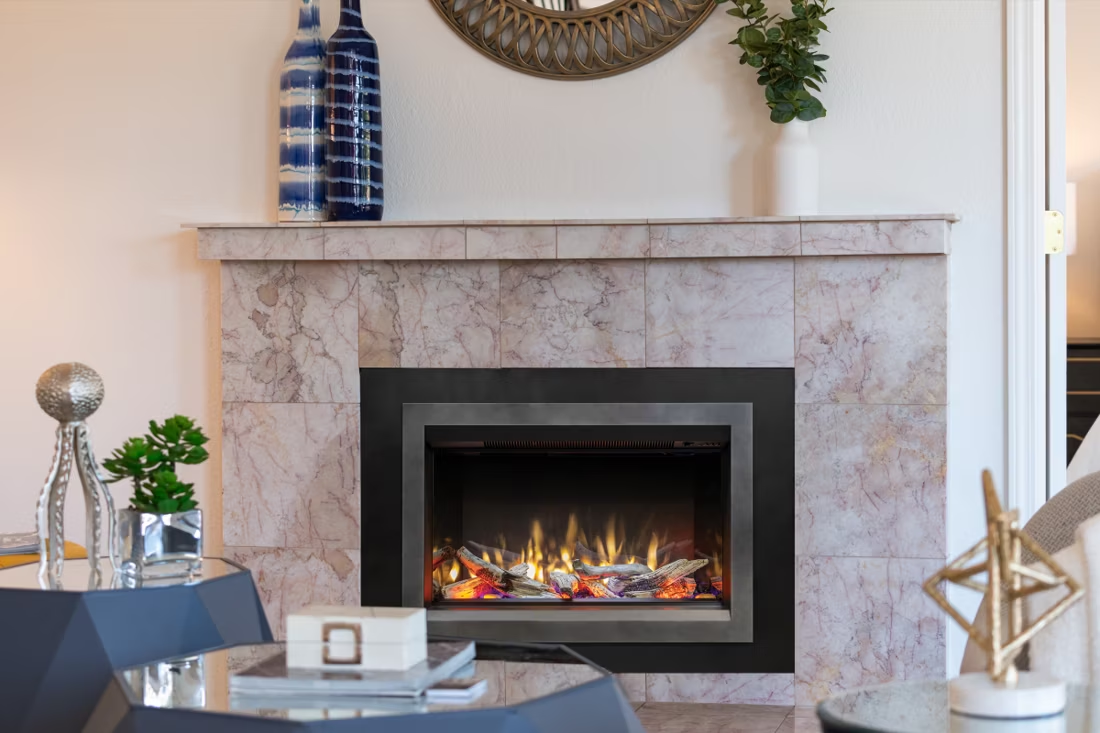
An electric fireplace is typically a built-in or wall-mounted unit designed to look like a traditional fireplace, often with a mantel surround. An electric insert is sized to slot into an existing masonry or wood fireplace opening, letting homeowners convert an old, drafty wood-burning fireplace into simple supplemental heat without touching the chimney. An electric stove is a freestanding unit styled like a wood or pellet stove but running on standard household power. For Nobles County homes with an existing but rarely-used fireplace, an insert is often the simplest upgrade—no chimney work, no combustion, and a noticeable ambiance and heat boost in a single afternoon.
How does electric compare to wood heat for a Nobles County home?
Wood offers real heating capacity—a stove burning local oak or maple can carry a significant heat load through a prairie winter and keep working during a power outage, which matters given how exposed Nobles County is to ice storms and high wind events. Electric offers convenience and zero maintenance: no wood to split or stack, no ash, no chimney to sweep, and instant on-off operation with a remote. The tradeoff is that electric fireplaces stop working the moment the power goes out—which is precisely when a lot of rural Nobles County households most want backup heat. Many homeowners here use wood or pellet as their real cold-weather backup and electric purely for ambiance or supplemental warmth in secondary rooms.
Will my electric fireplace still work if the power goes out?
No—electric fireplaces require grid power (or a generator) to operate, so they go dark exactly when a Nobles County ice storm or high-wind outage knocks out electricity. That's a real consideration in this part of southwest Minnesota, where rural lines can be down for hours or longer after a bad winter storm. If backup heat during outages is a priority, pair an electric fireplace for daily ambiance with a wood stove or a generator-ready setup elsewhere in the home rather than relying on electric alone.
Where can I find a local dealer to install an electric fireplace near me?
A handful of hearth and appliance dealers serve Worthington and the surrounding Nobles County communities, and most electrical contractors in the area are equipped to handle the wiring for a built-in unit. Because installation is simple compared to wood or gas, some homeowners are tempted to order online and DIY it—but a local dealer will make sure the unit is sized correctly for the room, the circuit is rated properly, and the unit is placed somewhere it'll actually get daily use rather than becoming a forgotten mantel decoration.
Are electric fireplaces a good fit for rural Nobles County properties without natural gas access?
Yes, in a supplemental role. Many farmsteads and acreages outside Worthington and Adrian run on propane or fuel oil for primary heat, and an electric fireplace is a low-cost way to add zone warmth to a room without extending gas lines or adding combustion appliances. Just keep the outage limitation in mind—rural power reliability varies, and an electric-only heat plan leaves you without backup during a prairie blizzard. Pairing electric with a wood stove burning local aspen or birch is a common approach among longtime county residents.
Electric vs. pellet stove—which makes more sense for supplemental heat?
Pellet stoves, using bagged fuel from regional suppliers like Lignetics or Somerset Pellet Fuel, produce real heat output—often enough to handle a whole zone or small home—but need electricity to run the auger and blower, and pellets to store and load. Electric fireplaces need only a wall outlet or circuit, produce no ash, and require zero fuel handling, but output real, usable heat only in smaller rooms. For a Nobles County homeowner who wants meaningful backup heating capacity, pellet is the stronger choice. For someone who just wants a clean, simple ambiance upgrade in a den or bedroom with no fuel to manage, electric wins.
Can I put a TV above my fireplace?
Yes—with an asterisk. Fireplaces are hot and TVs don't like heat. Either put a mantel between them to deflect rising warmth, or choose a fireplace with heat-management technology that creates a cool zone on the wall above—the wall stays around 125 degrees, barely warm, while the room still gets full heat. If you like clean lines and don't want a mantel, heat management is the answer.
Does an electric fireplace need a vent or chimney?
No—that's its superpower. An electric fireplace needs a wall and an outlet, period. No vent pipe, no gas line, no clearances to design around, which is why it works in bedrooms, offices, apartments, and walls where venting a gas or wood unit would be impractical or impossible. Installation is typically the simplest and least expensive of any fireplace type.
Can I install a fireplace myself?
If you're putting a fire in your house on purpose, it's best to work with an expert. Unless you're genuinely experienced in framing, gas line, vent pipe, and the national code on clearances to combustibles, have a professional do it—and ideally the same company that sells you the fireplace, so warranty, service, and liability all live under one roof.
Can a fireplace actually lower my heating bill?
Yes—by creating a comfort zone. A furnace heats every square foot of the house just to warm the one room you're in; a gas fireplace on low burns roughly a sixth of the gas a typical furnace does. Set the furnace around 55–60 degrees as a baseline, then heat the rooms your family actually uses. Families who heat this way commonly save $20–$60 a month.
Get your Nobles County electric fireplace Project Guide & Parts List.
Tell us a bit about your home and we'll match you with a trusted local Nobles County dealer and send a free Project Guide & Parts List for your electric fireplace project—sized right, wired right, no big-box guesswork.
Find Your Fireplace →