
Add real ambiance to your Nicollet County home without touching the chimney.
With a long, cold heating season and winter lows averaging 6°F, Nicollet County homes lean on furnaces for serious heat—electric fireplaces add zone warmth and year-round ambiance in the rooms that need it most, no gas line or masonry required.
Every Project Starts From One of These Five Situations
A supplemental heat source built for flexibility, not brute force.
Nicollet County sits in climate zone 6A, with winter lows averaging 6°F and a long, cold heating season comparable to Fargo or Bismarck. Homes across St. Peter, Nicollet, Lafayette, and the surrounding farmland typically rely on a forced-air furnace or in-floor system as primary heat, with wood (oak, maple, birch, aspen are all common locally) or gas handling supplemental warmth in a lot of older farmhouses. Electric fireplaces fit into that picture differently: they're not going to carry a whole house through a January cold snap, but they don't need to.
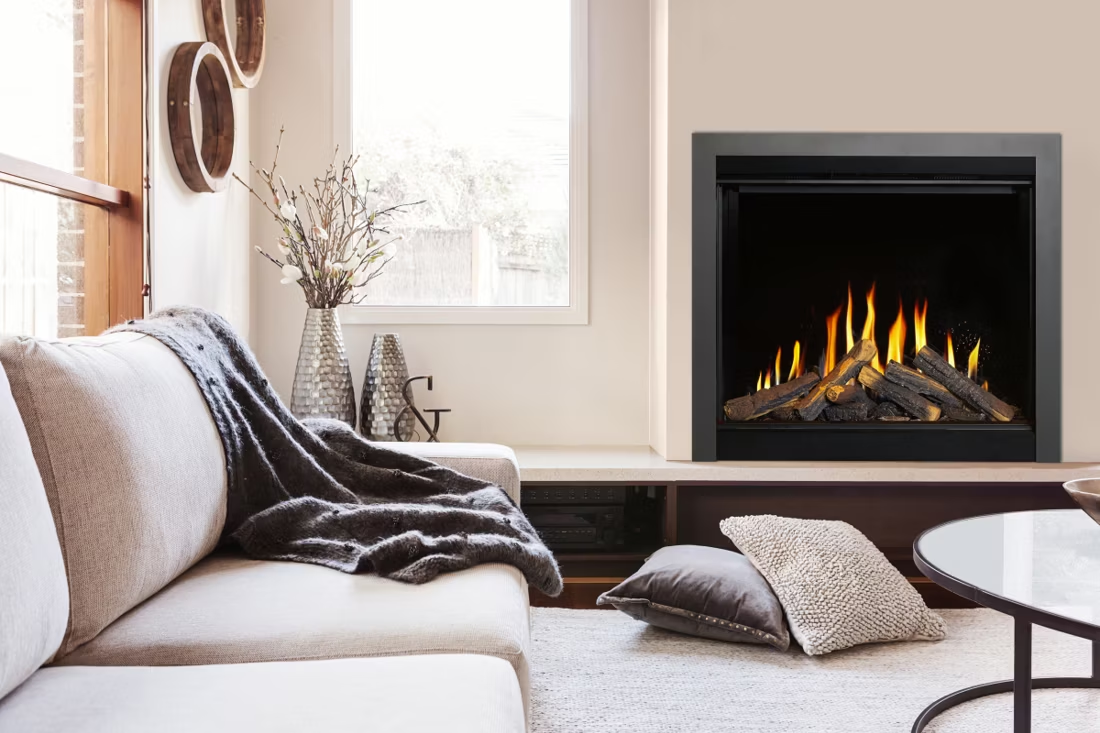
What an electric unit does well here is add heat and glow exactly where a family spends time—a finished basement, a main-floor living room, a sunroom that the furnace duct never quite reaches—without a chimney, gas line, or combustion air intake. Install is usually a matter of framing and a standard outlet or dedicated circuit, which is part of why costs run so much lower than wood or gas projects. For a rental unit in St. Peter, a lake cabin, or a room addition where running new gas or masonry venting isn't practical, electric is often the only real option that still delivers a convincing fire.
Three steps. No salesperson until you're ready.
Tell us about your project
Your zip code, your situation, and the fuel you're leaning toward—or let the answers point you to one.
See what's actually available
The brands dealers within 100 miles genuinely carry—real options, never a catalog mirage.
Get your dealer & Project Guide
A trusted local dealer, plus the free Project Guide & Parts List that names every component of the job.
Frequently Asked Questions
How much does an electric fireplace installation cost in Nicollet County?
Most electric fireplace and insert installations in Nicollet County run $400 to $1,200, which is a fraction of what wood or gas projects cost because there's no venting, chimney work, or gas line to run. A plug-in unit dropped into an existing masonry opening sits at the low end. A built-in wall unit or an insert that needs a new dedicated 120V or 240V circuit run by an electrician lands at the higher end. Larger linear units for great rooms or basement remodels can push slightly past that range once trim kits and custom surrounds are factored in.
Will an electric fireplace actually heat a room in a Minnesota winter?
It will take the edge off a room, not replace your furnace. Most residential electric fireplaces top out around 5,000 to 5,500 BTUs on the heat setting—enough to warm a single room of 400 to 1,000 square feet as supplemental heat, but not enough to offset a Nicollet County winter where lows average 6°F and the heating season runs long. Homeowners here typically use electric units to boost comfort in a specific space (a basement family room, a home office) while the furnace or in-floor system handles the rest of the house. If you're trying to heat a drafty older farmhouse room, wood or gas will outperform electric on raw output.
Do I need a permit to install an electric fireplace in Nicollet County?
In most cases, no—a plug-in electric fireplace or insert that uses an existing outlet doesn't typically trigger a building permit. If your installation requires a new dedicated electrical circuit, that work should be done by a licensed electrician and may require an electrical permit depending on the scope, particularly for built-in units drawing 240V. Local dealers and electricians serving St. Peter and the surrounding county can tell you quickly whether your specific install crosses that line—it usually comes down to whether new wiring is involved.
What's the difference between an electric insert and a built-in electric fireplace?
An electric insert is sized to drop into an existing fireplace opening—masonry or a converted wood-burning box—and typically just needs a nearby outlet. A built-in electric fireplace is designed to be framed into a wall from scratch, common in new construction or basement remodels in Nicollet County, and often calls for a dedicated circuit run during framing. Inserts are the faster, cheaper retrofit for a home that already has a fireplace opening sitting unused; built-ins make more sense when you're finishing a new space and can plan the electrical during construction rather than after.
Can an electric fireplace run during a power outage?
No—electric fireplaces require power to run the heater, blower, and flame effect, so they go dark the moment the electricity does. That matters in Nicollet County, where winter storms can knock out power for hours at a time. If backup heat during an outage is a priority, a wood stove or a gas unit with battery-backup ignition is a better fit for at least one room in the house. Many homeowners here treat electric as the everyday ambiance and zone-heat option, and keep a wood or gas appliance elsewhere as the storm backup.
Are electric fireplaces expensive to run compared to a furnace?
Running one for a few hours in the evening is inexpensive—a typical unit draws around 1,500 watts on the heat setting, which costs a few cents to a couple dollars an hour depending on your electric rate, far less than running a furnace flat-out. But electric heat is more costly per BTU than natural gas or propane over the course of a full Minnesota winter, which is exactly why homeowners in Nicollet County use these units for supplemental, targeted heat in one room rather than as a whole-house heating strategy.
What size electric fireplace do I need for my room?
Sizing is mostly about the visual fit and how much of the wall you want it to occupy, since heat output doesn't scale dramatically with unit size the way it does with wood or gas appliances. A 30- to 40-inch linear unit suits a smaller room or bedroom; 50- to 60-inch units are common for main living rooms and basement family rooms across St. Peter and Nicollet County homes; larger 70-inch-plus units are typically chosen for great rooms or as a statement wall feature. A local dealer can help you match the unit to your wall dimensions and viewing distance during an in-home or showroom consultation.
Do electric fireplaces produce real flames or just a video effect?
Modern electric fireplaces use LED lighting projected through a mirrored or reflective medium to create a flame effect that reads as convincingly real from across a room—it's not a video screen, though some entry-level units do use video-style displays. Better units let you run the flame effect with the heater off, which is popular for Nicollet County homes wanting fireplace ambiance in the shoulder seasons (spring and fall) when the furnace doesn't need to run but a real fire feels like overkill. A local dealer can show you the difference between flame-effect technologies in person before you decide.
Electric vs. gas—which is right for my Nicollet County home?
Gas delivers real heat output (typically 20,000 to 40,000 BTUs), works during a power outage on models with battery-backup ignition, and can genuinely supplement furnace heat on a cold day—but it requires venting, a gas line, and a bigger install budget in the $4,500 to $11,000 range. Electric costs far less to install ($400-$1,200), needs no venting or gas line, and works anywhere there's an outlet—but it won't meaningfully heat a room through a Nicollet County January and it's dark the moment the power goes out. For a basement remodel, rental property, or a room where running gas isn't worth the cost, electric is the practical choice. For a primary living space where real supplemental heat and outage backup matter, gas is usually the better investment.
Can I put a TV above my fireplace?
Yes—with an asterisk. Fireplaces are hot and TVs don't like heat. Either put a mantel between them to deflect rising warmth, or choose a fireplace with heat-management technology that creates a cool zone on the wall above—the wall stays around 125 degrees, barely warm, while the room still gets full heat. If you like clean lines and don't want a mantel, heat management is the answer.
Do electric fireplaces actually produce heat?
Yes—most put out around 4,800–5,000 BTUs from a standard outlet, which comfortably warms a bedroom, office, or den as a comfort-zone heater. What they won't do is carry a whole house the way wood, gas, or pellet can. Think of electric as ambiance-first with honest supplemental heat: flames on with no heat in July, flames plus warmth in January.
Can a fireplace actually lower my heating bill?
Yes—by creating a comfort zone. A furnace heats every square foot of the house just to warm the one room you're in; a gas fireplace on low burns roughly a sixth of the gas a typical furnace does. Set the furnace around 55–60 degrees as a baseline, then heat the rooms your family actually uses. Families who heat this way commonly save $20–$60 a month.
What is an in-home preview and do I need one?
It's a visit where a hearth professional measures your space, confirms the model you picked actually works in your home, and walks the specs—framing, gas line, venting, finish work—before anything is ordered. Some details you just can't know until you see the house. Never make a down payment without one; it's the single most-skipped step that burns buyers.
Find your electric fireplace in Nicollet County.
Tell us about your room and budget, and we'll match you with a trusted local dealer and send over a free Project Guide & Parts List—the right unit, the right circuit requirements, and no big-box guesswork.
Find Your Fireplace →