
Gas heat that keeps up with a Minnesota winter.
New Hope sees a long, cold heating season—on par with Bozeman, Montana—and winter lows around 7°F. Find the right gas fireplace or insert, and connect with a trusted local dealer who can get it installed correctly.
Every Project Starts From One of These Five Situations
Consistent warmth for one of the coldest inner-ring suburbs in the metro.
New Hope sits in Hennepin County just northwest of Minneapolis, in climate zone 6A with a long, cold heating season—colder on paper than Bozeman, Montana. Winter lows average around 7°F, and the housing stock here—mostly post-war ramblers and split-levels built in the 1950s and 60s—was built with forced-air furnaces as the backbone of the heating system. Gas fireplaces and inserts have become the go-to way homeowners add zone heat and backup warmth without touching a wood pile or a chimney flue that hasn't seen a fire in decades.
Natural gas and electric service throughout New Hope run through Xcel Energy (listed on utility records as Northern States Power Co – Minnesota), which covers essentially the entire city. That makes a gas line tie-in for a new fireplace straightforward in almost any New Hope home. With residential electric rates around 17 cents per kWh, a direct-vent gas fireplace running in the living room during a January cold snap costs a fraction of what an electric-resistance space heater would to produce the same heat—and unlike a furnace, it keeps radiant warmth right where you're sitting.
Three steps. No salesperson until you're ready.
Tell us about your project
Your zip code, your situation, and the fuel you're leaning toward—or let the answers point you to one.
See what's actually available
The brands dealers within 100 miles genuinely carry—real options, never a catalog mirage.
Get your dealer & Project Guide
A trusted local dealer, plus the free Project Guide & Parts List that names every component of the job.
Frequently Asked Questions
How much does a gas fireplace installation cost in New Hope?
Converting an existing wood-burning fireplace to a direct-vent gas insert typically runs $4,000 to $8,500 in the Twin Cities metro, depending on the insert model and whether a liner needs to be run up the existing masonry chimney. A new built-in gas fireplace for a remodel or basement finish—with framing, venting through an exterior wall, and a new gas line run from the furnace line—usually falls between $6,000 and $12,000. Homes already plumbed with a nearby gas line are on the lower end. A local dealer will give you a firm number after seeing the room.
Can I convert my New Hope home's existing wood fireplace to gas?
Very often, yes—and it's one of the most common projects in New Hope specifically. Many of the ramblers and split-levels built here in the 1950s and 60s came with a wood-burning masonry fireplace that homeowners rarely use, since New Hope is a built-out suburb with small lots, no nearby forest land, and no practical way to source or store firewood. A gas insert uses that existing chimney with a stainless liner, so you keep the look of the fireplace but get instant, controllable heat. Most conversions in this area run $4,000 to $8,500.
Is natural gas available throughout New Hope, or will I need propane?
Natural gas service through Xcel Energy covers virtually all of New Hope—it's a fully built-out inner-ring suburb, not a rural area, so propane tanks are uncommon here. If your home already has a gas furnace, water heater, or range, tapping into that existing line for a fireplace is usually the simplest and cheapest path. Propane only tends to come up for detached garages or outbuildings that sit off the main gas line.
Will my gas fireplace still work if the power goes out?
Most modern gas fireplaces will, which matters in a city that sees its share of winter ice storms and downed lines. Units with IPI (intermittent pilot ignition) run on a small battery backup that kicks in automatically when the power drops, so the fireplace lights on demand just like normal. Valor fireplaces take it further—their pilot assembly generates its own electricity through the thermocouple, so there's no battery to remember at all. For a New Hope home where the furnace's blower motor needs electricity to run but a gas fireplace doesn't, that's a real backup-heat advantage during an outage.
What's the difference between a gas fireplace, gas insert, and gas stove?
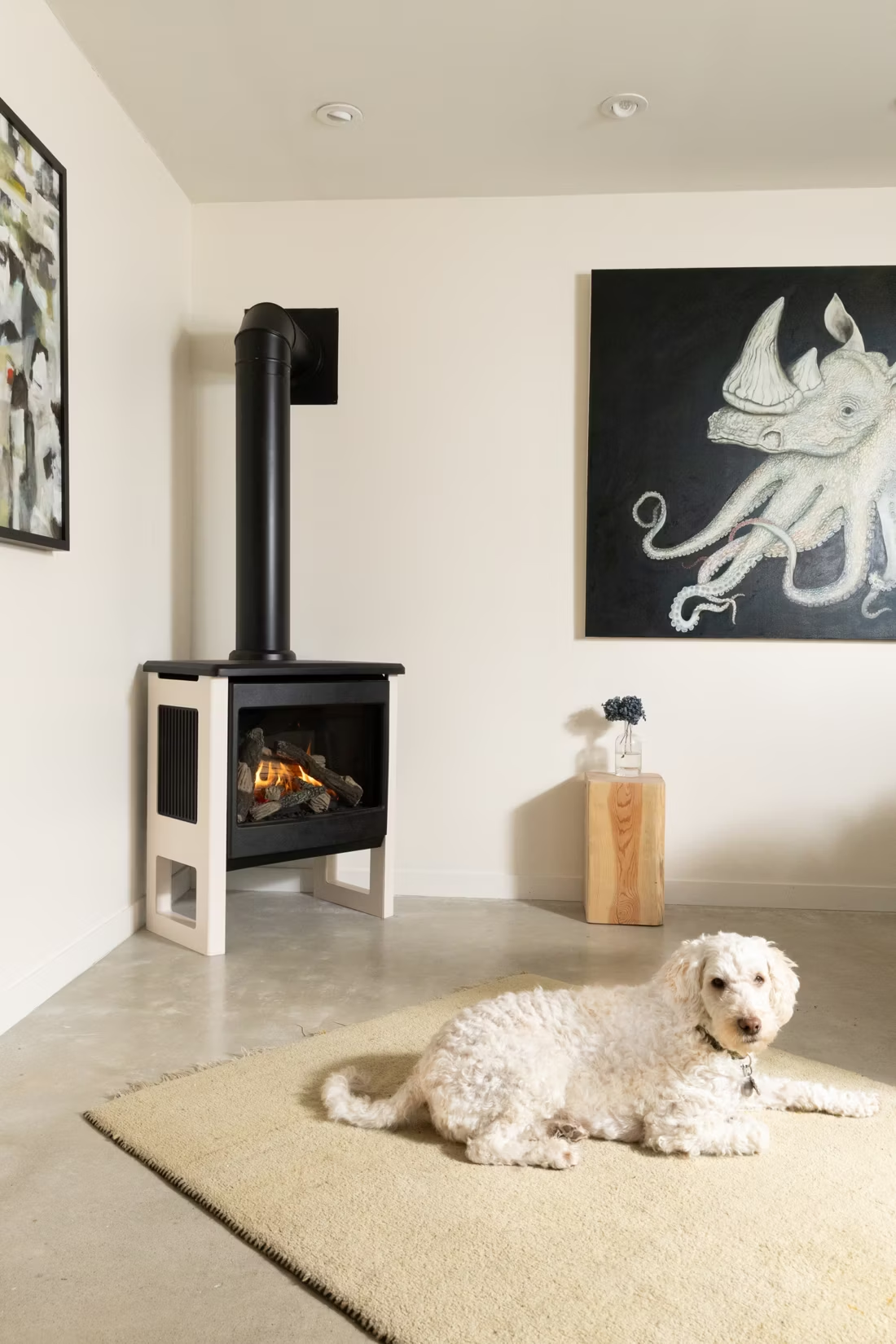
A gas fireplace is a fully built-in unit framed into a wall—the right choice for a basement finish or new construction where there's no existing masonry opening. A gas insert is sized to slide into an existing wood-burning fireplace, which fits a lot of New Hope's original 1950s and 60s masonry fireplaces. A gas stove is a freestanding cabinet unit that sits out in a room and doesn't require an existing fireplace opening at all—a good option for a family room or finished basement without a chimney. Most New Hope homeowners with an existing fireplace opening go with an insert.
Do I need a permit to install a gas fireplace in New Hope?
Yes—a building permit and a gas-fitting permit are both required for a new gas fireplace or insert installation, coordinated through the City of New Hope's inspections division. The gas line work has to be done by a licensed gas-fitter, which is one reason working with an established hearth dealer helps: they handle the permit application, the gas line tie-in, and the final inspection as one coordinated job instead of you managing separate contractors.
Should I get a vented or vent-free gas fireplace?
Vented (direct-vent) gas fireplaces draw combustion air from outside and exhaust it back outside through a sealed pipe—they're the standard choice and produce real heat without affecting indoor air quality. Vent-free units burn without any outside venting at all, which technically raises efficiency but releases some combustion byproducts into the room; Minnesota allows them but restricts sizing and requires an oxygen depletion sensor. In a well-insulated, tightly-sealed New Hope home built to modern energy codes, a direct-vent unit is almost always the better call—better airflow, no indoor air tradeoffs, and it's what most local dealers install by default.
How often does a gas fireplace need to be serviced?
Plan on an annual inspection, ideally before the heating season starts each fall. A technician checks the burner, pilot assembly, venting, and gas connections, and cleans the glass and interior—quicker and less involved than a wood chimney sweep, but just as important for safe operation. Most Twin Cities hearth service companies charge in the $150 to $250 range for this visit, and it's a good idea to schedule it around the same time as your furnace tune-up.
Why is gas so much more common than wood in New Hope?
New Hope is a fully built-out inner-ring suburb with small lots, no adjacent forest land, and a natural gas line already running to nearly every home through Xcel Energy—so the practical case for cutting and storing cordwood (oak, maple, birch, or aspen, the species common elsewhere in Minnesota) just isn't there the way it is in a more rural county. Electric fireplaces show up occasionally too, mostly in condos, townhomes, or rooms without any chimney, since they need no venting at all—but at roughly 17 cents per kWh, they're better suited to ambiance and light zone heat than to offsetting a furnace on a sub-zero night. For most New Hope homeowners, a direct-vent gas fireplace or insert ends up being the most practical fit.
Why is my open fireplace making my house colder?
Open fireplaces suck—literally. As the fire burns, it consumes air your furnace already paid to heat and pulls it out through the chimney, so the house is actually colder after the fire goes out than before you lit it. An insert fixes this: it seals the chimney, puts fixed glass across the front, and turns that hole in your house into a real heat source.
What do I measure to size a fireplace insert?
Four numbers tell you what fits: the front width, the front height, the back width, and the overall depth of your existing fireplace opening. Grab a tape measure, jot those down, and snap a photo of the wall—those two things do more to move your project forward than anything else you can do today.
Can a fireplace actually lower my heating bill?
Yes—by creating a comfort zone. A furnace heats every square foot of the house just to warm the one room you're in; a gas fireplace on low burns roughly a sixth of the gas a typical furnace does. Set the furnace around 55–60 degrees as a baseline, then heat the rooms your family actually uses. Families who heat this way commonly save $20–$60 a month.
Does a fireplace add value to my home?
On average, a fireplace adds back to the home about the same amount you spent installing it. Add the monthly savings from heating the rooms you actually use instead of the whole house—often hundreds of dollars a year—and the value case is strong before you even count what a fire does for how your family uses the room.
Nearby Dealers
Hearth shops serving New Hope and the surrounding area. Every listing shows whether it is a WhyFire partner, a dealer we have verified as authorized for the brands we recommend, or a local business carrying hearth products. No manufacturer pays for placement. How we verify dealers →
Ferguson Enterprises
Fireside Hearth & Home - Minnetonka
Fireside Hearth & Home - Maple Grove
Condor Fireplace & Stone
Custom Fireplace & Chimney Care
Fireside Hearth & Home - Roseville
Glowing Hearth & Home - Coon Rapids
Fireplace Gallery, Inc.
Pure Design Environments
Fireside Hearth & Home - Eden Prairie
Fireside Hearth & Home - Eagan
Minnesota Gas Grills & Fireplaces
Timberwall
DJ's Heating & Air Cond. Inc.
Minnesota Chimney
West Metro Fire And Stone
The Chimney Pro’s Mn
2nd Generation Chimneys
Find your gas fireplace in New Hope.
Tell us a bit about your home and we'll put together a free Project Guide & Parts List for your New Hope gas fireplace project—the right unit, the vent kit, and a trusted local dealer to install it.
Find Your Fireplace →