
Instant Ambiance for Minneapolis Winters—No Venting Required.
Real-flame-look heat for Twin Cities homes and condos, with none of the flue work a wood or gas unit demands. Find the right unit and connect with a trusted local dealer.
Every Project Starts From One of These Five Situations
Zone heat and real flame look—without a flue.
Minneapolis sits in climate zone 6A with an average winter low near 8°F and roughly 7,699 heating degree days a year—cold enough to rank alongside Fargo, ND for sheer heating demand. But across the city's dense zip codes, from the high-rises of downtown (55402) to the classic duplexes of Uptown and Northeast, a huge share of the housing stock is multi-family, rented, or simply not set up for a masonry chimney or a new gas line. That's where electric fireplaces do their best work: as supplemental zone heat and real-flame ambiance in rooms where venting a wood or gas unit isn't practical or allowed.
Most of Minneapolis is served by Northern States Power Co - Minnesota, better known as Xcel Energy, with a small municipal pocket in Northeast served by the City of St. Paul utility. At a residential rate of about $0.17 per kWh, running a typical 1,500-watt electric insert costs roughly 25 cents an hour, a fraction of the cost and effort of running a full furnace cycle. Electric units also skip the building-permit and venting questions that come with wood or gas: no chimney, no gas line, no clearance-to-combustible calculations. For an apartment, condo, or older home where a real hearth isn't in the cards, electric is often the simplest way to get flame and heat in the same fixture.
Three steps. No salesperson until you're ready.
Tell us about your project
Your zip code, your situation, and the fuel you're leaning toward—or let the answers point you to one.
See what's actually available
The brands dealers within 100 miles genuinely carry—real options, never a catalog mirage.
Get your dealer & Project Guide
A trusted local dealer, plus the free Project Guide & Parts List that names every component of the job.
Frequently Asked Questions
How much does an electric fireplace cost to install in Minneapolis?
Because electric units don't need a chimney, gas line, or through-wall vent, installation costs in Minneapolis run far lower than wood or gas. A plug-in insert or mantel unit that uses an existing outlet can be a same-day job with no contractor at all. A built-in wall unit or linear electric fireplace that needs a dedicated 20-amp circuit typically runs $300 to $700 for the electrical work alone, and $1,500 to $4,000 all-in once you add custom framing, a mantel surround, or a media-console build-out. Local dealers who also handle the carpentry can quote the full project after seeing your wall and framing.
Do I need a permit for an electric fireplace in Minneapolis?
Plug-in electric fireplaces that run off a standard 120-volt outlet don't require a permit; they're treated like any other appliance. If your unit needs a new dedicated circuit or a licensed electrician is opening up a wall, that electrical work does need a permit through Minneapolis Development Services, the city's building and inspections office. Most licensed electricians pull that permit as part of the job, so it's rarely something a homeowner has to manage directly.
How much does it cost to run an electric fireplace in Minneapolis?
At Xcel Energy's residential rate of roughly $0.17 per kWh, a typical 1,500-watt electric fireplace costs about 25 cents an hour to run on full heat, or a fraction of that on flame-only mode with the heater off. Running one for four hours a night through a Minnesota winter, where heating degree days top 7,600, adds up to somewhere around $10 to $15 a month depending on how often you use the heat setting versus just the flame effect. That's meaningfully cheaper than most gas units to operate, though it's supplemental heat, not a replacement for your furnace.
What's the difference between an electric insert, a wall-mount unit, and a mantel package?
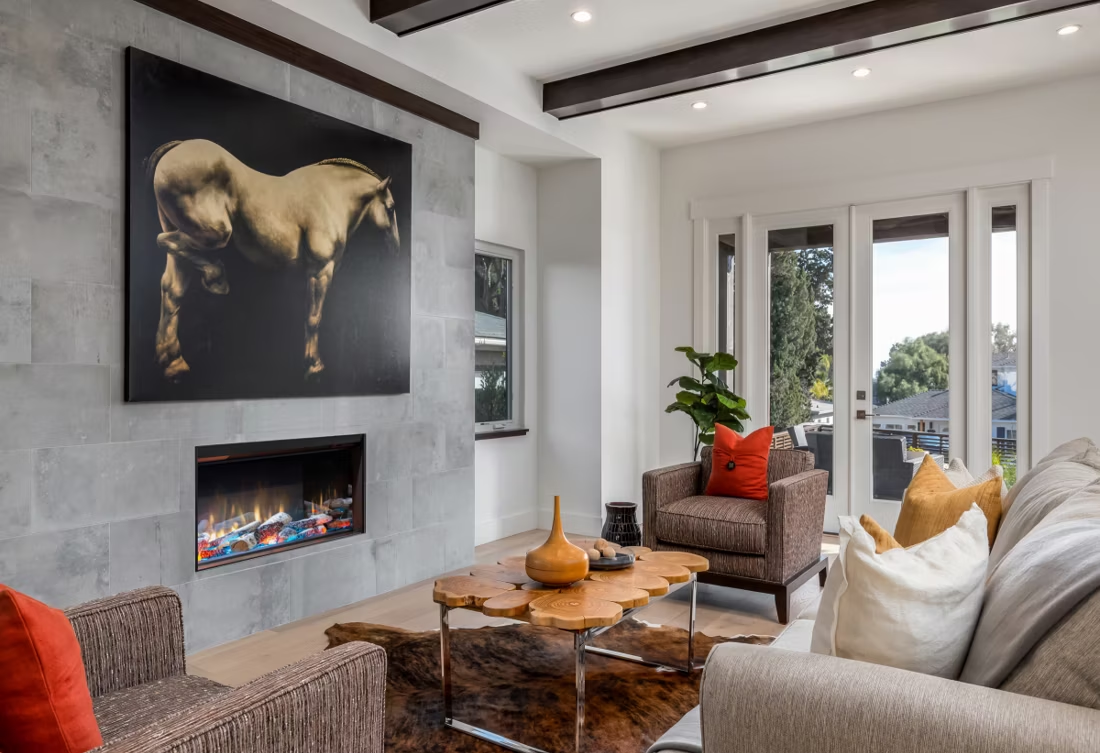
An electric insert is built to drop into an existing fireplace opening, masonry or zero-clearance, and is the natural choice if you already have a hearth you want to reactivate without dealing with a chimney. A wall-mount or linear unit hangs flush on the wall like a flat-screen TV and is popular in Minneapolis condos and newer builds where there's no existing fireplace at all. A mantel package pairs a freestanding or insert-style unit with a surround and shelf, giving you a traditional fireplace look in a room that never had one. All three plug into standard household current or a dedicated circuit, and none require venting.
Will an electric fireplace actually heat my Minneapolis home during a cold snap?
Not on its own. With winter lows averaging 8°F and heating degree days near 7,700, in the range of Duluth or Fargo for sheer cold, a single electric fireplace is realistically a 400 to 1,000 square foot supplemental heater for the room it's in, not a whole-house solution. Most Minneapolis homeowners install one to take the edge off a bedroom, den, or basement that the furnace doesn't reach evenly, or to add ambiance to a living room already served by central heat. If you're looking for a unit that can genuinely stand in during a furnace failure, a gas fireplace is the more realistic backup for this climate.
Electric vs. gas—which is right for my Minneapolis home?
Gas fireplaces put out real, sustained heat, often 20,000+ BTU, and can serve as backup heat during a furnace outage, which matters in a climate with 7,699 heating degree days. Electric units put out far less heat, roughly 5,000 BTU from a typical 1,500-watt unit, but cost a fraction to install, need no gas line or venting, and work in condos, rentals, and rooms where running new gas piping isn't an option. If you own a single-family home and want real backup heat, gas is usually the better long-term investment. If you're in a Minneapolis apartment or condo, or you just want ambiance and light supplemental warmth without construction, electric is the more practical fit.
Do power outages in Minneapolis affect electric fireplaces?
Yes, an electric fireplace goes dark the moment the power does, since there's no battery backup or pilot light involved. Xcel Energy's grid in the Twin Cities is generally reliable, but ice storms and high-wind events do occasionally knock out power for hours at a time in Hennepin County. If backup heat during an outage is a priority, an electric fireplace shouldn't be your only plan; pair it with a gas unit, a wood-burning appliance, or at minimum a generator plan for the furnace.
What size electric fireplace do I need for my Minneapolis home?
Electric fireplaces are rated more for room coverage than whole-home BTU output. A compact 26 to 30-inch insert or wall-mount unit suits a bedroom or small den under 400 square feet. A 40 to 50-inch linear unit handles a typical living room in the 400 to 600 square foot range. Larger great rooms or open-concept main floors, common in some of the renovated Uptown and Linden Hills homes, may need a 60-inch-plus unit or two smaller units in different zones. Because electric heat output tops out around 5,000 to 9,000 BTU regardless of size, bigger units mostly buy you a larger flame display rather than dramatically more heat.
Why choose electric over wood in a city like Minneapolis?
Wood-burning fireplaces and stoves see very little use in the dense parts of Minneapolis; most housing in zip codes like 55403 or 55408 is multi-family, and chimney access, creosote maintenance, and firewood storage just aren't realistic in a third-floor walk-up or a downtown high-rise. Electric fireplaces sidestep all of that: no chimney, no wood species to source (though oak, maple, and birch are the common local firewood for the homes that do burn), and no smoke to manage. For most Minneapolis condo and apartment dwellers who want the look and feel of a fire, electric is the only realistic option without major structural changes.
Can I put a TV above my fireplace?
Yes—with an asterisk. Fireplaces are hot and TVs don't like heat. Either put a mantel between them to deflect rising warmth, or choose a fireplace with heat-management technology that creates a cool zone on the wall above—the wall stays around 125 degrees, barely warm, while the room still gets full heat. If you like clean lines and don't want a mantel, heat management is the answer.
Do electric fireplaces actually produce heat?
Yes—most put out around 4,800–5,000 BTUs from a standard outlet, which comfortably warms a bedroom, office, or den as a comfort-zone heater. What they won't do is carry a whole house the way wood, gas, or pellet can. Think of electric as ambiance-first with honest supplemental heat: flames on with no heat in July, flames plus warmth in January.
Can a fireplace actually lower my heating bill?
Yes—by creating a comfort zone. A furnace heats every square foot of the house just to warm the one room you're in; a gas fireplace on low burns roughly a sixth of the gas a typical furnace does. Set the furnace around 55–60 degrees as a baseline, then heat the rooms your family actually uses. Families who heat this way commonly save $20–$60 a month.
Can I install a fireplace myself?
If you're putting a fire in your house on purpose, it's best to work with an expert. Unless you're genuinely experienced in framing, gas line, vent pipe, and the national code on clearances to combustibles, have a professional do it—and ideally the same company that sells you the fireplace, so warranty, service, and liability all live under one roof.
Nearby Dealers
Hearth shops serving Minneapolis and the surrounding area. Every listing shows whether it is a WhyFire partner, a dealer we have verified as authorized for the brands we recommend, or a local business carrying hearth products. No manufacturer pays for placement. How we verify dealers →
Fireside Hearth & Home - Roseville
Ferguson Enterprises
Fireside Hearth & Home - Minnetonka
Pure Design Environments
Fireside Hearth & Home - Eagan
Fireside Hearth & Home - Eden Prairie
Condor Fireplace & Stone
Minnesota Gas Grills & Fireplaces
Custom Fireplace & Chimney Care
Fireside Hearth & Home - Maple Grove
The Chimney Pro’s Mn
Glowing Hearth & Home - Coon Rapids
Fireplace Gallery, Inc.
Timberwall
Electric Service in Minneapolis
An electric fireplace's heater draws about 1,500 watts—pennies per hour at local rates.
Northern States Power Co - Minnesota
City Of St Paul - (Ne)
Find your electric fireplace in Minneapolis.
Tell us about your room and budget, and we'll match you with a trusted local Minneapolis dealer and send over a free Project Guide & Parts List, the exact unit, mounting or framing parts, and electrical requirements for your space.
Find Your Fireplace →