
Zone heat and ambiance for a climate with winters as long and cold as Fargo, North Dakota's.
East Bethel sits in Anoka County at just under 900 feet elevation, with winter lows averaging 6°F and a heating season up there with Fargo, ND. I'll match you with a trusted local dealer who knows what Connexus Energy's grid and your home's wiring can actually support.
Every Project Starts From One of These Five Situations
Electric heat here is a supplement, not a sole solution.
East Bethel's winters are not mild. At 908 feet in Anoka County, the city logs an average winter low of 6°F and a winter heating season about as long and cold as Fargo, North Dakota's, not the Twin Cities' milder southern suburbs. Wood remains a serious primary or secondary heat source here, split from the oak, maple, birch, and aspen that fill the woodlots and county parks around town. Electric fireplaces fit a different role: zone heat for a finished basement, a sunroom addition, or a bedroom the forced-air furnace never quite reaches, plus the instant ambiance of a fire without a chimney or gas line.
Running on Connexus Energy's cooperative grid at roughly 13.66 cents per kWh, an electric fireplace is cheap to install—many plug-in units need nothing more than a standard 120V outlet—but resistance heat adds up fast if you lean on it as a primary heat source through a seven-month heating season. Most East Bethel homeowners treat electric as the supplemental or backup layer: heat the room you're actually sitting in, and let the furnace or a wood stove carry the rest of the house through the coldest stretches.
Three steps. No salesperson until you're ready.
Tell us about your project
Your zip code, your situation, and the fuel you're leaning toward—or let the answers point you to one.
See what's actually available
The brands dealers within 100 miles genuinely carry—real options, never a catalog mirage.
Get your dealer & Project Guide
A trusted local dealer, plus the free Project Guide & Parts List that names every component of the job.
Frequently Asked Questions
How much does it cost to install an electric fireplace in East Bethel?
A plug-in electric insert or freestanding unit runs $300 to $1,500 installed, and in many cases it's a DIY job on an existing 120V outlet with no permit required. A built-in wall unit wired into a dedicated 240V circuit—common when homeowners want a larger unit with real supplemental heat output—runs closer to $1,500 to $3,500 once you account for an electrician's time and any drywall or mantel work. Either way, it's a fraction of the cost of running new gas line or a masonry chimney, which is part of why electric is a popular add-on in finished basements around East Bethel.
Can an electric fireplace heat my whole East Bethel home?
Not realistically, and no electric fireplace is designed to. With East Bethel's winters running about as long and cold as Fargo, North Dakota's, and winter lows around 6°F, a single 1,500-watt electric unit tops out around 5,000 BTUs of supplemental heat—enough to take the chill off one room, not a whole house through a Minnesota winter. Think of it as zone heat for the room you use most, paired with your existing furnace or a wood stove for whole-home coverage during the deep cold.
Do I need a permit to install an electric fireplace in East Bethel?
A plug-in unit on an existing outlet generally doesn't require a permit. If you're adding a built-in wall unit or a new dedicated circuit, an electrical permit through the City of East Bethel Building Department is standard, and the work should be done by a licensed electrician—East Bethel's housing stock includes a lot of homes on well and septic systems with older panels, so a licensed electrician can confirm your panel has capacity before you commit to a larger built-in.
What's the difference between an electric insert, a built-in, and a stove?
An electric insert drops into an existing masonry or built-in firebox—a common upgrade for East Bethel homes that have an old wood-burning fireplace they no longer use but still want ambiance from. A built-in or wall-mounted unit gets framed into new construction or a remodel, often in a finished basement or media room. A freestanding electric stove sits on the floor like a wood stove but plugs into a standard outlet, which makes it one of the simplest retrofits for an addition or sunroom that doesn't have an existing chimney or gas line.
Electric vs. wood—which makes more sense for an East Bethel home?
Wood, split from the oak, maple, birch, and aspen common in Anoka County, still carries the heating load for a lot of East Bethel homes because it works when the power is out and generates real BTUs through a long, cold season. Electric wins on convenience—no stacking, no ash, no chimney to sweep—and on upfront cost, but it depends entirely on Connexus Energy staying online, which is worth weighing given how exposed this part of Anoka County is to winter storm outages. Many households here keep a wood stove or insert as the serious heat source and add an electric unit purely for ambiance or a zoned room.
Electric vs. pellet stove—which is the better supplemental heat source here?
A pellet stove burning regional brands like Lignetics or Somerset Pellet Fuel puts out real heat—typically 40,000 to 50,000 BTUs—and can genuinely offset a furnace through East Bethel's long, Fargo-cold winter, but it needs electricity to run its auger and blower, so it goes dark in an outage just like an electric fireplace would. An electric fireplace produces a fraction of the BTUs but costs far less to install and needs no fuel storage. If you want supplemental heat with real output, pellet is the stronger choice; if you want low-cost ambiance with a little warmth in one room, electric fits better.
Will my electric fireplace work during a power outage?
No—and East Bethel, served by Connexus Energy's rural distribution lines, sees its share of winter storm outages. An electric fireplace needs grid power for both the heater element and any flame-effect lighting, so it's not a backup heat source during the exact weather events when you'd want one most. If outage resilience matters to you, pair an electric unit with a wood stove or a pellet appliance with battery backup for the auger rather than relying on electric alone.
How much does it cost to run an electric fireplace in East Bethel?
At Connexus Energy's residential rate of about 13.66 cents per kWh, a typical 1,500-watt electric fireplace costs roughly 20 cents an hour to run on the heat setting. Used for about five hours a night through a cold stretch, that's around $30 a month—modest compared to running a furnace, but worth factoring in if you're using it daily through East Bethel's long heating season rather than just for occasional ambiance.
Where does an electric fireplace make the most sense in an East Bethel home?
The best fits we see are finished basements, additions, and bonus rooms that are hard or expensive to tie into existing ductwork or a masonry chimney—spaces where running gas line or building a Class A chimney doesn't pencil out. It's also a good option for renters or anyone who wants real flame-effect ambiance without the commitment of a wood or gas installation. For a primary heat source capable of carrying a room through a 6°F January night, most East Bethel homeowners still look to wood or pellet instead.
Can I put a TV above my fireplace?
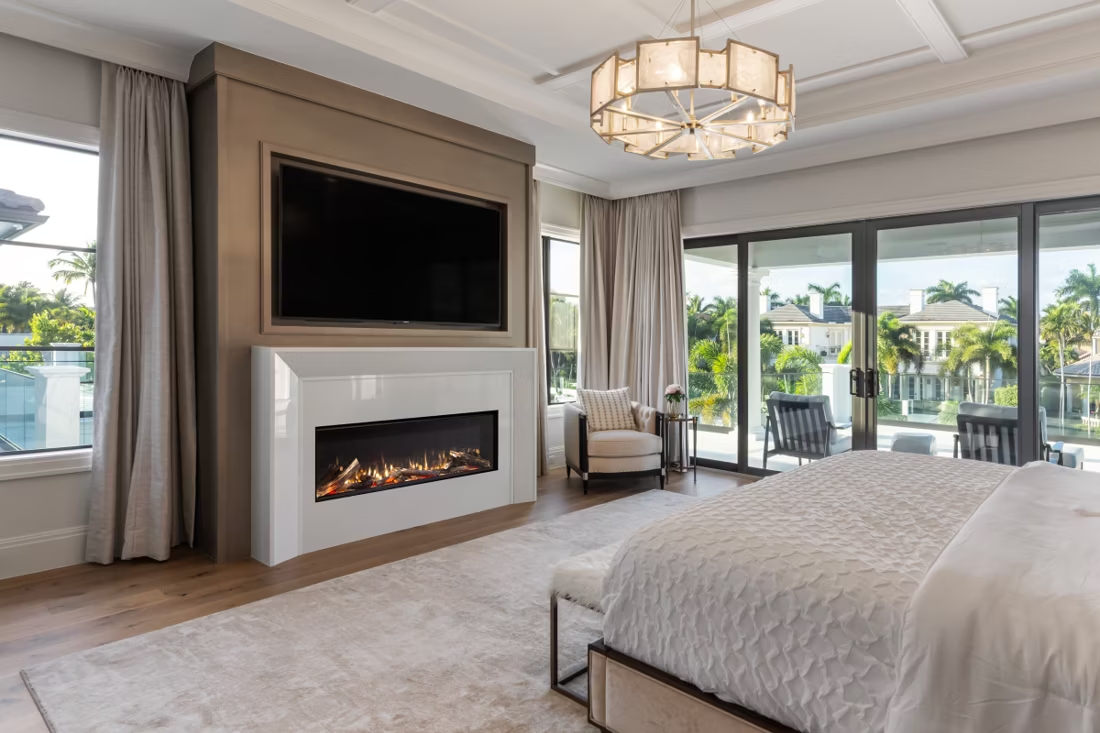
Yes—with an asterisk. Fireplaces are hot and TVs don't like heat. Either put a mantel between them to deflect rising warmth, or choose a fireplace with heat-management technology that creates a cool zone on the wall above—the wall stays around 125 degrees, barely warm, while the room still gets full heat. If you like clean lines and don't want a mantel, heat management is the answer.
Does an electric fireplace need a vent or chimney?
No—that's its superpower. An electric fireplace needs a wall and an outlet, period. No vent pipe, no gas line, no clearances to design around, which is why it works in bedrooms, offices, apartments, and walls where venting a gas or wood unit would be impractical or impossible. Installation is typically the simplest and least expensive of any fireplace type.
Does a fireplace add value to my home?
On average, a fireplace adds back to the home about the same amount you spent installing it. Add the monthly savings from heating the rooms you actually use instead of the whole house—often hundreds of dollars a year—and the value case is strong before you even count what a fire does for how your family uses the room.
What is an in-home preview and do I need one?
It's a visit where a hearth professional measures your space, confirms the model you picked actually works in your home, and walks the specs—framing, gas line, venting, finish work—before anything is ordered. Some details you just can't know until you see the house. Never make a down payment without one; it's the single most-skipped step that burns buyers.
Nearby Dealers
Hearth shops serving East Bethel and the surrounding area. Every listing shows whether it is a WhyFire partner, a dealer we have verified as authorized for the brands we recommend, or a local business carrying hearth products. No manufacturer pays for placement. How we verify dealers →
2nd Generation Chimneys
Glowing Hearth & Home - Coon Rapids
Fireplace Gallery, Inc.
Custom Fireplace & Chimney Care
Condor Fireplace & Stone
Fireside Hearth & Home - Maple Grove
Minnesota Chimney
Fireside Hearth & Home - Roseville
DJ's Heating & Air Cond. Inc.
Comfort By Design- Osceola
Electric Service in East Bethel
An electric fireplace's heater draws about 1,500 watts—pennies per hour at local rates.
Connexus Energy
Get your free Project Guide & Parts List for an East Bethel electric fireplace.
Tell me about your home, your panel capacity, and what room you're heating, and I'll match you with a trusted local dealer and send a free Project Guide & Parts List sized to what Connexus Energy's grid and your wiring can actually support.
Find Your Fireplace →