
Gas Heat Built for Minnesota Winters.
With a long, demanding winter heating season and winter lows averaging near 6°F, Cottage Grove homes need heat they can count on. Find the right gas fireplace or insert and get matched with a trusted local dealer.
Every Project Starts From One of These Five Situations
Instant heat for one of the metro's coldest suburbs.
Cottage Grove sits along the Mississippi River in Washington County, on the southeast edge of the Twin Cities metro. With a winter heating season as demanding as Madison, Wisconsin, or Burlington, Vermont, the city runs in the same cold-climate range—winter lows averaging around 6°F are routine, and a furnace alone often isn't enough to keep a family room comfortable during a January cold snap.
Cottage Grove is a built-out suburb of newer subdivisions and established neighborhoods rather than a rural, wood-lot community—there's no local Forest Service permit office, and wood-burning appliances are uncommon here compared to more rural parts of Minnesota. Gas fills that gap well. Most homes already have natural gas service for the furnace and water heater, so adding a direct-vent gas fireplace or insert is usually a matter of tapping an existing line rather than starting from scratch. The result is heat at the flip of a switch, backup warmth during the occasional metro power outage (with the right ignition system), and a zone-heating boost that takes pressure off the central furnace on the coldest nights.
Three steps. No salesperson until you're ready.
Tell us about your project
Your zip code, your situation, and the fuel you're leaning toward—or let the answers point you to one.
See what's actually available
The brands dealers within 100 miles genuinely carry—real options, never a catalog mirage.
Get your dealer & Project Guide
A trusted local dealer, plus the free Project Guide & Parts List that names every component of the job.
Frequently Asked Questions
How much does a gas fireplace installation cost in Cottage Grove?
Most gas fireplace and insert installations in the Cottage Grove area run between roughly $4,000 and $10,000, depending on the unit, the venting path, and whether new gas line work is required. A direct-vent gas insert going into an existing masonry fireplace with a gas line already nearby sits toward the lower end. A new built-in gas fireplace for a remodel or basement finish—with framing, direct-vent piping through an exterior wall, and a gas line extension—lands in the middle to upper end. Local dealers will give you a firm number after seeing your home, since gas line distance and venting complexity drive most of the variation.
Can I convert my wood-burning fireplace to gas in Cottage Grove?
Yes, and it's one of the more common projects local hearth dealers handle in this part of the metro, where wood-burning setups are less practical than in more rural counties. A gas insert typically drops into your existing masonry firebox, running a stainless liner up the old chimney or venting directly through the rear wall, depending on the fireplace. If your home is already served by natural gas—likely, since most Cottage Grove neighborhoods have it for the furnace and water heater—the conversion is usually straightforward. Expect the project to land in a similar $4,500 to $9,500 range, with propane-fed conversions or homes needing a new gas line running higher.
Should I use natural gas or propane for my fireplace?
Most Cottage Grove homes are already on natural gas for other appliances, and CenterPoint Energy serves much of the surrounding east metro, so tapping into that existing service is usually the simplest and cheapest path for a fireplace. If your home is on a private well and septic system on the outskirts of town without gas service nearby, propane is a workable alternative—it just requires either an existing tank or a new one from a local propane supplier. Nearly every direct-vent fireplace on the market can be configured for either fuel; your installer sets the correct orifice and regulator for whichever you're running.
Will my gas fireplace work during a power outage?
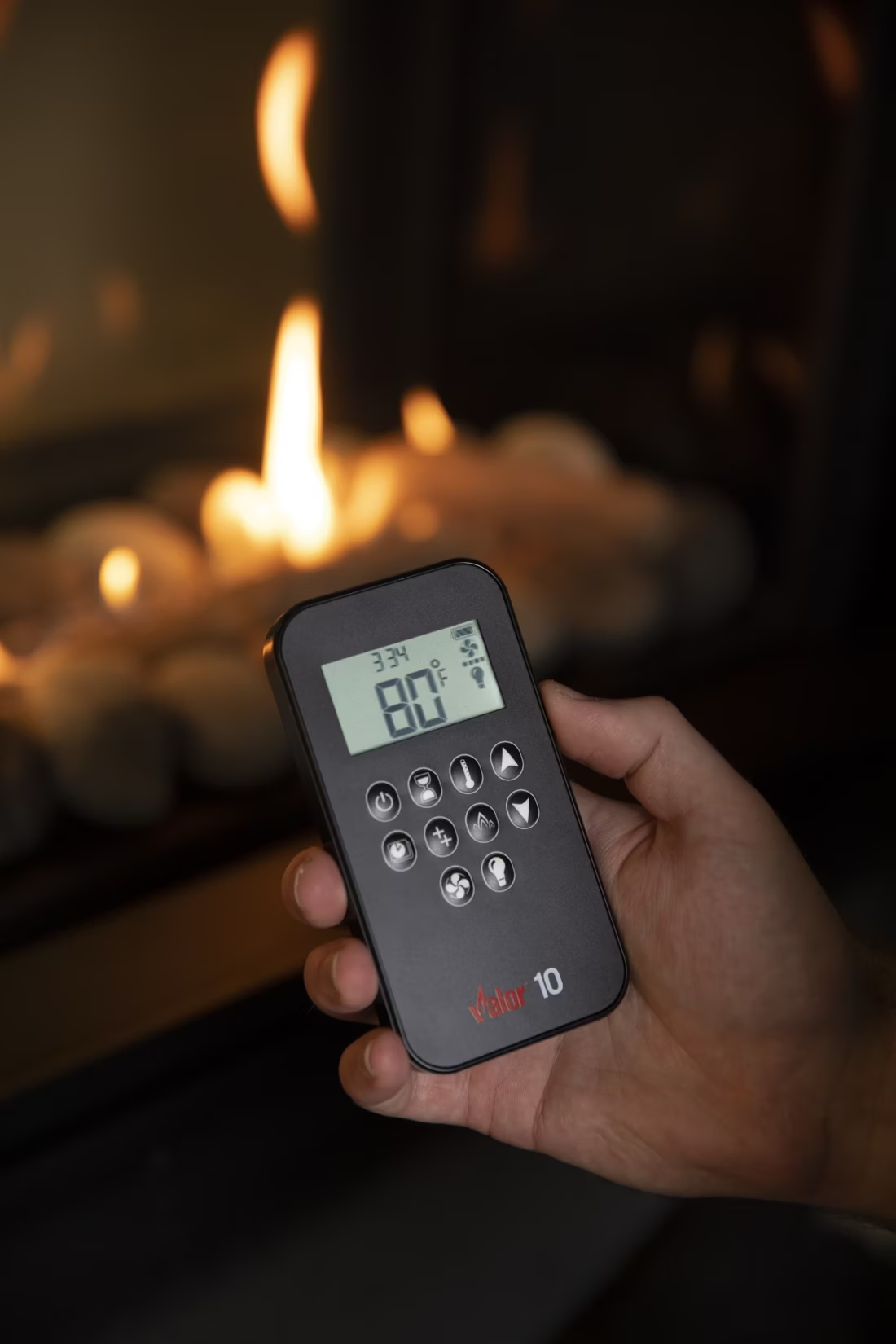
Most will, with the right ignition system. Units with IPI (intermittent pilot ignition) include a battery backup that automatically takes over when the power drops, so the fireplace still lights on demand. Valor fireplaces handle this a bit differently—their pilot assembly generates its own electricity through a thermocouple, so there's no battery to maintain at all. For a Cottage Grove winter where an ice storm or line fault can knock out power for hours, that distinction matters. Ask your local dealer about the ignition system on any unit you're considering, and if you go the battery route, put a reminder on the calendar to check them each fall.
What's the difference between a gas fireplace, gas insert, and gas stove?
A gas fireplace is a fully built-in unit framed into a wall—the right choice for a new build or a remodel that doesn't already have a firebox. A gas insert is sized to slide into an existing masonry fireplace opening, converting an old wood-burning hearth into a sealed, high-efficiency unit that still uses the existing chimney chase for venting. A gas stove is freestanding, sitting on a hearth pad like a wood stove would, but running on gas—a good option for a basement or three-season porch without an existing fireplace. For most Cottage Grove homeowners upgrading an existing masonry fireplace, an insert is the natural fit.
Do I need a permit to install a gas fireplace in Cottage Grove?
Yes—new gas fireplace installations require both a building permit and gas piping work signed off through the City of Cottage Grove's building inspections process, and Washington County standards apply to the gas line itself. In practice, this isn't something you manage yourself: established hearth dealers pull the permits, coordinate the licensed gas-fitter, and schedule the inspection as part of the installation price. That coordination is one of the real advantages of working with a dealer instead of piecing the job together yourself.
Are vent-free gas fireplaces allowed in Minnesota?
Vented, direct-vent gas fireplaces are by far the standard choice in Cottage Grove and across Minnesota—they pull combustion air from outside and exhaust it back outside through a sealed pipe, so they don't affect indoor air quality. Vent-free (unvented) units are legal in Minnesota but come with strict room-size minimums and oxygen depletion sensors, since they release combustion byproducts directly into the living space. Given how tightly built newer Cottage Grove homes tend to be for energy efficiency, most local dealers steer customers toward direct-vent units rather than vent-free models. Ask about both if you're weighing the difference, but expect direct-vent to be the recommendation for most rooms.
How often should my gas fireplace be serviced?
Plan on an annual inspection, ideally before the heating season starts in earnest. A technician checks the burner, pilot assembly, venting, gas connections, and any battery backup or electronic ignition components, and cleans the glass and interior of soot residue. It's a quicker visit than a wood-stove chimney sweep—usually 30 to 45 minutes—but skipping it is how minor issues like a dirty flame sensor turn into a fireplace that won't light on the coldest night of the year. Most local service providers charge in the $150 to $250 range for the visit.
Gas vs. electric vs. wood—which fireplace makes sense in Cottage Grove?
Gas is the default for most Cottage Grove homes: instant real flame, strong heat output, and the ability to tap existing natural gas service most subdivisions already have. Electric fireplaces and inserts are a reasonable option for supplemental warmth or a room where running gas line isn't practical—installation is inexpensive (often under $1,000) and there's no venting to worry about, though running one steadily at Xcel Energy's residential rate of about 17 cents per kWh costs more per BTU than gas. Wood-burning setups are genuinely uncommon here; Cottage Grove is a developed suburb without nearby public cutting-permit land, and most residents don't have a practical source of firewood or an existing masonry chimney built for it. For a cold-climate Twin Cities suburb like this one, gas is where most homeowners land, with electric as a secondary option for rooms that don't need full heating output.
Why is my open fireplace making my house colder?
Open fireplaces suck—literally. As the fire burns, it consumes air your furnace already paid to heat and pulls it out through the chimney, so the house is actually colder after the fire goes out than before you lit it. An insert fixes this: it seals the chimney, puts fixed glass across the front, and turns that hole in your house into a real heat source.
Is my gas fireplace wasting gas?
If it was installed more than 15 years ago, probably. Older gas fireplaces keep a standing pilot light burning all the time, and that little flame can cost a couple hundred dollars a year. Newer models use pilot-on-demand ignition—the pilot lights only when you use the fireplace and goes out when you turn it off.
How much should I budget for a fireplace?
For an average home—covering the fireplace, the vent pipe, and basic installation—a budget between $3,900 and $5,500 gives you a lot of options across wood, gas, and pellet. By the time you add finish work, gas line, and electrical, the average complete installation lands between $5,000 and $12,000 all-in. In a remodel or new build, a good rule is to put about 2.5% of the total project cost toward the fireplace.
Should the dealer who sells my fireplace also install it?
Ideally, yes. A fireplace project involves vent pipe, gas line, electrical, and often tile or stone. Hire three or four separate trades and you own the liability and the game of telephone between them. One company selling and installing means one accountable party, start to finish—ask about factory training, on-time completion records, and what happens if an inspection fails.
Nearby Dealers
Hearth shops serving Cottage Grove and the surrounding area.
Find your gas fireplace in Cottage Grove.
Tell us about your home and heating goals, and we'll match you with a trusted local dealer and send over a free Project Guide & Parts List—the exact parts, vent kit, and installer recommendation for your Cottage Grove gas fireplace project.
Find Your Fireplace →