
Electric heat for Cook County's cabins, cottages, and coldest nights.
Zone heat and fireplace ambiance for the North Shore's cabins and homes—from Grand Marais to the Gunflint Trail, where winter lows average 7°F and the heating season runs nearly nine months. Find the right electric unit and connect with a trusted local dealer.
Every Project Starts From One of These Five Situations
No chimney, no venting—just heat where you need it.
Cook County is Minnesota's northeasternmost county, a narrow strip of Lake Superior shoreline and boreal forest running from Grand Marais up the Gunflint Trail to the Canadian border. It's also one of the coldest inhabited places in the Lower 48—Climate Zone 7, winter lows averaging 7°F, and roughly 9,310 heating degree days a year, a heating load in the range of International Falls or Duluth. With just under 2,000 year-round residents spread across a county with no natural gas pipeline, heat here has always meant wood, propane, or electricity—often more than one at once.
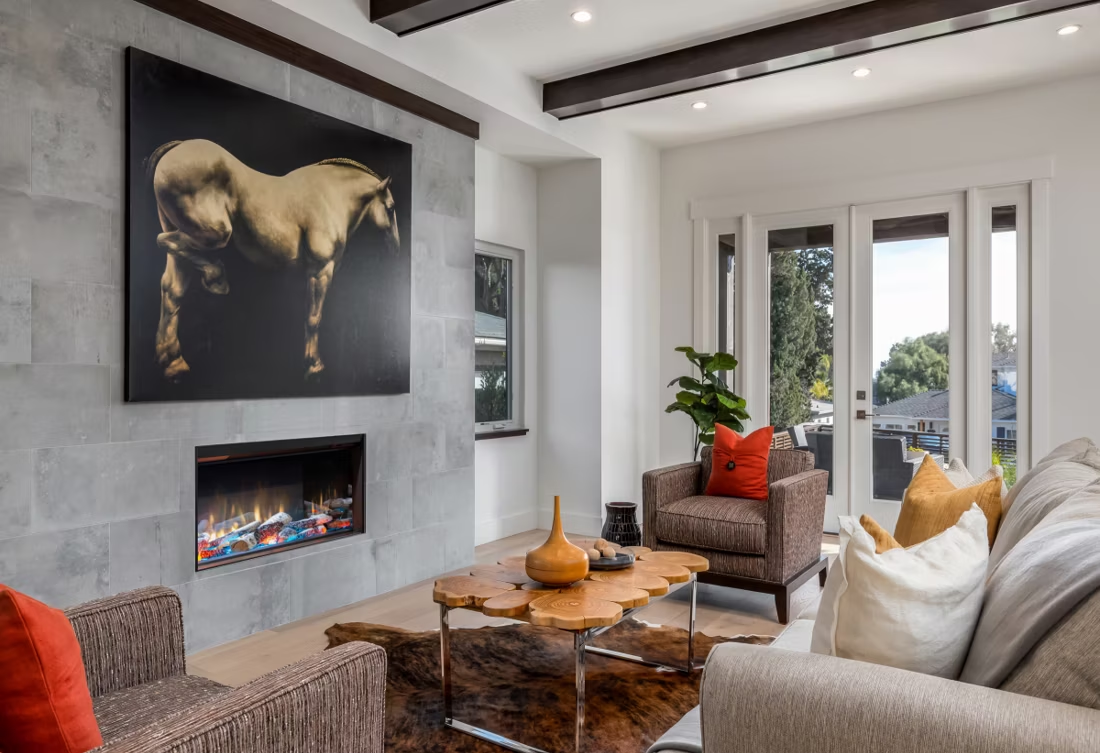
Electric fireplaces and stove inserts are common throughout Cook County, but almost always as supplemental heat or ambiance rather than a home's sole heat source—the resistance heat they produce simply can't keep pace with a 9,300-HDD winter on its own. What they do well is add instant, no-maintenance warmth to a living room, bedroom, or seasonal cabin along the North Shore or Gunflint Trail, without a chimney, gas line, or wood supply to manage. That's especially useful in the county's many vacation rentals and lake cabins, where an electric unit gives guests fireplace glow without teaching them to tend a stove. Power here comes largely through rural electric cooperative lines, and outages during Lake Superior storms are common enough that most year-round households pair electric heat with a wood stove or generator rather than relying on it alone.
Three steps. No salesperson until you're ready.
Tell us about your project
Your zip code, your situation, and the fuel you're leaning toward—or let the answers point you to one.
See what's actually available
The brands dealers within 100 miles genuinely carry—real options, never a catalog mirage.
Get your dealer & Project Guide
A trusted local dealer, plus the free Project Guide & Parts List that names every component of the job.
Frequently Asked Questions
How much does an electric fireplace installation cost in Cook County?
Plug-in electric fireplace inserts and stoves—the kind that run off a standard 120-volt outlet—typically run $400 to $1,200 installed, since no new wiring is usually needed. Built-in wall units or larger inserts that require a dedicated 240-volt circuit run higher, often $1,000 to $2,500, once an electrician runs new wire from the panel. Because Cook County is rural and spread out—Grand Marais, Lutsen, Tofte, Grand Portage, and the Gunflint Trail cabins can be 20-plus minutes apart—expect a trip charge added to quotes for installs outside Grand Marais itself.
What size electric fireplace do I need for my Cook County home?
Most electric fireplaces are rated for zone heating a single room—typically 400 to 1,000 square feet—rather than a whole house, which matters in a county carrying roughly 9,300 heating degree days a year. Sizing here is less about square footage and more about the job you're asking the unit to do: supplement a wood stove in the main living area, take the chill off a bedroom, or provide ambiance in a Gunflint Trail cabin that's otherwise heated by propane or wood. A local dealer can size the right unit once they know which room it's covering and what's already heating the rest of the house.
Where can I find a qualified electrician or installer near me?
Any built-in electric fireplace that needs a dedicated circuit should be installed by a licensed electrician, and Cook County's rural geography means most contractors cover the whole county rather than a single town. Look for electricians who've worked on cabins and seasonal properties along the Gunflint Trail and North Shore specifically—older cabin wiring and detached structures come with their own quirks. Plug-in units don't require an electrician at all, but it's still worth having a local hearth dealer confirm placement and clearances before you buy.
What's the difference between an electric fireplace, insert, and stove?
An electric fireplace is typically a built-in unit set into a wall or mantel surround, styled to look like a traditional fireplace. An electric insert is sized to slide into an existing wood or gas fireplace opening, giving an old masonry fireplace a flame-effect makeover without the chimney maintenance. An electric stove is a freestanding cabinet-style unit that mimics a wood stove's footprint and can sit anywhere near an outlet. For Cook County cabins with an existing but unused masonry fireplace, an insert is often the simplest upgrade; for new construction or rooms without a fireplace, a built-in unit or stove works just as well.
Do I need a permit to install an electric fireplace in Cook County?
A simple plug-in electric fireplace or stove generally doesn't require a permit, since it doesn't involve any new wiring. A built-in unit that needs a new dedicated circuit does require an electrical permit, pulled through Cook County's building and zoning office. Most licensed electricians handle that paperwork as part of the installation, so it's rarely something homeowners have to manage themselves.
What's the best electric fireplace for Cook County's climate?
Since electric resistance heat isn't meant to carry a whole house through a Zone 7 winter, the better question is which unit gives the most useful supplemental heat and the most convincing flame. Models from Dimplex and Amantii with infrared or heat-exchanger elements put out more real warmth per square foot than basic resistance units, which matters when you're trying to take the edge off a Gunflint Trail cabin's living room on a 7-below night. For cabins and rentals where the flame effect matters more than heat output, a lower-wattage unit with LED flame technology works fine and costs less to run.
How much maintenance does an electric fireplace need?
Very little—that's much of the appeal in a county where wood stoves need annual chimney sweeps and propane units need yearly service. Electric units just need an occasional dusting of the flame element or LED array, a check that the outlet or breaker is in good shape, and replacement of any burned-out bulbs on older models. There's no creosote, no venting to inspect, and nothing to service before burning season.
Will my electric fireplace work during a power outage?
No—electric fireplaces stop working the moment the power does, which is a real consideration in a county where Lake Superior storms and remote power lines mean outages happen more than once a winter. That's why most year-round Cook County households treat electric fireplaces as the supplemental or convenience option and keep a wood stove, propane heater, or generator as the actual backup plan when the grid goes down. If backup heat during outages is a priority, an electric fireplace shouldn't be your only heat source.
Electric vs. wood—which is right for my Cook County home?
Wood is still the backbone of home heating for a lot of year-round Cook County households—local oak, maple, birch, and aspen are all commonly burned, and a wood stove keeps producing heat through the power outages that come with North Shore winter storms. Electric fireplaces can't match that in a county carrying 9,300 heating degree days a year, but they're excellent for what they're built for: instant, no-maintenance ambiance and zone heat in a room that's already warm enough, or in a seasonal cabin where nobody wants to manage a woodpile. Many local homes run both—wood or propane as the real heat source, electric for the living room glow.
Can I put a TV above my fireplace?
Yes—with an asterisk. Fireplaces are hot and TVs don't like heat. Either put a mantel between them to deflect rising warmth, or choose a fireplace with heat-management technology that creates a cool zone on the wall above—the wall stays around 125 degrees, barely warm, while the room still gets full heat. If you like clean lines and don't want a mantel, heat management is the answer.
Do electric fireplaces actually produce heat?
Yes—most put out around 4,800–5,000 BTUs from a standard outlet, which comfortably warms a bedroom, office, or den as a comfort-zone heater. What they won't do is carry a whole house the way wood, gas, or pellet can. Think of electric as ambiance-first with honest supplemental heat: flames on with no heat in July, flames plus warmth in January.
What is an in-home preview and do I need one?
It's a visit where a hearth professional measures your space, confirms the model you picked actually works in your home, and walks the specs—framing, gas line, venting, finish work—before anything is ordered. Some details you just can't know until you see the house. Never make a down payment without one; it's the single most-skipped step that burns buyers.
Does a fireplace add value to my home?
On average, a fireplace adds back to the home about the same amount you spent installing it. Add the monthly savings from heating the rooms you actually use instead of the whole house—often hundreds of dollars a year—and the value case is strong before you even count what a fire does for how your family uses the room.
Find your electric fireplace in Cook County.
Tell us a bit about your home or cabin and we'll match you with the right electric fireplace, insert, or stove—plus a free Project Guide & Parts List with the exact parts and a recommended local dealer for your Cook County project.
Find Your Fireplace →