
Instant heat for Burnsville's coldest nights.
With winter lows averaging 8°F and a heating season nearly as long and demanding as Fargo's, Burnsville homes need dependable warmth. Find the right gas fireplace or insert and connect with a trusted local dealer.
Every Project Starts From One of These Five Situations
Reliable warmth built for a long, hard winter season.
Burnsville sits in Dakota County just south of the Minnesota River, in climate zone 6A—heating demand here runs comparable to Fargo, ND, with a long, intense winter heating season and average winter lows around 8°F. This is a fully built-out Twin Cities suburb, not a rural fringe community: subdivisions from the 1970s through today mix split-levels, ramblers, and newer construction, and most lots are served by natural gas mains rather than septic or well infrastructure. That combination—dense suburban development plus serious cold—is exactly why gas fireplaces dominate here.
Natural gas service is standard throughout Burnsville, making direct-vent gas fireplaces and inserts the practical choice for most homeowners: no wood to split or stack, no chimney to sweep, and instant heat at the flip of a switch or a wall thermostat. Electric service comes through Dakota Electric Association and the City of St. Paul, with residential rates around 14 cents per kWh—relevant if you're weighing an electric fireplace for a bonus room or basement, but for whole-room supplemental heat in a Minnesota winter, gas is the workhorse fuel in this market.
Three steps. No salesperson until you're ready.
Tell us about your project
Your zip code, your situation, and the fuel you're leaning toward—or let the answers point you to one.
See what's actually available
The brands dealers within 100 miles genuinely carry—real options, never a catalog mirage.
Get your dealer & Project Guide
A trusted local dealer, plus the free Project Guide & Parts List that names every component of the job.
Frequently Asked Questions
How much does a gas fireplace installation cost in Burnsville?
Most gas fireplace and insert installations in Burnsville run between roughly $4,000 and $10,000, depending on the unit, whether you're converting an existing masonry fireplace or building new, and how much gas line work is involved. A direct-vent insert into an existing wood-burning fireplace with a gas line already run to that wall sits toward the lower end. New construction, remodels requiring framing and fresh venting, or homes needing a gas line extended from the meter push toward the higher end. A local dealer will give you a firm number after seeing your specific setup.
Can I convert my existing wood fireplace to gas?
Yes, and it's one of the most common projects for Burnsville's older housing stock. Many homes built in the 1970s through 1990s have a masonry wood-burning fireplace that rarely gets used—converting it to a direct-vent gas insert reuses that existing chimney chase with a sealed liner, so you keep the look of the fireplace but get real, consistent heat without hauling or stacking wood. Since natural gas is already run to most Burnsville homes for furnaces and water heaters, extending a line to the fireplace wall is usually straightforward for a licensed installer.
Do I need natural gas to install a gas fireplace, or can I use propane?
Natural gas is the default in Burnsville since the city is fully served by gas mains, and it's typically the more cost-effective option if a line is already nearby. Propane comes into play mainly for newer developments where gas infrastructure hasn't caught up yet, or for detached structures like a three-season porch or garage where running a line is impractical. Most gas fireplace models can be configured for either fuel—your installer sets the correct orifice and regulator—so the fireplace you want doesn't have to be limited by which fuel you currently have.
Will my gas fireplace work during a power outage?
Most modern gas fireplaces with intermittent pilot ignition (IPI) include a battery backup that keeps the unit operating when the power drops—you just need to keep fresh batteries on hand. Minnesota ice storms and heavy snow loads occasionally take down power for a day or more in Dakota County, so this matters. Valor fireplaces go a step further: their pilot assembly generates its own electricity through the thermocouple, so there's no battery to remember at all. If backup heat during an outage is a priority, ask your local dealer specifically about the ignition system on any model you're considering.
What's the difference between a gas fireplace, gas insert, and gas stove?
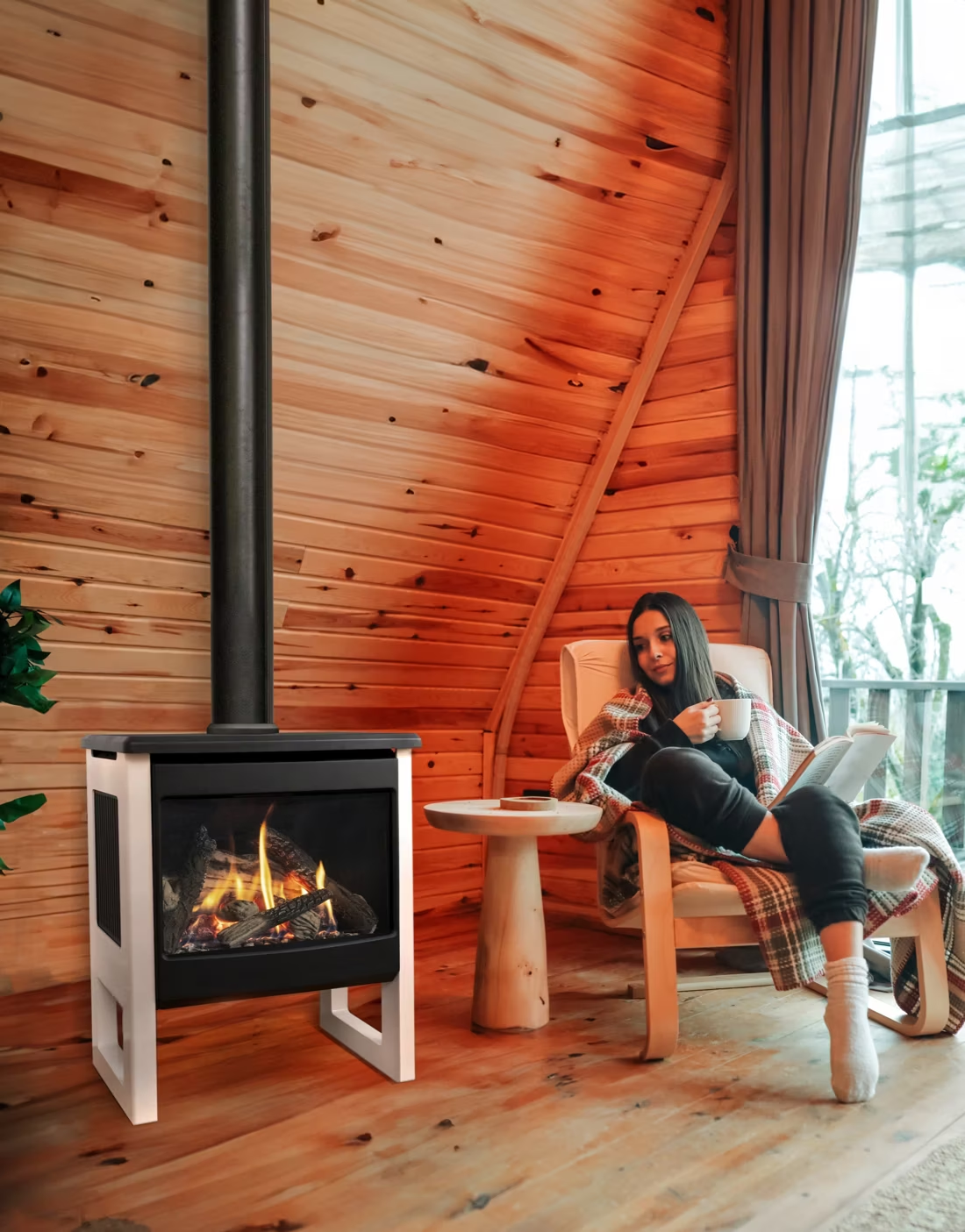
A gas fireplace is a fully built-in unit framed into a wall—the right choice for new construction or a remodel where you're starting from scratch. A gas insert slides into an existing masonry fireplace opening and uses the chimney chase as its venting path, which is the common route for Burnsville's older split-levels and ramblers with underused wood fireplaces. A gas stove is a freestanding cast-iron or steel unit that sits on the floor, often used in basements, additions, or rooms without an existing chimney. For most Burnsville homeowners upgrading an existing fireplace, an insert is the straightforward answer.
Do I need a permit to install a gas fireplace in Burnsville?
Yes—the City of Burnsville requires a building permit for gas fireplace installations, along with a separate mechanical or gas permit for the line work, which has to be run by a licensed gas-fitter. Most local hearth dealers handle the permitting and inspection scheduling as part of the installation, so you're not left coordinating separate trades. This is one of the practical advantages of going through a dealer who does this work regularly rather than a general handyman.
What's the difference between vented and vent-free gas fireplaces?
Vented (direct-vent) gas fireplaces draw combustion air from outside and exhaust exhaust gases back outside through a sealed pipe—they're the cleanest, safest option and the standard choice in cold climates. Vent-free units burn fuel directly into the room without external venting; they're legal in Minnesota but come with strict room-size and ventilation requirements, and the moisture they release can be a real concern in tightly sealed, well-insulated homes built for winters this long and cold—condensation on cold windows is already a common issue here without adding more humidity indoors. For Burnsville homes, direct-vent units are the more common and more broadly recommended option; ask your local dealer to walk through both if you're weighing the tradeoff.
How often should my gas fireplace be serviced?
Plan on an annual inspection, ideally in late summer or early fall before the heating season starts. A certified technician checks the burner, pilot assembly, venting, and gas connections, and cleans the glass and interior—a much quicker visit than a wood chimney sweep, but just as important for safe operation. Local gas hearth service providers typically charge $150 to $250 for this annual visit.
Why gas instead of wood or pellet in Burnsville?
Wood and pellet stoves are genuinely uncommon here—Burnsville is a mature, densely built suburb where most homes were framed without masonry chimneys designed for solid-fuel appliances, and sourcing firewood or hauling pellet bags is far less practical than in the more rural stretches of Dakota County. A handful of homeowners with an existing masonry fireplace do keep it as a wood-burning option for ambiance or true off-grid backup heat, but for the vast majority of Burnsville homes, gas is the fuel that actually fits the housing stock, the existing gas infrastructure, and the day-to-day convenience homeowners expect. If you do have a legacy wood-burning fireplace, converting it to gas is usually simpler than trying to keep it as-is.
What's the difference between an insert and a zero-clearance fireplace?
An insert is a fireplace that slides into a pre-existing wood-burning fireplace—if you don't have one, there's nothing to insert it into. A zero-clearance fireplace is built into a framed wall, which makes it the answer for remodels and new construction. Simple test: existing masonry fireplace means insert; blank or framed wall means zero-clearance.
Why is my open fireplace making my house colder?
Open fireplaces suck—literally. As the fire burns, it consumes air your furnace already paid to heat and pulls it out through the chimney, so the house is actually colder after the fire goes out than before you lit it. An insert fixes this: it seals the chimney, puts fixed glass across the front, and turns that hole in your house into a real heat source.
Can I install a fireplace myself?
If you're putting a fire in your house on purpose, it's best to work with an expert. Unless you're genuinely experienced in framing, gas line, vent pipe, and the national code on clearances to combustibles, have a professional do it—and ideally the same company that sells you the fireplace, so warranty, service, and liability all live under one roof.
Does a fireplace add value to my home?
On average, a fireplace adds back to the home about the same amount you spent installing it. Add the monthly savings from heating the rooms you actually use instead of the whole house—often hundreds of dollars a year—and the value case is strong before you even count what a fire does for how your family uses the room.
Nearby Dealers
Hearth shops serving Burnsville and the surrounding area. Every listing shows whether it is a WhyFire partner, a dealer we have verified as authorized for the brands we recommend, or a local business carrying hearth products. No manufacturer pays for placement. How we verify dealers →
Minnesota Gas Grills & Fireplaces
Fireside Hearth & Home - Eagan
Pure Design Environments
Fireside Hearth & Home - Eden Prairie
Fireside Hearth & Home - Minnetonka
Ferguson Enterprises
Fireside Hearth & Home - Roseville
The Chimney Pro’s Mn
Timberwall
Comfort By Design
Streitz Heating & Cooling
Condor Fireplace & Stone
Fireside Hearth & Home - Maple Grove
Find your gas fireplace in Burnsville.
Tell us a bit about your home and we'll match you with a trusted local dealer and put together your free Project Guide & Parts List—the exact fireplace or insert, vent kit, and installation plan for your Burnsville home.
Find Your Fireplace →