
Find the right electric fireplace for Brown County's long winters.
With a heating season nearly as demanding as Minneapolis's and winter lows averaging 7°F, Brown County homes need supplemental heat that installs in an afternoon. Find the right unit and get matched with a local dealer who installs it correctly.
Every Project Starts From One of These Five Situations
Zone heat that works with your existing furnace, not against it.
Brown County sits in climate zone 6A, with winter lows that average 7°F and a heating season about as demanding as Minneapolis's—closer to that than to the milder parts of southern Minnesota. Most homes here run on propane, natural gas, or forced-air electric furnaces as primary heat, and that's exactly where electric fireplaces earn their place: as supplemental zone heat for a den, basement rec room, or bedroom in New Ulm, Springfield, Sleepy Eye, or Comfrey without the venting, gas line, or masonry work a wood or gas unit requires.
Unlike wood stoves or gas inserts, an electric fireplace needs no chimney, no flue, and no combustion air—just a standard outlet in most cases, or a dedicated 240V circuit for larger built-ins. That makes them a practical fit for finished basements, apartments above New Ulm's storefronts, condos, and rental properties where a real chimney isn't in the cards. They won't replace your furnace on a January night when temps drop toward zero, but they add supplemental warmth to the room you're actually sitting in, and they run on demand with no ash, no smoke, and no propane delivery to schedule.
Three steps. No salesperson until you're ready.
Tell us about your project
Your zip code, your situation, and the fuel you're leaning toward—or let the answers point you to one.
See what's actually available
The brands dealers within 100 miles genuinely carry—real options, never a catalog mirage.
Get your dealer & Project Guide
A trusted local dealer, plus the free Project Guide & Parts List that names every component of the job.
Frequently Asked Questions
How much does an electric fireplace installation cost in Brown County?
Most electric fireplace installations in Brown County run $400 to $1,200. A plug-in insert or wall-mounted unit on a standard 120V outlet sits at the low end, while a built-in electric fireplace requiring a dedicated 240V circuit, mantel surround, or recessed wall opening runs toward the higher end. Because there's no venting or gas line involved, electric installs are typically the fastest and least invasive of any fireplace fuel—often completed in a single visit by a local electrician or hearth dealer.
Can an electric fireplace actually heat a room in a Brown County winter?
Most electric fireplace inserts put out around 5,000 BTUs, enough to noticeably warm a single room—a den, home office, or basement family room—but not enough to replace a furnace when overnight lows hit single digits, which happens regularly in Brown County. Think of it as targeted comfort: it takes the edge off a chilly bedroom above an unheated garage in Sleepy Eye, or makes a finished basement in New Ulm usable on a January evening, while your furnace still carries the whole-house load.
Do I need a permit to install an electric fireplace in Brown County?
Usually not for a plug-in unit—since there's no venting, gas line, or masonry work involved, most jurisdictions in Brown County don't require a building permit for a standard electric fireplace insert. If your installation involves adding a new dedicated 240V circuit or breaker panel work for a larger built-in unit, an electrical permit is typically required and your electrician will pull it as part of the job. Check with your city (New Ulm, Springfield, Sleepy Eye) or the county for specifics if you're doing structural work like a new mantel surround or recessed wall opening.
What's the difference between an electric insert, a wall-mounted unit, and a built-in electric fireplace?
An electric insert slides into an existing fireplace opening—including a wood-burning masonry fireplace you're no longer using—and plugs into a nearby outlet, making it one of the simplest upgrades for older Brown County homes with an unused hearth. A wall-mounted unit hangs on the wall like a flat-screen TV and needs no fireplace opening at all, which works well in newer builds or condos. A built-in electric fireplace is framed into a wall or custom surround for a more finished, permanent look and often requires a dedicated circuit. For most homeowners converting an old wood fireplace, the insert is the easiest path.
Will my electric fireplace work during a power outage?
No—unlike a wood stove or a gas fireplace with battery-backup ignition, an electric fireplace has no function without grid power. In Brown County, where winter storms occasionally knock out power for hours, that's worth factoring into your planning if you want a heat source that works when the lights go out. Homeowners who want backup heat alongside an electric fireplace often pair it with a wood stove elsewhere in the house, or a portable generator sized for the furnace's blower motor.
What's the best electric fireplace for a Brown County home?
For most Brown County homes, a mid-size insert or built-in with a 5,000 BTU heater and adjustable thermostat is the practical choice—enough supplemental heat for a room without overloading a household circuit. Look for units with a realistic flame effect if ambiance matters as much as heat, since many electric fireplace buyers here are prioritizing the visual and comfort experience in a den or bedroom rather than raw heat output. A local dealer can walk you through wattage, circuit requirements, and flame technology options based on the room you're heating.
Does an electric fireplace need any maintenance?
Very little compared to wood or gas. There's no chimney to sweep and no annual gas inspection required. Occasional dusting of the heating vents and an LED bulb replacement every several years (on older models) covers most upkeep. This low-maintenance profile is part of why electric units are popular in Brown County rental properties and second homes where owners want reliable ambiance without recurring service calls.
Electric vs. wood—which is right for my Brown County home?
Wood stoves, burning local oak, maple, birch, or aspen, deliver real heat output and keep working when the power's out—a genuine advantage during Brown County ice storms. They require a chimney, clearances, and regular chimney sweeping, though. Electric fireplaces install almost anywhere with no venting, cost far less upfront, and produce zero ash or smoke, but they do nothing during an outage and won't carry a whole room on the coldest nights. Many Brown County homeowners use wood or a furnace as primary heat and add electric units in secondary spaces—a basement, guest bedroom, or home office—where running a flue isn't practical.
Electric vs. gas fireplace—which should I choose?
Gas fireplaces put out considerably more heat (typically 20,000+ BTUs for a direct-vent unit) and can serve as genuine supplemental heat during a Brown County cold snap, but they require venting and, outside natural gas service areas, a propane tank and delivery contract. Electric fireplaces skip the venting and fuel logistics entirely, install in under a day, and cost a fraction as much—but they cap out around 5,000 BTUs and won't run without grid power. If you want a fireplace mainly for ambiance and light supplemental warmth in a specific room, electric is usually the simpler, cheaper answer. If you want a unit that can meaningfully offset your heating bill, gas is the stronger performer.
Do electric fireplaces actually produce heat?
Yes—most put out around 4,800–5,000 BTUs from a standard outlet, which comfortably warms a bedroom, office, or den as a comfort-zone heater. What they won't do is carry a whole house the way wood, gas, or pellet can. Think of electric as ambiance-first with honest supplemental heat: flames on with no heat in July, flames plus warmth in January.
Can I put a TV above my fireplace?
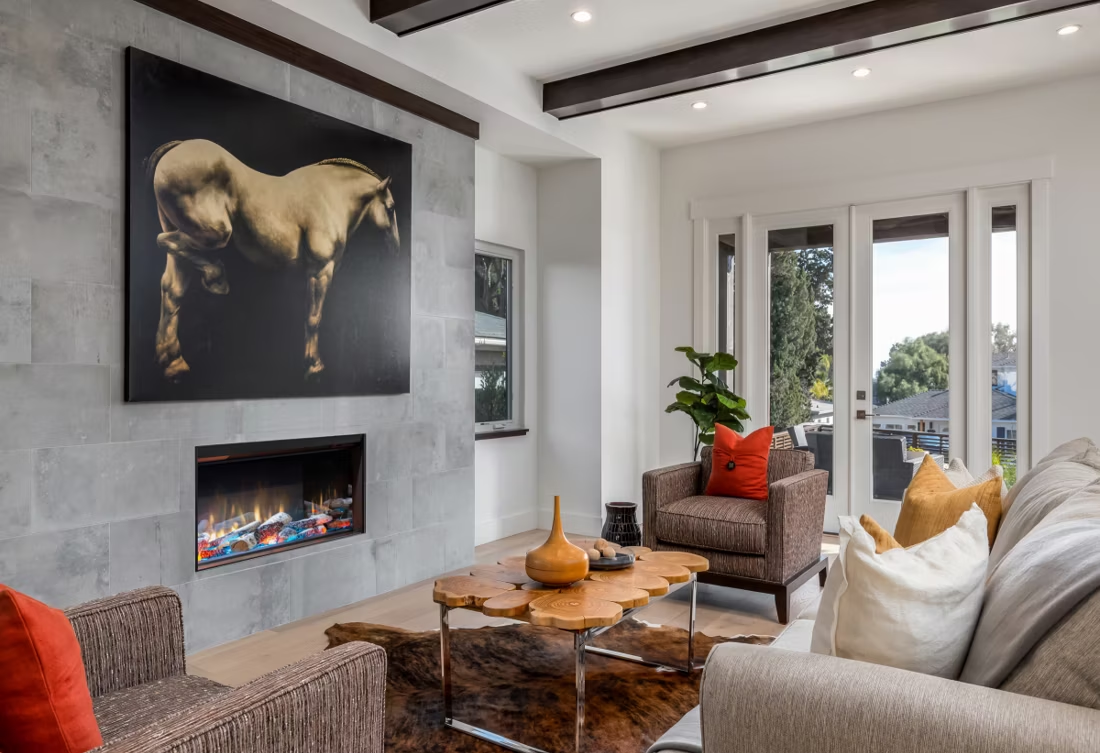
Yes—with an asterisk. Fireplaces are hot and TVs don't like heat. Either put a mantel between them to deflect rising warmth, or choose a fireplace with heat-management technology that creates a cool zone on the wall above—the wall stays around 125 degrees, barely warm, while the room still gets full heat. If you like clean lines and don't want a mantel, heat management is the answer.
Does a fireplace add value to my home?
On average, a fireplace adds back to the home about the same amount you spent installing it. Add the monthly savings from heating the rooms you actually use instead of the whole house—often hundreds of dollars a year—and the value case is strong before you even count what a fire does for how your family uses the room.
How much should I budget for a fireplace?
For an average home—covering the fireplace, the vent pipe, and basic installation—a budget between $3,900 and $5,500 gives you a lot of options across wood, gas, and pellet. By the time you add finish work, gas line, and electrical, the average complete installation lands between $5,000 and $12,000 all-in. In a remodel or new build, a good rule is to put about 2.5% of the total project cost toward the fireplace.
Find your electric fireplace in Brown County.
Tell us about your room and we'll match you with the right electric fireplace or insert, plus a free Project Guide & Parts List and a trusted local dealer to handle the install.
Find Your Fireplace →