
Instant heat for Austin's long, cold winters.
With average lows near 5°F and one of the longest, coldest winter heating seasons around, Mower County homes need heat that starts the moment you flip a switch. Find the right gas fireplace and get matched with a trusted local dealer.
Every Project Starts From One of These Five Situations
A climate that doesn't leave much margin for error.
Austin sits in south-central Minnesota's Mower County at just over 1,200 feet, in climate zone 6A—a designation that puts it in the same cold-climate tier as places like Fargo, ND. With a long, harsh winter heating season and average winter lows around 5°F, this is a place where furnaces run for months straight and a supplemental heat source isn't a luxury, it's a hedge against a bad ice storm or a compressor that quits in January.
Unlike the forested lake country farther north, Mower County is flat farmland without nearby national forest land or a wood-cutting permit system, which is a big part of why wood heat hasn't taken hold here the way it has elsewhere in Minnesota—gas and electric do the heavy lifting instead. For Austin homeowners, a direct-vent gas fireplace or insert delivers real, immediate heat with no ash, no chimney maintenance, and no dependence on a delivered fuel supply, which matters when a January cold snap settles in over Hormel country and doesn't let up for a week.
Three steps. No salesperson until you're ready.
Tell us about your project
Your zip code, your situation, and the fuel you're leaning toward—or let the answers point you to one.
See what's actually available
The brands dealers within 100 miles genuinely carry—real options, never a catalog mirage.
Get your dealer & Project Guide
A trusted local dealer, plus the free Project Guide & Parts List that names every component of the job.
Frequently Asked Questions
How much does a gas fireplace installation cost in Austin?
Most gas fireplace installations in Austin run between roughly $4,000 and $9,500, depending on the unit, the venting path, and whether new gas line work is required. A direct-vent insert going into an existing masonry fireplace with a gas line already nearby sits toward the lower end. A new built-in gas fireplace as part of a remodel—with framing, venting through an exterior wall, and a fresh gas line run—lands in the middle to upper range. Homes needing a propane tank set or a long line extension from the meter can run higher. A local dealer will size the job and give you a firm number after seeing your home.
Can I convert my existing wood fireplace to gas?
If your Austin home has an older masonry fireplace—common in the established neighborhoods around downtown—yes, a gas insert is usually a straightforward retrofit. The insert slides into the existing firebox and vents through a stainless liner run up your current chimney, so you keep the look of the fireplace while gaining real, controllable heat output. Given how few homes in Mower County burn wood as a serious heat source, this conversion is popular with owners of older houses who want the character of the original fireplace without hauling and stacking cordwood through a Minnesota winter.
Do I need natural gas, or can I use propane?
Either can work, and it depends on where you're located. Homes within Austin city limits typically have natural gas service available, which makes adding a fireplace simple if you already run gas to a furnace or water heater. Out in the more rural stretches of Mower County, propane is the standard fallback, supplied by regional propane dealers with either a leased or owned tank on the property. Most gas fireplace models can be set up for either fuel—your installer configures the correct orifice and regulator for whichever you have.
Will my gas fireplace work during a power outage?
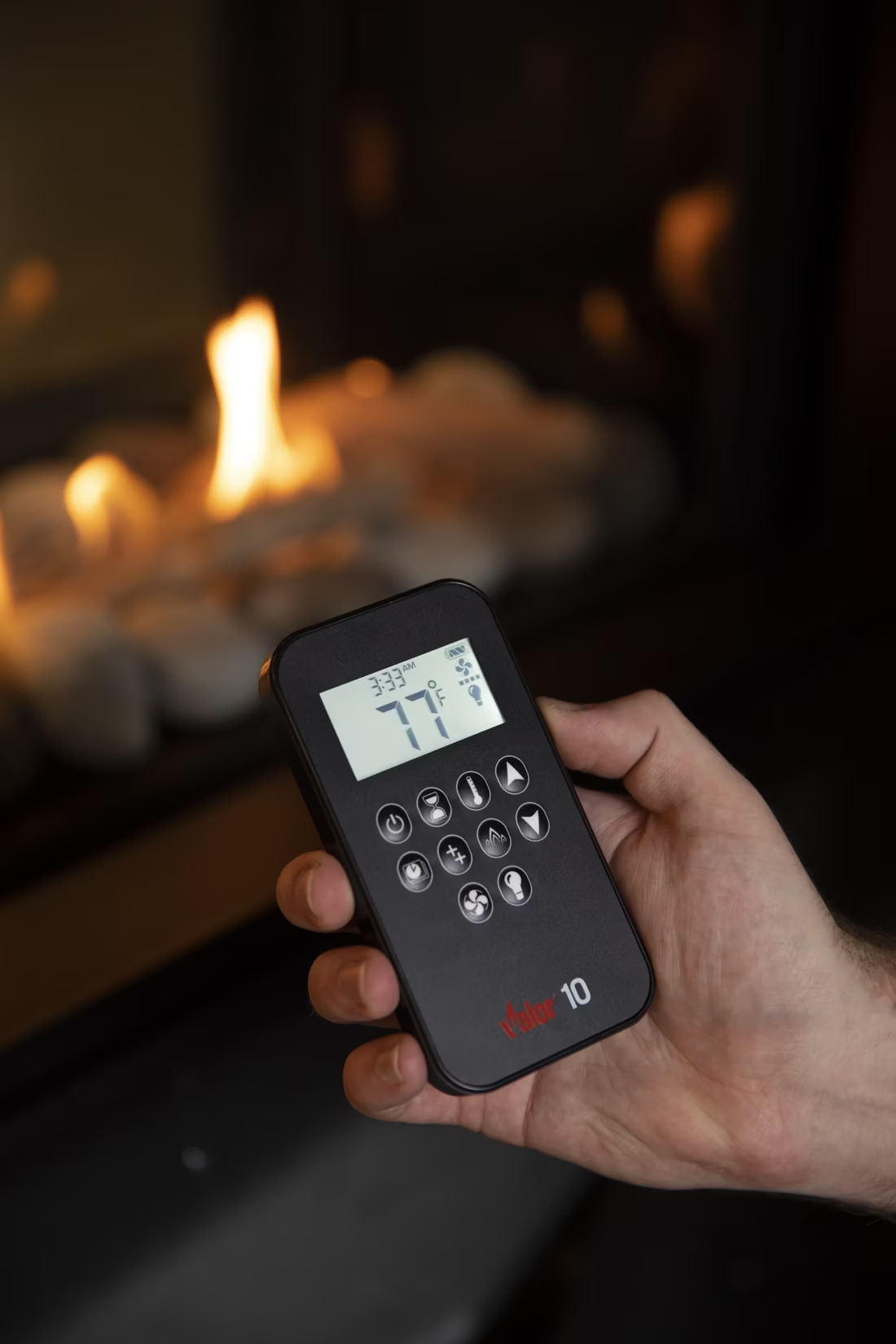
Most modern gas fireplaces will, which matters in a place where an ice storm can take down power lines for days at a time. Units with intermittent pilot ignition (IPI) run on a small battery backup that kicks in the moment the power drops, so the fireplace lights and operates normally off those batteries. Valor's lineup goes a step further—their pilot assembly generates its own electricity through a thermopile, so there are no batteries to remember or replace at all. For a Freeborn-Mower Electric Cooperative or City of Austin outage in the middle of a January cold snap, that kind of self-powered ignition is worth asking about specifically.
What's the difference between a gas fireplace, gas insert, and gas stove?
A gas fireplace is a fully built-in unit framed into a wall—the right call for new construction or a remodel where you're building the space from scratch. A gas insert drops into an existing masonry firebox and uses your current chimney as the venting path, which suits many of Austin's older homes with fireplaces that were never great heat sources. A gas stove is a freestanding cabinet unit that sits on the floor like a wood stove but runs on gas, useful in a basement or addition without an existing chimney. Most homeowners here with an existing fireplace choose an insert; those building new or finishing a basement usually go with a built-in or freestanding stove.
Do I need a permit to install a gas fireplace in Austin?
Yes—a new gas fireplace installation typically requires both a building permit and sign-off on the gas line work, coordinated through the City of Austin's building department. The gas line connection specifically has to be run or inspected by a licensed gas-fitter, which is one reason working with an established hearth dealer is worth it: they coordinate the gas line, venting, and inspection as one job instead of you managing separate trades and permit paperwork.
What's the difference between vented and vent-free gas fireplaces?
Vented (direct-vent) gas fireplaces pull combustion air from outside and exhaust the byproducts back outside through a sealed pipe—they're the cleanest and most universally code-approved option. Vent-free units burn gas directly into the room with no external venting, which sounds efficient but releases moisture and trace combustion gases into your living space. In a tightly sealed, well-insulated Minnesota home built for a long, demanding winter heating season, that extra moisture load can be a real issue—condensation and window fogging show up faster here than in milder climates. For that reason, direct-vent units are what most Austin dealers install and recommend, and they're the safer default if you're not sure which to choose.
How often should my gas fireplace be serviced?
Plan on an annual inspection, ideally in early fall before the unit sees heavy winter use. A technician checks the burner, pilot assembly, venting, and gas connections, and cleans the glass and interior—a much smaller job than a wood chimney sweep, but still important since a partially blocked vent or a failing thermocouple is a safety issue, not just a performance one. Local service providers typically charge $150 to $250 for a standard annual visit.
Should I consider a wood stove instead of gas?
For most Austin homes, probably not as a primary option. Mower County is flat agricultural land without the national forest access or cutting-permit infrastructure that supports wood heat in places like northern Minnesota's Arrowhead region, so firewood here has to be purchased rather than self-cut, and few local dealers stock wood-burning lines the way they do in more forested parts of the state. Gas and electric do almost all of the heavy lifting for supplemental and zone heating in and around Austin. If you already have a woodlot or a reliable cordwood source and want the ambiance and outage-proof heat of a real fire, it's not impossible—just less common and worth discussing directly with a local dealer before you commit.
What's the difference between an insert and a zero-clearance fireplace?
An insert is a fireplace that slides into a pre-existing wood-burning fireplace—if you don't have one, there's nothing to insert it into. A zero-clearance fireplace is built into a framed wall, which makes it the answer for remodels and new construction. Simple test: existing masonry fireplace means insert; blank or framed wall means zero-clearance.
Why is a fireplace insert so efficient?
An insert does two things: it seals the chimney completely, so you stop losing air you already paid to heat, and it radiates warmth into the room through the firebox and glass. Most add a heat-exchange fan that pulls cool room air underneath, wraps it around the hot firebox, and pushes it back out warm. Your home is more efficient before you've even lit the first fire.
How much should I budget for a fireplace?
For an average home—covering the fireplace, the vent pipe, and basic installation—a budget between $3,900 and $5,500 gives you a lot of options across wood, gas, and pellet. By the time you add finish work, gas line, and electrical, the average complete installation lands between $5,000 and $12,000 all-in. In a remodel or new build, a good rule is to put about 2.5% of the total project cost toward the fireplace.
Does a fireplace add value to my home?
On average, a fireplace adds back to the home about the same amount you spent installing it. Add the monthly savings from heating the rooms you actually use instead of the whole house—often hundreds of dollars a year—and the value case is strong before you even count what a fire does for how your family uses the room.
Nearby Dealers
Hearth shops serving Austin and the surrounding area. Every listing shows whether it is a WhyFire partner, a dealer we have verified as authorized for the brands we recommend, or a local business carrying hearth products. No manufacturer pays for placement. How we verify dealers →
Arens Heating & Cooling
Greenman Heating & Refrigeration Inc
Johnson Heating & A/c
Christianson P & H Fireplace
Jim & Dudes Plumbing & Heating
Jim And Dude’s
Get your Austin gas fireplace project planned right.
Tell us about your home and we'll put together a free Project Guide & Parts List—the exact parts, including the vent kit, and a trusted local Austin dealer to install it.
Find Your Fireplace →