
Plug-in warmth built for Wyandotte's downriver homes.
No chimney, no gas line, no venting—just clean zone heat for Wyandotte's older housing stock. Find the right unit and connect with a trusted local dealer.
Every Project Starts From One of These Five Situations
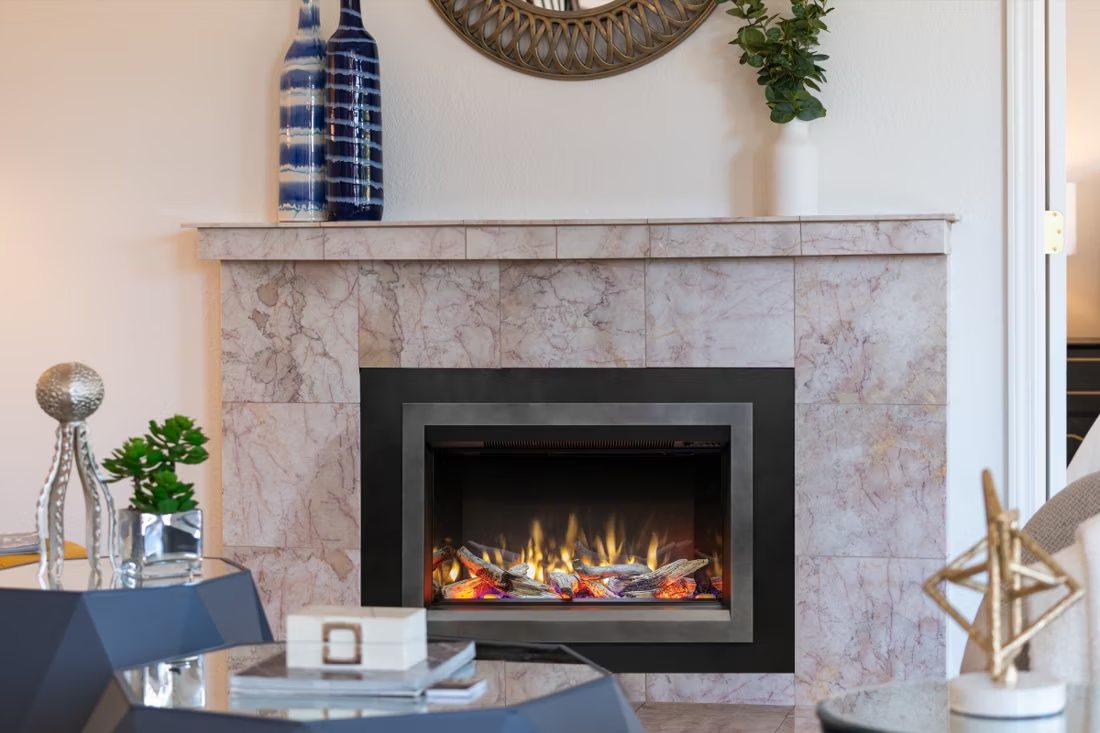
The easiest fireplace upgrade in Wayne County.
Wyandotte sits along the Detroit River in a climate zone (5A) that sees a long, demanding heating season, with winter lows averaging 18°F—cold enough to sit alongside places like Buffalo, NY for a typical heating season. Most of the city's housing stock dates to the early-to-mid 1900s, when Wyandotte grew up around its shipyards and chemical plants: brick bungalows, American Foursquares, and postwar colonials, many without an existing masonry chimney or an easy gas line run. That's exactly the gap electric fireplaces fill well.
Electric units need no venting, no gas hookup, and no annual chimney sweep—they plug into a standard outlet or, for larger built-ins, a dedicated circuit an electrician can add in an afternoon. Wyandotte is also one of the few Michigan cities with its own municipal electric utility, Wyandotte Municipal Services Commission, running alongside DTE Electric Company depending on which side of the service boundary a home sits on. WMSC's residential rate runs meaningfully lower than DTE's, which matters if you're planning to run a 1,500-watt unit for a few hours most winter evenings—it's one of the few fuel choices in this guide where your address inside city limits can directly change your operating cost.
Three steps. No salesperson until you're ready.
Tell us about your project
Your zip code, your situation, and the fuel you're leaning toward—or let the answers point you to one.
See what's actually available
The brands dealers within 100 miles genuinely carry—real options, never a catalog mirage.
Get your dealer & Project Guide
A trusted local dealer, plus the free Project Guide & Parts List that names every component of the job.
Frequently Asked Questions
How much does an electric fireplace cost to install in Wyandotte?
It depends heavily on the style. A freestanding or tabletop electric unit is essentially plug-and-play—$200 to $700 for the unit itself with no installation cost beyond an outlet you already have. A wall-mounted or built-in electric fireplace that needs its own 120V or 240V circuit typically runs $1,200 to $3,500 installed, including a licensed electrician's time and any surround or mantel carpentry. Electric inserts sized to fit an existing masonry firebox in one of Wyandotte's older homes usually land in the $800 to $2,000 range. None of these require the chimney work, gas line permits, or clearance-to-combustible calculations that wood or gas installs do, which keeps the total cost well below either of those options.
Will an electric fireplace actually heat my house?
Not the whole house—and it isn't designed to. Most electric fireplaces put out 4,600 to 9,000 BTU, similar to a space heater, which is enough to comfortably warm a single bedroom, den, or basement rec room but won't offset a Wyandotte winter's long, demanding heating season on its own. Homeowners here generally use them for zone heating—running the furnace lower and heating the room they're actually sitting in—or purely for ambiance with the heater switched off in the shoulder seasons. If you're hoping to heat a whole floor of an older Wyandotte bungalow, a wood or gas insert will do more work per dollar of fuel.
Does it matter if I'm on DTE or Wyandotte Municipal electric service?
Yes, and it's worth checking your bill before you buy. DTE Electric Company's residential rate runs close to 20 cents per kWh, while Wyandotte Municipal Services Commission—the city's own utility, which serves much of Wyandotte proper—charges closer to 16 cents per kWh. Run a typical 1,500-watt electric fireplace on high for 8 hours a day and you're looking at roughly $2.40 a day on DTE versus about $1.95 a day on WMSC power. It's not a reason to move, but it does mean your actual operating cost depends on which utility serves your specific address.
Do I need a permit or an electrician to install one?
A plug-in freestanding or insert unit that draws under 1,500 watts on a standard 15-amp outlet needs neither—it's no different from plugging in a space heater. A built-in wall unit or a larger insert that requires a new dedicated circuit does need a licensed electrician, and depending on the scope of the work, the City of Wyandotte Building Department may require an electrical permit for that circuit. Local hearth dealers who install built-in electric units typically coordinate this directly, so you're not left calling the city yourself.
What's the difference between an electric insert, a built-in, and a freestanding electric fireplace?
An electric insert is sized to slide into an existing masonry firebox—a common retrofit in Wyandotte's older brick homes that already have a fireplace opening but no working chimney liner. A built-in electric fireplace is framed into a wall like a TV niche, often as part of a basement finish or remodel, and needs its own housing and trim kit. A freestanding electric fireplace is a stove-shaped or mantel-style unit that simply sits on the floor and plugs in—no construction required at all. For a quick supplemental-heat upgrade with zero remodeling, freestanding is the simplest path; for a permanent focal point in a renovated room, built-in is the more common choice.
Is electric a good fit for a home without an existing chimney?
It's often the best fit. A lot of Wyandotte's housing stock—the postwar colonials and smaller bungalows especially—was never built with a second chimney flue, which rules out a straightforward wood or gas fireplace without adding venting from scratch. Electric fireplaces sidestep that problem entirely since they produce no combustion byproducts and need no flue at all. That's why electric inserts and built-ins are common choices for basement finishes and additions in this part of Wayne County, where running new venting through an existing structure gets expensive fast.
Electric vs. wood vs. gas—which makes sense for my Wyandotte home?
Wood remains a strong option locally given the oak, maple, birch, and ash that come through southeast Michigan woodlots, and it works without power during outages—a real consideration with Wyandotte's ice-storm-prone winters. Gas delivers the most heat output for the money and instant on-off convenience where a gas line is already run. Electric wins on installation simplicity and safety—no venting, no combustion, no permit for a plug-in unit—but costs more per BTU to run than either wood or gas, and it goes dark in a power outage unless you're on battery backup. For a rental unit, condo, or a room where running new venting isn't practical, electric is usually the most sensible choice; for primary heat in a drafty older home, wood or gas will do more work.
How much does it cost to actually run an electric fireplace here?
A typical 1,500-watt unit on its highest heat setting draws 1.5 kWh per hour. Run it three hours a night through a Wyandotte winter—DTE territory at roughly 20 cents per kWh—and you're spending about 90 cents a day, or around $25 a month. On Wyandotte Municipal Services Commission's lower rate, that drops closer to $22 a month. Most owners run the heater intermittently and use the flame effect on its own the rest of the time, which cuts the electric cost to almost nothing since the LED flame draws only a few watts.
Are electric fireplaces a good option for condos, apartments, or rental units in Wyandotte?
Yes—this is one of the more common uses for electric fireplaces in a denser river city like Wyandotte, where a fair number of residents live in condos, duplexes, or rental units along Biddle Avenue and near the riverfront. Because electric units need no venting and no gas line, they're typically allowed in situations where a landlord or condo association would never approve a wood or gas installation, and a freestanding unit can move with a tenant when they relocate. It's a low-commitment way to add real ambiance and a bit of supplemental warmth without any structural changes to the unit.
Can I put a TV above my fireplace?
Yes—with an asterisk. Fireplaces are hot and TVs don't like heat. Either put a mantel between them to deflect rising warmth, or choose a fireplace with heat-management technology that creates a cool zone on the wall above—the wall stays around 125 degrees, barely warm, while the room still gets full heat. If you like clean lines and don't want a mantel, heat management is the answer.
Do electric fireplaces actually produce heat?
Yes—most put out around 4,800–5,000 BTUs from a standard outlet, which comfortably warms a bedroom, office, or den as a comfort-zone heater. What they won't do is carry a whole house the way wood, gas, or pellet can. Think of electric as ambiance-first with honest supplemental heat: flames on with no heat in July, flames plus warmth in January.
What is an in-home preview and do I need one?
It's a visit where a hearth professional measures your space, confirms the model you picked actually works in your home, and walks the specs—framing, gas line, venting, finish work—before anything is ordered. Some details you just can't know until you see the house. Never make a down payment without one; it's the single most-skipped step that burns buyers.
Can I install a fireplace myself?
If you're putting a fire in your house on purpose, it's best to work with an expert. Unless you're genuinely experienced in framing, gas line, vent pipe, and the national code on clearances to combustibles, have a professional do it—and ideally the same company that sells you the fireplace, so warranty, service, and liability all live under one roof.
Nearby Dealers
Hearth shops serving Wyandotte and the surrounding area. Every listing shows whether it is a WhyFire partner, a dealer we have verified as authorized for the brands we recommend, or a local business carrying hearth products. No manufacturer pays for placement. How we verify dealers →
Scott’s Fireplace
Syles
Allstate By Watsons
Allstate Billiards, Patio, Fireplace
Premier Furniture
Marquis Fireplace Ltd.
Glenn's Fireplace & Spa
Fireside Hearth & Home - Canton
AirMaster
Fireside Hearth & Home - Royal Oak
This Is It Shop's House Of Fire
Electric Service in Wyandotte
An electric fireplace's heater draws about 1,500 watts—pennies per hour at local rates.
Dte Electric Company
Wyandotte Municipal Serv Comm
Find your electric fireplace in Wyandotte.
Tell us a bit about your home and we'll put together a free Project Guide & Parts List—the right electric unit, the wiring it needs, and a trusted local Wyandotte-area dealer to install it.
Find Your Fireplace →