
Add heat anywhere in your Twin Lake home—no venting, no chimney.
Zone heat for additions, bedrooms, and finished spaces near Lake Michigan's shoreline chill—installed by a local pro, not shipped in a box.
Every Project Starts From One of These Five Situations
A practical fit for a small, spread-out community.
Twin Lake is a small unincorporated community in Muskegon County, sitting at 689 feet with winter lows averaging 16°F and a long, cold heating season—colder, winter-wise, than Burlington, VT. Lake-effect snow off Lake Michigan adds to the season's length. Plenty of homes here still lean on wood heat from local oak, maple, birch, and ash, but electric fireplaces have carved out a real niche: additions, finished basements, bedrooms, and rental cottages where running a masonry chimney or a new gas line isn't practical or worth the cost.
Twin Lake's electric service is split between Consumers Energy, DTE Electric, and Wolverine Power Supply Cooperative, the rural co-op that serves parts of outlying Muskegon County. At Michigan's residential rate of roughly $0.20/kWh, running an electric fireplace as a zone heater in one or two rooms is inexpensive; running one as your only heat source through a Michigan winter is not. Because much of the area outside Whitehall and Muskegon proper has limited natural gas infrastructure, propane is the common whole-home fallback—which is exactly why electric units are popular for supplemental warmth: no fuel tank, no venting, and a straightforward plug-in or dedicated-circuit install.
Three steps. No salesperson until you're ready.
Tell us about your project
Your zip code, your situation, and the fuel you're leaning toward—or let the answers point you to one.
See what's actually available
The brands dealers within 100 miles genuinely carry—real options, never a catalog mirage.
Get your dealer & Project Guide
A trusted local dealer, plus the free Project Guide & Parts List that names every component of the job.
Frequently Asked Questions
How much does an electric fireplace installation cost in Twin Lake?
Plug-in electric inserts and mantel packages typically run $300 to $1,200 installed, since most just need an existing outlet—no permit, no electrician. Built-in or wall-mounted units that require a dedicated 20-amp circuit, in-wall wiring, or recessed framing run $1,800 to $4,500 once an electrician and finish carpentry are factored in. Homes converting an old wood-burning fireplace to an electric insert usually land in the middle of that range, since the masonry opening is already there and just needs a surround and outlet added.
Do I need a permit to install an electric fireplace in Twin Lake?
A plug-in electric fireplace that runs off an existing outlet doesn't require a permit. If you're adding a dedicated circuit—which most built-in units need to run safely at full output—that electrical work falls under Muskegon County's building and electrical permitting, and it needs to be pulled by a licensed electrician. Local dealers who install built-in units typically coordinate the electrician and the permit as part of the job, so you're not managing two separate trades.
Will an electric fireplace actually heat a room, or is it just for looks?
Most residential electric fireplaces use a 1,500-watt heater rated around 5,000 BTU, enough to noticeably warm a single room—a bedroom, den, or finished basement space—but not enough to carry a whole house through a long, cold Twin Lake winter. Think of it as zone heat that lets you turn down the furnace or supplement a propane system in the room you're actually using, rather than a primary heat source for the whole home.
What does it cost to run an electric fireplace at Michigan electric rates?
At the local residential rate of about $0.2013/kWh, a 1,500-watt electric fireplace running on high for 8 hours costs roughly $2.40 a day, or about $70 over a full month of daily evening use. That's reasonable for supplemental heat in one or two rooms but adds up quickly if you're trying to heat more space than the unit is rated for. Whether you're on Consumers Energy, DTE, or Wolverine Power Supply Cooperative service, the rate is close enough that the math doesn't change much—sizing the unit correctly for the room matters more than which utility serves your address.
What happens to an electric fireplace during a power outage?
It goes off—completely, with no ember glow, no backup mode. That's worth thinking through in Twin Lake, where Wolverine Power Supply Cooperative's rural lines and winter lake-effect storms can mean longer restoration times than in town. Homes that need heat during outages typically pair an electric fireplace for everyday convenience with a wood stove or propane heater as backup, rather than relying on electric alone for cold-weather resilience.
What type of electric fireplace works best for a Twin Lake home?
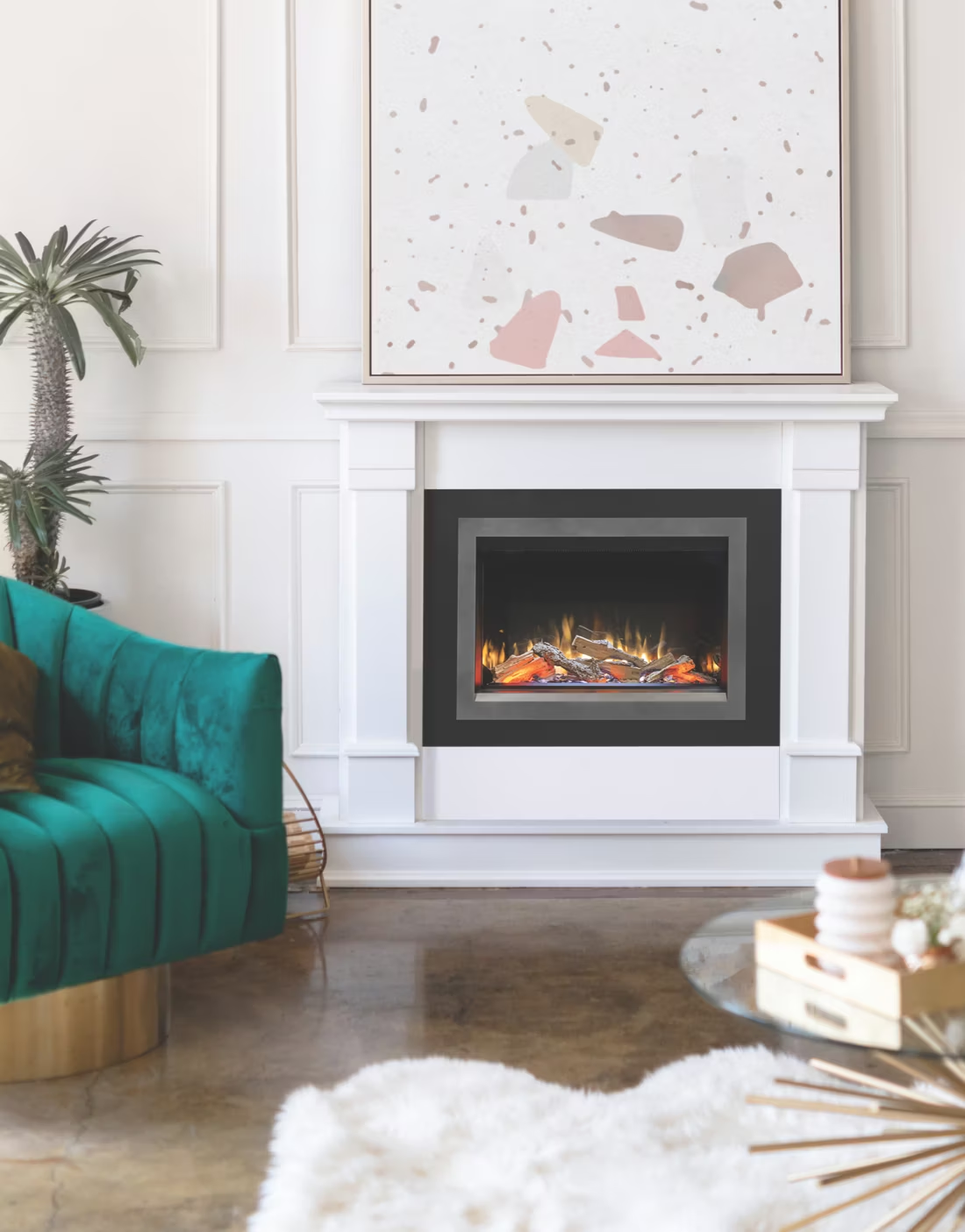
For converting an existing masonry fireplace, an electric insert from a brand like Dimplex or Napoleon slides into the opening and uses the same footprint, no chimney work needed. For additions or rooms without any existing fireplace, a wall-mounted linear unit or a zero-clearance built-in framed into the wall gives you a cleaner, more built-in look. Freestanding electric stoves are a low-cost option for a bonus room or garage conversion where you want heat and ambiance without any construction. A local dealer can walk you through which format fits your specific room.
Electric vs. wood—which makes more sense for my Twin Lake home?
Wood, burned in a stove fed by local oak, maple, birch, or ash, delivers far more heat output and keeps working when the power's out—a real consideration on rural Wolverine co-op lines. Electric wins on convenience: no ash, no chimney maintenance, no wood stacking, and installation that a plug-in unit can complete in an afternoon. Many Twin Lake homes end up with both—a wood stove or insert for serious winter heat and outage backup, and an electric unit in a bedroom or den for effortless daily warmth without tending a fire.
Can I put an electric insert into my existing wood-burning fireplace?
Yes, and it's one of the more popular projects for older Twin Lake homes with a masonry fireplace that's rarely used. An electric insert fits into the existing firebox opening, plugs into a nearby outlet or dedicated circuit, and gives you flame-effect heat without cutting or cleaning a chimney. It's a lower-cost, lower-hassle alternative to a gas conversion for homeowners who mainly want the look and some supplemental warmth rather than serious heat output.
How do I know what size electric fireplace I need?
Match the unit's BTU rating to the room, not the whole house—most electric fireplaces are built for single-room heating regardless of listed square footage. A 26 to 40-inch insert or linear unit rated around 4,600 to 5,200 BTU comfortably supplements a bedroom or living room in the 200 to 400 square foot range. Larger open layouts usually need either a larger unit or the expectation that it's ambiance-plus-supplemental-heat rather than a room's sole source of warmth. A local dealer can size this correctly during a quick in-home look at the space.
Can I put a TV above my fireplace?
Yes—with an asterisk. Fireplaces are hot and TVs don't like heat. Either put a mantel between them to deflect rising warmth, or choose a fireplace with heat-management technology that creates a cool zone on the wall above—the wall stays around 125 degrees, barely warm, while the room still gets full heat. If you like clean lines and don't want a mantel, heat management is the answer.
Do electric fireplaces actually produce heat?
Yes—most put out around 4,800–5,000 BTUs from a standard outlet, which comfortably warms a bedroom, office, or den as a comfort-zone heater. What they won't do is carry a whole house the way wood, gas, or pellet can. Think of electric as ambiance-first with honest supplemental heat: flames on with no heat in July, flames plus warmth in January.
How much should I budget for a fireplace?
For an average home—covering the fireplace, the vent pipe, and basic installation—a budget between $3,900 and $5,500 gives you a lot of options across wood, gas, and pellet. By the time you add finish work, gas line, and electrical, the average complete installation lands between $5,000 and $12,000 all-in. In a remodel or new build, a good rule is to put about 2.5% of the total project cost toward the fireplace.
Does a fireplace add value to my home?
On average, a fireplace adds back to the home about the same amount you spent installing it. Add the monthly savings from heating the rooms you actually use instead of the whole house—often hundreds of dollars a year—and the value case is strong before you even count what a fire does for how your family uses the room.
Nearby Dealers
Hearth shops serving Twin Lake and the surrounding area. Every listing shows whether it is a WhyFire partner, a dealer we have verified as authorized for the brands we recommend, or a local business carrying hearth products. No manufacturer pays for placement. How we verify dealers →
Stoves N More LLC
Fireplace And Stone
Fireplace Gallery Of West Mich
Electric Service in Twin Lake
An electric fireplace's heater draws about 1,500 watts—pennies per hour at local rates.
Consumers Energy Co
Dte Electric Company
Wolverine Power Supply Coop
Find your electric fireplace in Twin Lake.
Tell us about your room and we'll put together a free Project Guide & Parts List—the right unit, the wiring needs, and a trusted local dealer to install it.
Find Your Fireplace →