
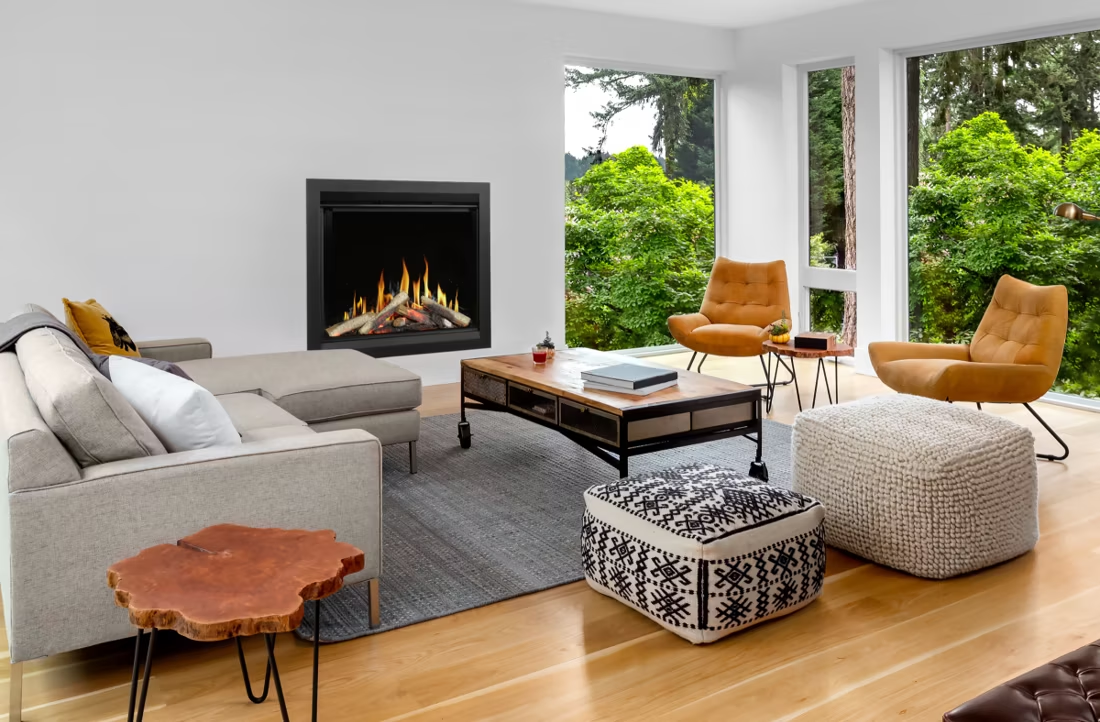
Find the right electric fireplace for your St. Joseph County home.
No venting, no chimney, no gas line—just a supplemental heat source for the long St. Joseph County winter, from Three Rivers to Sturgis to Constantine. Find the right unit for your room and get matched with a trusted local dealer.
Every Project Starts From One of These Five Situations
Fast to install, but sizing still matters in St. Joseph County.
St. Joseph County spreads about 27,000 residents across small communities in Michigan's south-central farm belt—Three Rivers, Sturgis, Constantine, White Pigeon, county-seat Centreville, Mendon, Nottawa, and Colon, the self-styled Magic Capital of the World. Climate zone 5A and an average winter low of 16°F put the county in the same general cold-climate bracket as Buffalo, NY—furnaces run for roughly seven months of the year here. Electric fireplaces are common across the county, but locals tend to understand them for exactly what they are: comfort heat for one room, not a substitute for the furnace.
The county's housing stock—older farmhouses, mid-century brick ranches, and a meaningful share of manufactured and mobile homes in the rural townships—explains a lot of the electric fireplace demand. No chimney, no gas line, and no combustion clearances to fuss over makes electric the easiest add for a room addition, a finished basement, or a mobile home bedroom the ductwork barely reaches. Indiana Michigan Power serves much of the county's incorporated areas, while Home Works Tri-County Electric Cooperative covers many of the rural townships—either way, these units run entirely on grid power, which matters when winter ice storms take down lines in the county's more rural stretches.
Three steps. No salesperson until you're ready.
Tell us about your project
Your zip code, your situation, and the fuel you're leaning toward—or let the answers point you to one.
See what's actually available
The brands dealers within 100 miles genuinely carry—real options, never a catalog mirage.
Get your dealer & Project Guide
A trusted local dealer, plus the free Project Guide & Parts List that names every component of the job.
Frequently Asked Questions
How much does an electric fireplace installation cost in St. Joseph County?
Plug-in electric inserts and mantel units run $300 to $1,500 installed—often just a matter of setting the unit and plugging into an existing outlet. Built-in linear electric fireplaces that require a dedicated 20-amp circuit, wall framing, or a recessed opening typically run $1,500 to $4,000 once an electrician is involved, more if the breaker panel needs upgrading in an older Three Rivers or Sturgis farmhouse. Local dealers will quote the difference between a simple insert swap and a full built-in after seeing your wall and panel.
Can an electric fireplace heat my whole house?
No—electric fireplaces are zone heaters, not furnace replacements. Most units put out roughly 1,500 watts of heat, enough to noticeably warm a single room, but St. Joseph County's long, roughly seven-month heating season and 16°F average winter low mean the furnace still has to carry the rest of the house. Most county homeowners use them the way they're meant to be used: supplemental heat for a finished basement, a family room addition, or a mobile home bedroom the ductwork doesn't reach well—not a way to shut the furnace off for the season.
Do I need an electrician to install an electric fireplace?
For a plug-in insert or mantel unit, no—you plug it into a standard 120V outlet like any large appliance. For a built-in linear fireplace, or any unit drawing more than 1,500 watts on a panel that's already near capacity—not uncommon in older housing stock around Constantine and White Pigeon—a licensed electrician should run a dedicated circuit. The St. Joseph County Building Department requires an electrical permit for new circuit work, and most local dealers coordinate that as part of the installation.
What's the difference between an electric insert, an electric stove, and a wall-mounted electric fireplace?
An electric insert is built to slide into an existing masonry fireplace opening, a common retrofit for older farmhouses around Centreville and Mendon that have an unused wood-burning fireplace they'd rather convert to something maintenance-free. An electric stove is a freestanding cabinet-style unit that mimics a wood stove's footprint without any chimney. A wall-mounted or linear electric fireplace is a built-in unit recessed into new framing, popular in newer construction and remodels near Sturgis and Three Rivers. All three run on standard household power or a dedicated circuit—the right choice depends on whether you're retrofitting an existing opening or building new.
Will my electric fireplace still work during a power outage?
No—this is the honest tradeoff worth knowing before you buy. Electric fireplaces run entirely on grid power, so when an ice storm takes down lines, which happens most winters somewhere in the rural townships served by Home Works Tri-County Electric Cooperative, the fireplace goes dark along with everything else. Households here who want heat that survives an outage typically pair an electric fireplace for everyday ambiance with a wood stove or insert as backup—oak, maple, birch, and ash are all common local species that burn well and are widely available around the county.
What's the best electric fireplace for St. Joseph County's climate?
For genuine supplemental heat during the coldest stretches—when overnight lows regularly sit near 16°F—look for units with a stated heating capacity in the 400-1,500 square foot range and true fan-forced heat rather than a flame-only decorative model. Brands like Dimplex and Napoleon build linear inserts sized for exactly this kind of zone heating. If ambiance matters more than warmth—say, in a room the furnace already handles well—a lower-wattage flame-effect unit is fine. A local dealer can match wattage to your actual room rather than guessing off a box label.
Do I need a permit to install an electric fireplace in St. Joseph County?
A simple plug-in insert or mantel unit typically doesn't need a permit since it doesn't involve new wiring. A built-in electric fireplace requiring a dedicated circuit, wall framing, or a change to existing electrical service does require an electrical permit through the St. Joseph County Building Department, or the local municipal building office if you're inside Three Rivers, Sturgis, or Constantine city limits. Most dealers handle this paperwork as part of the installation quote.
Electric vs. wood vs. gas—which fireplace fits my St. Joseph County home?
Wood remains the most reliable choice for actual backup heat during outages, and the county's abundant oak, maple, birch, and ash make it a practical fuel for anyone with land or a woodlot. Gas offers instant, higher-output heat, but depends on either in-town natural gas service or a propane tank in rural areas. Electric is the easiest and cheapest to install—no venting, no fuel storage, no chimney—but it's comfort heat for one room, tied to the grid. Many St. Joseph County homeowners land on electric for a living room or basement and keep a wood stove or gas furnace as the primary heat source for the rest of the house.
How much does it cost to run an electric fireplace each month?
A typical 1,500-watt electric fireplace run four hours a night for a month uses roughly 180 kWh. At regional Michigan electric rates—Indiana Michigan Power and Home Works Tri-County Electric Cooperative both run in the neighborhood of 15 to 18 cents per kWh—that's about $27 to $32 a month of supplemental use, considerably less than running a portable space heater around the clock and far cheaper than an extra furnace cycle during a St. Joseph County cold snap.
Do electric fireplaces actually produce heat?
Yes—most put out around 4,800–5,000 BTUs from a standard outlet, which comfortably warms a bedroom, office, or den as a comfort-zone heater. What they won't do is carry a whole house the way wood, gas, or pellet can. Think of electric as ambiance-first with honest supplemental heat: flames on with no heat in July, flames plus warmth in January.
Can I put a TV above my fireplace?
Yes—with an asterisk. Fireplaces are hot and TVs don't like heat. Either put a mantel between them to deflect rising warmth, or choose a fireplace with heat-management technology that creates a cool zone on the wall above—the wall stays around 125 degrees, barely warm, while the room still gets full heat. If you like clean lines and don't want a mantel, heat management is the answer.
How much should I budget for a fireplace?
For an average home—covering the fireplace, the vent pipe, and basic installation—a budget between $3,900 and $5,500 gives you a lot of options across wood, gas, and pellet. By the time you add finish work, gas line, and electrical, the average complete installation lands between $5,000 and $12,000 all-in. In a remodel or new build, a good rule is to put about 2.5% of the total project cost toward the fireplace.
What is an in-home preview and do I need one?
It's a visit where a hearth professional measures your space, confirms the model you picked actually works in your home, and walks the specs—framing, gas line, venting, finish work—before anything is ordered. Some details you just can't know until you see the house. Never make a down payment without one; it's the single most-skipped step that burns buyers.
Find your electric fireplace in St. Joseph County.
Tell us about your room, your panel, and your home, and we'll match you with a trusted local dealer and a free Project Guide & Parts List—the exact parts, wiring notes, and recommended installer for your St. Joseph County electric fireplace project.
Find Your Fireplace →