
Steady heat for a town with winters as long and cold as Madison, Wisconsin's.
Spring Arbor sits in climate zone 5A with winter lows averaging 18°F—closer to Madison, Wisconsin than to the rest of the Lower Peninsula gets credit for. We'll help you find a trusted local dealer who knows the gas line work and the venting your house actually needs.
Every Project Starts From One of These Five Situations
A small town built around a gas line, not a woodpile.
At just over 1,000 feet of elevation with winters that run about as long and cold as Madison, Wisconsin's, Spring Arbor sits in the same cold-climate bracket as Madison—a longer, harder heating season than most people associate with south-central Michigan. Winter lows average 18°F, and the village and surrounding township both see plenty of nights well below that. It's not extreme by Upper Peninsula standards, but it's more than enough to make a secondary heat source worth having, not just a nice-to-have for ambiance.
Consumers Energy serves this part of Jackson County for both electric and natural gas, which is a big part of why gas fireplaces are the default here rather than wood or pellet setups. Local building stock skews toward smaller village lots and Spring Arbor Township parcels near the university, without the kind of national forest or large private timber access that keeps wood-cutting practical in more rural stretches of the state—that's reflected in wood and pellet stoves being genuinely uncommon around here, even with oak, maple, birch, and ash all growing locally and pellet brands like Lignetics and Somerset Pellet Fuel sold regionally. A direct-vent gas fireplace tied into an existing gas line is simply the lower-friction option for most Spring Arbor homeowners.
Three steps. No salesperson until you're ready.
Tell us about your project
Your zip code, your situation, and the fuel you're leaning toward—or let the answers point you to one.
See what's actually available
The brands dealers within 100 miles genuinely carry—real options, never a catalog mirage.
Get your dealer & Project Guide
A trusted local dealer, plus the free Project Guide & Parts List that names every component of the job.
Frequently Asked Questions
How much does a gas fireplace installation cost in Spring Arbor?
Most gas fireplace and insert installs in this part of Jackson County land somewhere between $4,000 and $9,500. Homes already on Consumers Energy natural gas service with a line running near the intended fireplace location—common in the older farmhouses and ranch homes scattered through the village and Spring Arbor Township—tend to sit toward the lower end. New construction or additions needing a fresh gas line run, or a full built-in unit framed into a wall rather than an insert, push toward the top of that range.
Can I convert an old wood-burning fireplace to gas?
Yes, and it's a common upgrade in Spring Arbor's older housing stock, much of which was built with a traditional masonry fireplace designed to burn local oak or maple. A gas insert with a stainless liner run through the existing chimney is usually the most cost-effective path, since it reuses the chase and firebox you already have rather than requiring new framing. Given how little of the surrounding land supports practical wood-cutting compared to more forested parts of Michigan, converting to gas is often less about convenience alone and more about having a heat source that doesn't depend on hauling in cordwood.
Is natural gas or propane the right call for my address?
Consumers Energy provides natural gas service through the village of Spring Arbor and much of the surrounding developed area, so most in-town addresses can tie a fireplace directly into existing service. Homes further out in Spring Arbor Township on larger rural parcels sometimes fall outside the natural gas footprint and run on propane instead—usually with a tank already in place for a furnace or water heater. Either fuel works fine for a fireplace; your local dealer will size the appliance and line the same way regardless of which one you're on.
Will a gas fireplace still work if the power goes out?
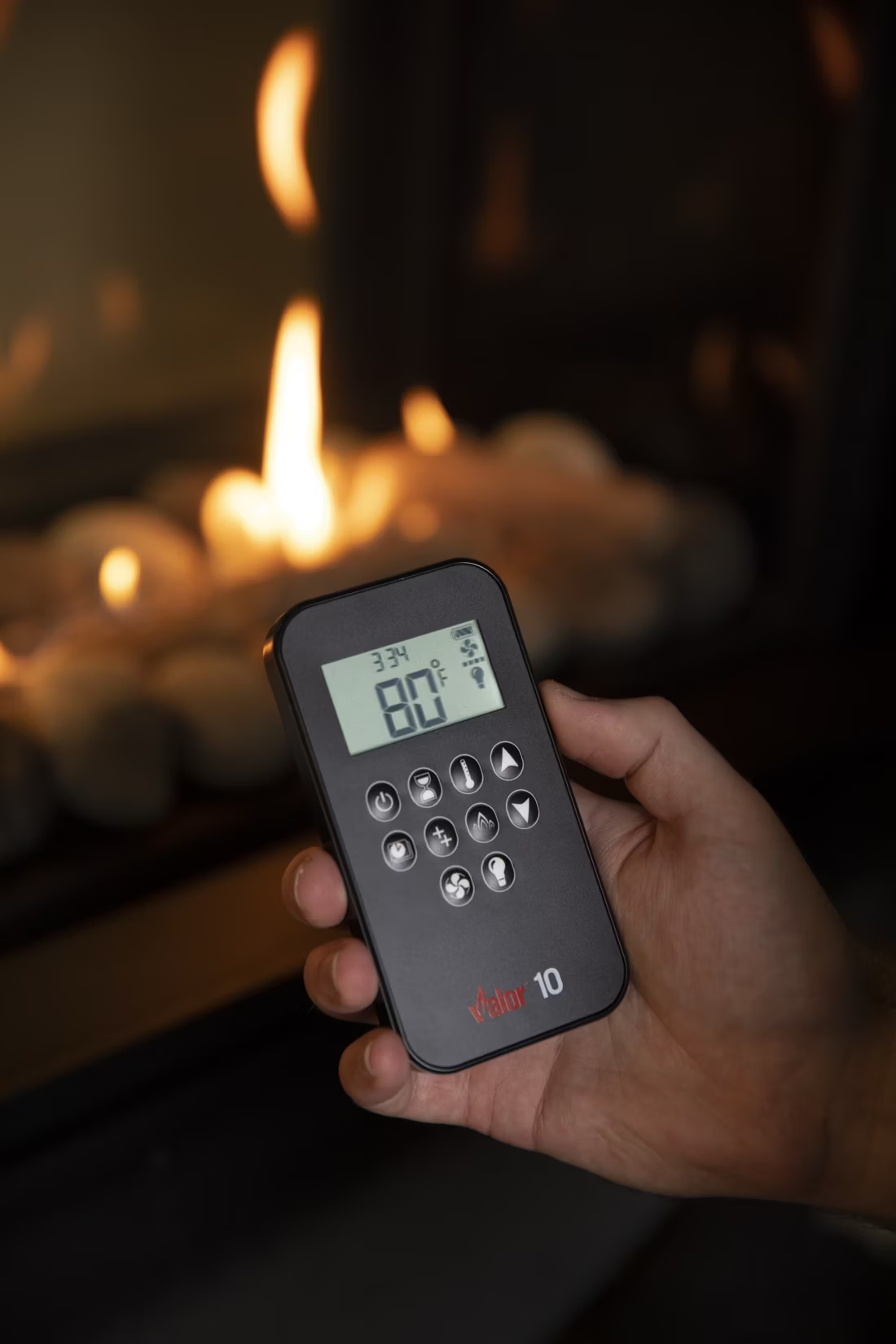
Most will, and that matters here given how ice storms and heavy lake-effect snow bands periodically knock out Consumers Energy service across Jackson County in winter. Units with intermittent pilot ignition (IPI) run on a AA battery backup that kicks in automatically when the power drops. Valor models skip the battery altogether since their pilot's thermocouple generates its own current. If backup heat during an outage is a priority for your household, ask your dealer which ignition system is on any model you're considering—it's a meaningful difference, not a minor spec.
What's the difference between a gas fireplace, insert, and stove?
A gas fireplace is a built-in unit framed into a wall, which fits well in new construction or a full remodel. A gas insert drops into an existing masonry firebox and reuses the chimney chase, which is the more common route for the older homes around Spring Arbor's village center that already have a wood fireplace opening. A gas stove is freestanding on a hearth pad, similar in footprint to a wood stove but running off a gas line or propane tank instead of cordwood—a good option if you want supplemental heat in a room without an existing chimney.
Do I need a permit to install a gas fireplace in Spring Arbor?
Yes. Depending on whether you're inside the village or out in Spring Arbor Township, permitting typically runs through the Jackson County Construction Code Department, covering both the building permit and the gas line work, which has to be done by a licensed gas fitter. Most hearth dealers who install regularly in this area handle the permit application and schedule the final inspection as part of the job, so you're not coordinating the paperwork yourself.
Should I get a direct-vent or vent-free gas fireplace?
Direct-vent units pull combustion air from outside and exhaust it back outside through sealed venting, and they're the safer, more code-friendly choice for a fireplace that's going to run regularly through a six-month-plus heating season. Vent-free units burn into the room and are legal under Michigan code with proper room-sizing, but they add moisture and combustion byproducts indoors. Spring Arbor doesn't carry the air quality restrictions that push some Western cities firmly toward direct-vent, but most local installers still recommend it by default for any fireplace intended for daily rather than occasional use.
How often does a gas fireplace need to be serviced?
Plan on an annual check, ideally in late summer or early fall before the first real cold snap rather than mid-winter when technicians are booked solid. A service visit covers the burner, pilot assembly, gas connections, and venting, plus a glass cleaning. With Spring Arbor's heating season stretching well past six months most years, a unit running daily is the kind of use that makes skipping the annual check show up as an ignition problem on the coldest night, not a minor inconvenience.
Gas or electric—which makes more sense for a Spring Arbor home?
Gas wins on real heat output for a climate with winters as long and cold as Madison, Wisconsin's—a direct-vent gas fireplace can meaningfully offset a furnace's workload during a cold stretch. Electric fireplaces install for far less, generally $400 to $1,200, and need no venting or gas line at all, but at Consumers Energy's residential rate of about 20.1 cents per kWh, running one as a serious heat source rather than an ambiance feature gets expensive fast. Most Spring Arbor homeowners choose gas for the primary living space and treat electric units as a low-commitment option for a bedroom or bonus room where running a gas line isn't practical.
Why is my open fireplace making my house colder?
Open fireplaces suck—literally. As the fire burns, it consumes air your furnace already paid to heat and pulls it out through the chimney, so the house is actually colder after the fire goes out than before you lit it. An insert fixes this: it seals the chimney, puts fixed glass across the front, and turns that hole in your house into a real heat source.
What's the difference between an insert and a zero-clearance fireplace?
An insert is a fireplace that slides into a pre-existing wood-burning fireplace—if you don't have one, there's nothing to insert it into. A zero-clearance fireplace is built into a framed wall, which makes it the answer for remodels and new construction. Simple test: existing masonry fireplace means insert; blank or framed wall means zero-clearance.
Can a fireplace actually lower my heating bill?
Yes—by creating a comfort zone. A furnace heats every square foot of the house just to warm the one room you're in; a gas fireplace on low burns roughly a sixth of the gas a typical furnace does. Set the furnace around 55–60 degrees as a baseline, then heat the rooms your family actually uses. Families who heat this way commonly save $20–$60 a month.
Does a fireplace add value to my home?
On average, a fireplace adds back to the home about the same amount you spent installing it. Add the monthly savings from heating the rooms you actually use instead of the whole house—often hundreds of dollars a year—and the value case is strong before you even count what a fire does for how your family uses the room.
Nearby Dealers
Hearth shops serving Spring Arbor and the surrounding area. Every listing shows whether it is a WhyFire partner, a dealer we have verified as authorized for the brands we recommend, or a local business carrying hearth products. No manufacturer pays for placement. How we verify dealers →
We’ve paused dealer listings for this connection today. Enter your zip or postal code above to find dealers near you, or come back tomorrow.
Popular Gas Brands
Where each brand came from, what's inside it today, and every current model. No brand pays to be here. Not every dealer carries every brand, so enter your zip code to see what's sold near Spring Arbor.
Kozy Heat
Kozy Heat was founded in 1976 by Dudley Hussong in Lakefield, Minnesota, and incorporated as Hussong Manufacturing Co., Inc. in 1978.
28 gas models →Fireplace Xtrordinair
Fireplace Xtrordinair, now often called FireplaceX, is the fireplace brand of Travis Industries, Inc., of Mukilteo, Washington.
25 gas models →Town & Country
Town & Country Fireplaces is the luxury gas fireplace brand of Pacific Energy Fireplace Products Ltd., of Duncan, British Columbia.
14 gas models →Lopi
Lopi is a wood, pellet, and gas stove brand founded by Kurt Rumens in Bellevue, Washington, in 1979.
7 gas models →Forge & Flame
Forge & Flame is the stove brand Hearth & Home Technologies introduced in August 2023 to bring Vermont Castings, Harman, and Quadra-Fire under one name.
6 gas models →Vermont Castings
Vermont Castings was founded in 1975 by Duncan Syme, the designer, and his brother-in-law Murray Howell, the business partner, in Randolph, Vermont.
6 gas models →Get your free Project Guide & Parts List for a Spring Arbor gas fireplace.
Tell us about your home and whether you're inside the village on Consumers Energy gas or out in the township on propane, and we'll help you find a trusted local dealer and send a free Project Guide & Parts List with the exact vent kit and parts your project needs.
Find Your Fireplace →