
On-demand heat for a village used to long, cold Michigan winters.
Schoolcraft sits at 878 feet in a 5A climate zone with winters in the same range as Madison, Wisconsin. I'll match you with a trusted local dealer who knows what actually gets permitted and installed on Kalamazoo County farmhouses and newer builds alike.
Every Project Starts From One of These Five Situations
Where gas fits into a small farm-country village.
At just under 1,500 people, Schoolcraft is small enough that most homes still lean on whatever heat source their farmhouse or ranch was built around decades ago, but the climate hasn't gotten any easier—an average winter low of 18°F and a long, six-plus-month heating season put it firmly in serious-heating-season territory, closer to Duluth than to Detroit in terms of how many months the furnace and any secondary heat source actually run. Oak, maple, birch, and ash are common in the woodlots around town, and plenty of households still keep a wood stove going, but a growing number are adding a gas fireplace or insert for heat that starts at the push of a button on the coldest mornings without hauling wood in from the barn.
Schoolcraft doesn't sit inside a major utility's core natural gas territory the way Kalamazoo proper does, so coverage on your specific road is worth confirming—some in-village addresses have natural gas service while outlying farm properties more commonly run on a propane tank instead. Either fuel path works fine for a direct-vent fireplace or insert. It's also worth knowing that electric service out here runs through Midwest Energy Cooperative or Wolverine Power Supply Cooperative rather than a big investor-owned utility, and rural co-op lines can be slower to restore after an ice storm—which is one more reason local homeowners often choose a gas unit with battery-backup ignition rather than one that depends entirely on household power to light.
Three steps. No salesperson until you're ready.
Tell us about your project
Your zip code, your situation, and the fuel you're leaning toward—or let the answers point you to one.
See what's actually available
The brands dealers within 100 miles genuinely carry—real options, never a catalog mirage.
Get your dealer & Project Guide
A trusted local dealer, plus the free Project Guide & Parts List that names every component of the job.
Frequently Asked Questions
How much does a gas fireplace installation cost in Schoolcraft?
Expect somewhere in the $4,000 to $10,000 range for most projects. A direct-vent insert going into an existing masonry firebox in one of Schoolcraft's older farmhouses—the kind originally built to burn oak or ash—tends to land toward the lower end, especially if a gas line is already nearby. A new built-in unit for an addition or a home without an existing chimney runs higher once you factor in fresh gas line work and through-wall venting. If your property is outside natural gas territory and needs a propane tank set, budget an extra $500 to $1,500 on top of the install itself.
Can I convert my existing wood fireplace to gas?
Yes, and it's a common upgrade for the older masonry fireplaces scattered around Schoolcraft that were originally built to burn local oak or maple. A gas insert typically slides into the existing firebox with a stainless liner run up the current chimney, which keeps the job from turning into full demolition. If you're on propane rather than natural gas, tell your dealer up front—the burner orifice and regulator setup differ, and it affects which units are even an option for your address.
Do I need natural gas service, or should I plan on propane?
It depends on exactly where your house sits. In-village addresses closer to downtown Schoolcraft are more likely to have natural gas service nearby, while farm properties out along the township roads more often run on a propane tank already used for the furnace or water heater. Neither is a dealbreaker—most direct-vent fireplace models a local dealer carries can be configured for either fuel—but it's worth confirming your specific coverage before you fall in love with a particular unit.
Will a gas fireplace still work if the power goes out?
Many will, and it's a real consideration here since electric service runs through Midwest Energy Cooperative or Wolverine Power Supply Cooperative rather than a large urban grid, and rural lines can take longer to come back after an ice storm or heavy snow. Units with intermittent pilot ignition (IPI) run on AA battery backup that kicks in automatically when the power drops. A few models, like some Valor fireplaces, skip batteries entirely because the pilot's thermocouple generates its own current. Ask specifically about the ignition system on any unit you're considering—for a co-op service area, it matters more than it would in town.
What's the difference between a gas fireplace, insert, and stove?
A gas fireplace is a built-in unit framed into a wall, which fits newer construction or a full remodel. A gas insert fits inside an existing masonry firebox, the common route for Schoolcraft's older homes that already have a chimney chase from years of burning local oak or ash. A gas stove stands freestanding on a hearth pad, similar footprint to a wood stove but running off a gas line or propane tank instead of split wood. For most existing homes in the village and surrounding township, an insert is the least disruptive option since it reuses the chimney you already have.
Do I need a permit to install a gas fireplace in Schoolcraft?
Yes. Schoolcraft is small enough that it doesn't run its own building department, so permitting for the village and the surrounding township typically routes through Kalamazoo County's Construction Codes Department, plus a gas line permit tied to licensed gas-fitter work if new piping is involved. Most hearth dealers who install in this area are used to coordinating with the county and will handle the paperwork and final inspection as part of the job.
Vented vs. vent-free gas fireplaces—what should I know here?
Direct-vent units pull combustion air from outside and exhaust it back outside through sealed venting, which makes them the safer choice for daily use and the standard most dealers install in Michigan homes. Vent-free units burn into the room and are legal under Michigan code but come with strict room-size and ventilation rules. Since Schoolcraft has no air quality non-attainment concerns to worry about, the choice here comes down to comfort and safety preference rather than local restrictions—but most homeowners still end up with direct-vent for the peace of mind, especially in tightly-built newer homes.
How often does a gas fireplace need to be serviced?
Plan on an annual check, ideally in late summer or early fall before the six-plus-month heating season Schoolcraft typically sees. A technician checks the burner, pilot assembly, gas connections, and venting, and cleans the glass—a much lighter lift than sweeping a wood chimney, but skipping it on a unit running daily through a long Michigan winter is how an ignition problem shows up on the coldest night of the year. Expect roughly $150 to $250 for a standard visit.
Gas vs. wood—which makes more sense for a Schoolcraft home?
With oak, maple, birch, and ash all common in the woodlots around town and no air quality restrictions to navigate, wood remains an easy, low-cost option for anyone with access to a woodlot or a neighbor willing to sell a few cords. Gas wins on convenience, especially for daily use in the main living space, and doesn't require splitting or hauling wood on the coldest days. Because electric service here runs through rural cooperatives that can be slower to restore after storms, plenty of Schoolcraft households keep both—a gas fireplace or insert for everyday comfort, and a wood stove or fireplace as a no-power backup during an extended outage.
Is my gas fireplace wasting gas?
If it was installed more than 15 years ago, probably. Older gas fireplaces keep a standing pilot light burning all the time, and that little flame can cost a couple hundred dollars a year. Newer models use pilot-on-demand ignition—the pilot lights only when you use the fireplace and goes out when you turn it off.
Can I put a TV above my fireplace?
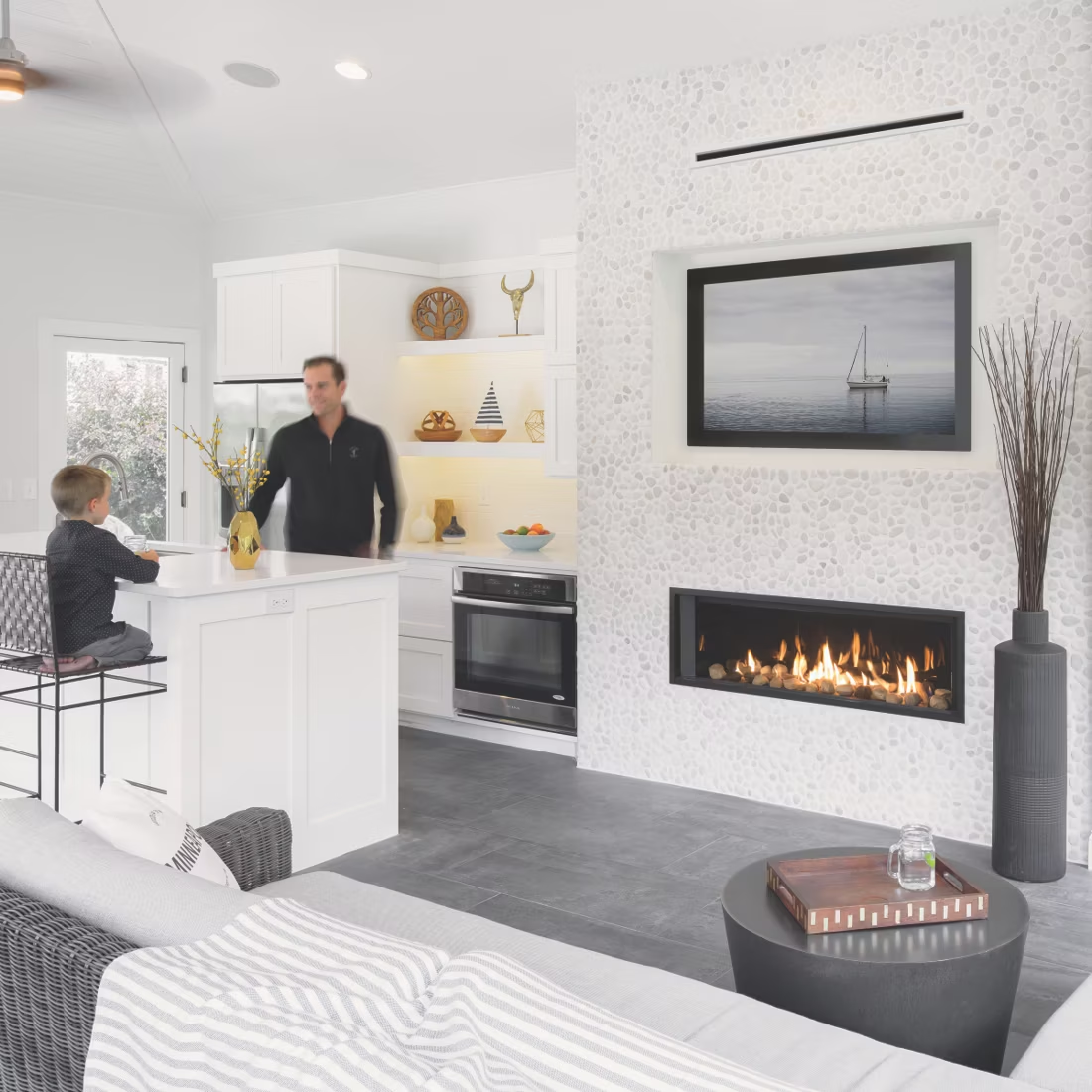
Yes—with an asterisk. Fireplaces are hot and TVs don't like heat. Either put a mantel between them to deflect rising warmth, or choose a fireplace with heat-management technology that creates a cool zone on the wall above—the wall stays around 125 degrees, barely warm, while the room still gets full heat. If you like clean lines and don't want a mantel, heat management is the answer.
Can a fireplace actually lower my heating bill?
Yes—by creating a comfort zone. A furnace heats every square foot of the house just to warm the one room you're in; a gas fireplace on low burns roughly a sixth of the gas a typical furnace does. Set the furnace around 55–60 degrees as a baseline, then heat the rooms your family actually uses. Families who heat this way commonly save $20–$60 a month.
Can I install a fireplace myself?
If you're putting a fire in your house on purpose, it's best to work with an expert. Unless you're genuinely experienced in framing, gas line, vent pipe, and the national code on clearances to combustibles, have a professional do it—and ideally the same company that sells you the fireplace, so warranty, service, and liability all live under one roof.
Nearby Dealers
Hearth shops serving Schoolcraft and the surrounding area. Every listing shows whether it is a WhyFire partner, a dealer we have verified as authorized for the brands we recommend, or a local business carrying hearth products. No manufacturer pays for placement. How we verify dealers →
Hodgson Light Log & Patio
Sackett's Fireplace
Flame Experience
Get your free Project Guide & Parts List for a Schoolcraft gas fireplace.
Tell me about your home and whether you're on natural gas or propane, and I'll match you with a trusted local dealer and send a free Project Guide & Parts List with the exact vent kit and parts your project needs.
Find Your Fireplace →