
Electric heat built for the coldest corner of Michigan.
Schoolcraft County sees a long, roughly seven-month heating season—colder most winters than Duluth, Minnesota. An electric fireplace won't replace a woodstove or propane furnace out here, but it adds instant, no-venting zone heat exactly where you need it. Find the right unit and connect with a trusted local dealer.
Every Project Starts From One of These Five Situations
Zone heat for a county where wood and propane do the heavy lifting.
Schoolcraft County sits in IECC climate zone 7—the same severe-cold designation used for International Falls, Minnesota—with an average winter low near 10°F and a long, roughly seven-month heating season each year. It's a sparsely populated county, under 3,000 residents spread from Manistique on the Lake Michigan shoreline back into the Hiawatha National Forest, and most homes here were built around wood heat: oak, maple, birch, and ash cut locally under Forest Service permits that run $10 to $20 a cord from May through October. Propane fills in where wood doesn't reach. Electric fireplaces occupy a smaller, specific role in that mix.
With no air quality restrictions on burning in Schoolcraft County, homeowners aren't pushed toward electric the way they are in smoke-regulated regions—the appeal here is purely practical. An electric fireplace or insert needs no chimney, no gas line, and no clearance-heavy framing, which makes it a fast way to add supplemental warmth and ambiance to a bedroom, sunroom, or seasonal camp along US-2 without touching the venting your woodstove already relies on. Because the area is served by rural electric cooperative lines running through heavily forested terrain, most homeowners here treat electric fireplaces as targeted zone heat rather than a whole-home heating strategy—the smart pairing with wood or propane as primary heat, not a replacement for it.
Three steps. No salesperson until you're ready.
Tell us about your project
Your zip code, your situation, and the fuel you're leaning toward—or let the answers point you to one.
See what's actually available
The brands dealers within 100 miles genuinely carry—real options, never a catalog mirage.
Get your dealer & Project Guide
A trusted local dealer, plus the free Project Guide & Parts List that names every component of the job.
Frequently Asked Questions
How much does an electric fireplace installation cost in Schoolcraft County?
Electric fireplaces are the least expensive hearth project available precisely because there's no chimney, gas line, or venting to install. A simple plug-in insert that drops into an existing masonry firebox can run as little as $300 to $600 in parts, with no labor if you're comfortable doing it yourself. A built-in wall unit or a linear electric fireplace set into new framing, which typically needs a dedicated 20-amp circuit run by a licensed electrician, runs closer to $1,500 to $2,500 installed. Compare that to the cost of running new Class A chimney pipe for a wood stove in a county without existing masonry, and the appeal for a second room or seasonal cabin becomes obvious.
Will my electric fireplace still work if the power goes out?
No—and this matters more in Schoolcraft County than in most places. Rural cooperative power lines running through the Hiawatha National Forest are exposed to ice storms and falling limbs, and outages here can stretch longer than they would in Escanaba or Marquette. An electric fireplace is entirely dependent on grid power, so it should never be your only heat source. Most homeowners in the county keep a wood stove or propane heater as the primary or backup system and use the electric unit for everyday convenience and supplemental warmth. If backup heat during outages is a priority, that's a conversation for your wood or propane dealer, not your electric fireplace dealer.
How much space can an electric fireplace actually heat?
Most electric fireplaces top out around 4,600 to 5,200 BTU on a standard 1,500-watt heater element, which is enough to noticeably warm a single room—a bedroom, den, or sunroom—but not enough to carry a whole house through a Schoolcraft County winter that runs a long seven months. Think of it as zone heating: it takes the edge off a room your furnace or wood stove doesn't reach efficiently, or it lets you turn the thermostat down in the rest of the house while keeping the room you're actually in comfortable. For anyone hoping to heat an entire cabin or addition, a wood stove or propane heater sized to the space will perform far better.
Do I need a permit to install an electric fireplace in Schoolcraft County?
A simple plug-in insert that uses an existing outlet typically doesn't require a permit. A built-in or wall-mounted unit that needs new wiring or a dedicated circuit does require an electrical permit, since that work has to be done by a licensed electrician and inspected. Check with the Schoolcraft County Building Department before starting any project that involves opening a wall or running new circuits—it's a quick process, and most local electricians who install these units already know the inspection routine.
What electric fireplace brands are available through local dealers?
Homeowners in Schoolcraft County typically source electric fireplaces through hearth or appliance dealers based in Manistique or the larger Escanaba and Marquette markets. Common brands carried regionally include Dimplex, Napoleon, and Touchstone, ranging from simple drop-in log inserts to full linear wall units with a realistic flame effect and supplemental heat. A local dealer can also tell you which units are rated for the kind of continuous winter use a UP home puts them through, versus lighter-duty models meant mostly for ambiance.
What's the difference between an electric insert, a wall-mount unit, and a built-in?
An electric insert is sized to slide into an existing masonry fireplace opening, giving an old wood-burning fireplace a plug-in heat source without any chimney work. A wall-mount unit hangs directly on a wall like a flat-screen TV, with a cord or hardwired connection, and works well in rooms with no existing fireplace. A built-in electric fireplace is framed into a wall or cabinetry during a remodel for a seamless, custom look. For most Schoolcraft County homes with an existing but rarely-used masonry fireplace, the insert is the simplest upgrade; new construction or additions are better suited to a wall-mount or built-in.
Electric vs. wood heat—which makes sense for my Schoolcraft County home?
Wood remains the backbone of home heating across the county, and for good reason: oak, maple, birch, and ash are all available locally, Hiawatha National Forest cutting permits run just $10 to $20 a cord from May through October, and a wood stove keeps producing heat when the power lines go down in an ice storm. Electric fireplaces can't compete with that on cost-per-BTU or outage resilience. What electric does well is convenience—instant on-off heat with no ash, no creosote, and no wood to split and stack—in a specific room where you don't want the maintenance of a second wood-burning appliance. Most households here that add electric are supplementing an existing wood or propane system, not replacing it.
How much maintenance does an electric fireplace need?
Very little, which is part of the appeal in a county where wood stove owners are already scheduling annual chimney sweeps. Electric fireplaces have no chimney, no creosote, and no combustion byproducts to manage. Maintenance is mostly dusting the interior, occasionally wiping the glass front, and checking that the heater fan and blower are free of dust buildup before heavy winter use. There's no annual inspection requirement and no equivalent to the CSIA chimney sweep—just basic housekeeping.
Will running an electric fireplace raise my electric bill significantly?
It depends on how you use it. Run occasionally for a few hours of supplemental heat in one room, an electric fireplace adds a modest amount to a monthly bill—a 1,500-watt unit run four hours a day costs a few dollars a month at typical rural cooperative rates. Run continuously as a primary heat source through a Schoolcraft County winter that stretches on for a long seven months, the cost climbs fast, since resistance electric heat is one of the more expensive ways to heat a space compared to wood or propane. That's the practical reason most local homeowners treat these units as targeted, part-time heat rather than a full heating strategy.
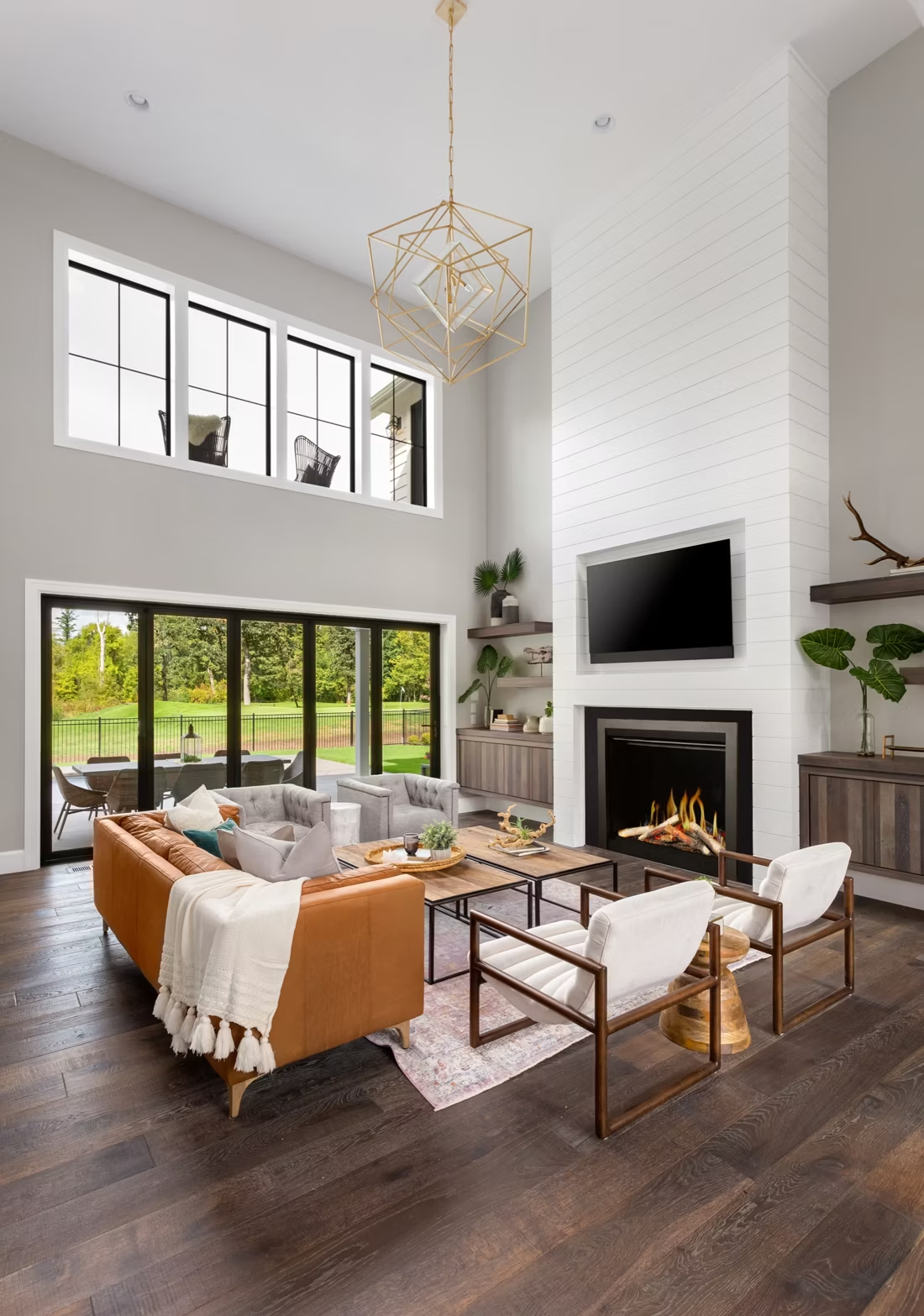
Can I put a TV above my fireplace?
Yes—with an asterisk. Fireplaces are hot and TVs don't like heat. Either put a mantel between them to deflect rising warmth, or choose a fireplace with heat-management technology that creates a cool zone on the wall above—the wall stays around 125 degrees, barely warm, while the room still gets full heat. If you like clean lines and don't want a mantel, heat management is the answer.
Does an electric fireplace need a vent or chimney?
No—that's its superpower. An electric fireplace needs a wall and an outlet, period. No vent pipe, no gas line, no clearances to design around, which is why it works in bedrooms, offices, apartments, and walls where venting a gas or wood unit would be impractical or impossible. Installation is typically the simplest and least expensive of any fireplace type.
How much should I budget for a fireplace?
For an average home—covering the fireplace, the vent pipe, and basic installation—a budget between $3,900 and $5,500 gives you a lot of options across wood, gas, and pellet. By the time you add finish work, gas line, and electrical, the average complete installation lands between $5,000 and $12,000 all-in. In a remodel or new build, a good rule is to put about 2.5% of the total project cost toward the fireplace.
Can a fireplace actually lower my heating bill?
Yes—by creating a comfort zone. A furnace heats every square foot of the house just to warm the one room you're in; a gas fireplace on low burns roughly a sixth of the gas a typical furnace does. Set the furnace around 55–60 degrees as a baseline, then heat the rooms your family actually uses. Families who heat this way commonly save $20–$60 a month.
Find your electric fireplace in Schoolcraft County.
Tell us about your home and where you need supplemental heat, and we'll match you with the right electric fireplace or insert—plus a free Project Guide & Parts List and a trusted local dealer to handle the install.
Find Your Fireplace →