
Add real heat to a room in your Oscoda County home or cabin—without a flue.
Zone heat and ambiance for Mio, the surrounding townships, and the camps scattered through the Huron-Manistee National Forests—installed by a local dealer, not a big-box guess.
Every Project Starts From One of These Five Situations
A supplement to wood heat, not a replacement for it.
Oscoda County is one of the least populated counties in Michigan's Lower Peninsula—about 1,358 residents spread across townships bordered by the Huron-Manistee National Forests. It's also genuinely cold: Climate Zone 6A, winter lows averaging 12°F, with roughly the same heating load as Minneapolis. Wood is the default heat source for a lot of county homes and hunting camps here, with oak, maple, birch, and ash the common species and Forest Service cutting permits running $10 to $20 per cord through the May-to-October season. Electric fireplaces fit into that picture as a supplement, not a substitute—they won't carry a home through an Oscoda County winter on their own, but they're honest, low-cost heat and ambiance for a specific room, a cabin addition, or a camp that doesn't have—or want—a chimney.
Where an electric fireplace earns its keep here is in the rooms wood and gas can't easily reach: a finished basement, a bedroom addition, a seasonal camp near the Au Sable River that only sees weekend use, or a rental cabin where tending a wood stove isn't practical. There's no venting, no gas line, and no combustion byproducts to manage—which matters in a county with no air quality restrictions to navigate but plenty of properties that sit closed up and unheated half the year. A local dealer can size the right unit to the room and, for built-in models, coordinate the electrical work a plug-in unit doesn't need.
Three steps. No salesperson until you're ready.
Tell us about your project
Your zip code, your situation, and the fuel you're leaning toward—or let the answers point you to one.
See what's actually available
The brands dealers within 100 miles genuinely carry—real options, never a catalog mirage.
Get your dealer & Project Guide
A trusted local dealer, plus the free Project Guide & Parts List that names every component of the job.
Frequently Asked Questions
How much does an electric fireplace installation cost in Oscoda County?
Most electric fireplace projects in Oscoda County fall between $300 and $2,500. A plug-in wall-mount or freestanding unit sits at the low end—no wiring or permit involved, just an outlet. A built-in electric insert or a linear unit set into a wall or existing masonry opening costs more once framing, trim, and a dedicated circuit are factored in, and that electrical work typically needs to be pulled by a licensed electrician given the county's rural power infrastructure. Larger cabin or camp installs can run higher if new wiring has to be run any real distance from the panel.
Can an electric fireplace actually heat my home through an Oscoda County winter?
Not as a primary heat source—and any dealer telling you otherwise isn't being straight with you. With winter lows averaging 12°F, Oscoda County's heating load is comparable to Minneapolis. Most electric fireplace inserts top out around 5,000 to 10,000 BTU/hour of supplemental heat, enough to make one room comfortable but not enough to carry a whole house. They work best paired with a wood stove, propane furnace, or central heat as the primary system, with the electric unit handling a specific room, an addition, or shoulder-season use.
Why would I choose electric over wood, given how common wood heat is in this county?
Wood makes sense in Oscoda County because the fuel is close and cheap—Forest Service cutting permits through the Huron-Manistee National Forests run $10 to $20 per cord for oak, maple, birch, and ash, and the May-to-October cutting season lines up with when most people are already out in the woods. Electric makes sense in the situations wood doesn't fit: a rental cabin without anyone around to tend a fire, a bedroom or basement where a chimney isn't feasible, or a seasonal camp that's occupied only a few weekends a month and doesn't want the upkeep of a wood-burning system sitting idle. Plenty of county homes end up with both—wood for primary heat, electric for a specific room.
Do I need a permit to install an electric fireplace in Oscoda County?
A plug-in electric fireplace that runs off a standard outlet typically doesn't require a permit. A built-in electric insert or a linear unit that needs a new dedicated circuit usually does require an electrical permit, since that's new wiring work rather than just placing an appliance. Your installer or electrician will know whether your specific unit and circuit setup crosses that line—it's worth asking upfront rather than assuming either way.
What's the best electric fireplace for a seasonal cabin or hunting camp near the national forest?
For camps that sit empty for stretches and don't have someone monitoring a fire, a simple plug-in electric insert or stove is usually the right call—no fuel to store, no risk of a chimney fire while the place is unattended, and it's ready to run the moment you flip the breaker back on after a season closed up. If the camp doesn't have reliable line power to begin with, electric isn't a great fit at all, and a wood stove or propane heater is the more realistic choice. A local dealer can tell you quickly which situation you're in.
Will an electric fireplace run on a generator if the power goes out?
Most will, but check the wattage first. A typical electric fireplace insert draws 1,200 to 1,500 watts on the heater setting, which most portable generators can handle alongside a few other essentials. Rural Oscoda County sees its share of winter outages, so if backup power matters to you, run the fireplace's amperage draw past whoever sizes your generator setup. Just know that an electric fireplace on generator power is still supplemental heat, not a substitute for a wood stove or other fuel-based backup heat during a multi-day outage.
How much maintenance does an electric fireplace need?
Very little—that's one of its advantages over wood heat in this county. No chimney to sweep, no creosote to manage, no ash to clean out. Maintenance is mostly dusting the unit and occasionally cleaning the glass front, with heater fan or LED light components sometimes needing replacement after years of use. There's no annual inspection requirement like there is for wood stoves or gas appliances.
What's the difference between an electric insert, a wall-mount, and a mantel package?
An electric insert is sized to slide into an existing masonry fireplace opening or a framed wall cavity—a common choice for Oscoda County homes converting an old, rarely-used wood fireplace into simple supplemental heat. A wall-mount unit hangs directly on the wall like a flat-screen TV and needs no surround. A mantel package pairs an electric firebox with a mantel and surround, built to look like a traditional fireplace in a room that never had one. Which makes sense depends on whether you're retrofitting an existing opening or adding a fireplace where one never existed.
Electric vs. pellet stove—which makes more sense for my situation?
Pellet stoves, using bagged pellets from regional suppliers like Lignetics or Somerset Pellet Fuel, put out real heat—enough to serve as primary or near-primary heat for a well-insulated Oscoda County home—but they still need electricity to run the auger and blower, so they go dark in a power outage same as electric units. Electric fireplaces are simpler still: no hopper to load, no ash, no venting, but meaningfully less heat output. If you want a serious secondary heat source that can carry real square footage, pellet is the stronger option. If you want low-maintenance ambiance and warmth for one room, electric is the simpler, cheaper path.
Can I put a TV above my fireplace?
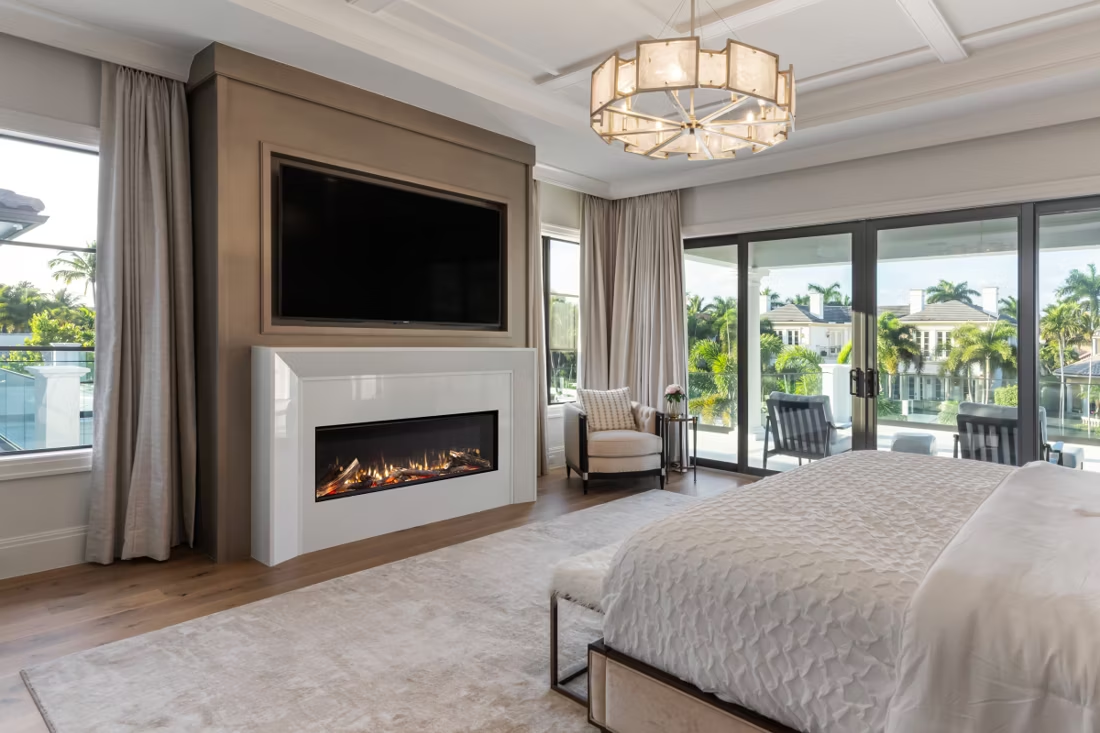
Yes—with an asterisk. Fireplaces are hot and TVs don't like heat. Either put a mantel between them to deflect rising warmth, or choose a fireplace with heat-management technology that creates a cool zone on the wall above—the wall stays around 125 degrees, barely warm, while the room still gets full heat. If you like clean lines and don't want a mantel, heat management is the answer.
Does an electric fireplace need a vent or chimney?
No—that's its superpower. An electric fireplace needs a wall and an outlet, period. No vent pipe, no gas line, no clearances to design around, which is why it works in bedrooms, offices, apartments, and walls where venting a gas or wood unit would be impractical or impossible. Installation is typically the simplest and least expensive of any fireplace type.
Can I install a fireplace myself?
If you're putting a fire in your house on purpose, it's best to work with an expert. Unless you're genuinely experienced in framing, gas line, vent pipe, and the national code on clearances to combustibles, have a professional do it—and ideally the same company that sells you the fireplace, so warranty, service, and liability all live under one roof.
Can a fireplace actually lower my heating bill?
Yes—by creating a comfort zone. A furnace heats every square foot of the house just to warm the one room you're in; a gas fireplace on low burns roughly a sixth of the gas a typical furnace does. Set the furnace around 55–60 degrees as a baseline, then heat the rooms your family actually uses. Families who heat this way commonly save $20–$60 a month.
Stove and Fireplace Dealers in Oscoda County
Find your electric fireplace in Oscoda County.
Tell us about your room, cabin, or camp and we'll match you with a trusted local dealer and a free Project Guide & Parts List—the exact unit, circuit requirements, and install plan for your Oscoda County property.
Find Your Fireplace →