
Warm, reliable heat for Norton Shores winters—without hauling wood.
Consistent, instant heat for the damp, lake-effect cold off Muskegon Lake and Lake Michigan. Find the right gas fireplace or insert and connect with a trusted local dealer.
Every Project Starts From One of These Five Situations
Steady heat that keeps up with lake-effect winters.
Norton Shores sits along Muskegon Lake, a few miles inland from Lake Michigan's open water, where lake-effect snow bands and persistent damp cold push the winter heating load to roughly that of a long, hard Great Lakes winter and winter lows averaging 21°F. That moisture off the big lake makes for a raw, penetrating cold that a lot of homeowners here would rather manage with the flip of a switch than a wood pile that has to stay dry through a Muskegon County winter.
Natural gas infrastructure runs through most established Norton Shores neighborhoods, with Consumers Energy and DTE Energy operating as the region's dominant combination utilities for both electric and gas service. That makes tapping into a gas line for a fireplace or insert a fairly routine job for most homes near Seaway Drive or Henry Street. Wood-burning setups are genuinely uncommon here—many of the lakefront and subdivision communities around Norton Shores have covenants or practical space constraints that discourage outdoor wood storage, and the lake's humidity makes seasoned firewood harder to keep dry than it would be further inland. Gas has become the default choice for homeowners who want real supplemental heat without the upkeep.
Three steps. No salesperson until you're ready.
Tell us about your project
Your zip code, your situation, and the fuel you're leaning toward—or let the answers point you to one.
See what's actually available
The brands dealers within 100 miles genuinely carry—real options, never a catalog mirage.
Get your dealer & Project Guide
A trusted local dealer, plus the free Project Guide & Parts List that names every component of the job.
Frequently Asked Questions
How much does a gas fireplace installation cost in Norton Shores?
Most gas fireplace installations in Norton Shores run between $4,000 and $10,500, with the spread driven mainly by venting type and gas line work. A direct-vent insert dropped into an existing masonry fireplace with a gas line already run to that wall sits toward the low end. A new built-in gas fireplace for a remodel or an addition—with framing, a fresh gas tap from the street-side meter, and full venting—lands in the middle to upper range. Homes on propane, or those needing a longer gas line extension from the meter, tend toward the higher end. A local dealer will give you a firm number after walking your space.
Can I convert my existing wood-burning fireplace to gas?
Yes, and it's one of the most common requests we hear from Norton Shores homeowners, especially those in older homes near Norton Shores' original lakeside subdivisions built with traditional masonry fireplaces that rarely get used. A gas insert typically runs $4,000 to $8,500 installed, using your existing chimney with a stainless liner as the vent path. If your home already has a gas furnace or water heater, you likely have gas service on the property already, which keeps the line-run cost down. The conversion keeps the look of your original fireplace while giving you instant, consistent heat instead of a masonry box that mostly radiates cold air when it's not in use.
Is natural gas available throughout Norton Shores, or will I need propane?
Most established parts of Norton Shores, including neighborhoods around Seaway Drive, Henry Street, and the areas close to Muskegon Lake, have natural gas service through Consumers Energy or DTE Energy. Homes further out toward the edges of Muskegon County, or newer developments where mains haven't been extended yet, sometimes rely on propane with a tank on the property. Either fuel works fine in most gas fireplace models—your installer sets the orifice and regulator for whichever you have. If you're not sure which you're on, check your existing furnace or water heater fuel type; a fireplace will almost always match it.
Will my gas fireplace still work if the power goes out?
Most modern gas fireplaces with IPI (intermittent pilot ignition) run on a small battery backup—usually a few AA batteries built into the control panel—that kicks in automatically the moment the power drops. That matters in Norton Shores, where lake-effect snow squalls off Lake Michigan can knock out power for hours at a time in a hard winter storm. Valor units take a slightly different approach: their pilot assembly generates its own electricity through the thermocouple, so there are no batteries to remember or replace at all. Whichever brand you're considering, ask your local dealer about the ignition system specifically—it's the detail that determines whether your fireplace works when Consumers Energy or DTE crews are still out restoring lines.
What's the difference between a gas fireplace, gas insert, and gas stove?
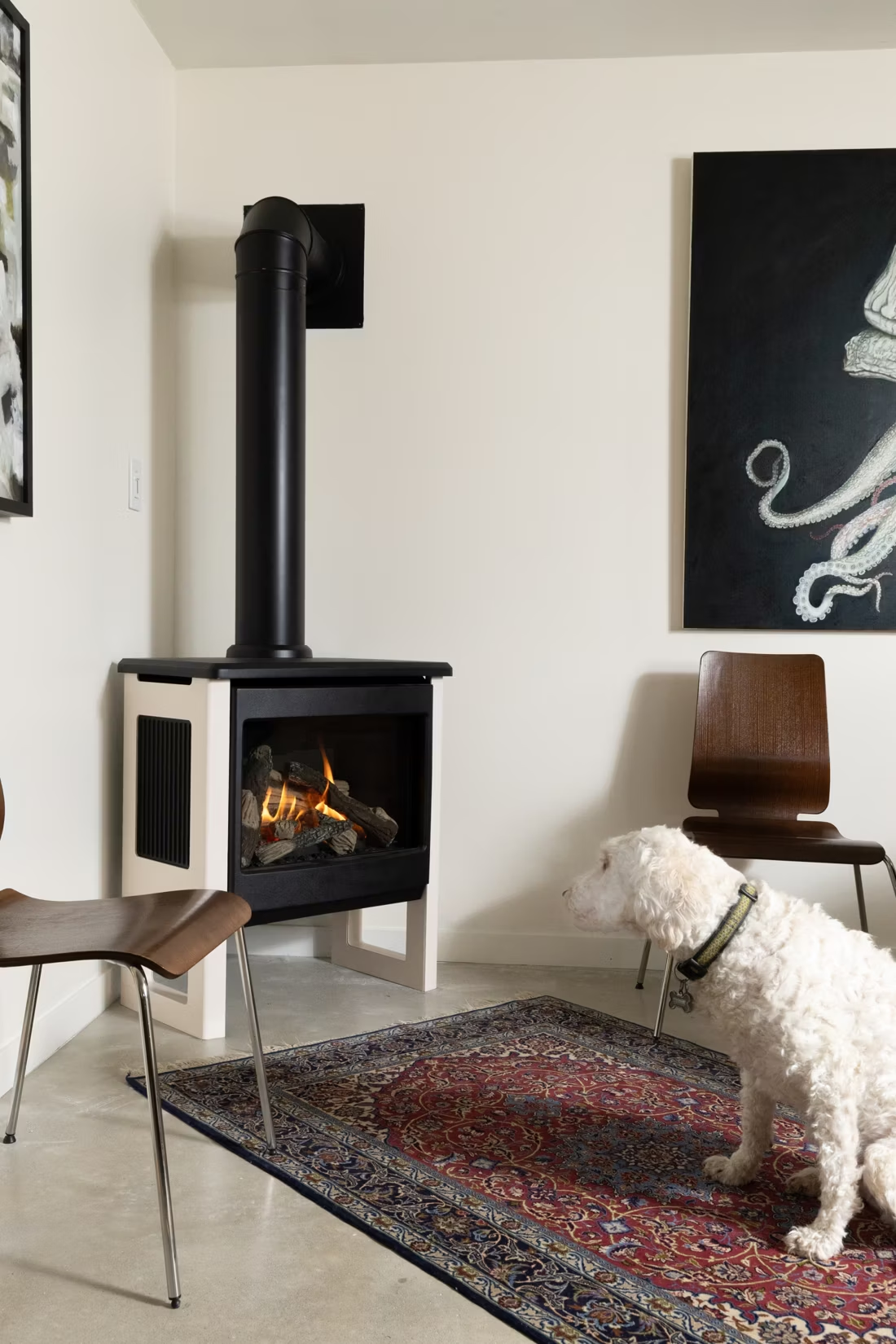
A gas fireplace is a fully built-in unit, framed into a wall—the right call for new construction or a remodel without an existing hearth. A gas insert slides into an existing masonry fireplace opening and uses the chimney as its vent path, which is the most common upgrade for older Norton Shores homes with an unused wood fireplace. A gas stove is a freestanding cabinet-style unit that sits on the floor, similar in footprint to a wood stove, and works well in a room without any existing fireplace structure at all. For most homeowners here converting an old masonry fireplace, an insert is the straightforward choice.
Do I need a permit to install a gas fireplace in Norton Shores?
Yes. New gas fireplace installations require both a building permit and a gas piping permit, typically coordinated through the City of Norton Shores Building Department, with Muskegon County involved on the inspection side depending on the scope of work. The gas line portion has to be run or modified by a licensed gas-fitter—this is a big part of why it pays to use a certified hearth dealer rather than a general handyman, since they'll pull the permits, coordinate the gas work, and schedule the inspection as one job instead of leaving you to manage separate trades.
Should I get a vented or vent-free gas fireplace?
Vented (direct-vent) units pull combustion air from outside and exhaust it back outside through a sealed pipe—they're the cleaner, safer option and the one most local dealers install by default. Vent-free units burn fuel directly into the room, releasing some water vapor and combustion byproducts indoors. Michigan permits vent-free fireplaces with proper room-sizing and oxygen-depletion sensors, but Norton Shores' proximity to Lake Michigan already means higher ambient humidity and condensation issues in a lot of homes near the shoreline—adding a vent-free unit's moisture output on top of that isn't ideal for window and wall condensation in winter. For that reason, most homeowners here end up better served by a direct-vent unit, even though it costs a bit more upfront.
How often does a gas fireplace need to be serviced?
Plan on an annual inspection, ideally before the heating season ramps up in October or November. A certified technician checks the burner, pilot assembly, venting, and gas connections, and cleans the glass and interior components. This is a much lighter lift than chimney sweeping for a wood system, but it matters just as much for safety and efficiency—a dirty burner or degraded gasket is the kind of thing that shows up as a service call in January otherwise. Local gas appliance technicians in the Norton Shores and Muskegon area typically charge $150 to $250 for this visit.
Gas vs. electric vs. wood—what actually makes sense in Norton Shores?
Wood is genuinely uncommon here—Norton Shores' lakeside subdivisions, HOA restrictions, and the practical challenge of keeping firewood dry in a humid lake climate mean most homeowners skip it, even though oak, maple, birch, and ash are all available regionally for those with rural property elsewhere. Electric fireplaces are a reasonable option for supplemental ambiance or a room without gas access, but with Consumers Energy and DTE residential rates in this area running around 20 cents per kWh—noticeably above the national average—electric resistance heat gets expensive fast if you're leaning on it for real BTUs. Gas splits the difference: it delivers real, consistent heat, works during winter power outages with the right ignition system, and taps into gas infrastructure that's already common throughout the city. For most Norton Shores homes, gas is the practical default, with electric reserved for smaller rooms or purely decorative use.
Why is my open fireplace making my house colder?
Open fireplaces suck—literally. As the fire burns, it consumes air your furnace already paid to heat and pulls it out through the chimney, so the house is actually colder after the fire goes out than before you lit it. An insert fixes this: it seals the chimney, puts fixed glass across the front, and turns that hole in your house into a real heat source.
Is my gas fireplace wasting gas?
If it was installed more than 15 years ago, probably. Older gas fireplaces keep a standing pilot light burning all the time, and that little flame can cost a couple hundred dollars a year. Newer models use pilot-on-demand ignition—the pilot lights only when you use the fireplace and goes out when you turn it off.
Can a fireplace actually lower my heating bill?
Yes—by creating a comfort zone. A furnace heats every square foot of the house just to warm the one room you're in; a gas fireplace on low burns roughly a sixth of the gas a typical furnace does. Set the furnace around 55–60 degrees as a baseline, then heat the rooms your family actually uses. Families who heat this way commonly save $20–$60 a month.
Does a fireplace add value to my home?
On average, a fireplace adds back to the home about the same amount you spent installing it. Add the monthly savings from heating the rooms you actually use instead of the whole house—often hundreds of dollars a year—and the value case is strong before you even count what a fire does for how your family uses the room.
Nearby Dealers
Hearth shops serving Norton Shores and the surrounding area. Every listing shows whether it is a WhyFire partner, a dealer we have verified as authorized for the brands we recommend, or a local business carrying hearth products. No manufacturer pays for placement. How we verify dealers →
Fireplace And Stone
Fireplace Gallery Of West Mich
Stoves N More LLC
Find your gas fireplace in Norton Shores.
Tell us a bit about your home and we'll match you with the right gas fireplace, insert, or stove—plus a free Project Guide & Parts List and a trusted local dealer to install it.
Find Your Fireplace →