
Electric heat that fits Madison Heights homes without a chimney.
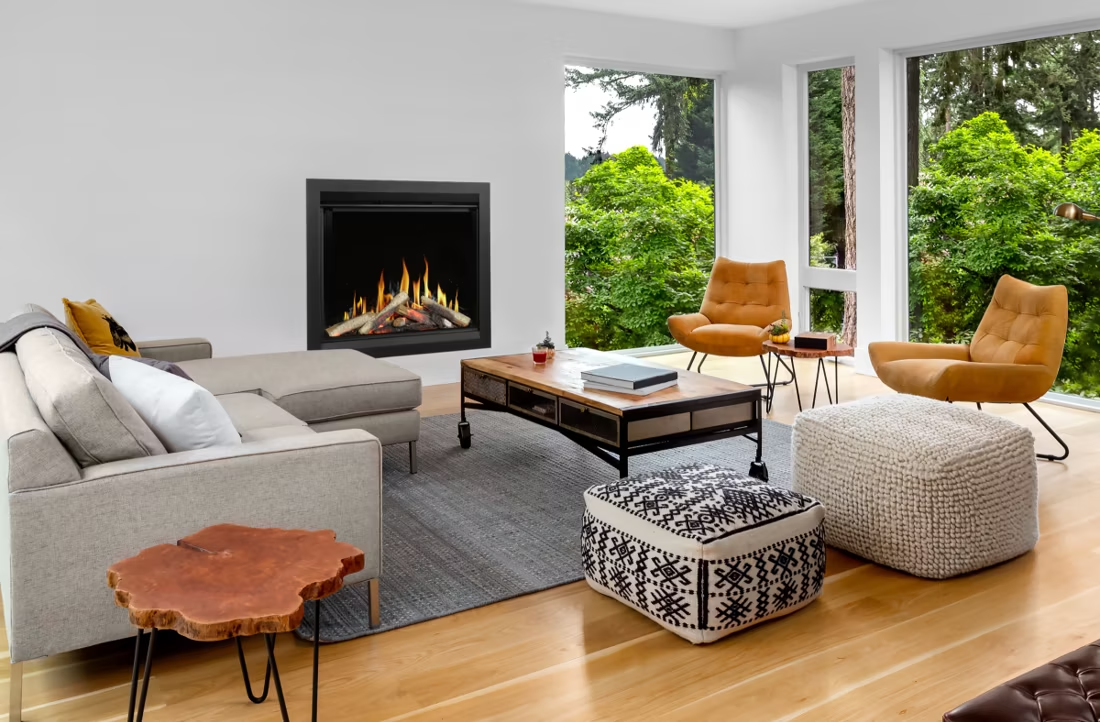
With a long, cold heating season on par with Buffalo, New York and winter lows near 20°F, most Madison Heights homes lean on a gas furnace for the heavy lifting. An electric fireplace adds real zone heat and ambiance to a bedroom, den, or condo living room without venting, a gas line, or a masonry chimney. I'll match you with a trusted local dealer who knows what fits your space.
Every Project Starts From One of These Five Situations
Zone heat that doesn't need a flue.
Madison Heights sits in climate zone 5A at about 635 feet, with winters that run long and cold enough to put the heating load closer to Buffalo, New York than to most of the Sun Belt. That said, a dense Oakland County suburb built out mostly with ranch homes, condos, and townhomes isn't wood-lot country, and there's no local cutting-permit infrastructure the way there might be farther north in the Lower Peninsula. Wood and pellet setups just aren't a realistic fit for most lots here, which is part of why electric and gas dominate the fireplace conversations in Madison Heights.
That leaves gas furnaces doing the primary heating in most homes, with an electric fireplace filling a specific role: instant supplemental warmth and visual fire in a single room, with none of the venting, gas line, or masonry work a wood or gas unit requires. DTE Electric Company serves Madison Heights at a residential rate around $0.2013 per kWh, on the higher side nationally—which matters if you're comparing it to central heat, but is a non-issue for the way most owners actually use these units: a few hours in the evening in one room, not as a whole-house heat source. For condo owners and renters in particular, a plug-in electric insert or freestanding unit is often the only fireplace option that doesn't require touching the building's venting or gas infrastructure at all.
Three steps. No salesperson until you're ready.
Tell us about your project
Your zip code, your situation, and the fuel you're leaning toward—or let the answers point you to one.
See what's actually available
The brands dealers within 100 miles genuinely carry—real options, never a catalog mirage.
Get your dealer & Project Guide
A trusted local dealer, plus the free Project Guide & Parts List that names every component of the job.
Frequently Asked Questions
How much does an electric fireplace installation cost in Madison Heights?
Most projects here run $300 to $3,500. A plug-in freestanding unit or a basic insert that drops into an existing fireplace opening and runs off a standard outlet sits at the low end—often it's furniture delivery, not a construction project. A built-in linear electric fireplace set into a wall or a new media console, which usually needs a dedicated 20-amp circuit run by an electrician, lands in the $1,500 to $3,500 range depending on the wall work involved. Either way, it's a fraction of what a gas or wood install costs in a Michigan winter climate like this one, since there's no venting or chimney to build.
Can I install an electric insert into my existing masonry fireplace?
Yes, and it's one of the more common upgrades in Madison Heights' older ranch-style homes that still have a wood-burning firebox nobody uses anymore. An electric insert slides into the existing opening, plugs into a nearby outlet or a new dedicated circuit, and gives you flame effect and heat without cleaning a chimney or dealing with a flue that may not have been swept in years. It's also a practical fix if your home's chimney has deteriorated or was never relined—you get the look of a working fireplace without touching the masonry structure at all.
Do I need a permit for an electric fireplace in Madison Heights?
A plug-in unit that runs off an existing standard outlet typically doesn't require a permit. If you're going with a built-in unit that needs new wiring or a dedicated circuit, that electrical work generally does need a permit through the City of Madison Heights Building Department, and it should be pulled by a licensed electrician regardless of whether the fireplace itself needs one. Most local dealers who install built-ins will tell you up front whether your specific project crosses that line.
Will an electric fireplace noticeably raise my DTE Electric bill?
For most households, not much. At DTE Electric Company's residential rate of roughly $0.2013 per kWh, running a typical 1,500-watt electric fireplace for four hours an evening adds somewhere around $15 to $25 a month, depending on the heat setting used. That's meaningfully less than heating a whole home electrically, because most Madison Heights houses still rely on a gas furnace for the bulk of the heating load—the fireplace is usually running as a supplemental or ambiance feature in one room, not as the primary heat source through a long, cold winter.
What size electric fireplace do I need for a Madison Heights home?
Most electric fireplaces are rated to comfortably heat 400 to 1,000 square feet as supplemental zone heat, which covers a typical bedroom, family room, or open living-dining area in the ranch and colonial-style homes common around Madison Heights. Given winter lows averaging 20°F, don't expect an electric unit to carry a whole floor on its own—it's built to take the edge off a specific room while your furnace handles the rest of the house. A local dealer will size the wattage against the room's square footage and insulation rather than treating it like a whole-home heat source.
Electric fireplace vs. gas fireplace—which makes more sense in Madison Heights?
Gas fireplaces put out real, sustained heat and can offset furnace use during a long Michigan heating season, but they require a gas line, venting, and a larger upfront investment. Electric fireplaces skip all of that—no venting, no gas line, and a fraction of the install cost—but they're realistically a zone-heat and ambiance product, not a furnace replacement. In condos and townhomes throughout Oakland County, where running new gas venting isn't always possible or allowed by an association, electric is often the only workable option. In detached homes, it comes down to whether you want supplemental heat with minimal installation or a fireplace that can genuinely carry part of the winter heating load.
Can an electric fireplace actually help heat my home through a Michigan winter?
It can meaningfully warm the room it's in, but with a winter season as long and demanding as Buffalo's and lows regularly near 20°F, it isn't going to replace your furnace. Think of it the way you'd think about a space heater with better looks—good for taking the chill off a bedroom or den so you can turn the thermostat down a couple degrees for the rest of the house, but not a substitute for whole-home heating in a climate zone 5A winter. Most Madison Heights buyers install one for exactly that kind of targeted, room-level warmth plus the visual appeal.
What's the difference between a built-in electric fireplace and an insert or freestanding unit?
A built-in electric fireplace is framed into a wall or cabinetry during a remodel and typically wired to a dedicated circuit—it looks the most like a traditional fireplace and usually costs more to install because of the electrical and carpentry work. An insert drops into an existing masonry firebox, which is common in older Madison Heights homes with an unused wood-burning fireplace. A freestanding electric unit is the simplest option—plug it in and place it almost anywhere, which makes it popular in condos and rentals where any wall or electrical modification isn't practical.
Are electric fireplaces a good fit for condos and townhomes in Madison Heights?
Yes, and it's one of the main reasons they're popular in the area's condo and townhome developments. Electric units don't require venting, a gas line, or changes to shared building infrastructure, which sidesteps most HOA restrictions that block wood or gas installs in attached housing. A plug-in freestanding or insert model can usually go in without any structural approval at all, while a built-in wired unit is still a much lighter lift than trying to add gas service or a chimney to a unit that was never built with one.
Can I put a TV above my fireplace?
Yes—with an asterisk. Fireplaces are hot and TVs don't like heat. Either put a mantel between them to deflect rising warmth, or choose a fireplace with heat-management technology that creates a cool zone on the wall above—the wall stays around 125 degrees, barely warm, while the room still gets full heat. If you like clean lines and don't want a mantel, heat management is the answer.
Does an electric fireplace need a vent or chimney?
No—that's its superpower. An electric fireplace needs a wall and an outlet, period. No vent pipe, no gas line, no clearances to design around, which is why it works in bedrooms, offices, apartments, and walls where venting a gas or wood unit would be impractical or impossible. Installation is typically the simplest and least expensive of any fireplace type.
Can a fireplace actually lower my heating bill?
Yes—by creating a comfort zone. A furnace heats every square foot of the house just to warm the one room you're in; a gas fireplace on low burns roughly a sixth of the gas a typical furnace does. Set the furnace around 55–60 degrees as a baseline, then heat the rooms your family actually uses. Families who heat this way commonly save $20–$60 a month.
What is an in-home preview and do I need one?
It's a visit where a hearth professional measures your space, confirms the model you picked actually works in your home, and walks the specs—framing, gas line, venting, finish work—before anything is ordered. Some details you just can't know until you see the house. Never make a down payment without one; it's the single most-skipped step that burns buyers.
Nearby Dealers
Hearth shops serving Madison Heights and the surrounding area. Every listing shows whether it is a WhyFire partner, a dealer we have verified as authorized for the brands we recommend, or a local business carrying hearth products. No manufacturer pays for placement. How we verify dealers →
AirMaster
Fireside Hearth & Home - Royal Oak
Bourlier & Sons Inc
Fireside Hearth & Home - Utica
American Grill And Patio
This Is It Shop's House Of Fire
Creative Design Build Associates
Allstate Billiards, Patio, Fireplace
Allstate By Watsons
Bourlier's (Macombs)
Glenn's Fireplace & Spa
Grate Fireplace Shop
Marquis Fireplace Ltd.
Pine Tree Furniture & Lighting
Syles
Premier Furniture
Electric Service in Madison Heights
An electric fireplace's heater draws about 1,500 watts—pennies per hour at local rates.
Dte Electric Company
Get your free Project Guide & Parts List for an electric fireplace in Madison Heights.
Tell me about your room, your outlet or circuit situation, and what you want the fireplace to do—and I'll match you with a trusted local dealer and send a free Project Guide & Parts List with the right unit and parts specified for your home.
Find Your Fireplace →