
Electric fireplace warmth for your Leelanau Peninsula home—wired in an afternoon.
No chimney, no gas line, no permit headaches—just a dedicated circuit and real ambiance for the cottages, wineries, and lake-view rooms scattered across the Leelanau Peninsula. We'll match you with a local pro who can size it right and install it correctly.
Every Project Starts From One of These Five Situations
Heat and ambiance without a chimney.
Leelanau County is a narrow peninsula wedged between Lake Michigan and Grand Traverse Bay, home to just 4,171 year-round residents spread across Northport, Suttons Bay, Leland, Glen Arbor, Empire, and Cedar—plus a much larger seasonal population that fills lake cottages and vineyard-view homes every summer. Winters here are genuinely cold: Climate Zone 6A, an average winter low of 15°F, and 7,610 heating degree days, with lake-effect snow off Grand Traverse Bay adding to the load. A lot of the county's housing stock is older lake cottages, converted barns near the cherry orchards, or newer builds tucked into wooded lots without an existing masonry chimney or a gas line anywhere nearby.
That's exactly where electric fireplaces earn their place. Cherryland Electric Cooperative serves most of the county's power, and an electric fireplace only needs a dedicated 120V or 240V circuit—no venting, no gas permit, no annual chimney sweep. Given the peninsula's heating load, electric units here work best as zone heat or ambiance rather than a home's sole heat source; plenty of Leelanau homeowners still burn oak, maple, birch, or ash cut under Huron-Manistee National Forests permits for primary winter heat. But for wine-tasting rooms, sunroom additions, condo units above the shops in Suttons Bay, and the short-term rental cottages that drive much of the county's tourist economy, electric is often the simplest, safest, and fastest fireplace to add.
Three steps. No salesperson until you're ready.
Tell us about your project
Your zip code, your situation, and the fuel you're leaning toward—or let the answers point you to one.
See what's actually available
The brands dealers within 100 miles genuinely carry—real options, never a catalog mirage.
Get your dealer & Project Guide
A trusted local dealer, plus the free Project Guide & Parts List that names every component of the job.
Frequently Asked Questions
How much does an electric fireplace installation cost in Leelanau County?
The units themselves range widely—a basic plug-in insert or mantel package can run a few hundred dollars, while a large linear wall unit or a built-in with a custom surround can run into the thousands. The bigger cost driver locally is electrical work: a plug-in unit needs nothing beyond an outlet, but a hardwired built-in typically needs a licensed electrician to run a dedicated circuit, which is where most of the labor cost sits. Because there's no venting or masonry involved, electric installations in Leelanau County are almost always faster and cheaper than a comparable wood or gas project—often a single afternoon rather than a multi-day job.
What size electric fireplace do I need for my room?
Electric fireplaces are sized by width and wattage rather than BTU output the way wood stoves are. A 30-to-40-inch wall-mount or insert works well for a bedroom, sunroom, or a condo unit above one of the shops in Suttons Bay. A 50-to-60-inch linear unit suits a larger great room or a tasting room in one of the peninsula's wineries. Because most electric heaters top out around 1,500 watts regardless of the unit's width, sizing up doesn't buy you more heat—it buys you more visual impact. A local dealer can walk your space and tell you honestly whether you need heat, ambiance, or both.
How much actual heat does an electric fireplace put out?
Most electric fireplace heaters are rated around 1,500 watts, roughly equivalent to a good space heater—enough to comfortably warm a single room, but not enough to carry a whole house through a Leelanau County winter. At 7,610 heating degree days and average lows around 15°F, that matters: electric fireplaces here work best as supplemental zone heat for a specific room, or as pure ambiance with the heater switched off in the shoulder seasons. Homeowners looking for whole-house backup heat during Grand Traverse Bay's lake-effect cold snaps are usually better served by a wood or gas unit alongside the electric fireplace, not in place of it.
Will my electric fireplace work during a power outage?
No—and this is worth being direct about. An electric fireplace runs entirely on grid power, so if Cherryland Electric Cooperative lines go down during a lake-effect snowstorm or a fall windstorm off Lake Michigan, the fireplace goes dark along with everything else, unless you have it wired to a whole-home generator. That's the trade-off for the easy install: no chimney, no gas line, but also no backup heat when the power fails. If outage resilience is a priority for your Leelanau property, especially a remote cottage near Northport or Glen Arbor, pair the electric fireplace with a wood stove or a battery-backed gas unit rather than relying on electric alone.
Do I need a permit to install an electric fireplace in Leelanau County?
A simple plug-in insert or freestanding unit generally doesn't require a permit since it just uses an existing outlet. A hardwired built-in that requires a new dedicated circuit typically does require an electrical permit, pulled by the licensed electrician doing the work—most local electricians and hearth dealers handle this as part of the job so you're not filing paperwork yourself. Because there's no venting, no gas line, and no combustion involved, electric fireplace installs avoid the building and mechanical permit steps that wood and gas installations require elsewhere in the county.
What's the difference between an electric insert, wall-mount, and mantel package?
An electric insert is built to slide into an existing masonry fireplace opening—a common upgrade for Leelanau's older lake cottages that have a fireplace but no interest in chimney maintenance. A wall-mount is a slim unit hung directly on the wall like a large TV, popular in condos and additions with no fireplace at all. A mantel package pairs an electric unit with a surrounding cabinet or mantel shelf, giving you a traditional fireplace look in a new-construction great room or a wine country tasting room where there's no chimney to build around. All three plug into standard household power; the difference is really about the look you want, not the heat output.
Is an electric fireplace a good fit for a Leelanau vacation rental?
Often, yes. With Leelanau County's tourist economy built around wineries, cherry orchards, and lake cottages, a large share of local hearth projects are short-term rental properties where insurance and simplicity matter as much as ambiance. Electric fireplaces have no open flame, no chimney to maintain between guest turnovers, and no combustion byproducts to worry about—which tends to satisfy rental insurance requirements more easily than a wood-burning unit. They also don't require guests to understand anything about damper operation or ash cleanup. The trade-off is that they're supplemental heat only, so a rental that markets itself as a winter destination should still have a real furnace or backup heat source in place.
Electric vs. wood vs. gas—which is right for my Leelanau home?
Wood remains a strong choice for full-time Leelanau County residents who want real primary heat and don't mind the work—oak, maple, birch, and ash are all common locally, and Huron-Manistee National Forests cutting permits run $10 to $20 per cord in season. Gas offers instant, consistent heat without wood handling, provided you have or can add a line or propane tank. Electric is the right call when you want fireplace ambiance and modest zone heat without touching a chimney, gas line, or permit process—which is exactly why it shows up so often in condos, additions, and vacation cottages across the peninsula. Many Leelanau homes end up with two: wood or gas for real winter heat, electric for the rooms where a full hearth installation doesn't make sense.
Where can I find someone to install an electric fireplace near me in Leelanau County?
For a simple plug-in unit, a hearth retailer can usually deliver and set it up directly. For a hardwired built-in or insert requiring new circuit work, you'll want a licensed electrician alongside whoever supplies the unit—some Leelanau County hearth dealers coordinate both parts of the job for you. Given how spread out the peninsula is, from Northport down to Empire, a dealer familiar with the area's cottages, wineries, and condo conversions will have a better sense of what's realistic for your specific property than a big-box store. We can match you with a trusted local dealer who knows the area.
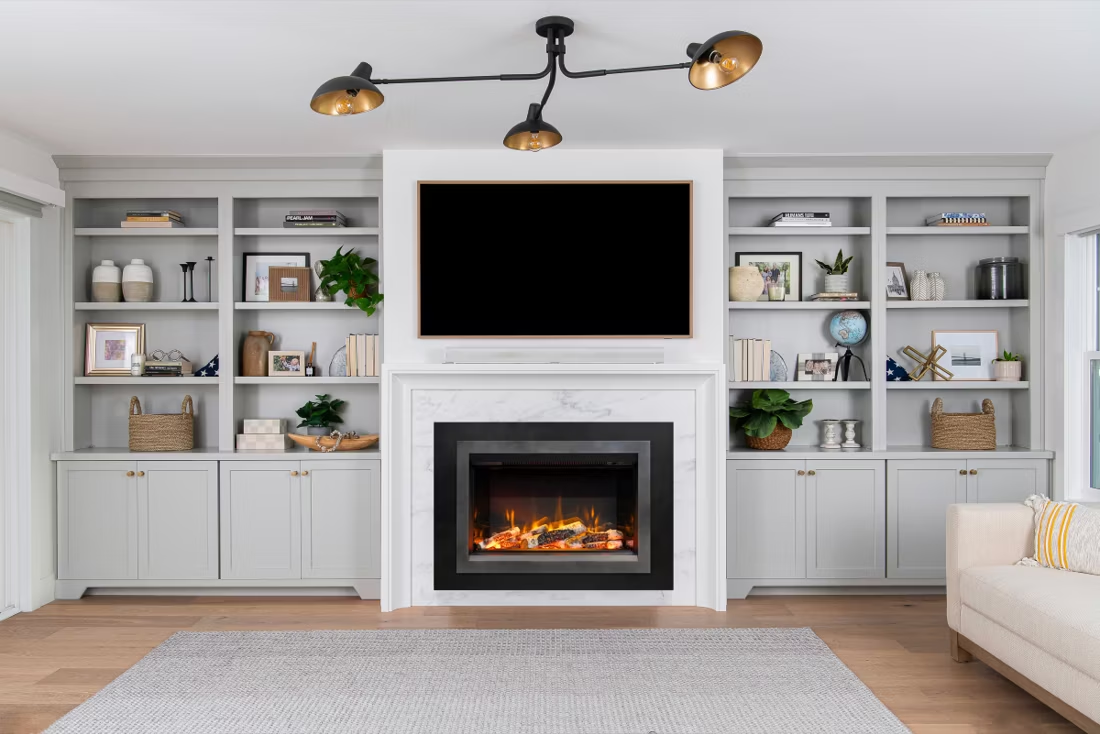
Can I put a TV above my fireplace?
Yes—with an asterisk. Fireplaces are hot and TVs don't like heat. Either put a mantel between them to deflect rising warmth, or choose a fireplace with heat-management technology that creates a cool zone on the wall above—the wall stays around 125 degrees, barely warm, while the room still gets full heat. If you like clean lines and don't want a mantel, heat management is the answer.
Do electric fireplaces actually produce heat?
Yes—most put out around 4,800–5,000 BTUs from a standard outlet, which comfortably warms a bedroom, office, or den as a comfort-zone heater. What they won't do is carry a whole house the way wood, gas, or pellet can. Think of electric as ambiance-first with honest supplemental heat: flames on with no heat in July, flames plus warmth in January.
Does a fireplace add value to my home?
On average, a fireplace adds back to the home about the same amount you spent installing it. Add the monthly savings from heating the rooms you actually use instead of the whole house—often hundreds of dollars a year—and the value case is strong before you even count what a fire does for how your family uses the room.
Can I install a fireplace myself?
If you're putting a fire in your house on purpose, it's best to work with an expert. Unless you're genuinely experienced in framing, gas line, vent pipe, and the national code on clearances to combustibles, have a professional do it—and ideally the same company that sells you the fireplace, so warranty, service, and liability all live under one roof.
Find your electric fireplace in Leelanau County.
Tell us a bit about your home—cottage, condo, or wine country great room—and we'll match you with a trusted local dealer and send you a free Project Guide & Parts List with the exact components for your electric fireplace project.
Find Your Fireplace →