
Zone heat and real ambiance, no chimney required.
For Lathrup Village's mid-century ranches and condos, an electric fireplace adds instant warmth to the room you're actually using—no venting, no gas line, no masonry work.
Every Project Starts From One of These Five Situations
A clean fit for compact ranch and colonial floor plans.
Lathrup Village is a small, tightly platted city in Oakland County—just over two square miles, built out in the 1950s with the curvilinear street layout Roy Lathrup designed to avoid through-traffic. Most homes here are brick ranches and colonials from that era, along with a number of condo and townhome developments. Winters are genuinely cold: an average low of 16°F and a total winter heating load put Lathrup Village in the same range as Madison, Wisconsin, for total heating demand. That's real cold-climate territory, even if the city itself is small.
DTE Electric Company serves the whole city, and at roughly $0.2013 per kWh, Lathrup Village homeowners pay a bit more than the regional average—which makes electric fireplaces attractive specifically as supplemental, zone heat rather than a whole-house solution. A furnace or boiler still carries the base heating load through a Michigan winter, but an electric fireplace or insert lets you turn down the thermostat and heat the family room or den on demand, with no chimney, no combustion byproducts, and installation that's often as simple as a dedicated outlet.
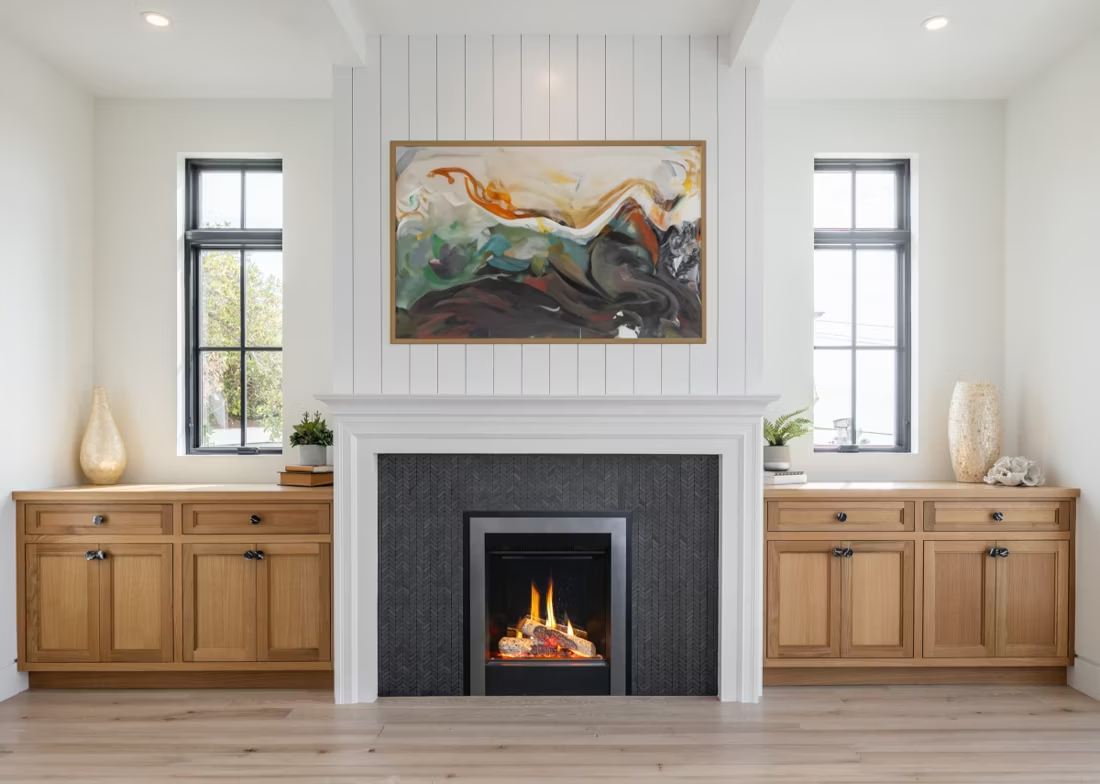
Three steps. No salesperson until you're ready.
Tell us about your project
Your zip code, your situation, and the fuel you're leaning toward—or let the answers point you to one.
See what's actually available
The brands dealers within 100 miles genuinely carry—real options, never a catalog mirage.
Get your dealer & Project Guide
A trusted local dealer, plus the free Project Guide & Parts List that names every component of the job.
Frequently Asked Questions
How much does an electric fireplace installation cost in Lathrup Village?
Plug-in electric fireplace inserts and mantel packages typically run $300 to $1,200 installed, since many just need an existing outlet or a simple GFCI outlet added behind the unit. Built-in electric fireplaces set into a wall or existing masonry opening run higher, often $1,200 to $2,500, once you factor in framing, a dedicated 20-amp circuit, and finish work around a Lathrup Village ranch home's typical brick surround. A licensed electrician handles the circuit work; the fireplace itself doesn't need a chimney or venting of any kind.
Do I need a permit to install an electric fireplace in Lathrup Village?
A freestanding or plug-in electric fireplace generally doesn't require a permit since it's treated like any other appliance plugged into an existing outlet. A built-in unit that requires new wiring or a dedicated circuit typically does need an electrical permit through the City of Lathrup Village Building Department, since that work has to be inspected. Most local dealers coordinate with a licensed electrician who pulls the permit as part of the installation, so you're not managing that step yourself.
What does it cost to run an electric fireplace with DTE rates?
At Lathrup Village's DTE residential rate of about $0.2013 per kWh, a typical 1,500-watt electric fireplace running on full heat costs around $0.30 per hour, or roughly $2.40 for an 8-hour evening of use. Most electric fireplaces also let you run the flame effect without the heater, which draws only 30-50 watts—pennies an hour—so you can keep the ambiance going on mild days without the heating cost. Compared to running a whole-house furnace longer to heat one room, zone heating with an electric fireplace is usually the cheaper option for occasional use in a den or family room.
Can an electric fireplace actually heat a room in a Michigan winter?
Yes, for the room it's in. Most electric fireplaces are rated to comfortably heat 400 to 1,000 square feet, which covers a typical Lathrup Village family room, den, or finished basement rec room. With a winter heating load on par with Madison, Wisconsin and lows in the teens, an electric fireplace won't replace your furnace as primary heat, but it's very effective as zone heat—letting you close off or heat that one space well while keeping the thermostat lower elsewhere in the house.
What's the difference between an electric fireplace, insert, and mantel package?
An electric insert is designed to slide into an existing fireplace opening—a common upgrade for Lathrup Village's brick ranch homes with an old wood-burning firebox that's rarely used. A built-in electric fireplace is designed to be framed into a wall, often as part of a media wall or new construction. A mantel package pairs an electric firebox with a freestanding surround and mantel, requiring no wall modification at all—useful for condo and townhome units where you can't cut into a shared wall. All three run on standard or dedicated circuits and need no venting.
Electric vs. gas fireplace—which makes more sense for my Lathrup Village home?
Most Lathrup Village homes already have natural gas service through DTE for the furnace and water heater, so a gas fireplace is a realistic option if you want higher heat output and the look of a real flame. Electric fireplaces trade some heat output and flame realism for a much simpler install—no gas line, no venting, and options that work in condos or units where running new gas lines isn't practical. If you're mainly after supplemental warmth in one room without construction, electric is usually the faster and less expensive path; if you want a fireplace that can meaningfully offset furnace use on the coldest nights, gas is worth comparing.
Is an electric fireplace enough heat if the power stays on but the furnace fails?
An electric fireplace can serve as backup heat for a single room as long as the power is on, which makes it different from wood or gas options that keep working during an outage. In Lathrup Village, where a mid-century furnace or boiler failure in January can mean a cold house fast, an electric fireplace in the main living area can keep one room livable while repairs happen—but it won't help during a power outage itself, since the heating element depends on electricity from DTE.
Are electric fireplaces a good option for condos and townhomes in Lathrup Village?
Yes—this is actually one of the strongest cases for electric. Lathrup Village has a meaningful number of condo and townhome units where cutting into shared walls for gas lines or venting isn't allowed or practical. Because electric fireplaces don't need a chimney, flue, or exterior vent, a plug-in or mantel-style unit can go into almost any condo living room without touching the building's structure or getting HOA approval for exterior work. This is often the only fireplace option realistic for multi-family units in the city.
What are the best electric fireplace brands for a Lathrup Village home?
Dimplex, SimpliFire, and Napoleon are widely available through Michigan hearth dealers and offer a range of insert, built-in, and mantel options suited to both ranch-style single family homes and condo units. Look for models with a realistic LED flame effect and a separate heater control, so you can run ambiance year-round and only turn on the heat element in winter—a detail that matters given DTE's per-kWh rate. A local dealer can walk you through which size and mounting style fits your specific opening or wall.
Do electric fireplaces actually produce heat?
Yes—most put out around 4,800–5,000 BTUs from a standard outlet, which comfortably warms a bedroom, office, or den as a comfort-zone heater. What they won't do is carry a whole house the way wood, gas, or pellet can. Think of electric as ambiance-first with honest supplemental heat: flames on with no heat in July, flames plus warmth in January.
Does an electric fireplace need a vent or chimney?
No—that's its superpower. An electric fireplace needs a wall and an outlet, period. No vent pipe, no gas line, no clearances to design around, which is why it works in bedrooms, offices, apartments, and walls where venting a gas or wood unit would be impractical or impossible. Installation is typically the simplest and least expensive of any fireplace type.
Can a fireplace actually lower my heating bill?
Yes—by creating a comfort zone. A furnace heats every square foot of the house just to warm the one room you're in; a gas fireplace on low burns roughly a sixth of the gas a typical furnace does. Set the furnace around 55–60 degrees as a baseline, then heat the rooms your family actually uses. Families who heat this way commonly save $20–$60 a month.
What is an in-home preview and do I need one?
It's a visit where a hearth professional measures your space, confirms the model you picked actually works in your home, and walks the specs—framing, gas line, venting, finish work—before anything is ordered. Some details you just can't know until you see the house. Never make a down payment without one; it's the single most-skipped step that burns buyers.
Nearby Dealers
Hearth shops serving Lathrup Village and the surrounding area. Every listing shows whether it is a WhyFire partner, a dealer we have verified as authorized for the brands we recommend, or a local business carrying hearth products. No manufacturer pays for placement. How we verify dealers →
Fireside Hearth & Home - Royal Oak
AirMaster
This Is It Shop's House Of Fire
Creative Design Build Associates
Allstate Billiards, Patio, Fireplace
Allstate By Watsons
Glenn's Fireplace & Spa
American Grill And Patio
Grate Fireplace Shop
Fireside Hearth & Home - Utica
Bourlier & Sons Inc
Premier Furniture
Fireside Hearth & Home - Canton
Pine Tree Furniture & Lighting
D & S Masonry Inc
Bourlier's (Macombs)
Electric Service in Lathrup Village
An electric fireplace's heater draws about 1,500 watts—pennies per hour at local rates.
Dte Electric Company
Find your electric fireplace in Lathrup Village.
Tell us a bit about your home and we'll put together a free Project Guide & Parts List—sized for your room and matched with a trusted local dealer who can install it right.
Find Your Fireplace →