
Reliable warmth for Kentwood winters—no wood pile required.
Instant, even heat for Grand Rapids-area homes through the long Michigan heating season. Find the right gas fireplace and get matched with a trusted local dealer.
Every Project Starts From One of These Five Situations
Suburban Grand Rapids comfort, powered by natural gas.
Kentwood sits at 741 feet in Kent County, just south of Grand Rapids, in a climate zone 5A pocket with a long, cold winter heating season and average winter lows near 17°F. Add in the lake-effect snow that spills off Lake Michigan through the winter months, and most Kentwood households are running a heat source of some kind from November through March.
Because Kentwood is a built-out suburban city of roughly 54,000 people—mostly ranch and colonial homes on standard-size lots developed from the 1960s through the 2000s—wood-burning setups are uncommon here; there's rarely room for a woodpile, and most houses were built with a furnace and a gas line rather than a masonry chimney. Natural gas service runs throughout the city through DTE Energy and Consumers Energy, both of which serve Kent County, so most homes already have gas plumbed to the house for a furnace, water heater, or range. That makes adding a gas fireplace or insert a straightforward extension of an existing gas line rather than a new utility hookup, and it delivers the kind of instant, thermostat-controlled zone heat that pairs naturally with a Michigan winter.
Three steps. No salesperson until you're ready.
Tell us about your project
Your zip code, your situation, and the fuel you're leaning toward—or let the answers point you to one.
See what's actually available
The brands dealers within 100 miles genuinely carry—real options, never a catalog mirage.
Get your dealer & Project Guide
A trusted local dealer, plus the free Project Guide & Parts List that names every component of the job.
Frequently Asked Questions
How much does a gas fireplace installation cost in Kentwood?
Most gas fireplace installations in Kentwood run $4,500 to $10,000, with the spread driven mainly by venting and gas line work rather than the appliance itself. A direct-vent insert going into an existing builder-grade wood-burning firebox—common in Kentwood subdivisions from the 1980s and 90s—sits toward the low end, since the chase and roof penetration already exist. A new built-in gas fireplace for a basement remodel or addition, where a fresh gas line has to be run from the meter, lands toward the higher end. Local dealers will confirm an exact number after seeing your gas line routing and venting path in person.
Can I convert my existing wood-burning fireplace to gas?
Yes, and it's a common request in Kentwood's older subdivisions, where many homes were built with a factory-built (zero-clearance) wood-burning firebox that's rarely used. A gas insert or gas log set can typically be installed into that existing firebox, using the same chase for venting. Conversions usually run $3,500 to $8,000 depending on whether you choose a sealed direct-vent insert (more efficient, glass front) or a vented log set that burns more like an open fireplace. Since Kentwood homes are almost all already on the DTE Energy or Consumers Energy gas grid, running a new supply line to the fireplace is usually a modest add rather than a major project.
Do I need natural gas, or should I use propane?
Almost all of Kentwood is served by natural gas through DTE Energy or Consumers Energy, so the large majority of installations here use the existing gas utility rather than propane. Propane tends to show up only on the rural fringes of Kent County where gas mains haven't been extended. If your home already runs a gas furnace, water heater, or range, adding a fireplace on the same natural gas line is the simplest and cheapest path—your installer just taps into the existing supply rather than arranging a propane tank and delivery contract.
Will my gas fireplace still work if the power goes out?
Most modern gas fireplaces will, which matters in a Kent County winter when an ice storm or high-wind event can knock out power for a day or more. Units with IPI (intermittent pilot ignition) run on a small AA battery backup that kicks in automatically and lets you light the fireplace on demand even with the grid down—just remember to swap the batteries once a year. Valor's gas fireplaces take a different approach: the pilot's thermocouple generates its own electricity, so there's no battery to maintain at all. Ask your local dealer which ignition system is in the model you're considering if outage backup is a priority.
What's the difference between a gas fireplace, gas insert, and gas stove?
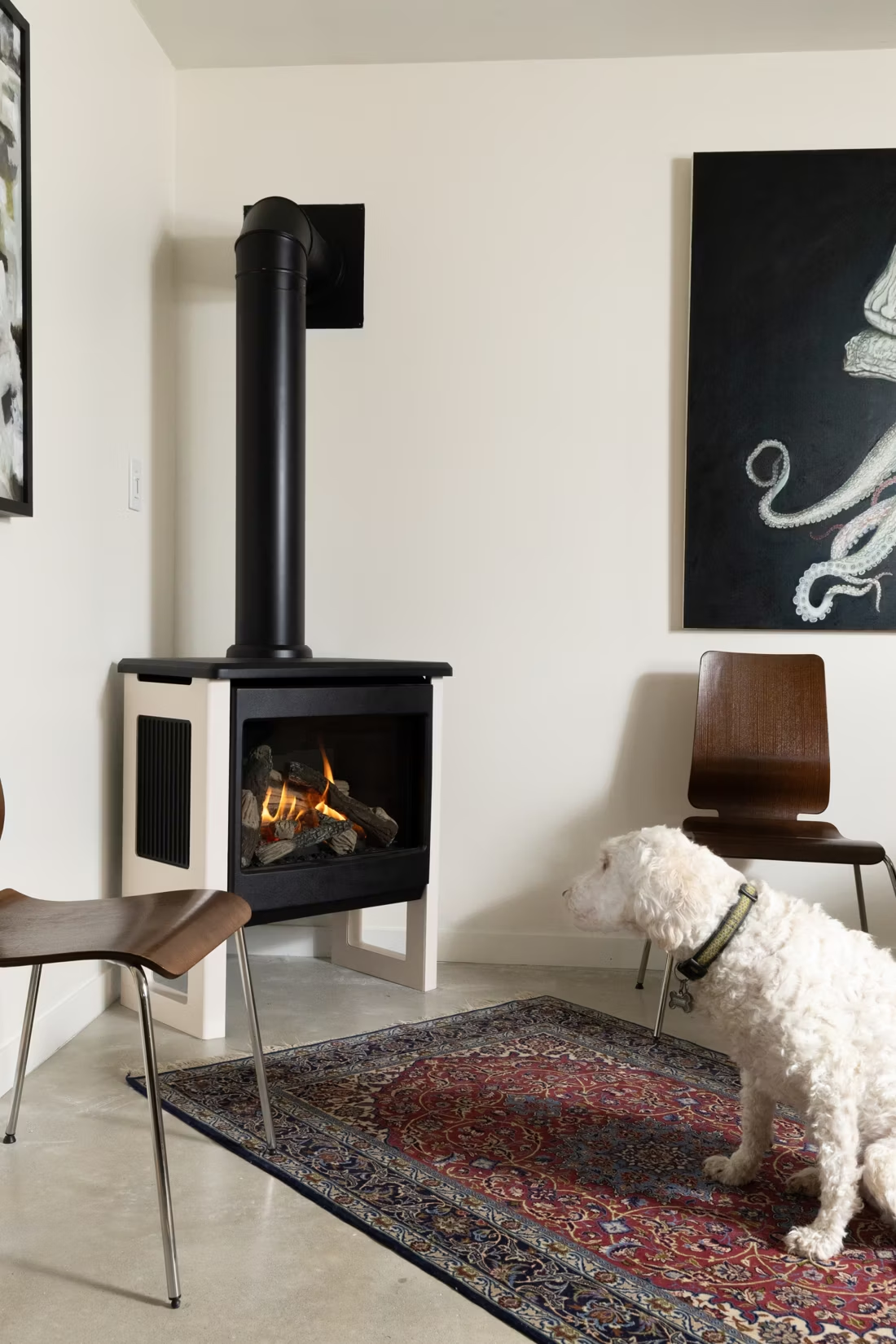
A gas fireplace is a fully built-in unit framed into a wall—the standard choice for new construction or a basement remodel without an existing firebox. A gas insert is sized to slide into an existing masonry or factory-built firebox, which fits a lot of Kentwood's older subdivisions where a wood-burning fireplace already exists but rarely gets used. A gas stove is a freestanding cast-iron or steel unit that sits out in the room on its own hearth pad, which works well in a basement or converted garage space without a fireplace opening at all. Most Kentwood homeowners with an existing firebox go with an insert; those adding heat to a new space typically choose a built-in or freestanding unit.
Do I need a permit to install a gas fireplace in Kentwood?
Yes. The City of Kentwood requires a building permit for the appliance installation and, because gas piping is involved, a mechanical/gas permit as well—both typically pulled through the city's Building Inspections Department. Any new or modified gas line also needs to be run by a licensed gas-fitter. Most established local hearth dealers handle this paperwork as part of the installation quote, coordinating the gas line, venting, and inspection sign-off so you're not managing separate trades yourself.
Are vent-free gas fireplaces allowed in Kentwood?
Michigan permits vent-free (unvented) gas fireplaces, but with restrictions on room size, an oxygen depletion sensor, and limits on total BTU input relative to the space—your local dealer or building inspector can confirm whether a given unit qualifies for a specific room. Direct-vent units, which draw combustion air from outside and exhaust gases through a sealed pipe, remain the most common recommendation for Kentwood homes because they don't affect indoor air quality and they aren't subject to the same room-size restrictions. For a tightly sealed, energy-efficient home—increasingly common in newer Kentwood construction—direct-vent is usually the safer, simpler call.
How often does a gas fireplace need to be serviced?
Plan on an annual inspection, ideally in early fall before the Michigan heating season ramps up. A certified technician checks the burner, pilot assembly, venting, and gas connections, and cleans the glass and interior—a much smaller job than chimney sweeping but still important, since a dirty pilot or degraded seal is the most common cause of a fireplace failing to light on the first cold night. Local gas appliance service providers in the Grand Rapids area typically charge $150 to $250 for this visit.
Gas vs. electric fireplace—which makes more sense in Kentwood?
Gas delivers more real heat output for the cost of fuel—an important factor given Kentwood's long, cold winter heating season—and it can double as backup heat during a power outage with battery-backup ignition. Electric fireplaces are cheaper to install (often $400 to $1,500 versus $4,500-plus for gas) and need no venting or gas line at all, but Michigan's residential electric rate of roughly $0.20/kWh through Consumers Energy or DTE Electric makes electric units a costlier way to produce sustained heat, so most electric installs here are chosen for ambiance or supplemental warmth in a single room rather than as a serious heat source. For a primary living space you actually want to heat through a Michigan winter, gas is generally the better fit; for a bedroom accent or a rental with no gas line, electric is the simpler option.
Why is a fireplace insert so efficient?
An insert does two things: it seals the chimney completely, so you stop losing air you already paid to heat, and it radiates warmth into the room through the firebox and glass. Most add a heat-exchange fan that pulls cool room air underneath, wraps it around the hot firebox, and pushes it back out warm. Your home is more efficient before you've even lit the first fire.
Can I put a TV above my fireplace?
Yes—with an asterisk. Fireplaces are hot and TVs don't like heat. Either put a mantel between them to deflect rising warmth, or choose a fireplace with heat-management technology that creates a cool zone on the wall above—the wall stays around 125 degrees, barely warm, while the room still gets full heat. If you like clean lines and don't want a mantel, heat management is the answer.
Can I install a fireplace myself?
If you're putting a fire in your house on purpose, it's best to work with an expert. Unless you're genuinely experienced in framing, gas line, vent pipe, and the national code on clearances to combustibles, have a professional do it—and ideally the same company that sells you the fireplace, so warranty, service, and liability all live under one roof.
Can a fireplace actually lower my heating bill?
Yes—by creating a comfort zone. A furnace heats every square foot of the house just to warm the one room you're in; a gas fireplace on low burns roughly a sixth of the gas a typical furnace does. Set the furnace around 55–60 degrees as a baseline, then heat the rooms your family actually uses. Families who heat this way commonly save $20–$60 a month.
Nearby Dealers
Hearth shops serving Kentwood and the surrounding area.
Heritage Fireplace & Design Center
Find your gas fireplace in Kentwood.
Tell us about your home and we'll put together a free Project Guide & Parts List—the right gas fireplace or insert, the vent kit it needs, and a trusted local Kentwood-area dealer to install it.
Find Your Fireplace →