
No chimney, no gas line—just heat where you need it.
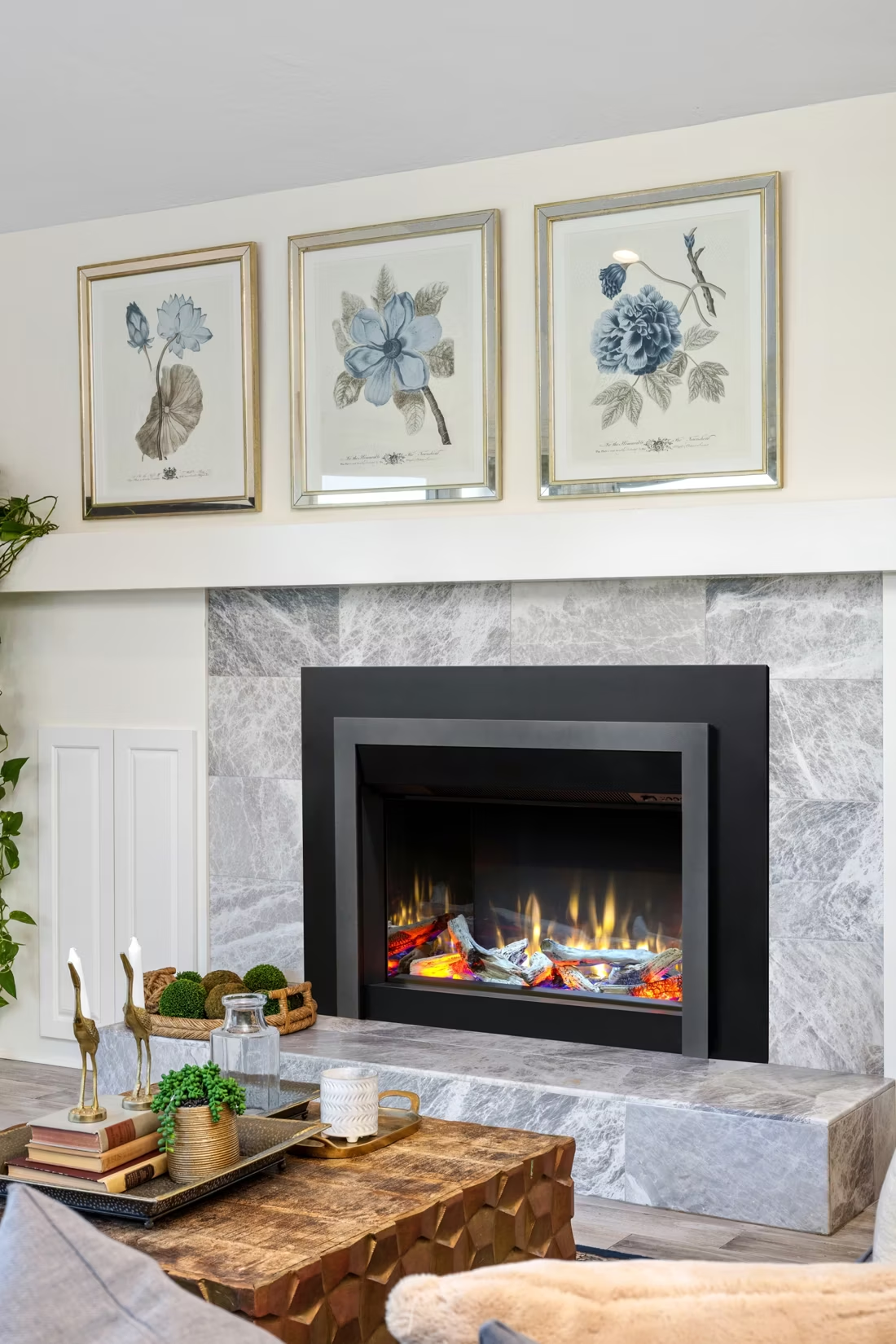
For Holland's lake-effect winters, an electric fireplace adds real zone heat and ambiance to a condo, bedroom, or lakefront cottage without touching a wall for venting. Find the right unit and connect with a trusted local dealer.
Every Project Starts From One of These Five Situations
The heat you want, without a flue to maintain.
Holland sits at the edge of Lake Michigan in climate zone 5A, with a winter heating load comparable to places like Grand Rapids and average winter lows around 20°F—a milder cold than Fargo or Duluth see, but still enough that most homes run a furnace from November through March and lake-effect snow squalls off the water are routine. In that climate, an electric fireplace isn't the primary heat source in most Holland households; it's a supplemental heater and focal point for a family room, bedroom, or finished basement, layered on top of a gas furnace doing the main work.
Holland is unusual for a Michigan city in that wood stoves and pellet stoves see almost no use here—newer housing stock, downtown lofts and condos near 8th Street, and lakefront cottage communities along the shoreline generally aren't built around chimneys or hearths that support solid-fuel appliances. Electric fills that gap well: no permit-heavy venting, no gas line, and no combustion byproducts to manage. Power comes from a mix of providers depending on where you live—the City of Holland's own municipal utility (Holland BPW) serves much of downtown and the historic core, while Consumers Energy and Wolverine Power Supply Cooperative cover surrounding Ottawa County. At a residential rate of roughly $0.1168 per kWh, Holland's electricity is priced below the statewide average, which keeps the cost of running a supplemental electric heater reasonable.
Three steps. No salesperson until you're ready.
Tell us about your project
Your zip code, your situation, and the fuel you're leaning toward—or let the answers point you to one.
See what's actually available
The brands dealers within 100 miles genuinely carry—real options, never a catalog mirage.
Get your dealer & Project Guide
A trusted local dealer, plus the free Project Guide & Parts List that names every component of the job.
Frequently Asked Questions
How much does an electric fireplace installation cost in Holland?
Electric fireplaces are the least expensive hearth appliance to install because there's no venting, chimney, or gas line involved. A plug-in insert or wall-mount unit that uses an existing 120-volt outlet typically runs $300 to $1,500 installed. A built-in unit with custom framing, a recessed wall cavity, and a dedicated circuit run by a licensed electrician usually lands between $1,500 and $3,500. The biggest cost variable in Holland is electrical work—if your family room or basement doesn't already have a 20-amp circuit near the install location, that's the line item that moves the estimate up.
Will an electric fireplace actually heat my Holland home?
Most models are built around a 1,500-watt heating element, which is the maximum a standard 120-volt circuit can safely carry—that's enough to comfortably heat a single room (250-400 sq ft) but not a whole house through a Holland winter with a heating load comparable to places like Grand Rapids. Think of it as zone heat: it takes the edge off a chilly family room or bedroom and lets you turn down the furnace thermostat in that part of the house, rather than replacing central heat. For whole-home heating in this climate, most Holland homeowners rely on a gas furnace as the primary system.
Do I need a permit or an electrician to install an electric fireplace?
A small plug-in unit needs neither—it works like any other appliance on an existing outlet. A built-in electric fireplace or insert that requires a new dedicated circuit does need an electrical permit through the City of Holland Building Department (or Ottawa County, if you're outside city limits), and the circuit work itself should be done by a licensed electrician. Most hearth retailers that sell built-in electric units either employ a licensed electrician or coordinate directly with one, so you're not left managing that trade separately.
What's the difference between an electric insert, a wall-mount unit, and a freestanding electric stove?
An electric insert is sized to slide into an existing masonry fireplace opening, which makes it a popular choice for older Holland homes near the lakeshore that have a fireplace but no interest in burning wood. A wall-mount unit hangs flat against the wall like a large TV and works well in newer builds or condos with no fireplace at all. A freestanding electric stove sits on the floor and mimics the look of a wood stove—a common pick for cottages and basements where a stove aesthetic is wanted without any venting.
How much does it cost to run an electric fireplace in Holland?
At Holland's residential rate of about $0.1168 per kWh, a standard 1,500-watt electric fireplace running on high costs roughly 18 cents per hour. Used for five or six hours a day during the coldest months, that works out to about $25 to $32 a month—meaningfully cheaper to operate than most people assume, and far less than heating an equivalent space with baseboard resistance heat or a space heater running around the clock.
Which electric utility serves my home in Holland?
It depends on your address. Much of downtown Holland and the historic core is served by the City of Holland's own municipal utility, Holland BPW, which generates and distributes its own power locally. Outside city limits in Ottawa County, Consumers Energy is the more common provider, and some rural areas are served by Wolverine Power Supply Cooperative. If you're not sure which one bills your address, check a recent statement—it affects nothing about which fireplace you can install, but it's worth confirming before an electrician quotes circuit work tied to your service panel.
Are electric fireplaces a good fit for condos and lofts in downtown Holland?
Yes—this is where electric genuinely outperforms every other fuel option locally. Downtown Holland's condos and converted lofts near 8th Street typically have no chimney, no gas service to the unit, and HOA rules that make wood or gas installations impractical or outright prohibited. A wall-mount or built-in electric unit sidesteps all of that: no venting, no combustion, no structural changes to a shared building. It's the fireplace option that actually clears the practical and regulatory bar in a multi-unit building.
Electric vs. gas—which is right for my Holland home?
Gas fireplaces deliver more real heat output and can serve as a legitimate secondary heat source during a Michigan winter, but they require a gas line, venting, and a more involved installation. Electric fireplaces install almost anywhere with minimal disruption but function purely as supplemental zone heat and ambiance, not a meaningful heat source on their own. For a primary living room where you want visible flame and real warmth on the coldest nights, gas is usually the better fit if you already have gas service. For a bedroom, basement, condo, or a room where running new gas or venting isn't practical, electric is the straightforward answer.
Will my electric fireplace work during a power outage?
No—electric fireplaces are entirely dependent on grid power, so they shut off the moment the power does. This matters in Holland during winter lake-effect storms off Lake Michigan, when outages can stretch for hours. Because wood and pellet stoves see very little use in Holland's housing stock, most homeowners here who want backup heat during an outage either lean on a whole-home or portable generator to keep the furnace and fireplace running, or accept that the electric fireplace is for everyday ambiance rather than emergency heat.
Does an electric fireplace need a vent or chimney?
No—that's its superpower. An electric fireplace needs a wall and an outlet, period. No vent pipe, no gas line, no clearances to design around, which is why it works in bedrooms, offices, apartments, and walls where venting a gas or wood unit would be impractical or impossible. Installation is typically the simplest and least expensive of any fireplace type.
Can I put a TV above my fireplace?
Yes—with an asterisk. Fireplaces are hot and TVs don't like heat. Either put a mantel between them to deflect rising warmth, or choose a fireplace with heat-management technology that creates a cool zone on the wall above—the wall stays around 125 degrees, barely warm, while the room still gets full heat. If you like clean lines and don't want a mantel, heat management is the answer.
Does a fireplace add value to my home?
On average, a fireplace adds back to the home about the same amount you spent installing it. Add the monthly savings from heating the rooms you actually use instead of the whole house—often hundreds of dollars a year—and the value case is strong before you even count what a fire does for how your family uses the room.
Can I install a fireplace myself?
If you're putting a fire in your house on purpose, it's best to work with an expert. Unless you're genuinely experienced in framing, gas line, vent pipe, and the national code on clearances to combustibles, have a professional do it—and ideally the same company that sells you the fireplace, so warranty, service, and liability all live under one roof.
Nearby Dealers
Hearth shops serving Holland and the surrounding area. Every listing shows whether it is a WhyFire partner, a dealer we have verified as authorized for the brands we recommend, or a local business carrying hearth products. No manufacturer pays for placement. How we verify dealers →
Hancock Chimney
Fireplace Gallery Of West Mich
Fireplace And Stone
Electric Service in Holland
An electric fireplace's heater draws about 1,500 watts—pennies per hour at local rates.
Consumers Energy Co
Wolverine Power Supply Coop
City Of Holland
Find your electric fireplace in Holland.
Tell us a bit about your home and we'll match you with the right electric fireplace, insert, or wall-mount unit—plus a free Project Guide & Parts List and an introduction to a trusted local dealer in Holland.
Find Your Fireplace →