
Real warmth, no chimney required in Highland Park.
Electric heat that works in Highland Park's rentals, duplexes, and century-old housing stock—no venting, no gas line, no cutting permit. Find the right unit and a trusted local dealer.
Every Project Starts From One of These Five Situations
A city built for plug-in heat, not wood smoke.
Highland Park is a 2.9-square-mile enclave completely surrounded by Detroit, with a population just over 9,000 living mostly in early-1900s housing built during the city's Ford Model T-era boom. Lots are small, many homes are multi-family or subdivided, and a large share of residents rent rather than own. Winters here average a 20-degree low with a heating load comparable to Buffalo, NY—but there's no equivalent to the woodlots and national forest cutting permits you'd find farther north or west in the state. That's why wood stoves and pellet appliances are essentially absent from Highland Park's housing market: there's no local permit office issuing cutting permits, most homes were never built with masonry chimneys sized for solid fuel, and storing cordwood or a pellet supply on a Highland Park lot simply isn't practical.
Electric fills that gap well. DTE Electric Company serves most of the city, with Wyandotte Municipal Services Commission serving a smaller portion—residential rates run roughly $0.16 to $0.20 per kWh depending on provider, which keeps a typical electric insert or freestanding unit inexpensive to run for supplemental zone heat. Because electric fireplaces plug into a standard outlet or tie into a dedicated circuit rather than requiring venting or gas piping, they're one of the few heating-adjacent upgrades a renter or condo owner in Highland Park can actually install, and they work well alongside the city's older electrical infrastructure once a licensed electrician confirms panel capacity.
Three steps. No salesperson until you're ready.
Tell us about your project
Your zip code, your situation, and the fuel you're leaning toward—or let the answers point you to one.
See what's actually available
The brands dealers within 100 miles genuinely carry—real options, never a catalog mirage.
Get your dealer & Project Guide
A trusted local dealer, plus the free Project Guide & Parts List that names every component of the job.
Frequently Asked Questions
How much does an electric fireplace cost to install in Highland Park?
Plug-in freestanding electric fireplaces and mantel units typically run $150 to $600 and need nothing more than a standard 120V outlet—a common choice in Highland Park's rental units and apartments. Built-in wall inserts or linear electric fireplaces that require a dedicated circuit, in-wall wiring, and a custom surround usually run $1,200 to $3,000 installed, and can climb toward $4,000 for larger linear units with custom millwork. Because there's no venting or gas line involved, electric installs are consistently the least expensive fireplace category, which matters in a city where housing values and renovation budgets tend to be modest.
Do I need a permit to install an electric fireplace in Highland Park?
Plug-in electric fireplaces generally don't require a permit since they use existing outlets and don't involve gas lines or venting. If you're adding a built-in insert that requires new electrical wiring or a dedicated circuit, that electrical work typically does need to be pulled and inspected—most licensed electricians and hearth dealers handle that paperwork as part of the installation rather than leaving it to the homeowner. Given Wayne County's mix of older housing stock, it's worth confirming with your installer whether your specific unit triggers a permit before work starts.
Will an electric fireplace actually heat a room, or is it just for looks?
Most electric fireplaces include a built-in fan heater rated around 1,500 watts, which is enough to noticeably warm a single room of 300 to 400 square feet—useful as supplemental heat on Highland Park's 20-degree average winter nights, especially in older homes with uneven central heating. They won't replace a furnace across a long, Buffalo-level Michigan winter, but they're effective zone heat for a bedroom, living room, or converted flat, and many units let you run the flame effect without the heater during milder stretches to keep electricity use down.
What's the difference between an electric fireplace, insert, and mantel package?
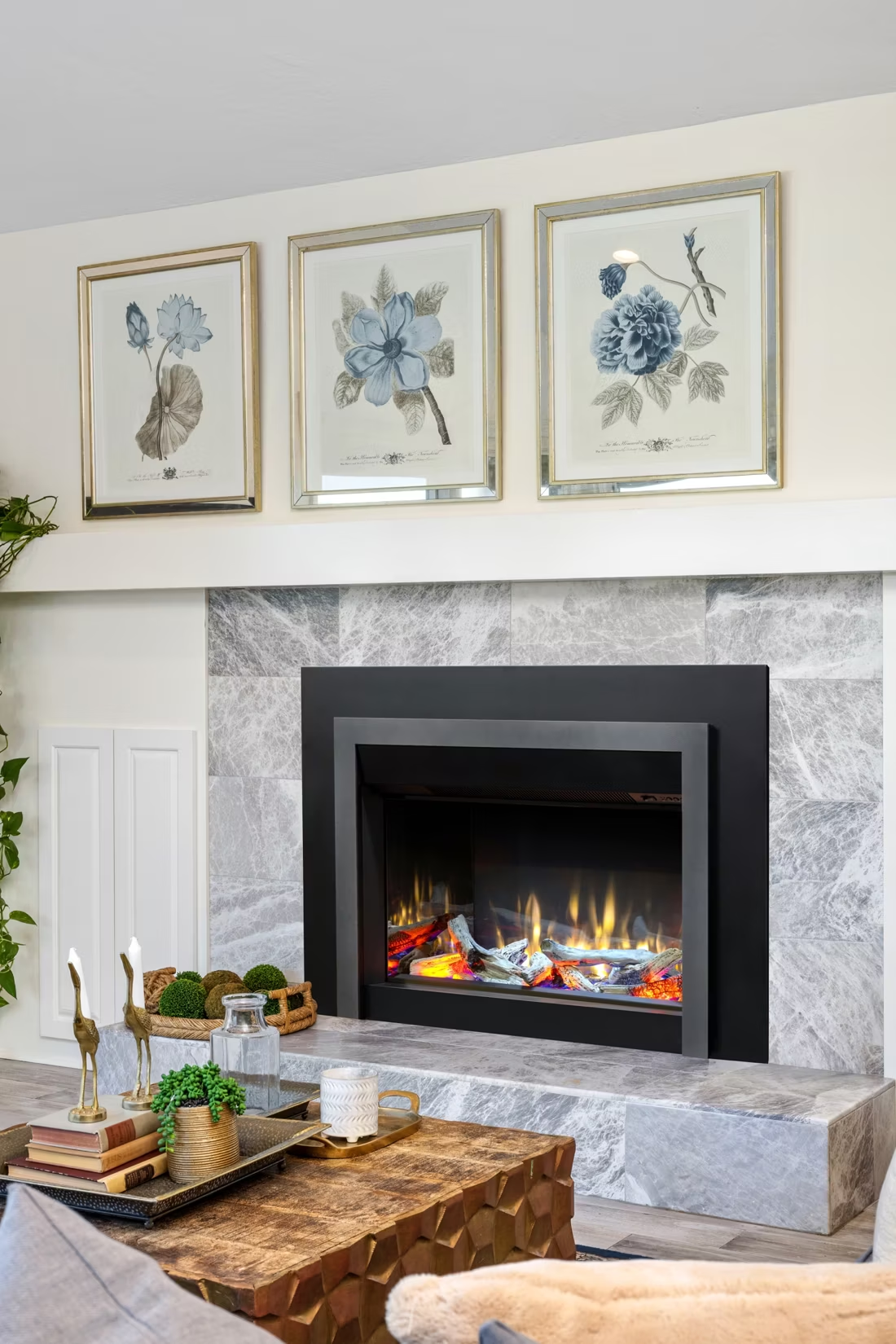
A freestanding electric fireplace or mantel package sits against a wall like furniture and plugs into a standard outlet—the easiest option for renters or anyone who wants to avoid modifying the wall. An electric insert is built into an existing opening, either a real masonry firebox being converted from wood or a manufactured cavity in a wall or built-in cabinet, and usually looks more integrated. Wall-mounted linear electric fireplaces mount flush like a large TV and often need a dedicated circuit run behind the wall. For Highland Park's older homes with existing but unused masonry fireboxes, an insert is often the cleanest upgrade since it reuses an opening that's otherwise just collecting dust.
My home's electrical panel is older—do I need an upgrade for an electric fireplace?
It depends on the unit and your existing panel capacity. A plug-in unit under 1,500 watts usually runs fine on a standard household circuit without any panel work. A hardwired built-in insert pulling a dedicated 20-amp circuit is more likely to require attention if your home still has an older fuse box or an undersized panel—common in parts of Highland Park's early-20th-century housing stock. A licensed electrician can confirm capacity in the same visit as the fireplace installation, and most local dealers will flag this during an in-home consultation rather than surprise you after the unit arrives.
I rent my apartment in Highland Park—can I still install an electric fireplace?
In most cases, yes. A plug-in freestanding or mantel-style electric fireplace requires no wall modification, no venting, and no permanent wiring, which makes it one of the only fireplace options a renter can install without landlord approval for construction. If you want a wall-mounted or recessed unit, that typically does require landlord sign-off since it involves cutting into drywall or running a new circuit. Given how much of Highland Park's housing is rental or multi-family, plug-in units are by far the most common electric fireplace choice in the city.
Can I install a wood stove in Highland Park instead?
It's not a realistic option here, and it's worth being upfront about that. Highland Park is a fully built-out 2.9-square-mile city with no adjacent national forest or public land offering cutting permits, no established firewood supply chain the way you'd find in a more rural part of Michigan, and lot sizes too small for practical cordwood storage. Most homes also lack a masonry chimney built to handle solid-fuel venting. A handful of oak, maple, birch, or ash trees might exist regionally, but there's essentially no residential wood-stove market in Highland Park—electric and gas cover the heating and ambiance needs that wood serves elsewhere in the state.
How much does it cost to run an electric fireplace daily in Highland Park?
At DTE Electric Company's residential rate of roughly $0.20 per kWh, running a 1,500-watt electric fireplace heater for 4 hours a day costs about $0.30 daily, or roughly $9 a month of regular winter use. Homes served by Wyandotte Municipal Services Commission, at closer to $0.16 per kWh, pay slightly less. Running the flame effect alone without the heater draws only 30 to 50 watts, so leaving it on for ambiance costs pennies. That low running cost is a big part of why electric fireplaces are popular as secondary heat sources in Highland Park rather than a whole-home heating strategy.
Electric vs. gas fireplace—which fits my Highland Park home better?
Gas fireplaces deliver more real heat output and can serve as a legitimate supplemental heat source through Michigan's coldest stretches, but they require a gas line, venting, and a larger installation budget—generally impractical for renters and best suited to owner-occupied homes. Electric fireplaces need only an outlet or a simple dedicated circuit, cost far less to install, and work in nearly any unit regardless of lease terms or building age. For Highland Park's mix of rental apartments, small multi-family buildings, and modest single-family homes, electric is usually the more accessible choice, while gas tends to make more sense for owners doing a larger renovation with an existing or planned gas line.
Does an electric fireplace need a vent or chimney?
No—that's its superpower. An electric fireplace needs a wall and an outlet, period. No vent pipe, no gas line, no clearances to design around, which is why it works in bedrooms, offices, apartments, and walls where venting a gas or wood unit would be impractical or impossible. Installation is typically the simplest and least expensive of any fireplace type.
Do electric fireplaces actually produce heat?
Yes—most put out around 4,800–5,000 BTUs from a standard outlet, which comfortably warms a bedroom, office, or den as a comfort-zone heater. What they won't do is carry a whole house the way wood, gas, or pellet can. Think of electric as ambiance-first with honest supplemental heat: flames on with no heat in July, flames plus warmth in January.
How much should I budget for a fireplace?
For an average home—covering the fireplace, the vent pipe, and basic installation—a budget between $3,900 and $5,500 gives you a lot of options across wood, gas, and pellet. By the time you add finish work, gas line, and electrical, the average complete installation lands between $5,000 and $12,000 all-in. In a remodel or new build, a good rule is to put about 2.5% of the total project cost toward the fireplace.
Does a fireplace add value to my home?
On average, a fireplace adds back to the home about the same amount you spent installing it. Add the monthly savings from heating the rooms you actually use instead of the whole house—often hundreds of dollars a year—and the value case is strong before you even count what a fire does for how your family uses the room.
Nearby Dealers
Hearth shops serving Highland Park and the surrounding area. Every listing shows whether it is a WhyFire partner, a dealer we have verified as authorized for the brands we recommend, or a local business carrying hearth products. No manufacturer pays for placement. How we verify dealers →
AirMaster
Fireside Hearth & Home - Royal Oak
Bourlier & Sons Inc
Allstate By Watsons
Allstate Billiards, Patio, Fireplace
Marquis Fireplace Ltd.
Syles
Glenn's Fireplace & Spa
Fireside Hearth & Home - Utica
This Is It Shop's House Of Fire
American Grill And Patio
Premier Furniture
Scott’s Fireplace
Creative Design Build Associates
Fireside Hearth & Home - Canton
Grate Fireplace Shop
Bourlier's (Macombs)
Electric Service in Highland Park
An electric fireplace's heater draws about 1,500 watts—pennies per hour at local rates.
Dte Electric Company
Wyandotte Municipal Serv Comm
Find your electric fireplace in Highland Park.
Tell us about your home—rented or owned—and we'll match you with the right electric fireplace or insert, connect you with a trusted local dealer, and send a free Project Guide & Parts List for your Highland Park install.
Find Your Fireplace →