
Add Real Warmth to Any Room in Franklin—No Chimney Required.
Zero-clearance electric heat for Franklin's historic Tudor and colonial homes, additions, and basements—no venting, no gas line, no masonry work. Find the right unit and get matched with a trusted local dealer.
Every Project Starts From One of These Five Situations
The cleanest way to add heat without touching the walls.
Franklin is a village of roughly 2,650 people built around a 19th-century cider mill and a historic district full of narrow lots, stone bridges, and Tudor-revival and colonial homes that predate central heating by a century. Cutting a new chimney chase through a house near the historic district, or running a masonry flue through a century-old roofline, is often impractical or restricted outright. At the same time, winters here are genuinely cold—Franklin sits in climate zone 5A with an average winter low of 16°F and a long, demanding heating season that stretches for months, cold enough that a lot of homeowners want supplemental heat in a sunroom, finished basement, or home office the furnace doesn't quite reach.
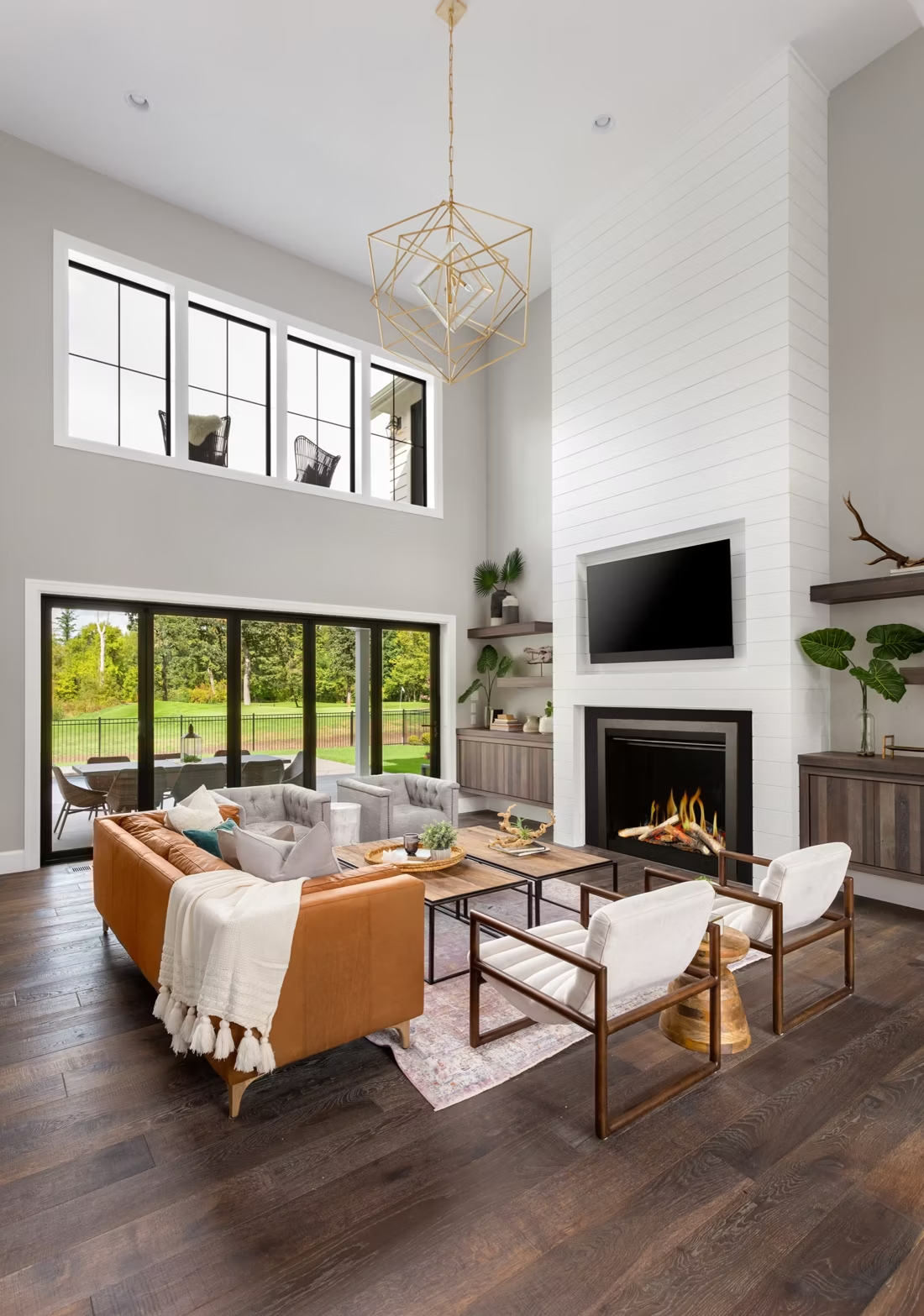
That's where electric fireplaces earn their place. A modern electric insert or linear unit plugs into a standard outlet or ties into a dedicated 20-amp circuit, produces real supplemental heat with a built-in fan-forced heater, and requires none of the venting, gas piping, or chimney work that wood or gas units need. DTE Electric Company serves Franklin at a residential rate around $0.20 per kWh—on the higher end nationally—so most homeowners here run electric fireplaces as zone heat for a specific room rather than a whole-house solution, which keeps operating costs reasonable. It's also, notably, why wood and pellet stoves see almost no uptake in the village: between historic-district guidelines, small lots, and a mature oak and maple canopy owners are protective of, there's little appetite for adding a new masonry chimney or a hopper full of pellets when an electric unit can be installed in an afternoon.
Three steps. No salesperson until you're ready.
Tell us about your project
Your zip code, your situation, and the fuel you're leaning toward—or let the answers point you to one.
See what's actually available
The brands dealers within 100 miles genuinely carry—real options, never a catalog mirage.
Get your dealer & Project Guide
A trusted local dealer, plus the free Project Guide & Parts List that names every component of the job.
Frequently Asked Questions
How much does it cost to install an electric fireplace in Franklin?
Electric fireplaces are the least expensive hearth product to install, which is part of their appeal in a village where masonry and venting work on a historic home can get complicated fast. A plug-in freestanding or wall-mount unit typically runs $200 to $800 installed, since it needs no dedicated wiring. A built-in linear electric fireplace set into a wall, cabinetry, or new construction with a custom surround usually runs $1,500 to $4,500, mostly driven by carpentry and finish work rather than the unit itself. If you need a licensed electrician to run a new 20-amp circuit—common for larger units—add $200 to $500. Local dealers can give you a firm number after seeing the room.
Do electric fireplaces actually put out real heat, or are they just for looks?
Both, depending on the model. Most electric fireplaces sold today include a fan-forced heater rated around 1,500 watts, which is enough to comfortably heat a 300- to 400-square-foot room—plenty for a Franklin sunroom, den, or finished basement. Given Franklin's average winter low of 16°F and a long, demanding heating season that stretches for months, an electric unit works best as zone heat for a specific room rather than a replacement for your furnace. Some homeowners run the flame effect without the heater in summer or shoulder seasons, then switch on the heat function once temperatures drop.
What's the difference between an electric insert, a wall-mount, and a freestanding electric fireplace?
An electric insert is built to slide into an existing masonry fireplace opening, which is a common retrofit in Franklin's older homes with fireplaces original to the house—no chimney sweep or liner needed since there's no combustion. A wall-mount or built-in linear unit is designed to be recessed into a wall or set into custom cabinetry during a remodel or addition, and is the most popular choice for new construction or finished-basement projects in the village. A freestanding electric stove or mantel unit needs no installation beyond an outlet and can be moved room to room, which makes it a good option for renters or homeowners not ready to commit to built-in work.
Do I need a permit or an electrician to install an electric fireplace in Franklin?
Plug-in units that use a standard 120-volt outlet don't require a permit. Larger built-in electric fireplaces that need a dedicated 20-amp circuit do require an electrical permit through the Village of Franklin, and the wiring should be done by a licensed electrician—most local hearth dealers either employ one or coordinate directly with one as part of the install. Because Franklin's historic district has additional review requirements for exterior and structural changes, any project that involves altering a wall opening or mantel surround visible from the street may also need village design review, even though the fireplace itself is unvented.
Why don't more homes in Franklin use wood stoves, given all the oak and maple trees?
It's less about the wood supply—Franklin has plenty of oak, maple, birch, and ash in its tree canopy—and more about the housing stock and village character. Many homes here sit on tight, historic-district lots where adding a new masonry chimney or running Class A chimney pipe through a Tudor-revival roofline is either impractical or subject to strict design review. Pellet stoves face a similar hurdle, plus most Franklin homeowners aren't set up for pellet delivery and storage. Electric fireplaces sidestep all of it—no chimney, no combustion air, no exterior venting—which is a big reason they've become the practical choice for supplemental heat in the village.
What does it cost to run an electric fireplace in Franklin?
At DTE Electric Company's residential rate of about $0.20 per kWh, a typical 1,500-watt electric fireplace running on its heater setting costs roughly $0.30 per hour, or about $2.40 for an 8-hour evening of use. Running the flame effect alone, without the heater, draws only 30 to 100 watts and costs pennies per hour. Compared to running a gas fireplace or firing up the whole-house furnace to warm one room, an electric unit used as zone heat in a single space is usually the cheaper option, even at Michigan's above-average electric rates.
What's the best electric fireplace for a historic Franklin home?
For homes with an existing but unused masonry fireplace—common in Franklin's older colonial and Tudor-revival stock—an electric insert that slides into the firebox opening is usually the cleanest solution, since it preserves the original mantel and surround while adding real heat. For additions, finished basements, or rooms without an existing fireplace, a linear wall-mount unit set into custom millwork gives a more contemporary look. Brands like Napoleon, Dimplex, and Amantii are widely available through hearth dealers serving Oakland County and offer realistic flame effects that hold up well even without the heater running.
Electric vs. gas fireplace—which makes more sense for a Franklin home?
Gas fireplaces are common in Franklin and offer higher heat output, a more authentic flame, and the option to run during a power outage if properly configured—a real consideration given how ice storms occasionally knock out DTE service in this part of Oakland County. But gas requires a gas line and venting, which can be a bigger and more disruptive project in a historic-district home. Electric fireplaces install in a fraction of the time, cost less upfront, and work anywhere there's an outlet, but they won't run without power and produce less heat than a comparable gas unit. Many Franklin homeowners use gas in the main living area and electric in secondary rooms like a home office or basement where a full gas line isn't worth the disruption.
Will my electric fireplace work if the power goes out?
No—electric fireplaces require power to run both the flame effect and the heater, so they won't provide backup heat during an outage. This matters in Franklin, where ice storms and downed trees along the village's older overhead lines occasionally cause multi-hour or multi-day DTE outages in winter. If backup heat during outages is a priority, most local dealers will point you toward a battery-backed gas fireplace or a generator setup rather than relying on electric alone. For everyday supplemental heat when the power is on, though, electric remains the simplest and least disruptive option for a historic home.
Does an electric fireplace need a vent or chimney?
No—that's its superpower. An electric fireplace needs a wall and an outlet, period. No vent pipe, no gas line, no clearances to design around, which is why it works in bedrooms, offices, apartments, and walls where venting a gas or wood unit would be impractical or impossible. Installation is typically the simplest and least expensive of any fireplace type.
Can I put a TV above my fireplace?
Yes—with an asterisk. Fireplaces are hot and TVs don't like heat. Either put a mantel between them to deflect rising warmth, or choose a fireplace with heat-management technology that creates a cool zone on the wall above—the wall stays around 125 degrees, barely warm, while the room still gets full heat. If you like clean lines and don't want a mantel, heat management is the answer.
What is an in-home preview and do I need one?
It's a visit where a hearth professional measures your space, confirms the model you picked actually works in your home, and walks the specs—framing, gas line, venting, finish work—before anything is ordered. Some details you just can't know until you see the house. Never make a down payment without one; it's the single most-skipped step that burns buyers.
How much should I budget for a fireplace?
For an average home—covering the fireplace, the vent pipe, and basic installation—a budget between $3,900 and $5,500 gives you a lot of options across wood, gas, and pellet. By the time you add finish work, gas line, and electrical, the average complete installation lands between $5,000 and $12,000 all-in. In a remodel or new build, a good rule is to put about 2.5% of the total project cost toward the fireplace.
Nearby Dealers
Hearth shops serving Franklin and the surrounding area. Every listing shows whether it is a WhyFire partner, a dealer we have verified as authorized for the brands we recommend, or a local business carrying hearth products. No manufacturer pays for placement. How we verify dealers →
This Is It Shop's House Of Fire
Fireside Hearth & Home - Royal Oak
Creative Design Build Associates
Grate Fireplace Shop
AirMaster
Allstate Billiards, Patio, Fireplace
Allstate By Watsons
Glenn's Fireplace & Spa
American Grill And Patio
Premier Furniture
Fireside Hearth & Home - Utica
Fireside Hearth & Home - Canton
D & S Masonry Inc
Pine Tree Furniture & Lighting
Bourlier & Sons Inc
Bourlier's (Macombs)
Electric Service in Franklin
An electric fireplace's heater draws about 1,500 watts—pennies per hour at local rates.
Dte Electric Company
Find your electric fireplace in Franklin.
Tell us about your room and we'll match you with the right electric insert or built-in unit—plus a free Project Guide & Parts List and a trusted local dealer to install it.
Find Your Fireplace →