
Instant Heat for Farmington's Long Winters.
Reliable gas heat for Oakland County homes, from Farmington bungalows to Farmington Hills colonials. Find the right fireplace or insert and connect with a trusted local dealer.
Every Project Starts From One of These Five Situations
The default heat source for Oakland County homes.
Farmington sits in Oakland County at just under 740 feet elevation, with winters that average a 16-degree low and add up to a heating season colder, degree for degree, than Madison, Wisconsin. Detached wood lots and rural acreage are scarce here; most Farmington homes sit on suburban lots close to neighbors, in subdivisions platted from the early to mid 20th century. That geography, combined with the fact that natural gas service reaches nearly every block in the city, makes gas the default heating fuel for fireplaces and inserts here.
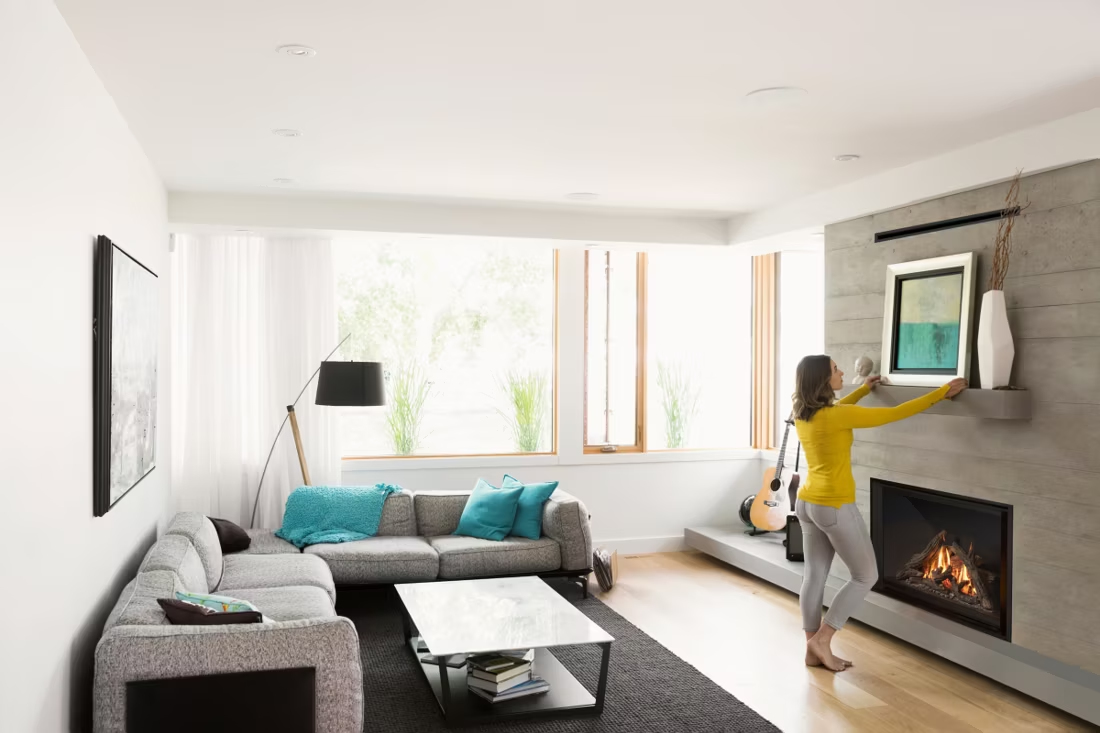
DTE serves Farmington with both electricity and natural gas, and most homes already have a gas line run to the furnace or water heater, which keeps a fireplace installation straightforward. A gas fireplace or insert gives you instant, thermostat-controlled heat without the wood storage, cutting permits, or smoke considerations that come with burning cordwood in a dense suburban neighborhood—a real advantage for zone-heating a family room or finished basement through a Michigan winter.
Three steps. No salesperson until you're ready.
Tell us about your project
Your zip code, your situation, and the fuel you're leaning toward—or let the answers point you to one.
See what's actually available
The brands dealers within 100 miles genuinely carry—real options, never a catalog mirage.
Get your dealer & Project Guide
A trusted local dealer, plus the free Project Guide & Parts List that names every component of the job.
Frequently Asked Questions
How much does a gas fireplace installation cost in Farmington?
Most gas fireplace and insert installations in Farmington run $4,000 to $10,000, depending on the unit, the venting path, and whether new gas line work is needed. A direct-vent gas insert dropped into an existing masonry fireplace with a gas line already nearby sits on the lower end. A new built-in gas fireplace for a basement remodel or family room addition—with framing, direct-vent piping through an exterior wall, and a gas line run—lands in the middle to upper end. Local hearth dealers serving Farmington and Farmington Hills will give you a firm number after they've seen your fireplace or the space you're converting.
Can I convert my existing wood-burning fireplace to gas?
Yes, and it's one of the more common projects for older Farmington housing stock—a lot of the ranch and colonial homes built from the 1950s through the 1970s came with a wood-burning masonry fireplace that rarely gets used. A gas insert can go into that existing firebox, using a stainless liner run up the existing chimney, and typically runs $4,000 to $8,500 installed. Since most of these homes already have gas service from DTE for the furnace and water heater, extending a line to the fireplace is usually a modest add rather than a major project.
Do I need natural gas, or can I use propane?
Natural gas reaches nearly every home in Farmington and Farmington Hills through DTE's distribution network, so the overwhelming majority of installations here use natural gas rather than propane. Propane comes up mainly for detached structures without a gas line nearby—a pole barn, a detached garage conversion, or an outbuilding—where a small propane tank is more practical than trenching a new gas line. If you already have a furnace or gas range, adding a fireplace on that same natural gas service is the straightforward path.
Will my gas fireplace work if the power goes out?
Most modern gas fireplaces will, provided they use IPI (intermittent pilot ignition) rather than a standing pilot paired only with an electronic blower—IPI units run on a small battery backup that keeps the igniter working when DTE power drops. That matters in Farmington, where ice storms and high winds can knock out power for a day or more during a Michigan winter. Valor fireplaces take a different approach: they generate their own electricity from the pilot's thermocouple, so there's no battery to replace or forget. Ask your local dealer which ignition system is in the unit you're considering.
What's the difference between a gas fireplace, insert, and stove?
A gas fireplace is a built-in, framed unit—typical for a Farmington basement finish or family room addition. A gas insert fits inside an existing masonry firebox, which is the common upgrade path for the many 1950s-70s Farmington homes with an unused wood fireplace. A gas stove is a freestanding unit that sits out in the room like a wood stove but burns gas, useful when you don't have an existing fireplace and don't want to frame one in. For most Farmington homeowners working with an existing masonry fireplace, an insert is the simplest and most cost-effective option.
Do I need a permit to install a gas fireplace in Farmington?
Yes. The City of Farmington Building Department requires a permit for gas fireplace installations, covering both the mechanical/venting work and the gas line connection, and Farmington Hills has an equivalent requirement for its own residents. The gas line portion has to be pulled by a licensed gas-fitter. Most established hearth dealers in the area handle the permit application and inspection scheduling as part of the installation, so you're not coordinating separate trades yourself.
Should I get a vented or vent-free gas fireplace?
Vented (direct-vent) units draw combustion air from outside and exhaust it back outside through a sealed pipe—they're the standard recommendation and what most Farmington dealers install by default. Vent-free units burn without any outside venting and release some combustion byproducts into the room; Michigan allows them but requires oxygen-depletion sensors and limits them by room size. For a Michigan home sealed up tight for winter, a direct-vent unit is generally the safer, more comfortable choice, and it's what you'll see in the large majority of Farmington installations.
How often should a gas fireplace be serviced?
Plan on an annual inspection, ideally in early fall before the unit gets heavy use through a Farmington winter. A technician checks the burner, pilot assembly, venting, and gas connections, and cleans the glass. This runs roughly $150 to $225 locally and is far quicker than a wood-stove chimney sweep, but skipping it is the most common reason a fireplace won't light reliably the first cold week of November.
Should I consider a wood stove instead of gas?
For most Farmington homes, no—wood-burning stoves and inserts are uncommon here. Lot sizes are small, many subdivisions carry restrictions on outdoor burning and smoke, and firewood cutting permits aren't really part of the local landscape the way they are farther north in the state. A handful of homeowners with larger wooded lots or a taste for a real wood fire do install wood stoves, but the overwhelming majority choose gas for the instant, low-maintenance heat and because DTE's natural gas network already reaches their home. If you're set on wood, a local dealer can still help, but expect it to be a more custom project than a standard gas insert swap.
Why is my open fireplace making my house colder?
Open fireplaces suck—literally. As the fire burns, it consumes air your furnace already paid to heat and pulls it out through the chimney, so the house is actually colder after the fire goes out than before you lit it. An insert fixes this: it seals the chimney, puts fixed glass across the front, and turns that hole in your house into a real heat source.
Why is a fireplace insert so efficient?
An insert does two things: it seals the chimney completely, so you stop losing air you already paid to heat, and it radiates warmth into the room through the firebox and glass. Most add a heat-exchange fan that pulls cool room air underneath, wraps it around the hot firebox, and pushes it back out warm. Your home is more efficient before you've even lit the first fire.
What is an in-home preview and do I need one?
It's a visit where a hearth professional measures your space, confirms the model you picked actually works in your home, and walks the specs—framing, gas line, venting, finish work—before anything is ordered. Some details you just can't know until you see the house. Never make a down payment without one; it's the single most-skipped step that burns buyers.
Can I install a fireplace myself?
If you're putting a fire in your house on purpose, it's best to work with an expert. Unless you're genuinely experienced in framing, gas line, vent pipe, and the national code on clearances to combustibles, have a professional do it—and ideally the same company that sells you the fireplace, so warranty, service, and liability all live under one roof.
Nearby Dealers
Hearth shops serving Farmington and the surrounding area. Every listing shows whether it is a WhyFire partner, a dealer we have verified as authorized for the brands we recommend, or a local business carrying hearth products. No manufacturer pays for placement. How we verify dealers →
This Is It Shop's House Of Fire
Glenn's Fireplace & Spa
Allstate Billiards, Patio, Fireplace
Allstate By Watsons
Grate Fireplace Shop
Premier Furniture
Creative Design Build Associates
Fireside Hearth & Home - Canton
Fireside Hearth & Home - Royal Oak
AirMaster
American Grill And Patio
D & S Masonry Inc
Fireside Hearth & Home - Utica
Pine Tree Furniture & Lighting
Bourlier & Sons Inc
Brighton Stone & Fireplace
Fireside Hearth & Home- Brighton
Find your gas fireplace in Farmington.
Tell us about your home and we'll put together a free Project Guide & Parts List—the exact parts, vent kit, and a recommended local Farmington-area dealer for your gas fireplace project.
Find Your Fireplace →