
Real heat, zero venting, in Ecorse.
Plug-in warmth for Downriver homes near the Detroit River—no chimney, no gas line, no combustion. Find the right unit and connect with a trusted local dealer.
Every Project Starts From One of These Five Situations
No venting required, and that matters here.
Ecorse sits low along the Detroit River in Wayne County, at just 580 feet elevation, where a long, cold heating season and winter lows averaging 18°F mean supplemental heat gets real use from November through March. Many homes here are older, tightly-lotted Downriver houses where adding a chimney or running new gas line is either impossible or prohibitively expensive—which is exactly the gap electric fireplaces fill.
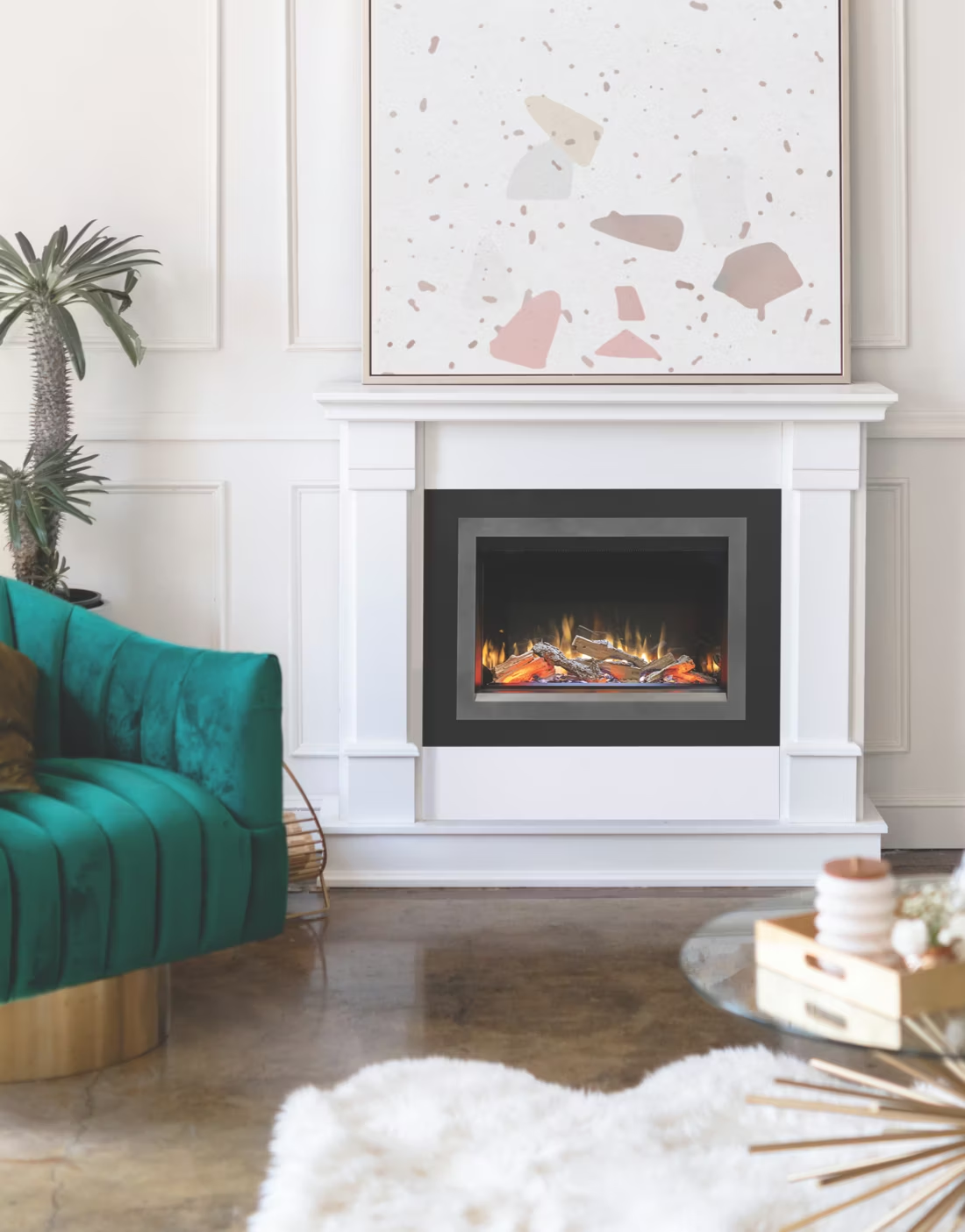
An electric insert or built-in unit plugs into a standard outlet (or a dedicated 20-amp circuit for larger models), needs no venting, no gas permit, and no masonry work, and can go into a bedroom, condo, or finished basement where a wood or gas unit simply isn't an option. With DTE Electric Company serving most of Ecorse at roughly 20 cents per kWh, running an electric fireplace's heater a few hours a night costs meaningfully less than people expect—most 1,500-watt units run about 15-20 cents an hour, cheaper than propane and comparable to a space heater, but with a far better look.
Three steps. No salesperson until you're ready.
Tell us about your project
Your zip code, your situation, and the fuel you're leaning toward—or let the answers point you to one.
See what's actually available
The brands dealers within 100 miles genuinely carry—real options, never a catalog mirage.
Get your dealer & Project Guide
A trusted local dealer, plus the free Project Guide & Parts List that names every component of the job.
Frequently Asked Questions
How much does an electric fireplace installation cost in Ecorse?
Most electric fireplace installs in Ecorse run $400 to $1,200. A plug-in insert or wall-mounted unit that uses an existing outlet is on the low end—often just the unit cost plus a couple hours of labor to frame or mount it. Larger built-in units that need a dedicated 120V or 240V circuit run higher, since an electrician needs to add that circuit. Because there's no venting, chimney, or gas line involved, electric installs are consistently the fastest and least invasive of any fireplace fuel type—often done in a single afternoon.
Will an electric fireplace actually heat a room in Ecorse's winters?
It depends on the room and the goal. Most electric fireplaces top out around 5,000-5,120 BTUs (roughly the output of a 1,500-watt space heater), which is enough to comfortably heat a single room—a bedroom, den, or basement family room—but won't carry a whole Downriver home through an 18°F January night the way a furnace or a wood stove would. For Ecorse homeowners, electric fireplaces work best as supplemental or zone heat layered on top of central heating, or as the primary heat source in a converted garage, sunroom, or basement apartment where running gas or a chimney isn't practical.
Do I need a permit to install an electric fireplace in Ecorse?
Usually not for a plug-in insert or freestanding unit—those don't require a building permit since there's no gas line, venting, or structural work involved. If you're having an electrician add a dedicated circuit for a larger built-in unit, that electrical work typically does require a permit and inspection, which the electrician handles as part of the job. Wall-mounted units that involve cutting into drywall or a stud wall for recessing may also need a permit depending on scope—a local dealer or licensed electrician can tell you which applies to your specific installation.
DTE Electric or Wyandotte Municipal Service—does my provider affect the cost to run a fireplace?
Yes, and the difference is meaningful. Most of Ecorse is served by DTE Electric Company at around 20.1 cents per kWh, while nearby Wyandotte Municipal Service Commission customers pay closer to 16.3 cents per kWh. On a typical 1,500-watt electric fireplace running its heater, that's roughly 30 cents an hour on DTE versus about 24 cents an hour on Wyandotte's municipal rate—a real difference if you're running the unit several hours a night all winter. Check your utility bill to confirm which provider serves your specific address before budgeting for winter operating cost.
What's the difference between an electric fireplace, insert, and built-in unit?
A freestanding electric fireplace is a self-contained cabinet unit you plug in and place anywhere near an outlet—the most flexible and least invasive option, and popular in Ecorse's older homes with limited wall access. An electric insert is sized to slide into an existing masonry fireplace opening, giving a wood-burning fireplace a clean, heated makeover without any chimney work. A built-in electric fireplace is recessed into a wall or custom surround, usually during a remodel, and requires a dedicated circuit and some framing or drywall work. For most Ecorse homeowners with an old, unused wood fireplace, an insert is the simplest upgrade; for new rooms or additions, a built-in gives the cleanest finished look.
Are electric fireplaces safe to run overnight or unattended?
Yes—this is one of electric's clearest advantages over wood or gas. There's no open flame, no combustion byproducts, and no risk of carbon monoxide, so most manufacturers rate their units safe for extended or overnight operation, and many include auto shutoff timers and overheat protection as standard features. That said, they should still be plugged directly into a wall outlet (not an extension cord or power strip) and kept clear of curtains, bedding, and furniture, the same as any space heater. For Ecorse renters or homeowners in older housing stock without updated wiring, this is also generally the safest fireplace option available since there's no interaction with existing gas lines or chimneys, some of which are decades old and unmaintained.
Is wood or pellet heat an option in Ecorse instead of electric?
Rarely, and for good reason. Ecorse is a dense, small, riverfront city in Wayne County with a tight urban lot pattern, most homes built without cutting permits or forest access nearby, and no meaningful local firewood or bulk pellet supply chain—wood species like oak, maple, birch, and ash that are common across the broader region aren't readily available for self-cutting near Ecorse itself, and pellet fuel infrastructure here is essentially nonexistent for residential use. A small number of homeowners still install wood-burning units for ambience or as a deliberate backup heat source, but for most Ecorse residents, electric or gas is the practical choice given the housing stock and utility access already in place.
How does an electric fireplace compare to gas for Ecorse homes?
Gas offers more heat output—enough to serve as real supplemental or even primary zone heat during Wayne County's coldest stretches—and Ecorse has natural gas service available through the regional utility infrastructure common to Downriver Detroit. But gas installation requires a gas line, venting, and a building permit, which adds cost and complexity, especially in older homes. Electric skips all of that: no venting, no gas line, and a same-day install in many cases, but with meaningfully lower heat output. For a primary heat source in a cold Michigan winter, gas usually wins; for ambiance, a low-cost secondary heat zone, or a space where venting simply isn't feasible, electric is the better fit—and many Ecorse homeowners choose electric specifically for bedrooms or basements where a gas line isn't already run.
What should I look for in an electric fireplace for Ecorse's older housing stock?
Given that much of Ecorse's housing was built decades ago, wiring capacity is the first thing to check—a local dealer can confirm whether your panel and outlets can support a larger unit or whether you'll need an electrician to add a circuit. Beyond that, look for a realistic flame effect (LED technology has improved significantly in the last several years), a heater rated for your room's square footage rather than just the fireplace's visual size, and a model with a built-in thermostat rather than simple high/low settings, which gives you better control over both comfort and the electric bill under DTE's or Wyandotte's rates. A trusted local dealer will walk through your specific electrical setup before recommending a unit.
Do electric fireplaces actually produce heat?
Yes—most put out around 4,800–5,000 BTUs from a standard outlet, which comfortably warms a bedroom, office, or den as a comfort-zone heater. What they won't do is carry a whole house the way wood, gas, or pellet can. Think of electric as ambiance-first with honest supplemental heat: flames on with no heat in July, flames plus warmth in January.
Can I put a TV above my fireplace?
Yes—with an asterisk. Fireplaces are hot and TVs don't like heat. Either put a mantel between them to deflect rising warmth, or choose a fireplace with heat-management technology that creates a cool zone on the wall above—the wall stays around 125 degrees, barely warm, while the room still gets full heat. If you like clean lines and don't want a mantel, heat management is the answer.
Does a fireplace add value to my home?
On average, a fireplace adds back to the home about the same amount you spent installing it. Add the monthly savings from heating the rooms you actually use instead of the whole house—often hundreds of dollars a year—and the value case is strong before you even count what a fire does for how your family uses the room.
Can a fireplace actually lower my heating bill?
Yes—by creating a comfort zone. A furnace heats every square foot of the house just to warm the one room you're in; a gas fireplace on low burns roughly a sixth of the gas a typical furnace does. Set the furnace around 55–60 degrees as a baseline, then heat the rooms your family actually uses. Families who heat this way commonly save $20–$60 a month.
Nearby Dealers
Hearth shops serving Ecorse and the surrounding area. Every listing shows whether it is a WhyFire partner, a dealer we have verified as authorized for the brands we recommend, or a local business carrying hearth products. No manufacturer pays for placement. How we verify dealers →
Syles
Allstate By Watsons
Allstate Billiards, Patio, Fireplace
Scott’s Fireplace
Marquis Fireplace Ltd.
Glenn's Fireplace & Spa
Premier Furniture
AirMaster
Fireside Hearth & Home - Canton
Fireside Hearth & Home - Royal Oak
This Is It Shop's House Of Fire
Bourlier & Sons Inc
Electric Service in Ecorse
An electric fireplace's heater draws about 1,500 watts—pennies per hour at local rates.
Dte Electric Company
Wyandotte Municipal Serv Comm
Find your electric fireplace in Ecorse.
Tell us a bit about your home and we'll put together a free Project Guide & Parts List—the right electric fireplace or insert for your space, plus a match with a trusted local dealer in Ecorse who can install it.
Find Your Fireplace →