
Pellet Stoves in Detroit: An Honest Look at What's Actually Available.
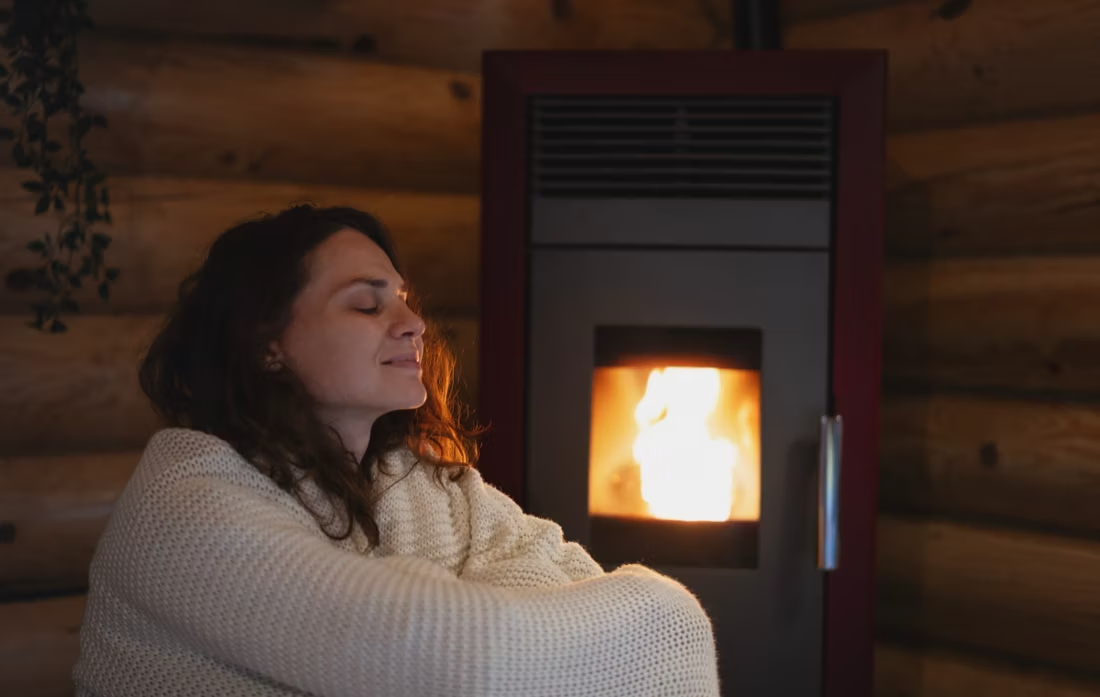
Pellet heat is a niche choice in a city this dense and this well-served by gas and electric infrastructure. If it still makes sense for your home, we'll connect you with a local dealer who can tell you the truth about it.
Every Project Starts From One of These Five Situations
A gas-and-electric city doesn't need pellet heat the way rural Michigan does.
Detroit sits in climate zone 5A with a fairly long, cold winter season and average winter lows around 19°F—cold enough that supplemental heat matters. But unlike the rural Upper Peninsula or the timber counties north of Grand Rapids, most Detroit neighborhoods already have reliable natural gas service and electric coverage through DTE Electric or, in a handful of southwest Detroit and Wyandotte-area blocks, Wyandotte Municipal Services. That infrastructure is a big part of why pellet stoves never became a standard heating option here the way they did in colder, more rural parts of the Midwest.
There's also a practical, physical reason: Detroit's housing stock is dominated by bungalows, colonials, and duplexes on narrow city lots, often with small basements or crawl spaces that aren't well suited to storing 40-lb pellet bags by the ton. The nearest pellet production comes from regional suppliers like Indeck Energy Services, Lignetics, and Somerset Pellet Fuel, which serve rural and semi-rural Michigan more heavily than the urban core, so pellet fuel here typically means trucked-in bags from a hardware store or feed supply rather than a local mill. None of this makes a pellet stove impossible in Detroit—homeowners in older neighborhoods like Indian Village, Boston-Edison, or east-side bungalow blocks sometimes install one for backup heat or ambiance—but it does mean the market and dealer network are thinner than for gas or electric options.
Three steps. No salesperson until you're ready.
Tell us about your project
Your zip code, your situation, and the fuel you're leaning toward—or let the answers point you to one.
See what's actually available
The brands dealers within 100 miles genuinely carry—real options, never a catalog mirage.
Get your dealer & Project Guide
A trusted local dealer, plus the free Project Guide & Parts List that names every component of the job.
Frequently Asked Questions
Are pellet stoves actually used in Detroit?
Not commonly. Pellet fuel relevance for Detroit is rated not-applicable in our data because the vast majority of homes here rely on natural gas or electric heat, and the city's dense lot sizes and multi-family housing stock don't lend themselves to pellet storage the way a rural property does. That said, a small number of homeowners—usually in older single-family homes with existing chimneys or basements with room for a hopper and fuel storage—do install pellet stoves for supplemental heat or the look of a real flame without wood handling. If that's your situation, a local dealer can tell you honestly whether it's a good fit for your specific house.
What does a pellet stove installation cost in Detroit?
Because pellet stoves are uncommon in Detroit, there isn't a well-established local price baseline the way there is for gas fireplace conversions. Nationally, a freestanding pellet stove with venting typically runs in the $3,000-$6,000 range installed, and a pellet insert into an existing masonry fireplace can run somewhat higher depending on liner work. Expect quotes from Detroit-area dealers to vary more than they would for a gas or electric project, simply because fewer installers here do this work regularly. Get more than one quote before committing.
Where can I actually buy pellets in Detroit?
Pellet fuel isn't sold on every corner here the way it is in more rural parts of Michigan. Regional producers like Indeck Energy Services, Lignetics, and Somerset Pellet Fuel supply the broader Michigan market, and their bagged product typically reaches Detroit through hardware stores, farm supply retailers, and some hearth dealers rather than direct sale. If you're seriously considering a pellet stove, ask your installer where they source fuel locally—reliable, consistent pellet supply is a real factor in whether the appliance makes sense for your household.
Do I need a permit to install a pellet stove in Detroit?
Yes. New solid-fuel or pellet-burning appliance installations in the city fall under the City of Detroit's Buildings, Safety Engineering and Environmental Department (BSEED), which requires a permit and inspection for venting and clearance compliance. Most hearth dealers who do this work will handle the permit application as part of the installation, but because pellet installs are less frequent here than gas conversions, confirm with your installer upfront that they're familiar with the current BSEED process for solid-fuel appliances.
Pellet stove vs. electric heat—which makes more sense in Detroit?
For most Detroit homes, electric heat is simpler: no fuel storage, no auger or hopper maintenance, and straightforward billing through DTE Electric (around $0.20/kWh) or Wyandotte Municipal Services (around $0.16/kWh) for customers in that service area. A pellet stove offers a real flame and radiant heat that many people find more satisfying, and it can supplement or offset electric heating costs during the coldest stretches of a long, cold Detroit winter. But a pellet stove also needs electricity to run its auger and blower, so it isn't a true backup during an outage—which narrows the case for it in a city where electric service is already widely available and reasonably reliable.
Pellet stove vs. gas fireplace—which is the better fit here?
In Detroit, gas is almost always the more practical choice. Most neighborhoods have natural gas service already run to the house, gas fireplaces and inserts require no fuel storage or hopper refilling, and the local dealer network for gas hearth products is far deeper than it is for pellet. Pellet stoves can still appeal to homeowners who want a visible, glowing fire without wood handling, or who like the idea of a fuel source that isn't tied to the gas utility. But if convenience and easy service are the priority, gas is the well-worn path in this city.
What size pellet stove would I need for a Detroit home?
With average winter lows around 19°F and a fairly long, cold winter season, Detroit's climate is cold enough that undersizing a pellet stove will leave a home cold on the worst nights. A small pellet stove (rated for 1,000-1,300 sq ft) suits a single room or a small bungalow used for supplemental heat. A medium unit (1,500-2,200 sq ft) can handle an open first floor in a typical Detroit two-story home. Because so few Detroit installers size pellet appliances regularly, an in-home visit from a dealer who does this work is worth more here than a generic sizing chart.
Will a pellet stove keep working if the power goes out?
No—this is one of the biggest misconceptions about pellet stoves. They rely on an electric auger to feed pellets into the burn pot and a blower to distribute heat, so a power outage shuts the unit down just like a furnace would. Some models accept a small battery backup or generator connection to bridge a short outage, but that's an add-on, not standard. If your priority is heat that works no matter what happens to the grid, a pellet stove isn't the right tool for that job in Detroit—that's a case where a wood-burning appliance or a battery-backed gas unit is the more resilient choice.
If pellet stoves are rare here, why does Find My Fireplace have a Detroit pellet page at all?
Because a small but real number of Detroit homeowners do look into pellet heat—often people who grew up with it elsewhere, own an older home with an existing masonry chimney, or simply like the idea of a self-feeding, low-maintenance flame. Our job isn't to talk you into a fuel type that doesn't fit your house; it's to give you a straight answer. For most Detroit homes, gas or electric will be the more practical, better-supported choice. If your situation is genuinely a good fit for pellet—enough storage space, a workable vent path, and a dealer nearby who services these units—we'll match you with one who can say so honestly.
Why is my open fireplace making my house colder?
Open fireplaces suck—literally. As the fire burns, it consumes air your furnace already paid to heat and pulls it out through the chimney, so the house is actually colder after the fire goes out than before you lit it. An insert fixes this: it seals the chimney, puts fixed glass across the front, and turns that hole in your house into a real heat source.
Why is a fireplace insert so efficient?
An insert does two things: it seals the chimney completely, so you stop losing air you already paid to heat, and it radiates warmth into the room through the firebox and glass. Most add a heat-exchange fan that pulls cool room air underneath, wraps it around the hot firebox, and pushes it back out warm. Your home is more efficient before you've even lit the first fire.
What is an in-home preview and do I need one?
It's a visit where a hearth professional measures your space, confirms the model you picked actually works in your home, and walks the specs—framing, gas line, venting, finish work—before anything is ordered. Some details you just can't know until you see the house. Never make a down payment without one; it's the single most-skipped step that burns buyers.
How much should I budget for a fireplace?
For an average home—covering the fireplace, the vent pipe, and basic installation—a budget between $3,900 and $5,500 gives you a lot of options across wood, gas, and pellet. By the time you add finish work, gas line, and electrical, the average complete installation lands between $5,000 and $12,000 all-in. In a remodel or new build, a good rule is to put about 2.5% of the total project cost toward the fireplace.
Nearby Dealers
Hearth shops serving Detroit and the surrounding area. Every listing shows whether it is a WhyFire partner, a dealer we have verified as authorized for the brands we recommend, or a local business carrying hearth products. No manufacturer pays for placement. How we verify dealers →
AirMaster
Fireside Hearth & Home - Royal Oak
Allstate By Watsons
Allstate Billiards, Patio, Fireplace
Marquis Fireplace Ltd.
Syles
Bourlier & Sons Inc
Glenn's Fireplace & Spa
Scott’s Fireplace
Premier Furniture
This Is It Shop's House Of Fire
Fireside Hearth & Home - Utica
American Grill And Patio
Fireside Hearth & Home - Canton
Creative Design Build Associates
Grate Fireplace Shop
Bourlier's (Macombs)
Pellet Brands Stocked Around Detroit
Manufacturers will point you to the nearest stocking dealer.
See what's actually available for pellet heat in Detroit.
Tell us about your home and, if pellet heat is a genuine fit, we'll match you with a trusted local dealer and send over a free Project Guide & Parts List—the exact parts, including the vent kit, for your pellet project in Detroit.holeholder_unused_field_
Find Your Fireplace →