
Add a Fireplace to Any Detroit Home—No Chimney Required.
From brick bungalows on the east side to condos in Midtown and downtown, electric fireplaces bring real ambiance and zone heat to homes where venting a chimney isn't an option. Find the right unit and connect with a trusted local dealer.
Every Project Starts From One of These Five Situations
The easiest fireplace upgrade for Detroit's housing stock.
Detroit sits at 637 feet in climate zone 5A, with winters that average a low of 19°F and a long, demanding heating season that runs deep into spring—not far off the numbers you'd see in Buffalo, NY, another Great Lakes city that knows what a January cold snap feels like. That kind of climate makes supplemental heat genuinely useful, but Detroit's housing stock complicates the wood- or gas-fireplace conversation: historic districts like Boston-Edison, Indian Village, and Palmer Woods restrict exterior alterations that would come with adding a chimney or vent penetration, and a growing share of residents live in Midtown, Corktown, and downtown condos and apartments where there's no chimney, no gas line, and no landlord appetite for either.
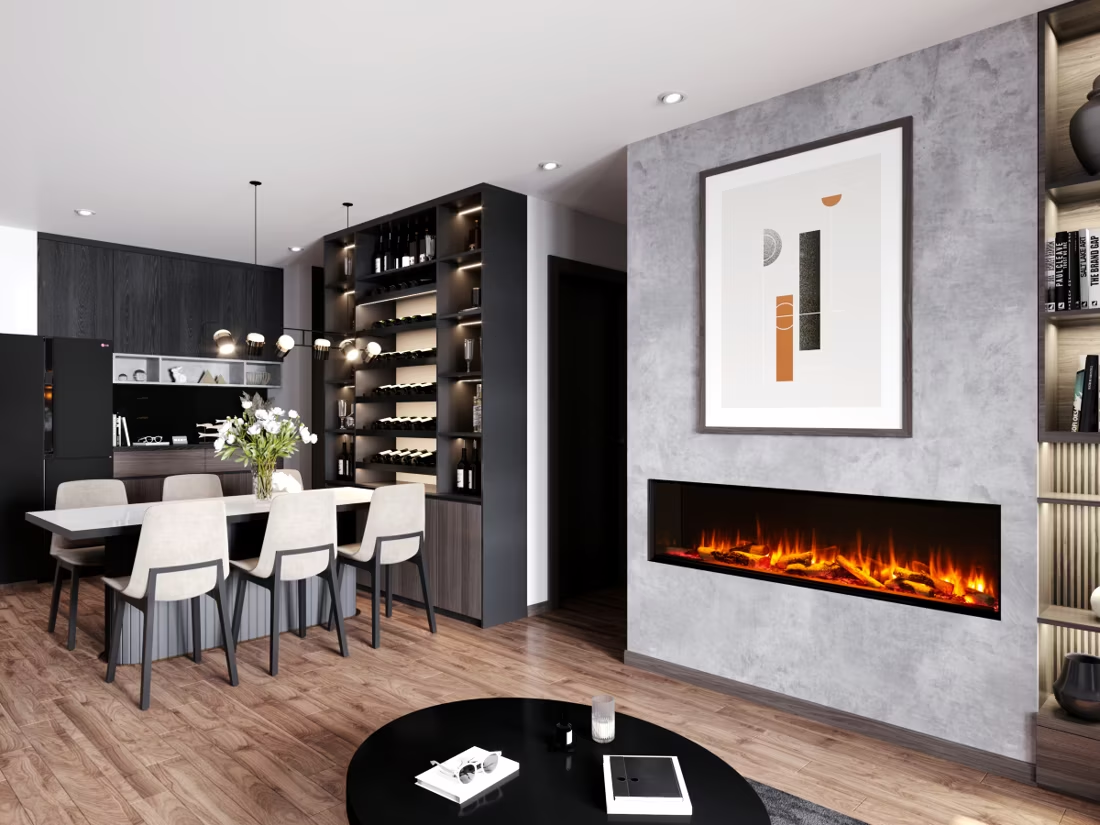
Electric fireplaces sidestep all of that. Most units plug into a standard outlet or run on a dedicated circuit an electrician can add in an afternoon—no venting, no gas line, and in many cases no building permit at all. DTE Electric Company serves the bulk of the city at a residential rate around $0.2013 per kWh, while homes served by Wyandotte Municipal Service Commission see a meaningfully lower rate near $0.1628 per kWh. Either way, an electric fireplace is best understood as a zone heater and an ambiance upgrade—a way to warm the room you're actually in on a 19-degree evening without cranking the furnace for the whole house.
Three steps. No salesperson until you're ready.
Tell us about your project
Your zip code, your situation, and the fuel you're leaning toward—or let the answers point you to one.
See what's actually available
The brands dealers within 100 miles genuinely carry—real options, never a catalog mirage.
Get your dealer & Project Guide
A trusted local dealer, plus the free Project Guide & Parts List that names every component of the job.
Frequently Asked Questions
How much does an electric fireplace installation cost in Detroit?
Plug-in electric inserts and freestanding units are the cheapest path—often $300 to $800 including delivery and setup, with no electrician needed if you're using an existing outlet. Built-in wall units or mantel-surround packages that call for a dedicated 20-amp circuit typically run $1,500 to $3,500 once you add electrical work. Compare that to gas fireplace conversions in Detroit, which usually run well into the thousands once venting and gas line work are factored in—electric is consistently the lowest-cost way to add a fireplace to a Detroit home, which is part of why it's popular in older housing stock and multi-unit buildings alike.
Can an electric fireplace actually heat a room, or is it just for looks?
A quality electric insert or built-in unit can genuinely warm a room—most run a 1,500-watt heater capable of taking the chill off a 300 to 400 square foot space. But with Detroit facing a long, demanding heating season that runs deep into spring, an electric fireplace should be thought of as zone heat, not a furnace replacement. It's most useful for taking pressure off your central heat in the room you're actually living in—a den, a bedroom, a home office—rather than trying to heat an entire drafty bungalow on the east side.
Do I need a permit to install an electric fireplace in Detroit?
In most cases, no. A plug-in insert that uses an existing outlet doesn't require any permit. If you're installing a built-in unit that needs a new dedicated circuit, the electrical work itself typically requires a permit through the City of Detroit's Buildings, Safety Engineering and Environmental Department (BSEED), and it should be pulled by a licensed electrician. This is a much lighter lift than the building and venting permits required for wood or gas installations, which is one reason electric is the go-to choice for renters and condo owners in the city.
I live in a historic district like Boston-Edison or Indian Village—is electric my only real option?
For most homes in Detroit's historic districts, electric is the path of least resistance. Boston-Edison, Indian Village, and Palmer Woods all have design review requirements that make adding a new chimney or exterior vent termination a slow, sometimes costly process. An electric fireplace requires no exterior modification at all—it can go into an existing fireplace opening as an insert, into a wall as a built-in, or simply sit on a mantel—so there's nothing for the historic district commission to review. Homeowners who want the original masonry fireplace preserved often install an electric insert specifically because it doesn't alter the opening or require venting.
I rent an apartment or condo downtown—can I still add a fireplace?
Yes, and this is one of the most common uses for electric fireplaces in Detroit's downtown, Midtown, and Corktown residential buildings. A freestanding or wall-mount plug-in unit requires no permanent alteration to the unit, no gas line, and no venting—it's genuinely portable if you move. Most leases don't restrict a plug-in electric fireplace the way they would a wood stove or gas appliance, though it's worth a quick check with your building management if you're considering a built-in unit that involves cutting into a wall.
What does it actually cost to run an electric fireplace in Detroit?
At DTE Electric's residential rate of roughly $0.2013 per kWh, a typical 1,500-watt unit running on high for 5 hours a day costs about $1.51 daily, or roughly $45 a month of regular winter use. If you're served by Wyandotte Municipal Service Commission at around $0.1628 per kWh, that same usage drops to about $1.22 a day. Most owners run the heater setting only when they're in the room and use the flame-only mode (which draws a fraction of the wattage) the rest of the time, which keeps the ambiance without the electric bill.
Electric vs. gas—which makes more sense for my Detroit home?
Gas fireplaces put out more heat and, in homes already served by DTE's natural gas lines, can run cheaper per BTU than electric resistance heat. But gas installation involves venting, gas line work, and permitting that can run into real money and real time—especially in a historic district or a condo building. Electric wins on install cost, install speed, and flexibility: no venting, minimal permitting, and it works in apartments and rentals where gas simply isn't an option. For a primary heat source in an older Detroit home with existing gas service, gas often makes sense. For ambiance, zone heat, or any home where venting isn't feasible, electric is the practical choice.
What features should I look for in an electric fireplace?
Look for a unit with a true heater rating (most are 1,500 watts, the practical maximum for a standard 15-amp circuit) and a realistic flame effect—the better modern units use LED-and-mirror or water-vapor
Is an electric fireplace better than a plug-in space heater?
Functionally, an electric fireplace insert and a space heater both convert electricity to heat at close to 100% efficiency, so the running cost is similar for the same wattage. The difference is the fireplace itself: a built-in or insert unit gives you a real focal point, a flame effect, and in many cases a mantel or surround that a portable space heater can't offer, while still delivering the same zone heat. For a Detroit living room or bedroom where you want both function and the look of a fireplace, an electric insert is generally worth the modest premium over a bare space heater.
Can I put a TV above my fireplace?
Yes—with an asterisk. Fireplaces are hot and TVs don't like heat. Either put a mantel between them to deflect rising warmth, or choose a fireplace with heat-management technology that creates a cool zone on the wall above—the wall stays around 125 degrees, barely warm, while the room still gets full heat. If you like clean lines and don't want a mantel, heat management is the answer.
Do electric fireplaces actually produce heat?
Yes—most put out around 4,800–5,000 BTUs from a standard outlet, which comfortably warms a bedroom, office, or den as a comfort-zone heater. What they won't do is carry a whole house the way wood, gas, or pellet can. Think of electric as ambiance-first with honest supplemental heat: flames on with no heat in July, flames plus warmth in January.
How much should I budget for a fireplace?
For an average home—covering the fireplace, the vent pipe, and basic installation—a budget between $3,900 and $5,500 gives you a lot of options across wood, gas, and pellet. By the time you add finish work, gas line, and electrical, the average complete installation lands between $5,000 and $12,000 all-in. In a remodel or new build, a good rule is to put about 2.5% of the total project cost toward the fireplace.
Does a fireplace add value to my home?
On average, a fireplace adds back to the home about the same amount you spent installing it. Add the monthly savings from heating the rooms you actually use instead of the whole house—often hundreds of dollars a year—and the value case is strong before you even count what a fire does for how your family uses the room.
Nearby Dealers
Hearth shops serving Detroit and the surrounding area. Every listing shows whether it is a WhyFire partner, a dealer we have verified as authorized for the brands we recommend, or a local business carrying hearth products. No manufacturer pays for placement. How we verify dealers →
AirMaster
Fireside Hearth & Home - Royal Oak
Allstate By Watsons
Allstate Billiards, Patio, Fireplace
Marquis Fireplace Ltd.
Syles
Bourlier & Sons Inc
Glenn's Fireplace & Spa
Scott’s Fireplace
Premier Furniture
This Is It Shop's House Of Fire
Fireside Hearth & Home - Utica
American Grill And Patio
Fireside Hearth & Home - Canton
Creative Design Build Associates
Grate Fireplace Shop
Bourlier's (Macombs)
Electric Service in Detroit
An electric fireplace's heater draws about 1,500 watts—pennies per hour at local rates.
Dte Electric Company
Wyandotte Municipal Serv Comm
Find your electric fireplace in Detroit.
Tell us a bit about your home and we'll put together a free Project Guide & Parts List for your Detroit electric fireplace project—the right unit, what it takes to install it, and a trusted local dealer to do the work.
Find Your Fireplace →