
Reliable warmth for Davison's long, gray winters.
With a heating load in the same range as Duluth, Minnesota and lows that regularly sit in the teens, Davison homes lean on steady heat. Find the right gas fireplace or insert and get matched with a trusted local dealer.
Every Project Starts From One of These Five Situations
Steady heat for a place that sees real winter.
Davison sits in Genesee County at about 785 feet elevation, in climate zone 5A, with a heating load in the same range as Duluth, Minnesota. Winters here run long, with average lows around 15°F and a heating season that stretches from October well into April. Plenty of local homes still burn oak, maple, birch, and ash in a wood stove or fireplace, but a growing number of Davison homeowners are choosing gas for the main living space—especially in homes with central forced-air furnaces already in place.
Consumers Energy serves electric and gas customers throughout much of mid-Michigan, including Genesee County, which makes a direct-vent gas fireplace or insert a straightforward add for most in-town Davison homes. For properties outside the gas main—common in the more rural stretches of the county—propane fills the gap. Either way, a gas fireplace gives you instant, thermostat-controlled zone heat that takes pressure off the furnace during the coldest stretches, without the ash, smoke, or wood-hauling that comes with a cordwood setup.
Three steps. No salesperson until you're ready.
Tell us about your project
Your zip code, your situation, and the fuel you're leaning toward—or let the answers point you to one.
See what's actually available
The brands dealers within 100 miles genuinely carry—real options, never a catalog mirage.
Get your dealer & Project Guide
A trusted local dealer, plus the free Project Guide & Parts List that names every component of the job.
Frequently Asked Questions
How much does a gas fireplace installation cost in Davison?
Most gas fireplace and insert installations in Genesee County run somewhere between $3,500 and $9,000, depending on the unit, the venting path, and whether the gas line is already run to the room. A direct-vent insert dropped into an existing masonry fireplace with gas already nearby sits at the lower end. New construction, remodels, or installs that require running a new gas line from the meter—common in Davison's older housing stock—push toward the higher end, and can reach $10,000–$12,000 when framing and venting work is involved. A local dealer will give you a firm number after seeing the room.
Can I convert my existing wood fireplace to gas?
Yes, and it's one of the more common upgrades local hearth dealers see in older Davison and Genesee County homes. A gas insert typically goes into your existing masonry firebox, using a stainless liner run up your current chimney for venting. Costs generally land between $4,000 and $8,500, with the swing depending on whether you're on natural gas or need a propane setup, and whether a new gas line has to be run to the fireplace. You keep the mantel and masonry look while gaining real, controllable heat output instead of an open hearth that mostly sends warm air up the flue.
Do I need natural gas, or is propane the option in Davison?
Both are used locally. Consumers Energy serves natural gas throughout much of Davison and the surrounding Genesee County area, so if your home already has a gas furnace, water heater, or range, adding a fireplace is usually a simple tap-in. Homes on the outskirts of town or on rural county roads without gas main access typically run on propane instead, supplied by a regional propane company with either an owned or leased tank. Most gas fireplace models can be set up for either fuel—your installer selects the correct orifice and regulator for the job.
Will my gas fireplace still work if the power goes out?
Most direct-vent gas fireplaces with an IPI (intermittent pilot ignition) system include a battery backup—typically a few AA batteries in the control compartment—that keeps the unit fully operational when the grid drops. That matters in Genesee County, where ice storms and heavy lake-effect snow can knock out power for a day or more in a hard winter. Valor fireplaces take a different route: their pilot assembly generates its own electricity through the thermocouple, so there's no battery to remember or replace at all. Ask your dealer which ignition system a given model uses before you buy.
What's the difference between a gas fireplace, gas insert, and gas stove?
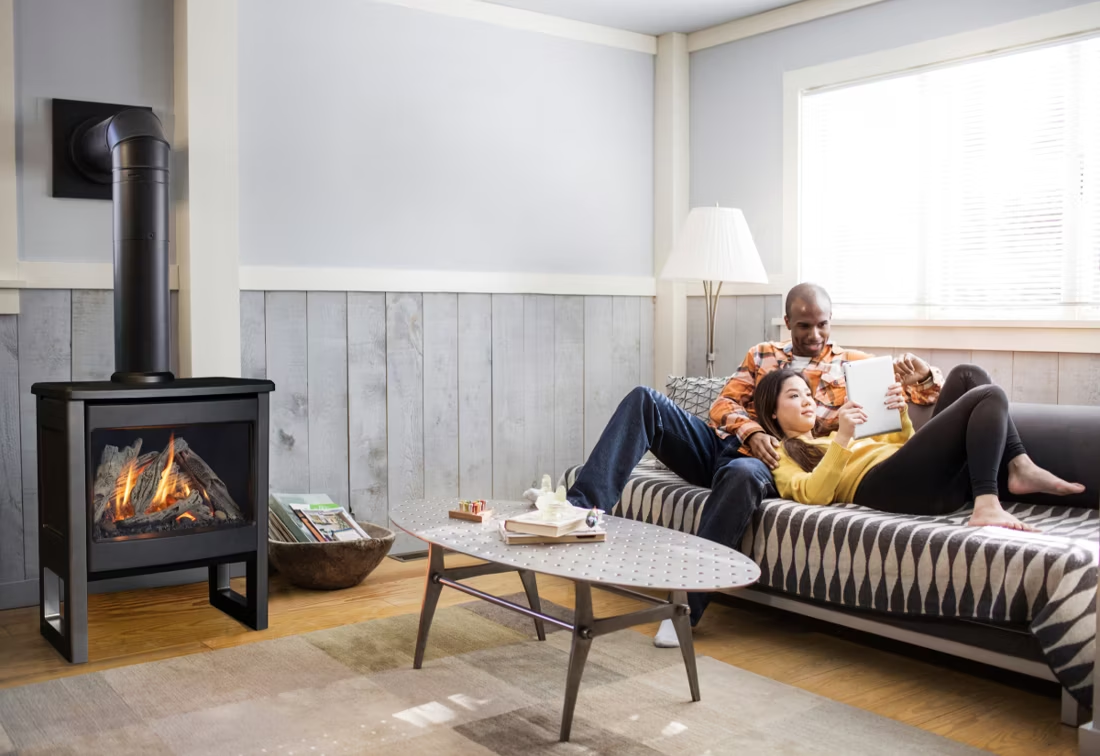
A gas fireplace is a fully built-in unit framed into a wall—the right call for new construction or a remodel where there's no existing masonry opening. A gas insert is sized to slide into an existing wood-burning fireplace, sealing it off and venting through the existing chimney with a liner. A gas stove is a freestanding cabinet unit that sits out on the floor, similar in footprint to a wood stove but running on gas. In Davison's older homes with existing brick fireboxes, an insert is usually the simplest and most cost-effective path. Newer homes or additions without a fireplace already in place are better matched to a built-in unit or a freestanding stove.
Do I need a permit to install a gas fireplace in Davison?
Yes—a gas fireplace installation typically requires both a building permit and a gas piping permit through the local building department covering Davison and Genesee County, and any new gas line work has to be run by a licensed gas fitter. Most hearth dealers handle the permitting and inspection scheduling as part of the installation package, which is one of the main reasons to go through a certified installer rather than a handyman: they coordinate the gas trade, the venting, and the inspection sign-off in one pass.
What's the difference between vented and vent-free gas fireplaces?
Vented (direct-vent) gas fireplaces pull combustion air from outside and exhaust it back outside through sealed venting—they're the cleanest, safest option and what most Davison installers recommend by default. Vent-free units burn gas directly into the room air with no outside venting; they're legal in Michigan but come with strict room-size minimums, oxygen depletion sensors, and ventilation requirements, and some homeowners notice a faint odor or added humidity in tightly sealed homes. Given how long the heating season runs here—nearly seven months of the year with the furnace on—most local dealers steer customers toward direct-vent units for daily, all-winter use, and reserve vent-free for occasional-use rooms without existing venting access.
How often does a gas fireplace need to be serviced?
Plan on an annual inspection, ideally in early fall before the heating season ramps up. A technician checks the burner, pilot assembly, venting, and gas connections, and cleans the glass and interior—a much lighter job than a wood-chimney sweep, but still important, since a dirty or misaligned burner can cause sooting on the glass or an unreliable pilot. Local gas appliance service providers typically charge $150 to $250 for a standard annual inspection and cleaning.
Gas vs. wood vs. electric—what makes the most sense in Davison?
Wood is still common here given the oak, maple, birch, and ash available around Genesee County, and it works without power during outages—a real consideration in a Michigan winter. Gas trades that self-sufficiency for push-button convenience, no ash or smoke, and steady output that pairs well with a central furnace on the coldest nights. Electric fireplaces are the cheapest to install but the most expensive to run for real heat here—Consumers Energy's residential rate runs around 20 cents per kWh, well above the regional average, so electric units tend to work better as supplemental or ambiance heat than as a serious heat source through a full Davison winter. Many local homeowners land on gas for the main living space and keep wood or electric in reserve elsewhere in the house.
Why is my open fireplace making my house colder?
Open fireplaces suck—literally. As the fire burns, it consumes air your furnace already paid to heat and pulls it out through the chimney, so the house is actually colder after the fire goes out than before you lit it. An insert fixes this: it seals the chimney, puts fixed glass across the front, and turns that hole in your house into a real heat source.
Is my gas fireplace wasting gas?
If it was installed more than 15 years ago, probably. Older gas fireplaces keep a standing pilot light burning all the time, and that little flame can cost a couple hundred dollars a year. Newer models use pilot-on-demand ignition—the pilot lights only when you use the fireplace and goes out when you turn it off.
How much should I budget for a fireplace?
For an average home—covering the fireplace, the vent pipe, and basic installation—a budget between $3,900 and $5,500 gives you a lot of options across wood, gas, and pellet. By the time you add finish work, gas line, and electrical, the average complete installation lands between $5,000 and $12,000 all-in. In a remodel or new build, a good rule is to put about 2.5% of the total project cost toward the fireplace.
Does a fireplace add value to my home?
On average, a fireplace adds back to the home about the same amount you spent installing it. Add the monthly savings from heating the rooms you actually use instead of the whole house—often hundreds of dollars a year—and the value case is strong before you even count what a fire does for how your family uses the room.
Nearby Dealers
Hearth shops serving Davison and the surrounding area. Every listing shows whether it is a WhyFire partner, a dealer we have verified as authorized for the brands we recommend, or a local business carrying hearth products. No manufacturer pays for placement. How we verify dealers →
Pine Tree Heating & Ac
Autumn-Glo Fireplace Studio
Macsood’s Pool & Patio
Cjw Chimney & Fireplace
Macksood's
Root's Heating & Cooling
D & S Masonry Inc
Pine Tree Furniture & Lighting
Find your gas fireplace in Davison.
Tell us about your home and heating goals, and we'll match you with a trusted local Genesee County dealer plus a free Project Guide & Parts List—the fireplace or insert, the vent kit, and everything else needed to get it installed right.
Find Your Fireplace →