
Gas Heat Built for Genesee County Winters.
Clio sees a long, cold winter with lows averaging 16°F. Find the right gas fireplace or insert and get matched with a trusted local dealer.
Every Project Starts From One of These Five Situations
Dependable warmth without the wood pile.
Clio sits just north of Flint at 721 feet in Michigan's climate zone 5A, where winters put it in the same cold-winter tier as Madison, Wisconsin. Winter lows average around 16°F, and the heating season here stretches from October well into April. With a population of about 2,275, Clio is a small enough town that most hearth dealers with showrooms are based a short drive away in Flint or Saginaw rather than downtown—worth knowing when you're comparing options.
Consumers Energy serves the Clio area for both electricity and, in most of Genesee County, natural gas—meaning a natural gas fireplace is often a straightforward add for homes already piped for a gas furnace or water heater. Many of the ranch and split-level homes built through Clio's 1960s-80s growth years came with a wood-burning fireplace that owners now convert to gas for the convenience of instant, thermostat-controlled heat without hauling wood or cleaning ash—a meaningful upgrade given how many cold months this region logs each year.
Three steps. No salesperson until you're ready.
Tell us about your project
Your zip code, your situation, and the fuel you're leaning toward—or let the answers point you to one.
See what's actually available
The brands dealers within 100 miles genuinely carry—real options, never a catalog mirage.
Get your dealer & Project Guide
A trusted local dealer, plus the free Project Guide & Parts List that names every component of the job.
Frequently Asked Questions
How much does a gas fireplace installation cost in Clio?
For a Genesee County home, a gas fireplace or insert project typically runs somewhere in the $4,000 to $9,500 range, with the low end covering a direct-vent insert dropped into an existing masonry fireplace that's already near a gas line, and the higher end covering new construction or remodel installs that need framing, a fresh gas line run, and full venting. Homes on the outskirts of Clio without existing natural gas service may also need to factor in propane tank setup, which adds to the total. A local dealer will give you a firm number after seeing your fireplace or the space you're planning to build into.
Can I convert my existing wood-burning fireplace to gas?
Yes, and it's a common project in this part of Genesee County, where a lot of housing stock from the 1960s through 1980s came standard with a masonry, wood-burning fireplace that rarely gets used. A gas insert typically reuses your existing chimney with a stainless liner run down through it, so you keep the look of the fireplace while gaining instant, even heat. Cost usually lands toward the lower end of the local install range if you already have natural gas service to the house; homes relying on propane or needing a new gas line will run higher.
Do I need natural gas, or can I run a fireplace on propane in Clio?
Either works. Consumers Energy provides natural gas to much of Genesee County, so if your Clio home already has gas appliances—a furnace or water heater, for example—adding a fireplace on the same line is usually the simpler and cheaper path. For homes just outside the natural gas footprint or on rural lots around Clio, propane is the standard fallback, supplied by a local bulk propane provider with either a buried or above-ground tank. Most gas fireplace models can be set up for either fuel; your installer configures the orifice and regulator for whichever you have.
Will my gas fireplace still work if the power goes out?
Most modern gas fireplaces can. Units with intermittent pilot ignition (IPI) run on a battery backup—usually a few AA batteries tucked inside the unit—that takes over automatically when the power drops, so the fireplace still lights on demand. That matters in Genesee County, where winter ice storms have knocked out Consumers Energy service for stretches of a day or more in past years. Valor's gas fireplaces take a different approach: the pilot's thermocouple generates its own electricity, so there are no batteries to remember or replace. Ask your local dealer about the ignition system before you buy if backup heat during outages is a priority.
What's the difference between a gas fireplace, insert, and stove?
A gas fireplace is a fully built-in unit framed into a wall—the right call for new construction or a remodel where you're starting from scratch. A gas insert slides into an existing masonry fireplace opening and vents through the chimney you already have, which fits a lot of Clio's older housing stock. A gas stove is a freestanding, cast-iron-style unit that sits on the floor on its own hearth pad, useful for homes without an existing fireplace opening or for heating an addition or garage-adjacent room. Most homeowners converting an old wood fireplace end up choosing an insert.
Do I need a permit to install a gas fireplace in Clio?
Generally yes—a gas fireplace installation involves both a building/mechanical permit and gas line work, which the City of Clio and Genesee County require to be pulled and inspected. The gas line connection itself has to be done by a licensed gas-fitter. In practice, most established hearth dealers handle the permitting and inspection scheduling as part of the installation quote, so you're not coordinating separate trades yourself.
Should I get a vented or vent-free gas fireplace?
Vented (direct-vent) units draw combustion air from outside and exhaust it back outside through a sealed pipe—they're the standard choice and deliver real heat output without affecting indoor air quality. Vent-free units burn directly into the room and are legal in Michigan under specific room-size and ventilation rules, but they release some combustion byproducts indoors, which is worth weighing carefully in a tightly sealed, well-insulated Michigan home built for a long, cold winter. For most Clio homeowners, a direct-vent unit is the safer and more broadly recommended option, and it's what most local dealers will steer you toward first.
How often does a gas fireplace need to be serviced?
Plan on an annual inspection, ideally before the heating season ramps up in October. A technician checks the burner, pilot assembly, gas connections, and venting, and cleans the glass and interior—a much smaller job than a wood chimney sweep, but not one to skip, especially on a unit that's running most days through a long Genesee County winter. Local gas appliance service techs typically charge somewhere in the $150-$250 range for this visit.
Gas fireplace vs. electric fireplace—which makes more sense in Clio?
Gas delivers real heat output—enough to serve as supplemental or even primary zone heat during Clio's coldest stretches—plus the flicker and glow of an actual flame. Electric fireplaces cost far less to install, need no venting or gas line, and can go anywhere with an outlet, but Consumers Energy's residential rate here runs about 20 cents per kWh, which makes an electric unit a pricier way to produce serious heat over a long winter. Most Clio homeowners land on gas for a primary living space where real warmth matters, and consider electric for a bedroom, basement, or secondary room where ambiance is the main goal.
What's the difference between an insert and a zero-clearance fireplace?
An insert is a fireplace that slides into a pre-existing wood-burning fireplace—if you don't have one, there's nothing to insert it into. A zero-clearance fireplace is built into a framed wall, which makes it the answer for remodels and new construction. Simple test: existing masonry fireplace means insert; blank or framed wall means zero-clearance.
Can I put a TV above my fireplace?
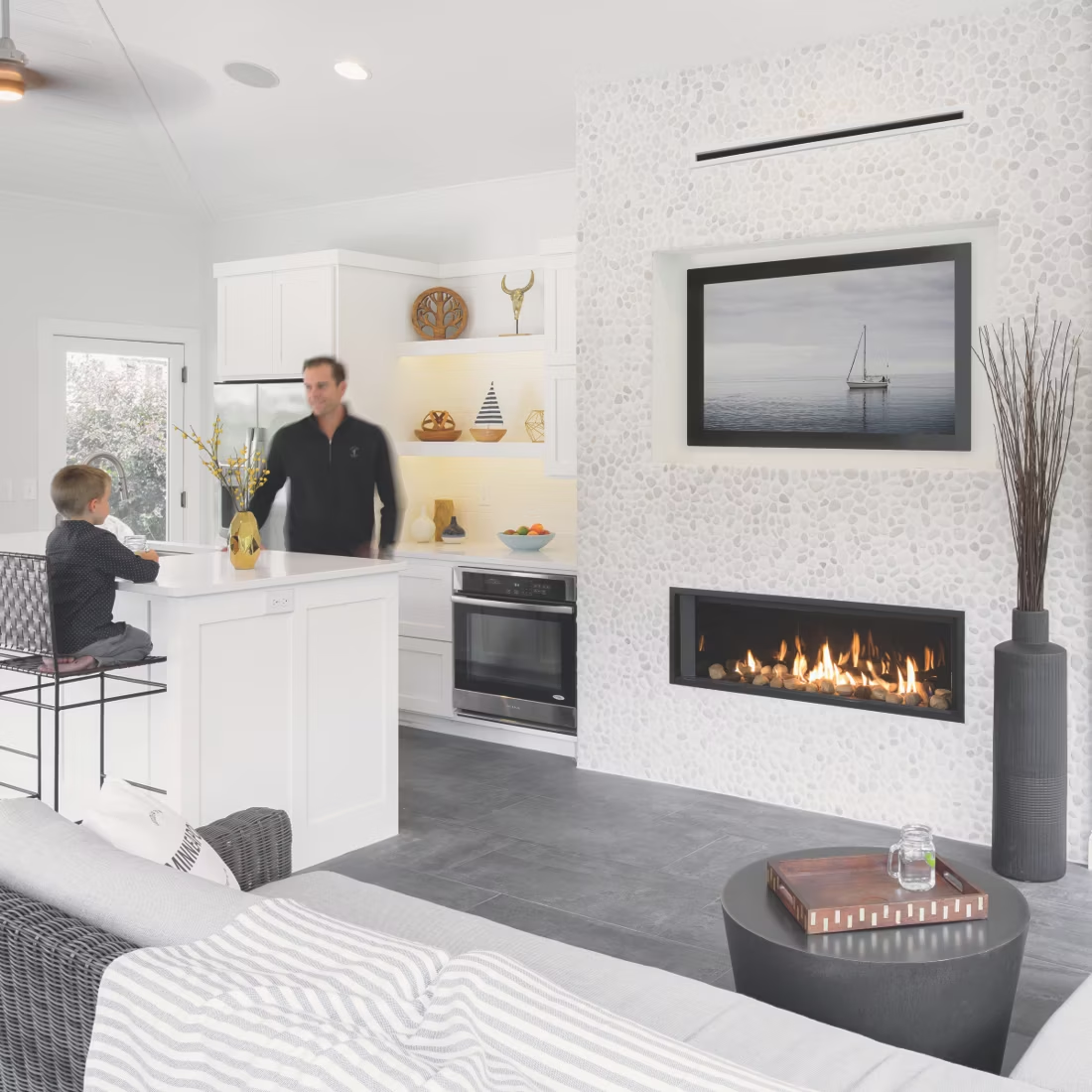
Yes—with an asterisk. Fireplaces are hot and TVs don't like heat. Either put a mantel between them to deflect rising warmth, or choose a fireplace with heat-management technology that creates a cool zone on the wall above—the wall stays around 125 degrees, barely warm, while the room still gets full heat. If you like clean lines and don't want a mantel, heat management is the answer.
Does a fireplace add value to my home?
On average, a fireplace adds back to the home about the same amount you spent installing it. Add the monthly savings from heating the rooms you actually use instead of the whole house—often hundreds of dollars a year—and the value case is strong before you even count what a fire does for how your family uses the room.
Can I install a fireplace myself?
If you're putting a fire in your house on purpose, it's best to work with an expert. Unless you're genuinely experienced in framing, gas line, vent pipe, and the national code on clearances to combustibles, have a professional do it—and ideally the same company that sells you the fireplace, so warranty, service, and liability all live under one roof.
Nearby Dealers
Hearth shops serving Clio and the surrounding area. Every listing shows whether it is a WhyFire partner, a dealer we have verified as authorized for the brands we recommend, or a local business carrying hearth products. No manufacturer pays for placement. How we verify dealers →
Macsood’s Pool & Patio
Macksood's
Doty Mechanical
Autumn-Glo Fireplace Studio
Pine Tree Heating & Ac
Northeastern Paint Supply
Macksood's Saginaw
Find your gas fireplace in Clio.
Tell us a bit about your Clio home and heating goals, and we'll match you with a trusted local dealer plus a free Project Guide & Parts List—the exact equipment, venting, and next steps for your gas fireplace project.
Find Your Fireplace →