
Add real warmth without adding a chimney.
Zone heat and ambiance for Clinton County homes—from St. Johns to DeWitt to the rural townships in between—without masonry, venting, or a burn permit. Find the right unit and connect with a trusted local dealer.
Every Project Starts From One of These Five Situations
Electric fireplaces fit where wood and gas can't.
Clinton County sits in mid-Michigan farm country—St. Johns as the county seat, with DeWitt, Ovid, Fowler, Eagle, and Bath Township filling out a landscape of small towns and working farmland. Winters here are long and genuinely cold: an 18°F average winter low and a climate on par with Madison, Wisconsin, put Clinton County in the same climate tier as Madison, Wisconsin, with a heating season that typically runs from late October through April. Most homes rely on a furnace as primary heat—propane and fuel oil are common in the county's rural stretches, alongside natural gas in and around St. Johns and DeWitt—and that's exactly where electric fireplaces earn their keep, as targeted supplemental heat rather than a whole-house solution.
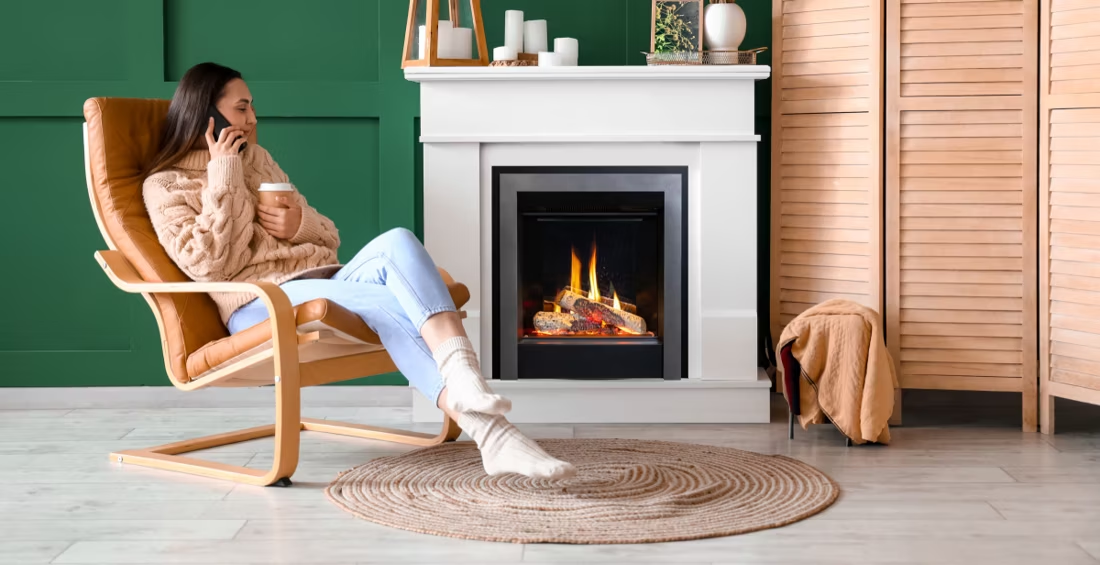
Because an electric fireplace doesn't burn anything, it needs no chimney, no gas line, and in most cases no building permit—a plug-in insert or mantel package can go into a finished basement, a condo in DeWitt, or a bonus room addition in an afternoon. Consumers Energy serves electric accounts throughout Clinton County, and larger built-in units drawing a dedicated 240-volt circuit are straightforward for a licensed electrician to wire in. For homeowners who want real flame appearance and instant, controllable warmth in one specific room—without the wood-stacking or the venting project—electric is the simplest path in the county's housing stock, from older farmhouses in Westphalia and Duplain Townships to newer builds near Bath.
Three steps. No salesperson until you're ready.
Tell us about your project
Your zip code, your situation, and the fuel you're leaning toward—or let the answers point you to one.
See what's actually available
The brands dealers within 100 miles genuinely carry—real options, never a catalog mirage.
Get your dealer & Project Guide
A trusted local dealer, plus the free Project Guide & Parts List that names every component of the job.
Frequently Asked Questions
How much does an electric fireplace installation cost in Clinton County?
A plug-in electric insert or mantel package that runs on a standard 120-volt outlet typically costs $200 to $1,000 installed, since there's no wiring or venting to add—many homeowners in St. Johns and DeWitt handle these themselves. A larger built-in wall unit or a linear electric fireplace that requires a dedicated 240-volt circuit runs closer to $1,500 to $4,000 once you include an electrician's time for the circuit and any framing or trim work. Costs run a bit higher for installs in the county's older farmhouses in Westphalia, Duplain, or Bengal Townships where panel upgrades are sometimes needed to add a new circuit.
Do I need a permit for an electric fireplace in Clinton County?
In most cases, no. A self-contained electric insert or freestanding unit plugged into an existing outlet doesn't require a permit through the Clinton County Building Department. If your install involves adding a new dedicated circuit or panel work—common with larger built-in units—an electrical permit is typically required, and your electrician will usually pull it as part of the job. This is one of the simplest fuel types in the county from a code standpoint, since there's no venting, no clearance-to-combustible chimney work, and no gas line inspection involved.
Will an electric fireplace actually heat a room during a Clinton County winter?
Yes, within limits. Most electric fireplaces put out around 5,000 BTU (roughly 1,500 watts) of supplemental heat, enough to comfortably warm a single room—a finished basement, a bedroom, an addition—but not a whole house. With an 18°F average winter low and a heating season that runs from late October through April, Clinton County's heating season is long and cold enough that electric fireplaces are best positioned as zone heat layered on top of your furnace, not as a replacement for it. Homeowners in older farmhouses with drafty additions often use one to keep a specific room comfortable without running the furnace harder for the whole house.
Electric vs. wood vs. gas—which is right for my Clinton County home?
Wood offers real BTU output and works during power outages, which matters in Clinton County's rural townships where outages can stretch for hours during winter storms—oak, maple, and ash are all common local firewood species. Gas delivers instant, higher-output heat and can be set up to run without electricity with the right ignition system, but it requires a gas line and venting. Electric is the easiest and least expensive to add, needs no fuel storage or venting, and is ideal for supplemental warmth in a specific room—but it depends entirely on grid power, so it offers no heat during an outage. For a primary or backup heat source in outage-prone rural areas, wood or gas usually wins; for ambiance and targeted comfort in town, electric is hard to beat on cost and simplicity.
What's the difference between an electric insert, a wall-mount, and a mantel package?
An electric insert is sized to slot into an existing masonry or wood-burning fireplace opening, converting an unused hearth into usable heat without any venting work—a popular option in the county's older homes around St. Johns and Ovid that have a fireplace but rarely burn wood. A wall-mount or linear electric fireplace recesses into a framed wall, common in newer builds and remodels near DeWitt and Bath. A mantel package is a freestanding, furniture-style unit that needs no installation beyond plugging it in, which makes it the easiest option for a rental or a room where you're not ready to commit to built-in work.
What size electric fireplace do I need?
Sizing an electric fireplace is mostly about the room it's heating rather than the whole house, since output tops out around 5,000 BTU regardless of unit size. A 30- to 40-inch unit comfortably supplements heat in a bedroom or den up to roughly 400 square feet; a 50- to 60-inch linear unit is better suited to an open basement or great room where you want more visual presence, even though the heating output is similar. In Clinton County's larger farmhouse layouts, homeowners often place electric units in specific problem rooms—a cold addition, a walkout basement—rather than trying to use one to offset heat loss across the whole floor plan.
Will my electric fireplace work during a power outage?
No—this is worth being direct about. An electric fireplace requires grid power to run its heater and flame effect, so it provides zero heat during an outage, which can be a real consideration in Clinton County's rural townships where ice storms and downed lines sometimes knock out Consumers Energy service for extended periods in winter. If backup heat during outages is a priority, a wood stove or a gas fireplace with battery-backup or self-powered ignition is the better choice for at least one room in the house. Many Clinton County homeowners pair an electric fireplace for everyday convenience in one room with a wood or gas unit elsewhere as genuine emergency heat.
Who installs electric fireplaces in Clinton County?
Plug-in units can often be installed by the homeowner with no trade involved. For built-in or wall-mount units requiring new wiring, a licensed electrician handles the circuit work, and many hearth retailers serving the St. Johns and DeWitt areas either employ electricians directly or coordinate with one as part of the install. Because there's no chimney or gas line involved, electric installs typically move faster than wood or gas projects—often completed in a single day once the unit and any wiring are on site.
How much does it cost to run an electric fireplace in Clinton County?
A typical electric fireplace drawing around 1,500 watts on high heat costs roughly 20 to 25 cents per hour to run at current Consumers Energy residential rates—meaning a few hours of evening use adds only a modest amount to a monthly bill. Most units also run on flame-only mode with the heater off, using a fraction of that wattage for ambiance alone. Compared to running a furnace harder to compensate for a cold room, many Clinton County homeowners find that zone-heating one space with an electric fireplace is the more economical choice during the shoulder seasons in October and April.
Can I put a TV above my fireplace?
Yes—with an asterisk. Fireplaces are hot and TVs don't like heat. Either put a mantel between them to deflect rising warmth, or choose a fireplace with heat-management technology that creates a cool zone on the wall above—the wall stays around 125 degrees, barely warm, while the room still gets full heat. If you like clean lines and don't want a mantel, heat management is the answer.
Do electric fireplaces actually produce heat?
Yes—most put out around 4,800–5,000 BTUs from a standard outlet, which comfortably warms a bedroom, office, or den as a comfort-zone heater. What they won't do is carry a whole house the way wood, gas, or pellet can. Think of electric as ambiance-first with honest supplemental heat: flames on with no heat in July, flames plus warmth in January.
Can I install a fireplace myself?
If you're putting a fire in your house on purpose, it's best to work with an expert. Unless you're genuinely experienced in framing, gas line, vent pipe, and the national code on clearances to combustibles, have a professional do it—and ideally the same company that sells you the fireplace, so warranty, service, and liability all live under one roof.
What is an in-home preview and do I need one?
It's a visit where a hearth professional measures your space, confirms the model you picked actually works in your home, and walks the specs—framing, gas line, venting, finish work—before anything is ordered. Some details you just can't know until you see the house. Never make a down payment without one; it's the single most-skipped step that burns buyers.
Stove and Fireplace Dealers in Clinton County
Find your electric fireplace in Clinton County.
Tell us a bit about your home and we'll match you with the right electric fireplace or insert—and connect you with a trusted local dealer who can size and install it correctly.
Find Your Fireplace →