
Real warmth for Bingham Farms homes, no chimney required.
A clean, code-simple way to add heat and ambiance to a Bingham Farms home—find the right unit and connect with a trusted local dealer.
Every Project Starts From One of These Five Situations
The cleanest way to add heat and ambiance to a wooded Oakland County lot.
Bingham Farms is a small, densely wooded village of just over 1,600 residents tucked between Franklin and Bloomfield Hills, and winters here are genuinely cold—average lows around 16°F and a long, demanding heating season, putting the village in the same climate band as Madison, WI. That cold doesn't translate into a wood-burning culture the way it does farther north: village lot sizes and local ordinances mean cutting permits and self-supplied firewood simply aren't part of daily life here, which is why wood and pellet appliances see almost no real demand locally. Natural gas is the standard whole-home heat source in most Bingham Farms homes, and electric fireplaces have carved out a solid niche alongside it.
DTE Electric Company serves the village, and at roughly 20 cents per kWh—noticeably above the national average—most homeowners here treat an electric fireplace as targeted zone heat and ambiance rather than a way to cut the furnace bill. That makes it a natural fit for finished basements, primary suites, home offices, and condo-style units in the area where running a gas line or masonry chimney isn't practical. No venting, no combustion byproducts, and installation that a licensed electrician can often finish in an afternoon.
Three steps. No salesperson until you're ready.
Tell us about your project
Your zip code, your situation, and the fuel you're leaning toward—or let the answers point you to one.
See what's actually available
The brands dealers within 100 miles genuinely carry—real options, never a catalog mirage.
Get your dealer & Project Guide
A trusted local dealer, plus the free Project Guide & Parts List that names every component of the job.
Frequently Asked Questions
How much does an electric fireplace installation cost in Bingham Farms?
Plug-in freestanding units or basic inserts run $200 to $1,000 for the appliance itself and need nothing more than an existing outlet. A built-in wall-mounted linear fireplace—the more common choice in Bingham Farms renovations—typically runs $1,500 to $3,500 installed once you factor in a dedicated 20-amp circuit and any wall framing or surround work. Larger multi-sided units or full mantel-and-surround builds can push toward $4,000 to $6,000. A local dealer can give you a firm number after seeing the wall, the framing, and your electrical panel capacity.
Will an electric fireplace actually heat a room in a Michigan winter?
Most electric fireplaces use a 1,500-watt heater rated around 4,600 to 5,200 BTUs, which comfortably heats a 400 to 1,000 square foot space depending on insulation and ceiling height. That's real, useful supplemental heat for a family room or bonus room, but with Bingham Farms facing a long, demanding heating season each year, it isn't a substitute for your furnace on the coldest January nights—think of it as zone heat that lets you turn the thermostat down in the rooms you're actually using, not a whole-home solution.
Do I need a permit to install an electric fireplace in Bingham Farms?
A basic plug-in unit that uses an existing outlet doesn't require a permit. If your installation needs a new dedicated circuit—which is standard for most built-in linear units—an electrical permit through the Village of Bingham Farms building department is typically required, and the work needs to be done by a licensed electrician. Most local hearth dealers coordinate this as part of the installation quote, so you're not left tracking down the paperwork yourself.
What does it cost to run an electric fireplace with DTE Electric rates?
At DTE Electric's residential rate of about $0.2013 per kWh, a typical 1,500-watt electric fireplace running on high costs roughly 30 cents an hour to operate. Run four hours a night through a Michigan winter and you're looking at around $36 a month in added electric cost—more per BTU than a comparable gas insert would cost to run, which is why most Bingham Farms homeowners use electric units for supplemental warmth and ambiance rather than as their main heat source.
Why don't more homes in Bingham Farms use wood or pellet stoves?
It comes down to the village itself: Bingham Farms lots are wooded but not large-acreage, there's no local cutting-permit infrastructure the way there is in a national forest community, and hauling and storing cordwood or pellet bags isn't practical for most residents here. Air quality isn't the issue—it's simply a lack of local demand and supply chain. Homeowners who want the drama of real flame typically choose a gas insert instead, since natural gas service is standard throughout the area; electric fireplaces cover the ambiance-and-supplemental-heat need without any of the logistics.
Electric vs. gas fireplace—which makes more sense for my Bingham Farms home?
Gas fireplaces deliver more heat output, can be sized to actually help with the heating bill, and—with a battery-backup or Valor-style pilot system—some models keep working during a power outage. Electric fireplaces cost far less to install, need no gas line or venting at all, and can go virtually anywhere there's an outlet or a dedicated circuit, which makes them the easier retrofit for a basement, a condo unit, or a room where running gas line isn't worth the disruption. Many Bingham Farms homeowners end up with both: gas in the main living space, electric in a secondary room.
What type of electric fireplace fits best in a Bingham Farms home?
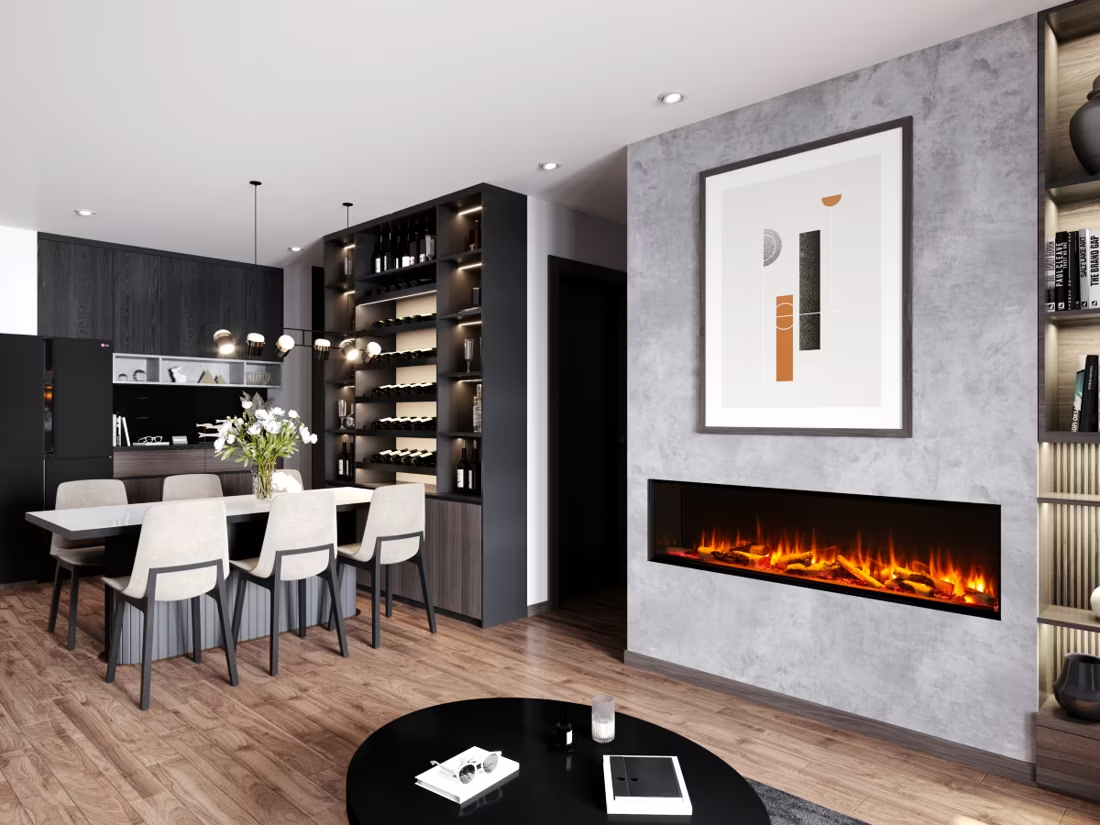
For a renovation or finished basement, a built-in linear model set into a wall or custom surround is the most popular choice locally—it reads as a real architectural feature rather than an appliance. If you have an old, unused masonry fireplace, an electric insert can slide into the existing firebox opening and give you flame effect and heat without touching the chimney. Freestanding electric stoves are a good fit for renters or homeowners who want something they can take with them if they move. A local dealer can walk your space and tell you which option fits the wall, the wiring, and the look you're after.
Will my electric fireplace work if the power goes out?
No—an electric fireplace needs household power to run, so it will shut off during an outage just like the rest of your electronics. If backup heat during a Michigan winter storm is a priority, a gas fireplace with a battery-backup or self-generating pilot ignition system is the better choice for that specific need. Most homeowners pair the two: electric for everyday ambiance and easy zone heat, gas or the furnace for outage resilience.
Does adding an electric fireplace add value to a Bingham Farms home?
Local real estate agents and remodelers report that a well-installed built-in electric fireplace is increasingly seen as a desirable feature in Oakland County renovations—it reads as updated and low-maintenance to buyers without the commitment of a gas line or chimney. It won't move the needle the way a full kitchen remodel does, but in a finished basement or primary suite, it's a relatively low-cost upgrade that shows well and appeals to buyers who don't want the upkeep of a wood-burning fireplace.
Do electric fireplaces actually produce heat?
Yes—most put out around 4,800–5,000 BTUs from a standard outlet, which comfortably warms a bedroom, office, or den as a comfort-zone heater. What they won't do is carry a whole house the way wood, gas, or pellet can. Think of electric as ambiance-first with honest supplemental heat: flames on with no heat in July, flames plus warmth in January.
Does an electric fireplace need a vent or chimney?
No—that's its superpower. An electric fireplace needs a wall and an outlet, period. No vent pipe, no gas line, no clearances to design around, which is why it works in bedrooms, offices, apartments, and walls where venting a gas or wood unit would be impractical or impossible. Installation is typically the simplest and least expensive of any fireplace type.
Does a fireplace add value to my home?
On average, a fireplace adds back to the home about the same amount you spent installing it. Add the monthly savings from heating the rooms you actually use instead of the whole house—often hundreds of dollars a year—and the value case is strong before you even count what a fire does for how your family uses the room.
Can a fireplace actually lower my heating bill?
Yes—by creating a comfort zone. A furnace heats every square foot of the house just to warm the one room you're in; a gas fireplace on low burns roughly a sixth of the gas a typical furnace does. Set the furnace around 55–60 degrees as a baseline, then heat the rooms your family actually uses. Families who heat this way commonly save $20–$60 a month.
Nearby Dealers
Hearth shops serving Bingham Farms and the surrounding area. Every listing shows whether it is a WhyFire partner, a dealer we have verified as authorized for the brands we recommend, or a local business carrying hearth products. No manufacturer pays for placement. How we verify dealers →
This Is It Shop's House Of Fire
Fireside Hearth & Home - Royal Oak
Creative Design Build Associates
AirMaster
Grate Fireplace Shop
Allstate Billiards, Patio, Fireplace
Allstate By Watsons
Glenn's Fireplace & Spa
American Grill And Patio
Fireside Hearth & Home - Utica
Premier Furniture
Bourlier & Sons Inc
Fireside Hearth & Home - Canton
Pine Tree Furniture & Lighting
D & S Masonry Inc
Bourlier's (Macombs)
Electric Service in Bingham Farms
An electric fireplace's heater draws about 1,500 watts—pennies per hour at local rates.
Dte Electric Company
Find your electric fireplace in Bingham Farms.
Tell us about your space and we'll put together a free Project Guide & Parts List—the right electric fireplace or insert for your home, matched with a trusted local Bingham Farms-area dealer.
Find Your Fireplace →