
Warm up a room in Battle Creek without new venting.
Zone heat for Cereal City homes that plugs into an outlet and skips the chimney, gas line, and permits altogether. Find the right unit and connect with a trusted local dealer.
Every Project Starts From One of These Five Situations
Supplemental heat that plugs in and works.
Battle Creek sits in climate zone 5A with a long, cold winter season and winter lows averaging 17°F—a heating load in the same ballpark as Buffalo, NY. That's real cold, but Battle Creek's housing stock is a mix of older Victorian and craftsman homes near downtown and the Post and Kellogg neighborhoods, plus newer construction out toward Pennfield and Emmett Township. Not every one of those homes has a masonry chimney or a gas line run to the room where extra heat is actually needed, which is where electric fireplaces earn their place.
Consumers Energy serves Battle Creek at a residential rate around 20.13 cents per kWh—noticeably higher than the statewide average—so most homeowners here treat an electric fireplace as zone heat for a bedroom, finished basement, or sunroom rather than a whole-house heat source. Because there's no combustion, no flue, and no venting to plan around, an electric unit is often the fastest and least disruptive hearth upgrade available in a condo, apartment, or older home where opening a wall for a chimney liner or gas line isn't realistic.
Three steps. No salesperson until you're ready.
Tell us about your project
Your zip code, your situation, and the fuel you're leaning toward—or let the answers point you to one.
See what's actually available
The brands dealers within 100 miles genuinely carry—real options, never a catalog mirage.
Get your dealer & Project Guide
A trusted local dealer, plus the free Project Guide & Parts List that names every component of the job.
Frequently Asked Questions
How much does an electric fireplace installation cost in Battle Creek?
A plug-in electric fireplace or insert that uses an existing outlet typically runs $200 to $1,500 installed, since there's no venting or gas work involved. A built-in or wall-mounted unit that needs a dedicated 20-amp circuit—common when the fireplace is going into a new wall, under a mounted TV, or into a room without a nearby outlet—runs closer to $1,500 to $4,000 once an electrician opens drywall and runs the circuit. Either way, installs are usually done in half a day, far faster than a wood or gas project that requires a chimney or venting.
Will an electric fireplace lower my Consumers Energy bill in Battle Creek?
Not if you're expecting it to replace your furnace. At Consumers Energy's residential rate of roughly 20.13 cents per kWh, a typical 1,500-watt electric fireplace running on heat mode costs about $0.30 an hour to operate—cheaper than running a whole-house furnace to heat one extra room, but more expensive per BTU than natural gas. With Battle Creek's long, cold winter season, the smart use case is zone heating: warm the room you're actually sitting in and turn the thermostat down a few degrees elsewhere, rather than trying to heat the whole house with it.
Do I need a permit to install an electric fireplace in Battle Creek?
Usually not. A plug-in electric fireplace or insert that runs off a standard outlet requires no permit at all—no combustion means no mechanical or venting inspection. If you're adding a dedicated circuit for a built-in unit, that electrical work needs a permit pulled by a licensed electrician through the City of Battle Creek Building Safety Division, or Calhoun County if you're outside city limits. There's no chimney, gas line, or clearance-to-combustible review required the way there is with wood or gas installs.
What size electric fireplace do I need for my Battle Creek home?
Start with the square footage of the specific room, not the whole house. Most electric fireplaces are rated to comfortably supplement 400 to 1,000 square feet at around 4,600 to 5,000 BTU equivalent on heat mode. For an open-concept living and kitchen area, one unit may only take the edge off; you're better off pairing it with your existing furnace rather than expecting it to carry the room through a Battle Creek cold snap on its own. A local dealer can walk your space and tell you whether one unit covers it or whether a different fuel makes more sense for that room.
Electric vs. wood vs. gas—which fits my Battle Creek home?
Wood—burning local oak, maple, birch, or ash—delivers real radiant heat, works without power, and suits homes with an existing chimney or the space for one, but it means hauling and stacking cordwood through a Michigan winter. Gas offers instant, consistent heat and can run during outages with the right battery-backup ignition, but it requires either a natural gas line or a propane tank. Electric skips both the fuel handling and the venting entirely, making it the simplest option for a bedroom, den, or basement—but at Consumers Energy's rate it's best treated as supplemental heat, not your primary defense against a Battle Creek January.
Will my electric fireplace still work if the power goes out?
No—and this is the one honest tradeoff worth knowing before you buy. Unlike a wood stove or a gas fireplace with battery-backup ignition, an electric fireplace is entirely dependent on grid power. During a Michigan ice storm or a Consumers Energy outage, an electric unit goes dark along with everything else in the house. If backup heat during outages is a priority for your household, a wood stove or a gas unit with IPI battery ignition is the better primary choice, with electric reserved for everyday convenience and ambiance.
Are electric fireplaces a good fit for older Battle Creek homes without a chimney?
Yes—this is one of the strongest use cases for electric. Many of the Victorian and craftsman homes around downtown Battle Creek and the historic neighborhoods near Post and Kellogg were never built with a second chimney flue, and retrofitting masonry or running a new gas line can get expensive fast. A wall-mounted or built-in electric unit gives you the look and supplemental warmth of a fireplace in a bedroom, den, or converted attic space without touching the structure of the house.
How much maintenance does an electric fireplace need?
Very little compared to wood or gas. There's no chimney to sweep and no annual combustion-safety inspection required. Maintenance is mostly dusting the blower vents so the fan doesn't get clogged, occasionally replacing the LED ember-bed bulbs (most last years), and checking that the cord and outlet aren't showing wear if it's a plug-in unit. No permit renewals, no creosote, no soot on the glass.
Should I just buy a space heater instead of an electric fireplace?
You can, but a built-in or insert-style electric fireplace is generally the safer long-term choice for continuous use. Both draw similar wattage and cost similarly to run at Consumers Energy's rates, but fireplace units are UL-listed for fixed installation, often include tip-over and overheat protection, and are designed to run for hours without the fire-risk concerns that come with portable space heaters left plugged in unattended. If you want the look of a hearth along with the heat, the fireplace route also adds real value to the room in a way a space heater in the corner doesn't.
Can I put a TV above my fireplace?
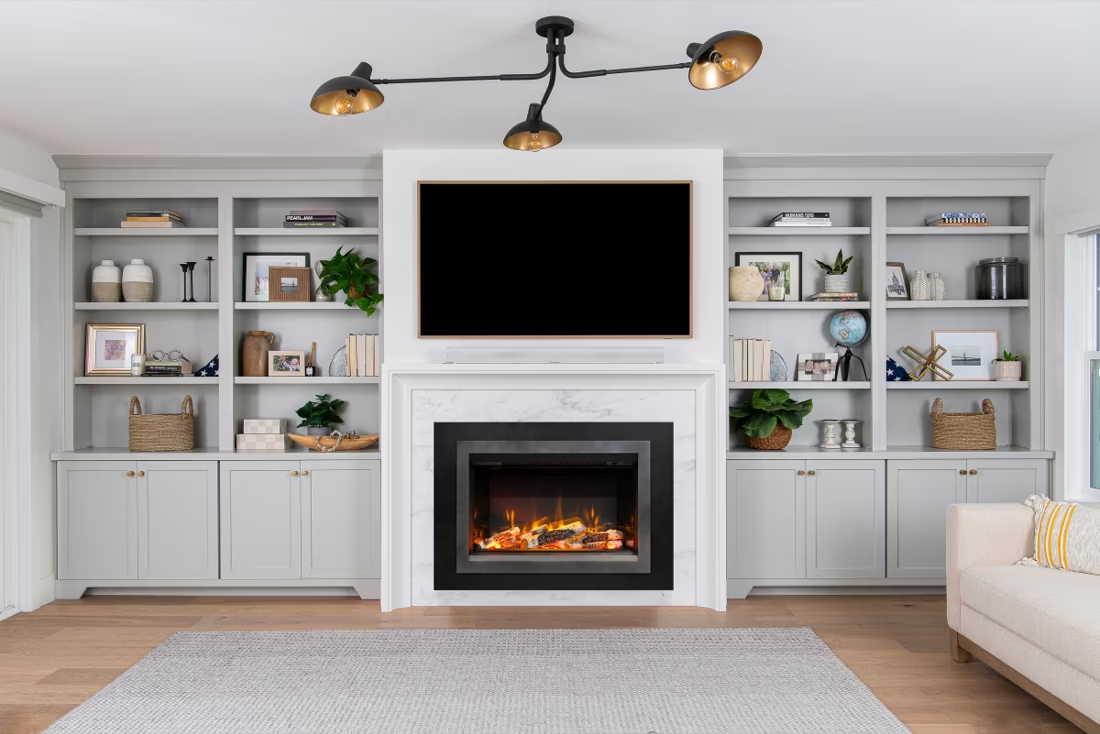
Yes—with an asterisk. Fireplaces are hot and TVs don't like heat. Either put a mantel between them to deflect rising warmth, or choose a fireplace with heat-management technology that creates a cool zone on the wall above—the wall stays around 125 degrees, barely warm, while the room still gets full heat. If you like clean lines and don't want a mantel, heat management is the answer.
Does an electric fireplace need a vent or chimney?
No—that's its superpower. An electric fireplace needs a wall and an outlet, period. No vent pipe, no gas line, no clearances to design around, which is why it works in bedrooms, offices, apartments, and walls where venting a gas or wood unit would be impractical or impossible. Installation is typically the simplest and least expensive of any fireplace type.
Can I install a fireplace myself?
If you're putting a fire in your house on purpose, it's best to work with an expert. Unless you're genuinely experienced in framing, gas line, vent pipe, and the national code on clearances to combustibles, have a professional do it—and ideally the same company that sells you the fireplace, so warranty, service, and liability all live under one roof.
Can a fireplace actually lower my heating bill?
Yes—by creating a comfort zone. A furnace heats every square foot of the house just to warm the one room you're in; a gas fireplace on low burns roughly a sixth of the gas a typical furnace does. Set the furnace around 55–60 degrees as a baseline, then heat the rooms your family actually uses. Families who heat this way commonly save $20–$60 a month.
Nearby Dealers
Hearth shops serving Battle Creek and the surrounding area.
Electric Service in Battle Creek
An electric fireplace's heater draws about 1,500 watts—pennies per hour at local rates.
Consumers Energy Co
Find your electric fireplace in Battle Creek.
Tell us a bit about your home and we'll match you with the right electric fireplace or insert—and connect you with a trusted local dealer who can get it installed correctly.
Find Your Fireplace →