
Find the right gas fireplace for your Barry County home.
From Hastings to Middleville to the cabins ringing Gun Lake and Thornapple Lake, Barry County winters run cold and long. A properly sized gas fireplace or insert gives you heat on demand—matched to your home by a local pro, not a big-box guess.
Every Project Starts From One of These Five Situations
Consistent, low-maintenance heat for long Barry County winters.
Barry County sits in the lake-and-farmland belt between Grand Rapids and Battle Creek, threaded by the Thornapple River and dotted with year-round and seasonal homes around Gun Lake, Jordan Lake, and Thornapple Lake. With roughly 6,883 heating degree days and average winter lows near 16°F—a season on par with Buffalo, NY—the furnace runs a long time here, and a gas fireplace or insert is an easy way to add zone heat to a living room, lake cottage, or finished basement without babysitting a woodpile.
Consumers Energy runs natural gas lines through Hastings, Middleville, and most of the county's incorporated areas, so homes there can typically tie a direct-vent fireplace straight into an existing gas meter. Out toward the townships and lake communities—where many houses run on well water and septic and sit outside municipal utility service—propane from a regional supplier is the standard fuel instead. Either way, the appeal is the same: flip a switch and get real heat, no ash, no chimney fire risk, and (with the right ignition system) a fireplace that still works when a winter storm knocks the power out.
Three steps. No salesperson until you're ready.
Tell us about your project
Your zip code, your situation, and the fuel you're leaning toward—or let the answers point you to one.
See what's actually available
The brands dealers within 100 miles genuinely carry—real options, never a catalog mirage.
Get your dealer & Project Guide
A trusted local dealer, plus the free Project Guide & Parts List that names every component of the job.
Frequently Asked Questions
How much does a gas fireplace installation cost in Barry County?
Most gas fireplace and insert projects in Barry County run in the $4,000 to $10,000 range, depending on the unit, whether you're converting an existing masonry fireplace or building new, and how far the gas line has to travel. A direct-vent insert dropped into an existing fireplace with a gas line already nearby sits at the lower end. New construction or a remodel that needs framing, venting through an exterior wall, and a fresh gas run—or a propane tank installation for a rural or lake property—lands toward the higher end. A local dealer will give you a firm number after seeing the space.
Can I convert my existing wood fireplace to gas?
Yes, and it's one of the most common upgrades in Barry County's older farmhouses and lake cabins. A gas insert goes into the existing masonry opening and vents through a stainless liner run up the same chimney, so you keep the look of the fireplace but lose the ash, the smoke, and the need to keep the woodshed stocked. Homes already served by Consumers Energy in Hastings or Middleville generally have an easier hookup; on propane, your installer will just size the line and regulator for the new appliance.
Do I need natural gas, or can I run a fireplace on propane?
Both work, and which one you use mostly comes down to where in the county you live. Natural gas from Consumers Energy reaches Hastings, Middleville, and other incorporated pockets of the county—if your water heater or furnace already runs on it, adding a fireplace is straightforward. Out around Gun Lake, Yankee Springs, and the more rural townships, propane from a local supplier is the norm, whether from an existing tank or a new one set for the project. Nearly every gas fireplace on the market can be configured for either fuel; your installer sets the orifice and regulator to match.
Will my gas fireplace still work if the power goes out?
Most will. Units with intermittent pilot ignition (IPI) carry a small battery backup that kicks in the moment power drops, so the fireplace lights on demand just like normal—as long as the batteries are fresh, which is worth checking each fall. Valor fireplaces skip batteries entirely: their pilot assembly generates its own electricity through the thermocouple, so the unit works during an outage with nothing to maintain. For lake-area homes and rural stretches of Barry County where outages can run a while during a winter storm, that distinction matters—ask your local dealer which ignition system is on any unit you're considering.
What's the difference between a gas fireplace, gas insert, and gas stove?
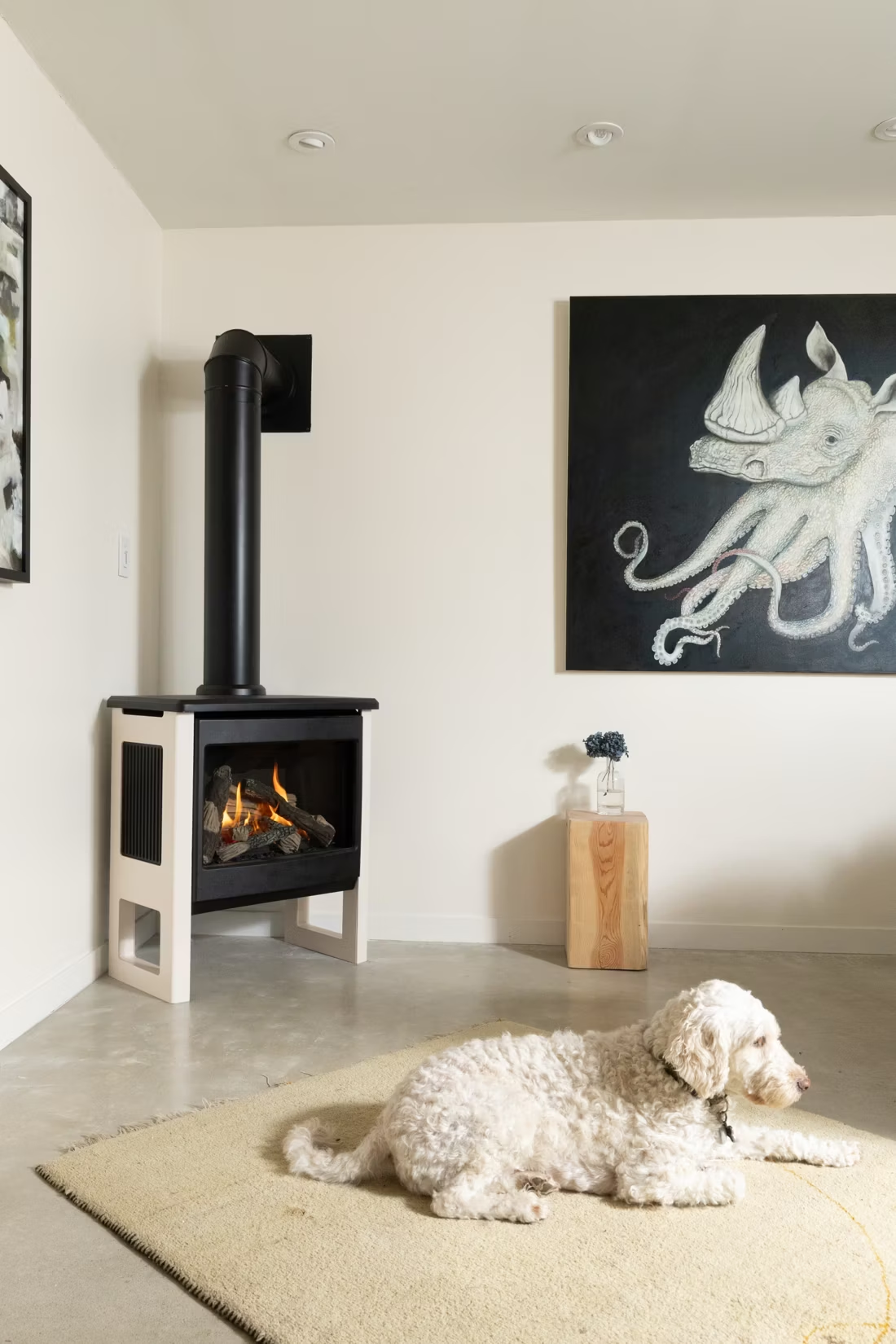
A gas fireplace is a fully built-in unit framed into a wall—the right call for new construction or a remodel without an existing hearth. A gas insert is built to slide into an existing masonry fireplace opening and use the chimney as its vent path, which is the common choice for Barry County's older housing stock in Hastings, Nashville, and Delton. A gas stove is a freestanding cabinet unit, similar in footprint to a wood stove, that can sit almost anywhere with the right clearances—a good fit for a lake cottage or a room without a chimney at all.
Do I need a permit to install a gas fireplace in Barry County?
Yes—a building permit and gas-line permit are both required for a new gas fireplace or insert, issued through the Barry County Building Department in Hastings (or the local municipal office if you're inside city limits). The gas hookup itself has to be done by a licensed gas-fitter, which is one reason working with an established hearth dealer is worth it: they coordinate the gas line, venting, and inspection instead of leaving you to juggle separate trades.
What's the difference between vented and vent-free gas fireplaces?
Vented (direct-vent) gas fireplaces draw combustion air from outside and exhaust the byproducts back outside through a sealed pipe—they run cleaner and are code-compliant everywhere, including Michigan. Vent-free units burn gas directly into the room with no outside venting; they're legal in Michigan but come with strict room-sizing rules and require an oxygen depletion sensor. Barry County has no air quality non-attainment issues driving people toward one option or the other, so the choice is mostly about performance—and direct-vent units are what most local dealers install and recommend for full-time and seasonal homes alike.
How often should a gas fireplace be serviced?
Plan on an annual inspection, ideally before the heating season starts. A technician checks the burner, pilot assembly, venting, and gas connections, and cleans the glass and interior—a much smaller job than a chimney sweep but just as important for safe operation. This matters even more for seasonal lake homes around Gun Lake or Thornapple Lake that sit unused for stretches, since a unit that hasn't fired in months should be checked before the first cold-weather burn.
Gas vs. wood—which is right for my Barry County home?
Wood is plentiful here—oak, maple, birch, and ash are all common locally, and with no air quality restrictions in the county, there's nothing stopping anyone from burning as much as they want. Wood also keeps working when the power is out, which matters given how long a Barry County winter runs. Gas trades that self-sufficiency for convenience: instant on-off heat, no ash, no wood to split and stack, and a fireplace that can sit idle all week at a lake cottage and still light instantly on a Friday night. Many households here end up with both—gas for daily use in the main living space, wood as backup and for the cabin or camp.
What's the difference between an insert and a zero-clearance fireplace?
An insert is a fireplace that slides into a pre-existing wood-burning fireplace—if you don't have one, there's nothing to insert it into. A zero-clearance fireplace is built into a framed wall, which makes it the answer for remodels and new construction. Simple test: existing masonry fireplace means insert; blank or framed wall means zero-clearance.
Can I put a TV above my fireplace?
Yes—with an asterisk. Fireplaces are hot and TVs don't like heat. Either put a mantel between them to deflect rising warmth, or choose a fireplace with heat-management technology that creates a cool zone on the wall above—the wall stays around 125 degrees, barely warm, while the room still gets full heat. If you like clean lines and don't want a mantel, heat management is the answer.
How much should I budget for a fireplace?
For an average home—covering the fireplace, the vent pipe, and basic installation—a budget between $3,900 and $5,500 gives you a lot of options across wood, gas, and pellet. By the time you add finish work, gas line, and electrical, the average complete installation lands between $5,000 and $12,000 all-in. In a remodel or new build, a good rule is to put about 2.5% of the total project cost toward the fireplace.
Can a fireplace actually lower my heating bill?
Yes—by creating a comfort zone. A furnace heats every square foot of the house just to warm the one room you're in; a gas fireplace on low burns roughly a sixth of the gas a typical furnace does. Set the furnace around 55–60 degrees as a baseline, then heat the rooms your family actually uses. Families who heat this way commonly save $20–$60 a month.
Find your gas fireplace in Barry County.
Tell us about your home and we'll match you with a trusted local dealer and send over your free Project Guide & Parts List—the exact parts, vent kit included, for your gas fireplace project in Barry County.
Find Your Fireplace →