
Real heat for a long Berkshire winter, without the wood pile.
With a long, demanding heating season and winter lows that average 14°F, Pittsfield homes need heat that comes on the instant you flip a switch. Find the right gas fireplace and connect with a trusted local dealer.
Every Project Starts From One of These Five Situations
Instant heat for the long Berkshire heating season.
Pittsfield sits just over 1,000 feet up in the Berkshire Hills, where the heating season runs long and hard—winters as cold and demanding as Burlington, Vermont. A lot of the housing stock here, from the older triple-deckers near downtown to the farmhouses scattered through Berkshire County, was built around a wood-burning masonry fireplace that hasn't seen a real fire in years. For those homeowners, gas has become the practical fix: no kindling, no ash, no getting up at 2 a.m. to reload during a January cold snap.
Berkshire Gas Company runs natural gas service through much of Pittsfield and the surrounding county, and local hearth dealers regularly handle propane setups for homes on the outskirts of town or outside the gas main. Either fuel path gets you the same result: a properly sized direct-vent gas insert or fireplace that keeps producing real, sustained heat through the coldest stretch of a Berkshire winter—and keeps working even when an oil or electric furnace is straining to keep up.
Three steps. No salesperson until you're ready.
Tell us about your project
Your zip code, your situation, and the fuel you're leaning toward—or let the answers point you to one.
See what's actually available
The brands dealers within 100 miles genuinely carry—real options, never a catalog mirage.
Get your dealer & Project Guide
A trusted local dealer, plus the free Project Guide & Parts List that names every component of the job.
Frequently Asked Questions
How much does a gas fireplace installation cost in Pittsfield?
Most gas fireplace and insert installations in Pittsfield run somewhere between $4,000 and $10,000, depending on the unit, the venting path, and whether new gas line work is needed. A direct-vent insert dropped into an existing masonry fireplace with gas already run to that wall lands on the lower end. A new built-in gas fireplace as part of a remodel—with framing, direct-vent piping through an exterior wall, and a fresh gas line—sits toward the higher end. Homes relying on propane, or ones needing a longer gas line run from the meter, should expect costs on the higher side. A local dealer will give you a firm number after seeing the space.
Can I convert my old wood-burning fireplace to gas?
Yes, and it's one of the most common jobs local hearth dealers see in Pittsfield's older housing stock. A gas insert typically drops into the existing masonry firebox, using a stainless liner run up the existing chimney as the vent path. Because so many Berkshire County homes have an unused wood fireplace built around oak or maple framing from decades past, this conversion usually preserves the original mantel and surround while swapping out the smoke and ash for a switch-operated flame. Expect the job to run toward the lower-to-middle end of the typical installation range if the chimney is structurally sound and gas service already reaches the house.
Do I need natural gas, or does propane work too?
Both work fine. Berkshire Gas Company supplies natural gas through much of Pittsfield, so if your home already has a gas water heater, range, or furnace, adding a fireplace is a straightforward tie-in. Homes farther out in Berkshire County—or anywhere the gas main doesn't reach—typically run on propane from a local supplier, either from an existing tank or a new one installed alongside the fireplace. Most direct-vent gas fireplace models can be configured for either fuel; your installer sets the correct orifice and regulator for whichever you have.
Will a gas fireplace still work if the power goes out?
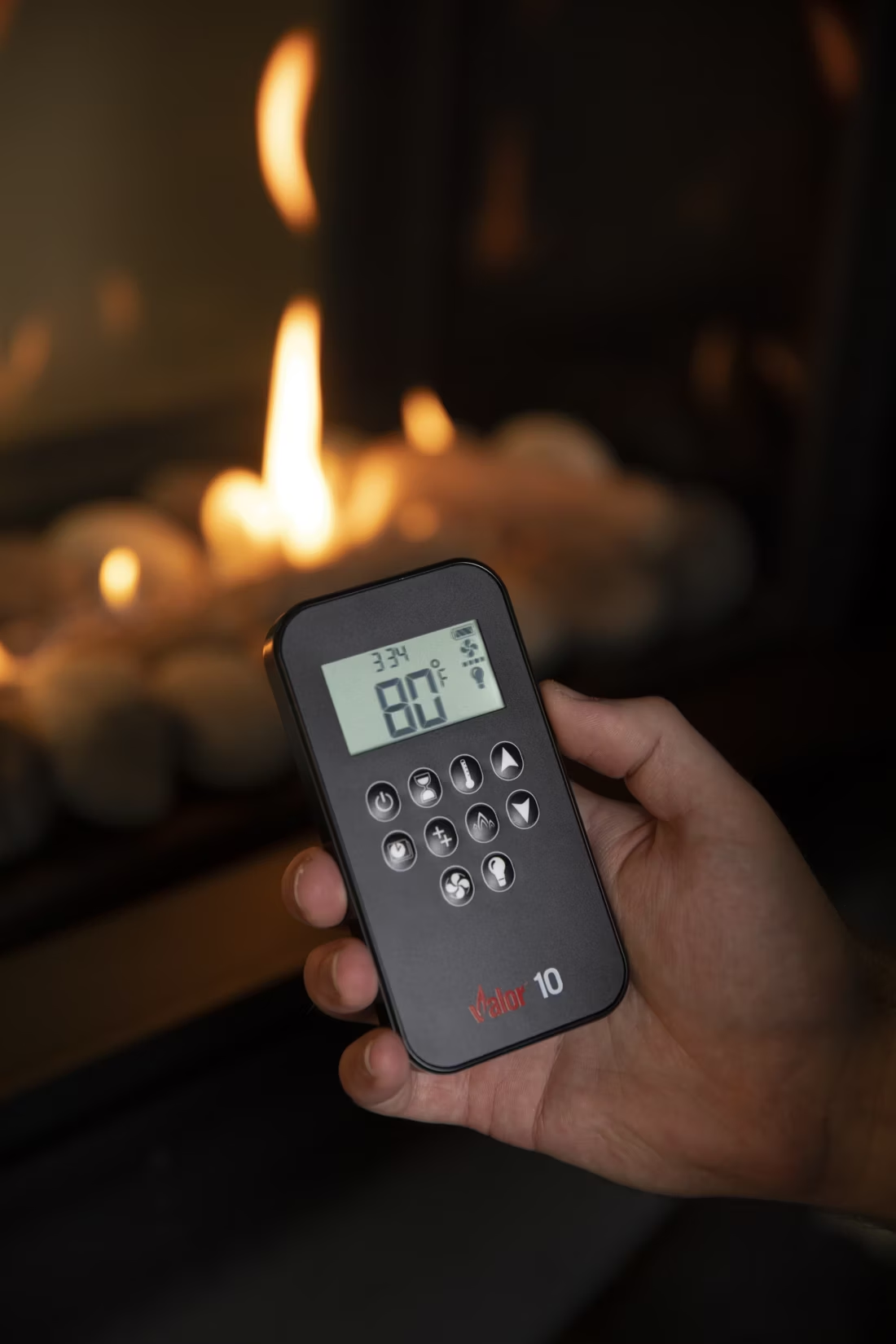
Most will, with the right ignition system. Units with IPI (intermittent pilot ignition) run on a small battery backup that kicks in automatically when NSTAR power drops, so the fireplace still lights on demand during an outage. Valor's gas fireplaces go a step further—the pilot's thermocouple generates its own electricity, so there's no battery to remember at all. Given how many Berkshire County outages come from ice storms and heavy nor'easters rather than brief blips, that distinction matters. Ask your local dealer which ignition system is on any unit you're considering.
What's the difference between a gas fireplace, a gas insert, and a gas stove?
A gas fireplace is a fully built-in unit framed into a wall—the right call for new construction or a full remodel. A gas insert is built to slide into an existing masonry firebox, which is why it's such a common upgrade in Pittsfield's older homes with unused wood fireplaces. A gas stove is a freestanding cast-iron or steel unit that sits out on its own hearth pad, similar in footprint to a wood stove but running on gas. If you've already got a fireplace opening you want to bring back to life, an insert is almost always the answer; if you're starting from a bare wall, a built-in fireplace or freestanding stove makes more sense.
Do I need a permit to install a gas fireplace in Pittsfield?
Yes. The Pittsfield Building Department requires a building permit for gas fireplace installations, and any new gas line or gas appliance connection also requires sign-off from a licensed Massachusetts gas fitter—a separate license from a general contractor's. Most established local hearth dealers coordinate both the building permit and the gas fitting themselves, so you're not stuck managing two trades. Skipping the permit isn't just a paperwork risk—it can affect your homeowner's insurance and resale disclosures down the line.
What's the difference between vented and vent-free gas fireplaces?
Vented (direct-vent) gas fireplaces draw combustion air from outside and exhaust exhaust gases back outside through a sealed pipe—they're the standard, code-compliant choice almost everywhere. Vent-free units burn gas directly into the room with no outside venting at all, and Massachusetts is one of the few states that prohibits their sale and installation under the state's Board of Fire Prevention Regulations. That makes the decision simple for Pittsfield homeowners: any gas fireplace or insert installed here needs to be a vented, direct-vent model. Local dealers will only be showing you products that are legal to install in the first place.
How often should a gas fireplace be serviced?
Plan on an annual inspection, ideally before the heating season ramps up in the fall. A technician checks the burner, pilot assembly, venting, and gas connections, and cleans the glass and interior—a much smaller job than a wood chimney sweep, but it matters for both safety and warranty coverage. Local gas appliance service providers typically charge somewhere in the $150 to $250 range for a standard annual inspection, more if the unit needs a part replaced or the glass has heavy soot buildup from a bad burn.
Gas or wood—which makes more sense for a Pittsfield home?
Wood is still common in Berkshire County, where oak, maple, birch, and ash are all locally abundant, and a wood stove keeps producing heat even if the power's out for days after an ice storm. But wood means splitting, stacking, hauling ash, and tending a fire through a season that runs long here. Gas trades that labor for instant, consistent heat at the flip of a switch, with none of the smoke or creosote buildup—a real advantage in a city with plenty of older homes and tighter, closely spaced lots. Plenty of Pittsfield homeowners end up with both: gas in the main living space for daily convenience, and a wood stove elsewhere as backup heat when the weather turns serious.
Why is my open fireplace making my house colder?
Open fireplaces suck—literally. As the fire burns, it consumes air your furnace already paid to heat and pulls it out through the chimney, so the house is actually colder after the fire goes out than before you lit it. An insert fixes this: it seals the chimney, puts fixed glass across the front, and turns that hole in your house into a real heat source.
Is my gas fireplace wasting gas?
If it was installed more than 15 years ago, probably. Older gas fireplaces keep a standing pilot light burning all the time, and that little flame can cost a couple hundred dollars a year. Newer models use pilot-on-demand ignition—the pilot lights only when you use the fireplace and goes out when you turn it off.
Does a fireplace add value to my home?
On average, a fireplace adds back to the home about the same amount you spent installing it. Add the monthly savings from heating the rooms you actually use instead of the whole house—often hundreds of dollars a year—and the value case is strong before you even count what a fire does for how your family uses the room.
Can I install a fireplace myself?
If you're putting a fire in your house on purpose, it's best to work with an expert. Unless you're genuinely experienced in framing, gas line, vent pipe, and the national code on clearances to combustibles, have a professional do it—and ideally the same company that sells you the fireplace, so warranty, service, and liability all live under one roof.
Nearby Dealers
Hearth shops serving Pittsfield and the surrounding area.
Get your Project Guide & Parts List for a Pittsfield gas fireplace.
Tell us about your home and your existing fireplace or hearth, and we'll match you with a trusted local dealer and send a free Project Guide & Parts List—the exact parts, vent kit, and dealer recommendation for your Pittsfield gas project.
Find Your Fireplace →