
Warmth on demand for Hampden County's long, cold winters.
With a long, hard winter heating season and winter lows averaging 14°F, Monson Center homes need heat that doesn't quit. I'll match you with a trusted local dealer who knows the propane setup, the venting code, and what actually fits your house.
Every Project Starts From One of These Five Situations
Propane-fed convenience in a small Hampden County village.
Monson Center sits at 561 feet in the hills of Hampden County, and the winter numbers here run closer to Burlington, Vermont than to coastal Massachusetts—an average low of 14°F and a long, hard winter heating season. Wood heat has deep roots in this part of the state, with oak, maple, birch, and ash all standing timber in the surrounding woodlots, but a growing number of homeowners in this small village of under 1,700 people want a heat source that starts at the flip of a switch on the coldest mornings without a woodpile to manage.
Monson Center is a rural village without piped natural gas mains reaching most addresses, so when residents here say 'gas fireplace,' they usually mean a propane-fed unit fed by a tank rather than a utility line—Massachusetts Electric Co (National Grid) covers electric service at a residential rate around 23 cents per kWh, but gas distribution simply doesn't extend to most of this part of Hampden County. One state-specific detail worth knowing: Massachusetts fire code prohibits vent-free (unvented) gas fireplaces in occupied living spaces, so every installation here is a sealed direct-vent unit, which also happens to be the safer, better-performing choice for a tight, well-insulated New England home.
Three steps. No salesperson until you're ready.
Tell us about your project
Your zip code, your situation, and the fuel you're leaning toward—or let the answers point you to one.
See what's actually available
The brands dealers within 100 miles genuinely carry—real options, never a catalog mirage.
Get your dealer & Project Guide
A trusted local dealer, plus the free Project Guide & Parts List that names every component of the job.
Frequently Asked Questions
How much does a gas fireplace installation cost in Monson Center?
Most propane fireplace and insert installs in this part of Hampden County run roughly $4,500 to $10,000. A direct-vent insert dropped into an existing masonry firebox—common in Monson Center's older Colonial and Federal-style homes—sits toward the lower end, especially if a propane line already serves the house for a range or water heater. A new built-in unit for an addition or remodel, including fresh gas line work from the tank and exterior venting, lands higher. Because Massachusetts fire code requires sealed direct-vent construction rather than vent-free units, expect the venting itself to be part of every quote, not an optional add-on.
Can I convert my existing wood fireplace to gas?
Yes, and it's a common request in Monson Center's older housing stock, where many original fireplaces were built to burn local oak or maple. A propane insert typically slides into the existing masonry firebox using a stainless liner run up the current chimney, which keeps the exterior look intact while eliminating the need to split and stack wood. Since the village isn't served by natural gas mains, the conversion also usually means sizing and placing a propane tank—above-ground or buried—which your local installer can plan around your lot and driveway access.
Do I need natural gas service, or is propane the only option in Monson Center?
For nearly all Monson Center addresses, propane is the practical answer. Natural gas mains don't reach this rural corner of Hampden County the way they do in denser parts of Springfield or Chicopee, so homeowners here typically run a propane tank for a fireplace, and often for the water heater, range, and backup furnace as well. A dealer can quote either a new tank installation or tie into an existing one if you're already using propane appliances—most gas fireplace models sold today are configurable for propane at the factory or in the field.
Will my gas fireplace still work if the power goes out?
Most will, and it's a real consideration in the hilly, tree-lined stretches around Monson Center where ice storms occasionally take down lines and National Grid restoration can take a while in rural areas. Units with IPI (intermittent pilot ignition) run their electronics off a AA battery backup that engages automatically when power drops. Valor fireplaces skip the battery question entirely—their pilot's thermocouple generates its own electricity to run the valve, so the fireplace keeps working through an outage with no backup system to maintain. Given how quiet a power outage can turn a house at 14°F, this is worth asking about directly.
What's the difference between a gas fireplace, insert, and stove?
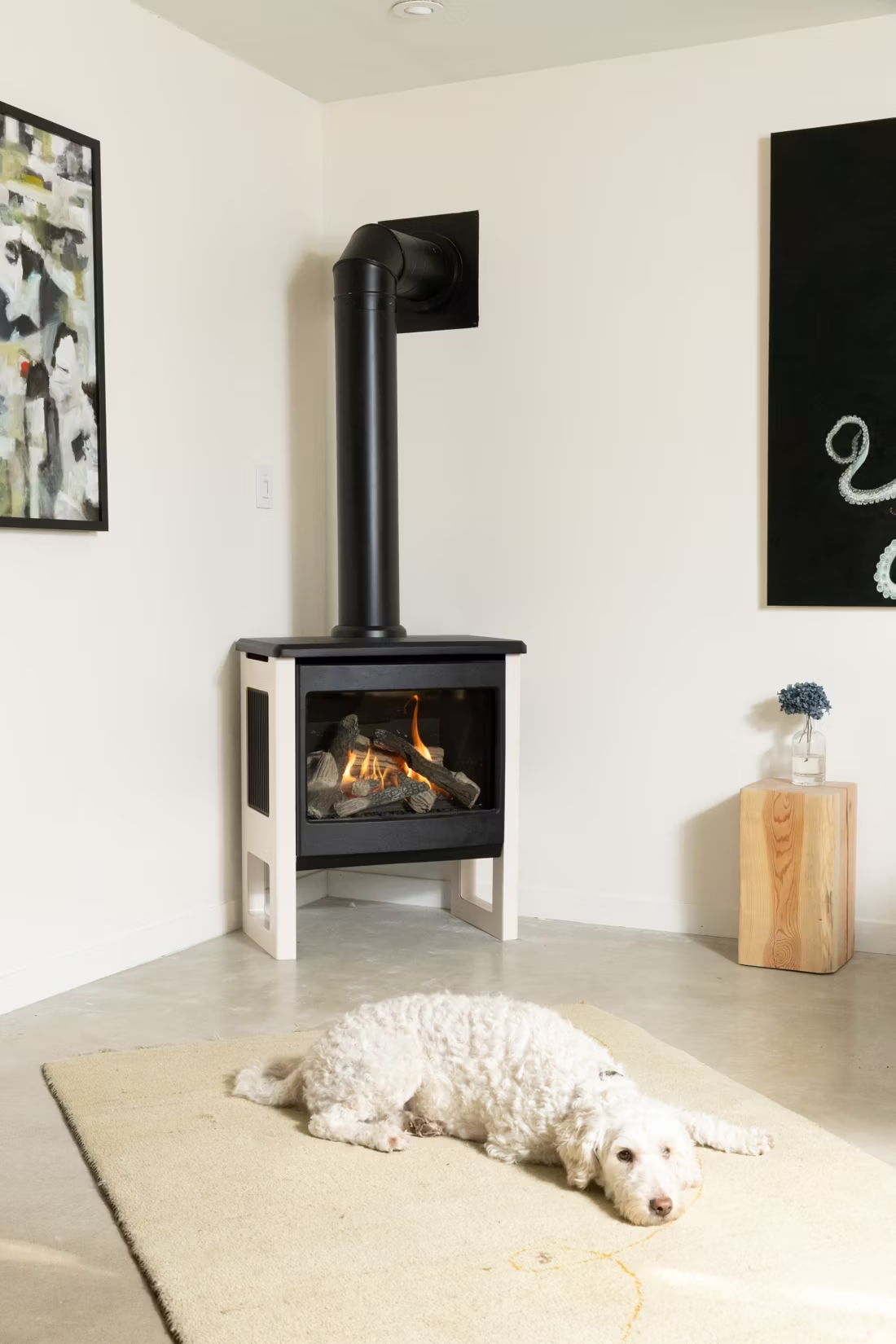
A gas fireplace is a built-in unit framed into a wall, typically chosen for new construction or a full remodel. A gas insert fits into an existing masonry firebox—the more common route in Monson Center's older homes that were originally built around a wood-burning hearth. A gas stove is freestanding on a hearth pad, similar in footprint to a wood stove but running on a propane line instead of split oak or maple. For most homes here with a fireplace already in place, an insert is the simpler and less invasive upgrade.
Do I need a permit to install a gas fireplace in Monson Center?
Yes. You'll need a building permit through the Monson Building Department, plus a separate gas permit pulled by a licensed propane or gas fitter for the line and tank work. Because most installs here involve a propane tank rather than a utility meter, the fitter also has to follow state setback rules for tank placement relative to the house, windows, and property line. An established local hearth dealer typically coordinates the building permit, the gas fitter, and the final inspection as one package rather than leaving you to manage separate trades.
Vented vs. vent-free gas fireplaces—what should I know?
In Massachusetts, this isn't really a choice: state fire code prohibits vent-free (unvented) gas fireplaces and heaters in occupied living spaces, so every legal installation in Monson Center is a sealed direct-vent unit that draws combustion air from outside and exhausts it back outside. That's actually a benefit in a tight, well-insulated New England home built to handle a long, hard winter heating season—direct-vent construction doesn't introduce combustion byproducts or extra humidity into the living space, which matters over a heating season that often runs six months or more.
How often should a gas fireplace be serviced?
Plan on an annual inspection in late summer or early fall, before the first real cold snap arrives—which in this part of Hampden County can come earlier than the calendar suggests. A technician checks the burner, pilot assembly, propane line connections, and venting, and cleans the glass. It's a lighter job than a wood chimney sweep, typically $150 to $250, but skipping it on a unit that's carrying real heating load through a Monson Center winter is how an igniter failure shows up on the coldest night of the year.
Gas vs. wood—which makes more sense for a Monson Center home?
Wood still has real advantages here: oak, maple, birch, and ash are all common in the woodlots around this part of Hampden County, there are no air quality restrictions or curtailment periods to work around, and a wood stove runs without electricity or a propane delivery. Gas wins on convenience—instant heat with no loading, no ash, and no chimney sweep—which is a big draw for anyone using the fireplace daily rather than as a weekend or backup source. Pellet stoves, using regional brands like New England Wood Pellet or Lignetics, split the difference: cleaner and more automated than cordwood, though like gas they depend on electricity to run the auger and blower. A lot of households in this area end up keeping a wood stove for outage resilience and adding gas or pellet for everyday convenience.
Why is a fireplace insert so efficient?
An insert does two things: it seals the chimney completely, so you stop losing air you already paid to heat, and it radiates warmth into the room through the firebox and glass. Most add a heat-exchange fan that pulls cool room air underneath, wraps it around the hot firebox, and pushes it back out warm. Your home is more efficient before you've even lit the first fire.
Is my gas fireplace wasting gas?
If it was installed more than 15 years ago, probably. Older gas fireplaces keep a standing pilot light burning all the time, and that little flame can cost a couple hundred dollars a year. Newer models use pilot-on-demand ignition—the pilot lights only when you use the fireplace and goes out when you turn it off.
What is an in-home preview and do I need one?
It's a visit where a hearth professional measures your space, confirms the model you picked actually works in your home, and walks the specs—framing, gas line, venting, finish work—before anything is ordered. Some details you just can't know until you see the house. Never make a down payment without one; it's the single most-skipped step that burns buyers.
How much should I budget for a fireplace?
For an average home—covering the fireplace, the vent pipe, and basic installation—a budget between $3,900 and $5,500 gives you a lot of options across wood, gas, and pellet. By the time you add finish work, gas line, and electrical, the average complete installation lands between $5,000 and $12,000 all-in. In a remodel or new build, a good rule is to put about 2.5% of the total project cost toward the fireplace.
Nearby Dealers
Hearth shops serving Monson Center and the surrounding area. Every listing shows whether it is a WhyFire partner, a dealer we have verified as authorized for the brands we recommend, or a local business carrying hearth products. No manufacturer pays for placement. How we verify dealers →
Squier Lumber & Hardware
High Grade Gas Service
Olde Hadleigh Hearth & Patio
Phelps & Sons Inc.
Northeast Wood Stove
McKenney Electric Dba McKenney Hearth & Home
Hocon Gas
Amherst Farmers Supply
Robbins Garden Center, Inc.
Get your free Project Guide & Parts List for a gas fireplace in Monson Center.
Tell me about your home and your propane setup, and I'll match you with a trusted local dealer and send a free Project Guide & Parts List with the exact vent kit and parts your project needs—sized for Hampden County's long, cold heating season.
Find Your Fireplace →