
Instant Heat for Melrose's Long New England Heating Season.
With a winter heating season as long and demanding as Burlington, Vermont's, and lows averaging 18°F, Melrose homes lean on gas for steady, no-fuss warmth. Find the right unit and connect with a trusted local dealer.
Every Project Starts From One of These Five Situations
Reliable warmth built for Melrose's dense, historic streets.
Melrose sits just north of Boston in Middlesex County, a fully built-out city of Victorians, Colonials, and early-1900s two-families packed onto narrow lots. Winters here run comparable to Burlington, Vermont in total heating load, with average lows near 18°F from December through February. That's a long, real heating season, but Melrose's tight lot sizes and shared driveways make cordwood storage and chimney-sweeping schedules impractical for most homeowners, which is a big part of why gas has become the default hearth fuel here rather than wood.
Because Melrose's street grid was built out block by block over a century ago, natural gas mains already run to nearly every home, and most older houses were plumbed for gas heat or cooking long before anyone added a fireplace. That makes converting an existing masonry fireplace to a direct-vent gas insert a common, straightforward project. Massachusetts fuel gas code also steers homeowners toward vented, direct-vent units rather than unvented "vent-free" fireplaces, which are restricted in most dwelling occupancies statewide. A gas fireplace or insert gives Melrose homeowners real, on-demand heat—with a battery-backup ignition system, it'll still light during the ice storms that occasionally knock out power from Eversource (NSTAR Electric).
Three steps. No salesperson until you're ready.
Tell us about your project
Your zip code, your situation, and the fuel you're leaning toward—or let the answers point you to one.
See what's actually available
The brands dealers within 100 miles genuinely carry—real options, never a catalog mirage.
Get your dealer & Project Guide
A trusted local dealer, plus the free Project Guide & Parts List that names every component of the job.
Frequently Asked Questions
How much does a gas fireplace installation cost in Melrose?
A typical direct-vent gas fireplace or insert installation in Melrose runs roughly $5,000 to $12,000, depending on the unit, the venting path through an existing masonry chimney or exterior wall, and whether new gas line work is needed. Converting an existing fireplace in one of Melrose's older Victorians or Colonials—using the existing chimney with a stainless liner—tends to land on the lower to middle end. New construction, additions, or homes needing a fresh gas line run from the street will run higher. A local dealer will size the job and give you a firm number after an in-home visit.
Can I convert my existing wood fireplace to gas?
Yes, and it's one of the most requested projects among Melrose's older housing stock—many of the city's early-1900s Victorians and Colonials still have their original masonry fireboxes and chimneys. A gas insert typically drops into that existing opening, with a stainless liner run up the flue for venting, and connects to the home's existing gas service. Since most of Melrose was built out with gas mains already in place, the plumbing is usually already close by, which keeps conversion costs on the more reasonable end compared to homes needing an entirely new gas line.
Is natural gas available throughout Melrose, or do I need propane?
Nearly every street in Melrose has natural gas service, since the city's grid was fully built out generations ago and most homes already use gas for heat or cooking. Propane is rarely needed here—it's really only a consideration for a handful of properties on the city's outer edges where a gas main hasn't been extended. If you already have a gas water heater, furnace, or range, adding a fireplace on the same line is generally a simple tie-in for a licensed gasfitter.
Will my gas fireplace work during a power outage?
Most modern gas fireplaces with intermittent pilot ignition (IPI) include a battery backup that keeps the unit lighting on demand even when Eversource (NSTAR Electric) power drops—which matters in Melrose during the occasional nor'easter or ice storm that knocks out lines for a day or more. Valor's lineup takes a different approach: their pilot assembly generates its own electricity through the thermocouple, so there's no battery to remember at all. Ask your local dealer which ignition system a given model uses before you buy.
What's the difference between a gas fireplace, gas insert, and gas stove?
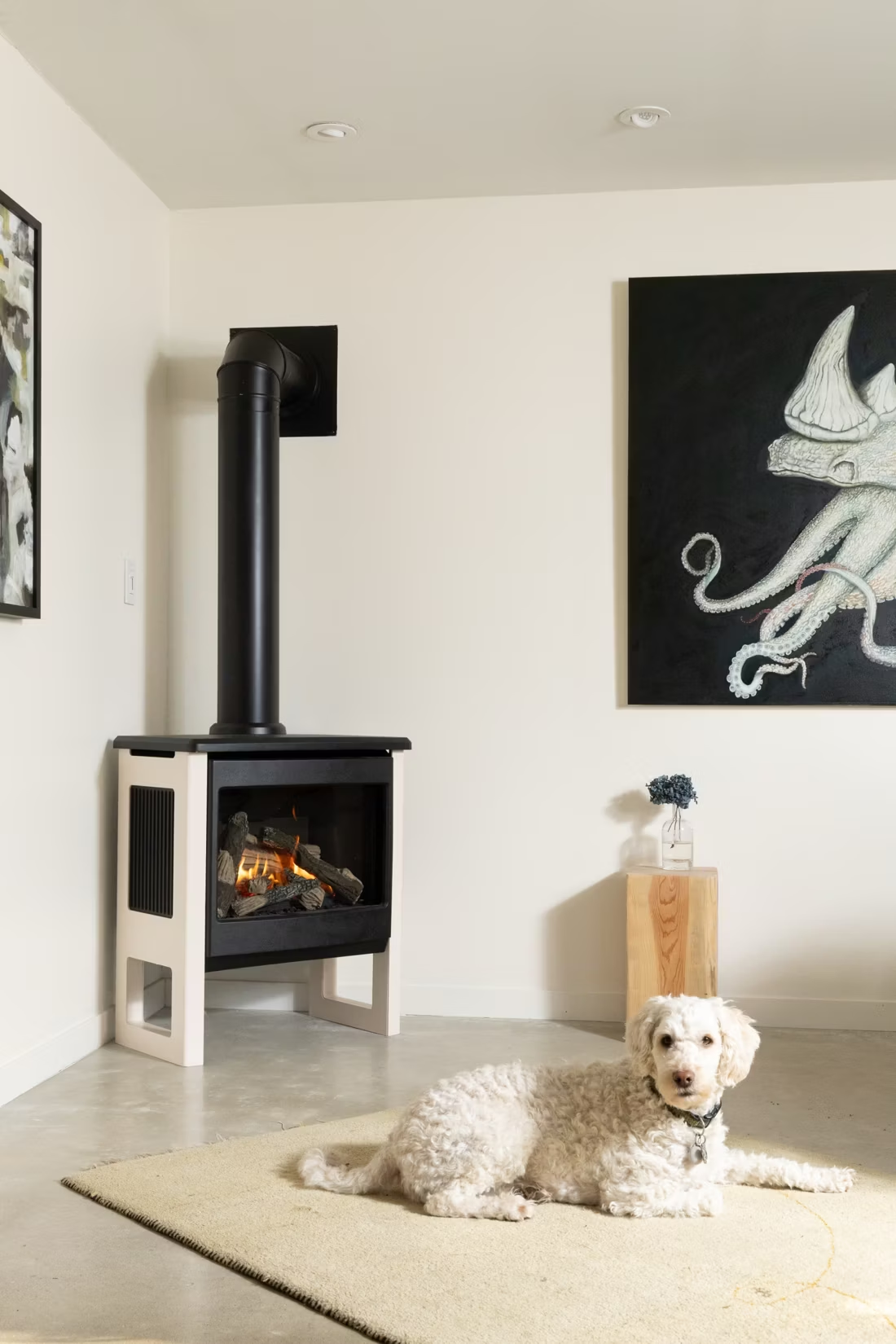
A gas fireplace is a fully built-in unit framed into a wall—the right call for additions or homes without an existing chimney. A gas insert is built to slide into an existing masonry firebox, which fits the housing stock in Melrose's older neighborhoods well, since it reuses the chimney that's already there. A gas stove is a freestanding cast-iron or steel unit that sits on its own hearth pad, a good option for a room without any existing fireplace opening, like a finished basement or a converted three-season porch. A local dealer can walk your specific room and tell you which fits.
Do I need a permit to install a gas fireplace in Melrose?
Yes. New gas fireplace installations in Melrose require a building permit through the City of Melrose Building Department, plus a separate gas permit pulled by a licensed gasfitter for the fuel line work. Most hearth dealers coordinate both permits and the required inspections as part of the installation, so you're not left managing separate trades. Massachusetts fuel gas code also governs which venting configurations are allowed, which is why your installer will specify a direct-vent model rather than an unvented one.
What's the difference between vented and vent-free gas fireplaces?
Vented (direct-vent) gas fireplaces draw combustion air from outside and exhaust it back outside through a sealed pipe—they're the standard, code-compliant choice nationwide. Vent-free units burn directly into the room air instead, and Massachusetts fuel gas code restricts their use in most residential dwelling occupancies, so you won't find them installed as primary units in Melrose homes the way they sometimes are in warmer, less-regulated states. Practically speaking, that means nearly every gas fireplace or insert installed in Melrose is a direct-vent model—which also happens to be the safer, better-performing option for year-round comfort.
How often should my gas fireplace be serviced?
Plan on an annual inspection, ideally before the heating season ramps up in the fall. A technician will check the burner, pilot assembly, venting, and gas connections, and clean the glass and interior—a much quicker visit than a wood chimney sweep, but just as important for safety. Local gas appliance service providers typically charge $150 to $250 for this annual visit, and it's worth keeping on the calendar given how many months of the year a Melrose gas fireplace actually runs.
Why don't more homes in Melrose use wood or pellet stoves?
Some of Melrose's older homes still have a decorative wood-burning fireplace, but wood and pellet stoves as a primary heat source are genuinely uncommon here—narrow lots, shared driveways, and tight side-yard setbacks make cordwood storage and stovepipe clearances difficult in a lot of the city's Victorian and two-family housing stock, and there's no nearby public land for cutting permits the way there is farther out in Massachusetts. Pellet fuel faces the same practical hurdle: hauling and storing 40-pound bags isn't realistic in a lot of Melrose's smaller garages and basements. Gas is the practical default for real heat here, with wood kept mostly for ambiance in the homes that already have a working masonry fireplace.
Why is my open fireplace making my house colder?
Open fireplaces suck—literally. As the fire burns, it consumes air your furnace already paid to heat and pulls it out through the chimney, so the house is actually colder after the fire goes out than before you lit it. An insert fixes this: it seals the chimney, puts fixed glass across the front, and turns that hole in your house into a real heat source.
Why is a fireplace insert so efficient?
An insert does two things: it seals the chimney completely, so you stop losing air you already paid to heat, and it radiates warmth into the room through the firebox and glass. Most add a heat-exchange fan that pulls cool room air underneath, wraps it around the hot firebox, and pushes it back out warm. Your home is more efficient before you've even lit the first fire.
Does a fireplace add value to my home?
On average, a fireplace adds back to the home about the same amount you spent installing it. Add the monthly savings from heating the rooms you actually use instead of the whole house—often hundreds of dollars a year—and the value case is strong before you even count what a fire does for how your family uses the room.
Should the dealer who sells my fireplace also install it?
Ideally, yes. A fireplace project involves vent pipe, gas line, electrical, and often tile or stone. Hire three or four separate trades and you own the liability and the game of telephone between them. One company selling and installing means one accountable party, start to finish—ask about factory training, on-time completion records, and what happens if an inspection fails.
Nearby Dealers
Hearth shops serving Melrose and the surrounding area. Every listing shows whether it is a WhyFire partner, a dealer we have verified as authorized for the brands we recommend, or a local business carrying hearth products. No manufacturer pays for placement. How we verify dealers →
Sunline Patio & Fireside
M & M Chimney
American Chimney Sweeps Inc. Stove Shop
Boston Fine Home Details
Euroline Tile
Norwood Fireplace
Eurosweep
Natick Fireplace
West Sport Gas
Sweepnman Fireplace Center
Advantage Fireplace, Inc
Backyard Living
Find your gas fireplace in Melrose.
Tell us about your home and heating goals, and we'll match you with a trusted local Melrose dealer and send over a free Project Guide & Parts List—the exact parts, vent kit, and installer recommendation for your gas fireplace project.
Find Your Fireplace →