
Reliable Heat for Lynn's Cold, Coastal Winters.
Lynn sees average winter lows near 18°F and a long, demanding heating season each year. Gas delivers instant, dependable warmth for the city's triple-deckers, colonials, and condos—find the right unit and a trusted local installer.
Every Project Starts From One of These Five Situations
The practical choice for a dense coastal city.
Lynn sits on Massachusetts Bay in Essex County, a densely built city of over 100,000 people packed into triple-deckers, rowhouses, and early-1900s single-family homes on tight lots. Winters here run cold and long—average lows around 18°F and a heating season about as demanding as Burlington, VT. But unlike rural New England towns with woodlots out back, Lynn's housing stock and lot sizes make wood and pellet stoves genuinely impractical for most residents: there's no nearby public land for cutting permits, storage space for cordwood is scarce, and shared walls and small yards complicate venting and clearances.
That's exactly why gas is the standard hearth fuel across Lynn's neighborhoods. Natural gas infrastructure is well established throughout this part of Essex County, and many of Lynn's older homes already run gas water heaters or boilers, making a new fireplace line a straightforward add for a licensed gas fitter. With Massachusetts Electric Co. residential rates running around 23 cents per kWh—well above the national average—a gas fireplace or insert is typically the more economical choice for real supplemental heat, while electric units are better reserved for ambiance in rooms where running a gas line isn't practical.
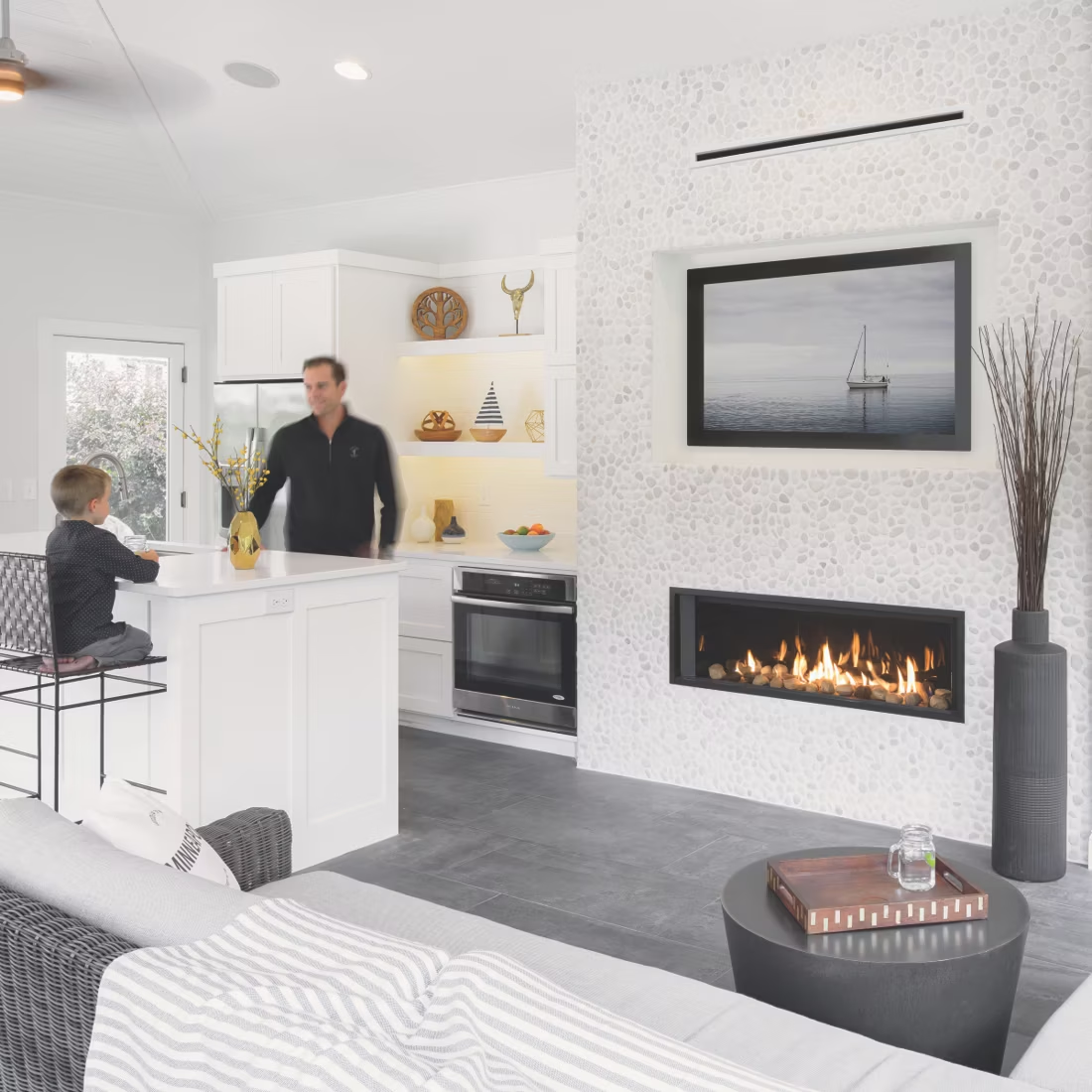
Three steps. No salesperson until you're ready.
Tell us about your project
Your zip code, your situation, and the fuel you're leaning toward—or let the answers point you to one.
See what's actually available
The brands dealers within 100 miles genuinely carry—real options, never a catalog mirage.
Get your dealer & Project Guide
A trusted local dealer, plus the free Project Guide & Parts List that names every component of the job.
Frequently Asked Questions
How much does a gas fireplace installation cost in Lynn?
Most gas fireplace and insert installations in Lynn run roughly $4,000 to $10,000, depending on the unit, the venting path, and whether new gas line work is required. A direct-vent gas insert dropped into one of Lynn's existing brick fireplaces—common in the city's early-1900s triple-deckers and colonials—tends to land on the lower end, especially in homes already piped for gas. Projects that require running a new gas line, building a new chase for venting, or adding a full mantel surround for new construction sit higher. A local dealer will give you a firm number after seeing the space in person.
Can I convert my existing fireplace to gas?
Yes, and it's one of the most common projects in Lynn's older housing stock. Many of the city's triple-deckers and single-family homes built in the early 20th century have masonry fireplaces that were designed for wood but rarely get used that way today given tight lots and no realistic firewood supply nearby. A gas insert uses your existing chimney as the venting path with a stainless liner, typically running $4,000 to $8,500 depending on whether the home is already connected to gas service. It keeps the original mantel and opening while turning an unused fireplace into real, controllable heat.
Is natural gas available throughout Lynn, or will I need propane?
Lynn's dense urban neighborhoods are well served by natural gas, and most homes across the city's 01901 through 01905 and 01910 zip codes already have a gas meter for a water heater, range, or boiler. That makes adding a gas fireplace a matter of extending an existing line rather than starting from scratch. Propane is uncommon within Lynn proper and mainly shows up in a handful of outlying properties without a gas connection—your installer can confirm which fuel makes sense for your address.
Will my gas fireplace still work if the power goes out?
Most modern gas fireplaces will, which matters in a coastal city like Lynn where nor'easters regularly knock out power for hours or days. Units with IPI (intermittent pilot ignition) run on a small battery backup that kicks in automatically when utility power drops, so the fireplace lights on demand just like normal. Valor fireplaces take it further—their pilot generates its own electricity through the thermocouple, so there's no battery to remember or replace. Ask your local dealer about the ignition system on any model you're considering, especially if backup heat during storms is a priority.
What's the difference between a gas fireplace, insert, and stove?
A gas fireplace is a built-in unit framed into a wall, typically used in new construction or a full remodel. A gas insert is sized to slide into an existing masonry fireplace opening, which fits the housing stock in much of Lynn's older neighborhoods. A gas stove is a freestanding cast-iron or steel unit that sits on the floor and vents through a wall or existing flue, a good option for a condo unit or an addition without an existing fireplace. Most Lynn homeowners upgrading a fireplace they already have end up with an insert; those building out a new room often go with a built-in unit or freestanding stove.
Do I need a permit to install a gas fireplace in Lynn?
Yes. The City of Lynn Inspectional Services Department requires both a building permit and a gas permit for new fireplace installations, and Massachusetts state code requires the gas line work be performed by a licensed gas fitter. Most hearth dealers coordinate this as part of the installation, pulling permits and scheduling inspections so you're not managing separate trades yourself. Skipping the permit isn't just a compliance issue—it can also affect insurance coverage and resale disclosures on Lynn's older housing stock.
Should I choose a vented or vent-free gas fireplace?
Vented (direct-vent) gas fireplaces draw combustion air from outside and exhaust exhaust gases back outside through sealed venting—they're the standard choice and the one nearly every Lynn installer will recommend. Vent-free units burn directly into the room air and face tighter restrictions in Massachusetts, including minimum room volume requirements and oxygen depletion sensors, which makes them a poor fit for the smaller rooms common in Lynn's triple-deckers and older apartments. For nearly all installations here, a direct-vent unit is the practical and code-friendly choice.
How often does a gas fireplace need to be serviced?
Plan on an annual inspection, ideally in early fall before the heating season ramps up. A technician checks the burner, pilot assembly, venting, and gas connections, and cleans the glass and interior—a much lighter lift than chimney sweeping for a wood stove, but just as important for safety. Local gas appliance service providers typically charge $150 to $250 for a standard annual visit, and it's worth budgeting for given how long Lynn's heating season runs.
Why is gas the standard hearth fuel in Lynn instead of wood or pellet?
Wood and pellet stoves are impractical for most Lynn homes, and it comes down to the city itself: dense lots, shared walls in triple-deckers, little to no space for cordwood or pellet bag storage, and no nearby public forest land offering cutting permits the way you'd find further inland or in northern New England. A handful of larger single-family properties on the city's outskirts might make wood work, but for the vast majority of Lynn's housing stock, gas is both the realistic and the better-performing option—instant heat, no fuel storage, and a straightforward tie-in to the natural gas service most homes already have.
Why is my open fireplace making my house colder?
Open fireplaces suck—literally. As the fire burns, it consumes air your furnace already paid to heat and pulls it out through the chimney, so the house is actually colder after the fire goes out than before you lit it. An insert fixes this: it seals the chimney, puts fixed glass across the front, and turns that hole in your house into a real heat source.
Why is a fireplace insert so efficient?
An insert does two things: it seals the chimney completely, so you stop losing air you already paid to heat, and it radiates warmth into the room through the firebox and glass. Most add a heat-exchange fan that pulls cool room air underneath, wraps it around the hot firebox, and pushes it back out warm. Your home is more efficient before you've even lit the first fire.
Can I install a fireplace myself?
If you're putting a fire in your house on purpose, it's best to work with an expert. Unless you're genuinely experienced in framing, gas line, vent pipe, and the national code on clearances to combustibles, have a professional do it—and ideally the same company that sells you the fireplace, so warranty, service, and liability all live under one roof.
Can a fireplace actually lower my heating bill?
Yes—by creating a comfort zone. A furnace heats every square foot of the house just to warm the one room you're in; a gas fireplace on low burns roughly a sixth of the gas a typical furnace does. Set the furnace around 55–60 degrees as a baseline, then heat the rooms your family actually uses. Families who heat this way commonly save $20–$60 a month.
Nearby Dealers
Hearth shops serving Lynn and the surrounding area. Every listing shows whether it is a WhyFire partner, a dealer we have verified as authorized for the brands we recommend, or a local business carrying hearth products. No manufacturer pays for placement. How we verify dealers →
American Chimney Sweeps Inc. Stove Shop
Sunline Patio & Fireside
M & M Chimney
Boston Fine Home Details
Euroline Tile
Eurosweep
Norwood Fireplace
Advantage Fireplace, Inc
Natick Fireplace
West Sport Gas
Get matched with a Lynn gas fireplace dealer.
Tell us about your home and we'll match you with a trusted local dealer and send over a free Project Guide & Parts List—a plan for your gas fireplace project in Lynn, including the exact parts, vent kit, and our recommended installer.
Find Your Fireplace →