
Gas Heat Built for Holyoke's Long, Cold Winters.
Instant, reliable heat for Pioneer Valley homes—whether you're converting an old masonry fireplace or adding heat to a triple-decker. Find the right unit and connect with a trusted local dealer.
Every Project Starts From One of These Five Situations
Steady heat for a winter as tough as Burlington, VT.
Holyoke sits along the Connecticut River in Hampden County at about 500 feet elevation, where winter lows average 16°F and the heating season runs long—comparable in severity to a Burlington, VT winter. In a city built largely of 19th-century mill-era triple-deckers and Victorians, most of that housing stock was never designed around wood heat, and dense lot lines and shared walls make solid-fuel installations impractical for the majority of Holyoke properties today.
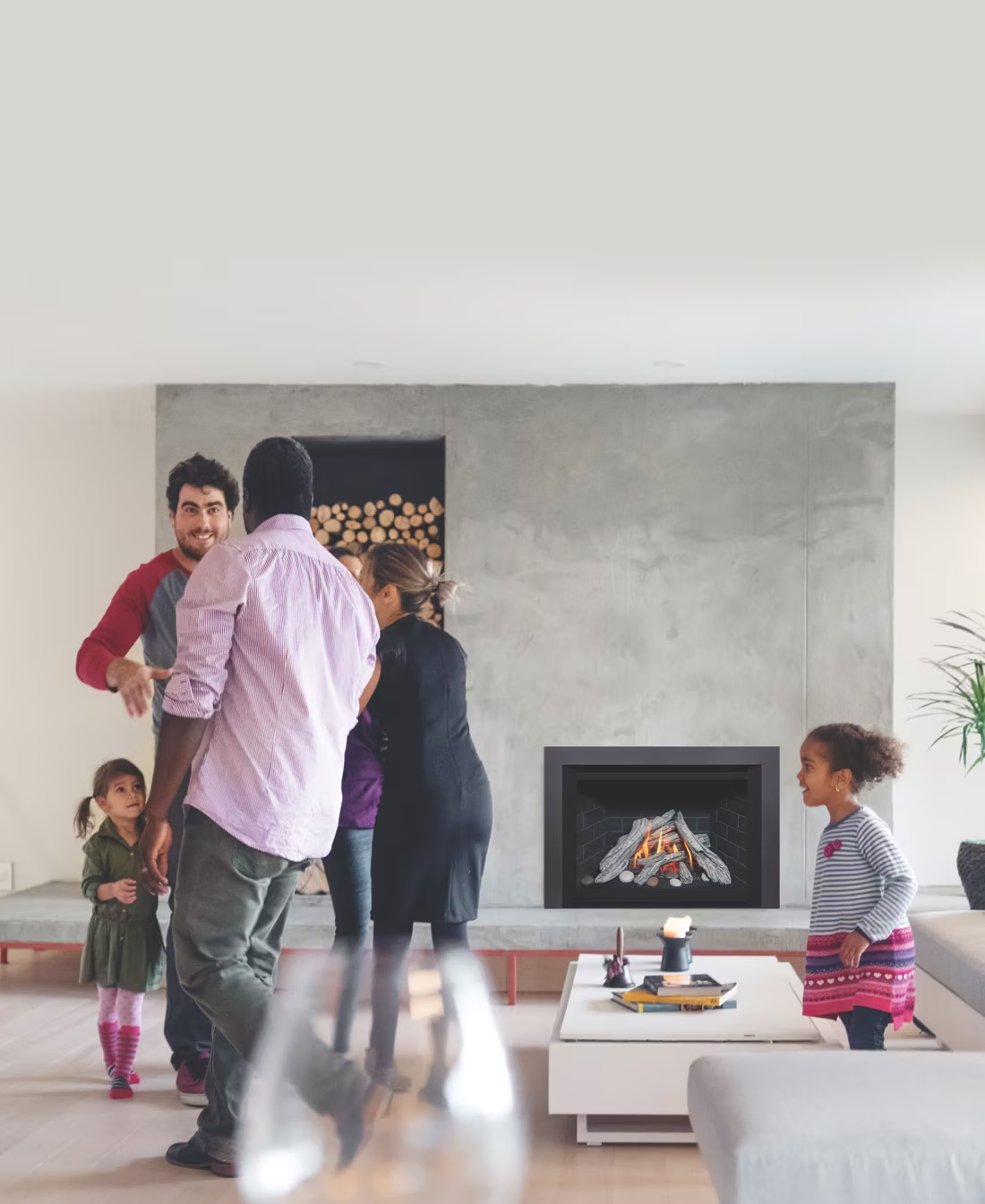
Gas has become the practical default here. Holyoke Gas & Electric (HG&E)—the city-owned utility that serves nearly every address in the 01040 and 01041 zip codes—supplies both natural gas and electricity, which means most homeowners already have gas service running to the house for a furnace or water heater. Adding a direct-vent gas fireplace or converting an existing masonry fireplace to a gas insert is usually a matter of tapping into that existing line, not running new infrastructure. The payoff is real: instant zone heat in a drafty rowhouse living room, no ash or chimney upkeep, and—with the right ignition system—a fireplace that still lights during a winter power outage.
Three steps. No salesperson until you're ready.
Tell us about your project
Your zip code, your situation, and the fuel you're leaning toward—or let the answers point you to one.
See what's actually available
The brands dealers within 100 miles genuinely carry—real options, never a catalog mirage.
Get your dealer & Project Guide
A trusted local dealer, plus the free Project Guide & Parts List that names every component of the job.
Frequently Asked Questions
How much does a gas fireplace installation cost in Holyoke?
Most gas fireplace installations in Holyoke run between roughly $4,000 and $10,000, depending on the unit and how much gas line or venting work is involved. A direct-vent insert going into an existing masonry fireplace in one of Holyoke's older triple-deckers or Victorians—where a chimney and often a gas stub are already present—tends to land toward the lower end. A new built-in gas fireplace for a remodel, requiring fresh gas piping run from an HG&E meter and new through-wall venting, sits toward the higher end. Local installers will confirm the number after seeing the space and the existing gas service.
Can I convert my existing wood-burning fireplace to gas?
Yes, and it's one of the most common projects for Holyoke's older housing stock. Many homes here—especially the pre-1930s triple-deckers and mill-worker rowhouses near downtown—still have a masonry firebox that was never really practical for regular wood burning given the tight lot sizes and shared chimneys. Dropping in a direct-vent gas insert uses that existing masonry chase for venting (typically with a stainless liner) and a gas line tied into your HG&E service. Expect somewhere in the $4,000 to $8,500 range depending on the insert and whether new gas piping is needed to reach the fireplace.
Is natural gas available at my address in Holyoke, or will I need propane?
Holyoke Gas & Electric provides natural gas service across most of the city, including both the 01040 and 01041 zip codes, so the majority of homeowners here are working with natural gas rather than propane. If you're just outside HG&E's service territory, or in a rural pocket of Hampden County without a gas main nearby, propane is the fallback—most gas fireplace models can be configured for either fuel with the correct orifice kit, so the appliance choice itself doesn't usually change.
Will my gas fireplace still work if the power goes out?
Most modern direct-vent gas fireplaces will, as long as they use an IPI (intermittent pilot ignition) system with battery backup—the fireplace switches to battery power automatically when HG&E service drops and keeps lighting on demand. Some manufacturers, like Valor, generate their own power off the pilot's thermocouple instead of relying on batteries at all, which some Holyoke homeowners specifically ask for given the ice storms and nor'easters that occasionally knock out power in the Pioneer Valley for a day or more. A standard electric fireplace, by contrast, is dead the moment the power goes out—worth knowing if backup heat is part of your decision.
Gas fireplace, gas insert, or gas stove—what's the difference for my home?
A gas insert is built to slide into an existing masonry firebox, which describes a large share of Holyoke's housing—the triple-deckers and Victorians around the Flats and Highlands neighborhoods usually already have a fireplace opening to work with. A built-in gas fireplace is framed into a wall from scratch and makes more sense for newer construction or a full renovation without an existing chimney. A freestanding gas stove sits on the floor like a wood stove but runs on gas, and works well in smaller rooms or additions where a fireplace opening doesn't already exist. For most Holyoke homeowners upgrading a fireplace they already have, the insert is the straightforward answer.
Do I need a permit for a gas fireplace installation in Holyoke?
Yes. The City of Holyoke Building Department requires a permit for the fireplace installation itself, and any new or modified gas piping needs a separate gas permit pulled by a licensed gas fitter—HG&E, as the local gas utility, will also need to be involved if the meter or service line requires upsizing. Most established hearth dealers in the area handle both permits as part of the installation quote, so you're not coordinating the building inspector and the gas fitter separately.
Can I install a vent-free gas fireplace in my Holyoke home?
No—Massachusetts fuel gas code prohibits vent-free (unvented) gas fireplaces and space heaters in residential dwellings statewide, so this isn't a Holyoke-specific restriction, it applies everywhere in the Commonwealth. Every gas fireplace or insert installed here will be a vented unit—either direct-vent, which draws combustion air from outside and exhausts through a sealed pipe, or B-vent. In practice this isn't a real limitation: direct-vent units are the most common option nationally anyway, deliver strong heat output, and don't raise the indoor air quality questions that come with unvented models.
How often does a gas fireplace need to be serviced?
Plan on an annual inspection, ideally in early fall before the heating season ramps up. A technician checks the burner, pilot assembly, venting, and gas connections, and cleans the glass and interior—a much smaller job than chimney sweeping but still important, since a dirty pilot or degraded gasket is the most common cause of a fireplace failing to light on a cold January morning. Local service providers around Holyoke typically charge $150 to $250 for this visit.
Should I consider wood or pellet heat instead of gas in Holyoke?
For most Holyoke properties, realistically, no. The city's housing stock—dense triple-deckers, shared-wall Victorians, and small lots—combined with local fire and building code constraints makes wood-burning and pellet stove installations impractical for the large majority of addresses here, which is why so few dealers stock them for this market. A handful of homeowners with detached single-family houses on larger lots outside the denser core do still install wood stoves for ambient use or backup heat, but it's the exception rather than the norm. Gas, backed by HG&E's existing infrastructure, is the practical and dominant choice for hearth heat in Holyoke.
Why is a fireplace insert so efficient?
An insert does two things: it seals the chimney completely, so you stop losing air you already paid to heat, and it radiates warmth into the room through the firebox and glass. Most add a heat-exchange fan that pulls cool room air underneath, wraps it around the hot firebox, and pushes it back out warm. Your home is more efficient before you've even lit the first fire.
What do I measure to size a fireplace insert?
Four numbers tell you what fits: the front width, the front height, the back width, and the overall depth of your existing fireplace opening. Grab a tape measure, jot those down, and snap a photo of the wall—those two things do more to move your project forward than anything else you can do today.
Can I install a fireplace myself?
If you're putting a fire in your house on purpose, it's best to work with an expert. Unless you're genuinely experienced in framing, gas line, vent pipe, and the national code on clearances to combustibles, have a professional do it—and ideally the same company that sells you the fireplace, so warranty, service, and liability all live under one roof.
How much should I budget for a fireplace?
For an average home—covering the fireplace, the vent pipe, and basic installation—a budget between $3,900 and $5,500 gives you a lot of options across wood, gas, and pellet. By the time you add finish work, gas line, and electrical, the average complete installation lands between $5,000 and $12,000 all-in. In a remodel or new build, a good rule is to put about 2.5% of the total project cost toward the fireplace.
Nearby Dealers
Hearth shops serving Holyoke and the surrounding area. Every listing shows whether it is a WhyFire partner, a dealer we have verified as authorized for the brands we recommend, or a local business carrying hearth products. No manufacturer pays for placement. How we verify dealers →
Olde Hadleigh Hearth & Patio
McKenney Electric Dba McKenney Hearth & Home
Done Right Chimney
Amherst Farmers Supply
The Fire Place
Hocon Gas
Squier Lumber & Hardware
Northeast Wood Stove
High Grade Gas Service
Find your gas fireplace in Holyoke.
Tell us about your home and we'll put together a free Project Guide & Parts List—the exact parts, including the vent kit, for your Holyoke gas fireplace project—and match you with a trusted local dealer to install it.
Find Your Fireplace →